Curry&Spice
From North to South India, food is so different, but equally good and tempting. I feel lucky enough that I could get chance to savour the authentic taste of the North-south-east-west. I have spent 25 years of my life in Baroda, Gujarat. The taste of Gujarati food and snacks is simply awesome. Till marriage I had been used to the Tambram recipes only. But after marriage I got to taste so many food varieties I never knew. I had neighbours from Gujarat, Punjab, Kashmir, Andhra, Kerala, UP, MP, Bengal, almost every part of our country. It was a wonderful experience wherein we shared tasty and authentic food freshly cooked at each of our houses and also shared the recipes and secret ingredients. Since I love cooking, I really took it as a golden opportunity to learn more and add stars to my cooking.
Welcome to my page 'Curry&Spice', here I have put down a consolidated list of recipes which will definitely add stars to your cooking too. The South Indian recipes will be of the TamBram (Tamil Brahmin) style whereas the others are a mix of what I have seen across and also out of my experience.
South Indian Gravy/Curry :
Arachi-utta Sambhar (Sambhar with freshly ground spices)
Sambhar (simply with sambhar powder)
Paruppu Rasam
Lemon Rasam
Special Lemon Rasam
Molagu Rasam(Pepper Rasam)
Kottu Rasam
Jeeraga Rasam (Jeera Rasam)
Mysore Rasam
Mysore Lemon Rasam
Pineapple Rasam
Vatha Kuzhambu
More Kuzhambu (South style kadi) - 2 varieties
Poricha Kootu
Poricha Kuzhambu
Murunga Keerai Poricha Kuzhambu
Puli kootu
Puli-itta Keerai
Pitlai (south recipe for bitter guard)
Avial
Paruppu thenga thogayal (south style chutney for rice)
Curry leaves thogayal/kuzhambu
Coriander/Pudina thogayal
Peerkangaa/Chow-chow Thogayal
Inji(Ginger) Thogayal
Inji(Ginger) puli
Vegetable Curry
Potato Curry
Brinjal Curry
Manathakkali Keerai curry
Manathakkali Kai Vatha Kuzhambu
Orange thol Kuzhambu
Dal
Usli Curry
Banana Stem Curry(Vaazha Thandu)
North Indian Gravy/Curry :
Doodhi ki Sabji (Bottle guard sabji)
Palak Paneer
Palak Mushroom
Aloo mutter
Soya Bhurji
Paneer Tikka Masala
Baingan ka Bharta
Chole
Aloo Parval Sabji
Paneer Bhurji
Ridge gourd/Turai Sabji
Paneer Butter Mutter Masala
Karele ki sabji
Aloo Karela Curry
Parval Curry (Oriya Style)
Sliced Baingan Fry
Paneer Methi
Cauliflower Curry
Vegetable Kurma
Stuffed Capsicum
Brinjal Tuwar Sabji
Katol (green Moong dal)
Aloo Gobi Masala
Methi corn gravy/Methi Malai Mutter
Karela Barela
Aloo Methi
Snake guard sabji
Doodhi Curry
Upma/Khichdi/Vada:
Vegetable Rava Upma
Semiya (vermicelli) upma
Arisi Upma (Rice upma)
Avul Upma/Poha (Rice flakes)
Pongal
Idli upma
Sabudana Khichdi
Medhu Vada
Paruppu Vada
Chutney:
Coconut chutney
Coriander Chutney
Pudina Chutney
Onion Tomato Chutney
Katrika gothsu
Roti/parantha/dosa varieties:
Aloo parantha
Paneer parantha
Methi parantha
Mooli parantha
Oats Dosa
Adai
Karacha Dosa
Green Moong Dosa
Rice:
Lemon Rice
Coconut Rice
Tamarind Rice
Tomato Rice
Palak Rice
Veg Biryani
Coconut Milk Pulao
Jeera Rice
Methi Pulao
Salads/Raita:
Tomato Pachadi
Cucumber Pachadi
Maanga Pachadi (Raw Mango)
Neem Flower Pachadi
Snacks & others:
Pav Bhaji
Macroni
Vegetable Noodles
Corn Spinach Sandwich
Desi Maggi
Arachi-utta Sambhar (Sambhar with freshly ground spices)
Sambhar is a famous and delicious South Indian gravy which is taken with rice or idli/dosa. It is frequently cooked in South Indian households. Sambhar is of two types: One made with freshly ground spices and another one simply made with sambhar powder. This 'Arachi-utta Sambhar' is a special one. It has a fantastic aroma. You will not get in in restaurants. This tastes best with rice.
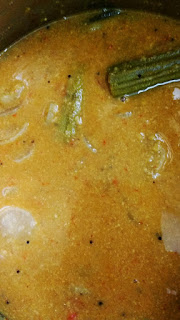
Ingredients (serves 3-4)
Tuwar dal (Tuwaram paruppu) : 75-100 g
Red Chilli : 6-7
Channa dal (Kadala parupu) : 1 tbsp
Dhaniya seeds (Kothamalli vedhai): 1 tsp
Solid Asafoetida(hing/perungaayam) : Tamarind seed size
(If solid asafoetida is not available, use powdered asafoetida.)
Fresh grated Coconut : 3 tbsp
Tamarind : Take some in hand, press and roll it, shld be small lemon size
Salt : 1.5 tsp (or) as per taste
Turmeric : pinch
Sambhar powder : 1/4 - 1/2 tsp
Tomato (optional) : 2 No.s
Curry leaves
Desired Vegetables : 1 cup chopped (like Radish, shallots, Capsicum, Brinjal, Potato, Pumpkin,Drumstick,etc.)
Mustard (Rai/kadugu) : 1/4th - 1/2 tsp
Green chillies : 2 No.s (optional)
Oil- 2-3 tbsp
Note1: You can adjust salt/sambhar powder/asafoetida/chillies according to your taste.
Note2: If you are taking mixed vegetables including pumpkin, then pls take yellow pumpkin. White pumpkin doesn't go well with other vegetables. So if you want to add white pumpkin, then add only that.
Procedure
1. Pressure cook tuwar dal, mash it and keep it aside.
2. Prepare 2 tumblers (1 tumbler=~ 200ml) of tamarind juice. (It will be easier to squeeze the juice out of tamarind if soaked in hot water for 5-10 min).
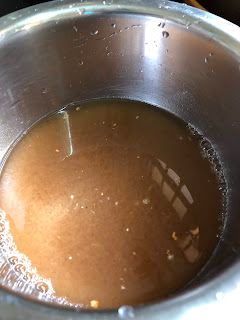
3. Take a cooking vessel (thick bottom) and pour tamarind juice and keep on low flame.
4. Add salt, turmeric, sambhar powder, pinch of asafoetida, chopped tomatoes, slit green chillies and desired vegetables and allow it to boil.
Note: If you are adding shallots, saute shallots and slit green chillies first with oil and then add tamarind juice and continue with step 4.
5. Now heat oil on a separate pan and add solid asafoetida first.
6. Then add red chillies, chana dal, dhaniya seeds and mix well and saute till golden brown.
7. Switch off the flame. Add fresh coconut and grind this mixture. (In hot regions, separately fry coconut for 5 sec and then add it to avoid spoiling of sambhar with time).
8. When tamarind juice boils and when vegetables are well cooked and soft, add little water to the mashed tuwar dal, mix well and add it to the boiling gravy. Allow it to boil for 3-4 min.
9. Then add the ground mixture after liquidizing it with little water.
10. Keep low flame. Add curry leaves and allow it to boil for 3-4 min.Then switch off the flame.
11. Heat oil in a separate pan for tadka. Put mustard and let it crackle. Switch off the flame and add it to the gravy.
Note: If you are using Fresh Sundakkai(turkey berry) for Sambhar, follow the procedure for sambhar without freshly ground masala. But the tuwar dal quantity should be little less and tamarind little more.
HOT SAMBHAR IS READY!!!!!!!!!!!!!!!!
Sambhar (simply with sambhar powder)
Sambhar is a famous and delicious South Indian gravy which is taken with rice or idli/dosa. It is frequently cooked in South Indian households. Sambhar is of two types: One made with freshly ground spices and another one simply made with sambhar powder. This is the plain variety sambhar. It tastes best with rice and idli/dosa.
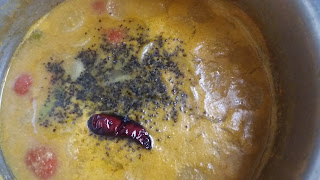
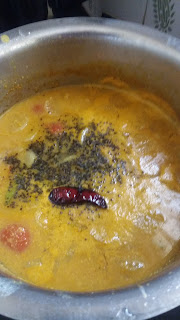 Ingredients (serves 3-4)
Tuwar dal (Tuwaram paruppu) : 75-100 g
Red Chilli :1-2
Solid/powdered Asafoetida : Tamarind seed size/ 1/4th tsp
Tamarind : Take some in hand, press and roll it, shld be small lemon size
Salt : 1.5 tsp (or) as per taste
Turmeric : pinch
Sambhar powder : 1.5 tsp
Tomato (optional) - 2 No.s
Curry leaves
Desired Vegetables - 1 cup (like Radish, shallots, Capsicum, Brinjal, Potato, Pumpkin,Drumstick,etc.)
Mustard (Rai/kadugu) - 1/4th - 1/2 tsp
Green chillies - 2 No.s (optional)
Oil- 2-3 tbsp
Note1: You can adjust salt/sambhar powder/asafoetida/chillies according to your taste.
Note2: If you are taking mixed vegetables including pumpkin, then pls take yellow pumpkin. White pumpkin doesn't go well with other vegetables. So if you want to add white pumpkin, then add only that.
Procedure
1. Pressure cook tuwar dal, mash it and keep it aside.
2. Prepare 2 tumblers (1 tumbler =~ 200ml) of tamarind juice. (It will be easier to squeeze the juice out of tamarind if soaked in hot water for 5-10 min).
3. Take a cooking vessel (thick bottom) and pour tamarind juice and keep on low flame.
4. Add salt, turmeric, sambhar powder, asafoetida, chopped tomatoes, slit green chillies and desired vegetables and allow it to boil.
Note: If you are adding shallots, saute shallots and slit green chillies first with oil and then add tamarind juice and continue with step 4.
5. When tamarind juice boils and when vegetables are well cooked and soft, add little water to the mashed tuwar dal, mix well and add it to the boiling gravy. Allow it to boil for 3-4 min.
6. Check the sambhar consistency, if you feel it should be thicker, take 1-2 tsp of rice flour/corn flour, mix it with 2-3 tsp cold water and add it to the boiling gravy. Stir well.
7. Keep low flame. Add curry leaves and allow it to boil for 3-4 min.Then switch off the flame.
8. Heat oil in a separate pan for tadka. Put mustard and let it crackle. Switch off the flame and add it to the gravy.
Note: If you are using Fresh Sundakkai(turkey berry) for Sambhar, follow the same procedure for sambhar without freshly ground masala. But the tuwar dal quantity should be little less and tamarind little more.
Paruppu Rasam
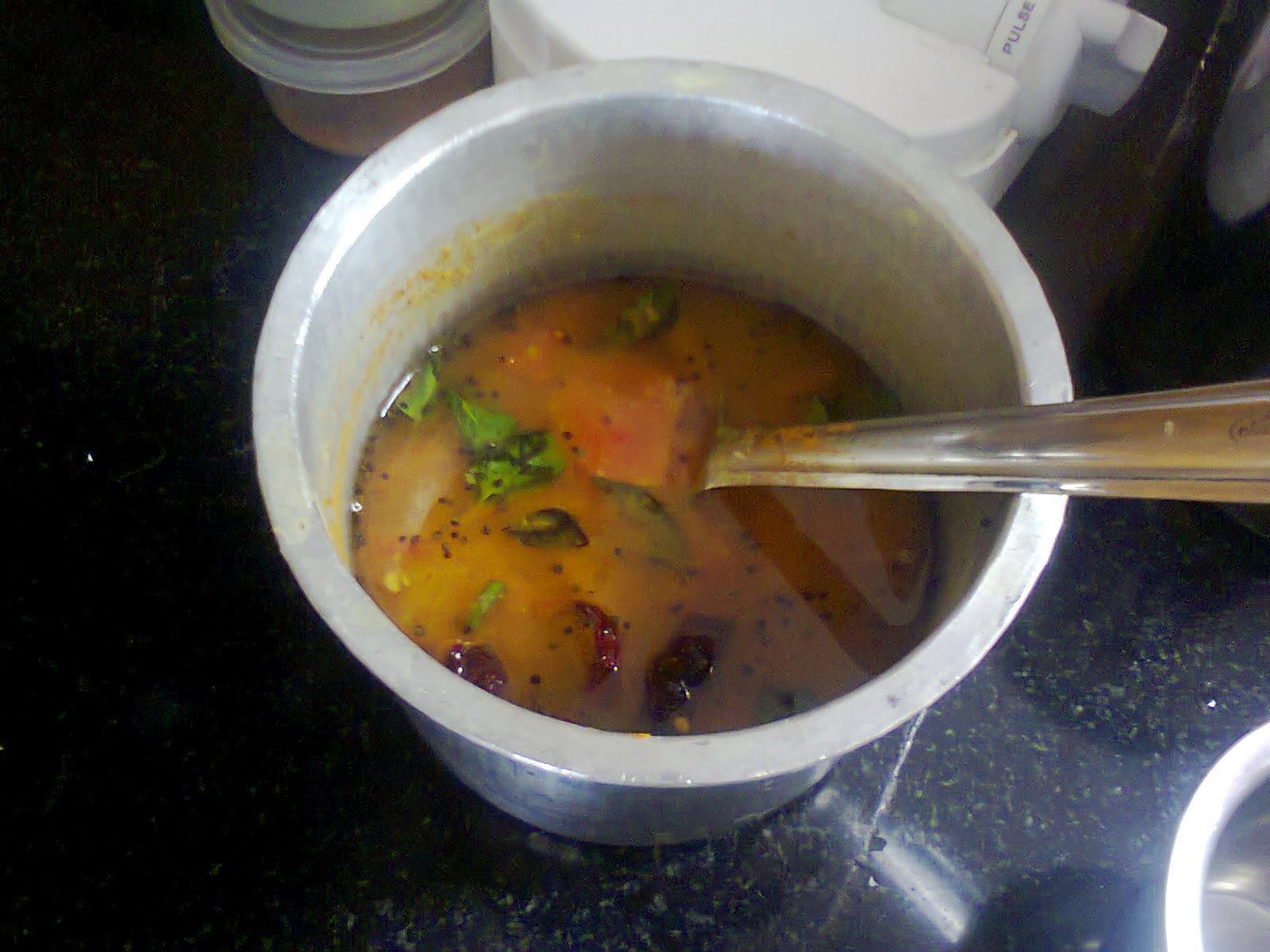
Rasam is a popular gravy in South Indian meals. People would have many optional items in their South Indian thali, but rasam is a must.
There are many types of Rasams, the most popular and known is Paruppu Rasam. Rasam is supposed to be mixed with rice and tastes best with fried papad/appalam.
 Note:
Note:
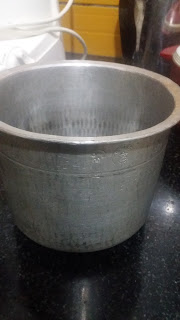
Rasam is prepared in 'eeya sombu' - the traditional vessel(made of tin & other metals. Eeya stands for metal and sombu for vessel) used since ages to make rasam. Making rasam in this vessel really enhances the taste. There are two types of eeyam - kar-eeyam, vell-eeyam. This vessel for rasam is vell-eeyam which is safe. Kar-eeyam is lead which is not used to make vessels for cooking. Many people have confusions regarding 'eeyam' and that it is poisonous. The age old traditional eeya sombu is 100% safe. The only thing is that it melts very easily, so never keep an empty eeya sombu on stove, it will melt. Make sure it has atleast half of its quantity loaded before switching on the flame and keep the flame on low to medium. Always keep an eye on the eeya sombhu, if you forget rasam is boiling and if it is kept so for a long time, the vessel will start to melt and lose its shape.
Ingredients (serves 3-4)
Tuwar Dal (Tuwaram paruppu) : small cup/50 g
Tamarind : hold raw tamarind in hand and roll it in ur palms. it should be small lemon size.
Rasam powder : 1.5 to 2 tsp
Salt : 1.5 tsp (or) as per taste
Asafoetida/Hing : pinch
Turmeric : pinch
Tomato : 2 No.s
Dhaniya and curry leaves
Desi ghee : 1 tsp
Mustard/Rai : 1/4th tsp
Procedure
1. Boil or pressure cook the tuwar dal. Mash it well and keep it aside.
2. Soak tamarind in hot water for 5-10 min so that it becomes easier to extract juice from it. By adding water prepare approximately 1.5 glass of tamarind juice.
3. Take a cooking vessel and pour the tamarind juice. Keep it on flame. Add chopped tomatoes. Heat on medium flame.
4. Add Rasam powder, salt, asafoetida,turmeric powder and bring the mixture to boiling.
5. Let it boil for 10-15 min.
6. Add 2 glasses (apprx) water to mashed dal and add it to the boiling mixture.
7. Boil for 2 min. Foam will be formed. Then switch off the flame.
8. Heat ghee in a small pan. Add mustard to it and let it crackle. Switch off the flame and add curry leaves to it and add this to the rasam.
9. Garnish with dhaniya leaves.
HOT PARUPPU RASAM IS READY!!!!!!
NOTE: For Paruppu rasam, you can add green chilli halved to the boiling rasam (after step 4). For this, you can reduce the rasam powder to 1 tsp.
Lemon Rasam
Rasam is a popular gravy in South Indian meals. People would have many optional items in their South Indian thali, but rasam is a must.
There are many types of Rasams, the most popular and known is Paruppu Rasam. But you should try Lemon Rasam, instead of tamarind, here lemons give the tangy taste. Rasam is supposed to be mixed with rice and tastes best with fried papad/appalam.
Note:
Rasam is prepared in 'eeya sombu' - the traditional vessel(made of tin & other metals. Eeya stands for metal and sombu for vessel) used since ages to make rasam. Making rasam in this vessel really enhances the taste. There are two types of eeyam - kar-eeyam, vell-eeyam. This vessel for rasam is vell-eeyam which is safe. Kar-eeyam is lead which is not used to make vessels for cooking. Many people have confusions regarding 'eeyam' and that it is poisonous. The age old traditional eeya sombu is 100% safe. The only thing is that it melts very easily, so never keep an empty eeya sombu on stove, it will melt. Make sure it has atleast half of its quantity loaded before switching on the flame and keep the flame on low to medium. Always keep an eye on the eeya sombhu, if you forget rasam is boiling and if it is kept so for a long time, the vessel will start to melt and lose its shape.
Ingredients (serves 3-4)
Tuwar Dal (Tuwaram paruppu) : small cup/50 g
Lemon : 2
Rasam powder : 1.5 to 2 tsp
Salt : 1.5 tsp (or) as per taste
Asafoetida/Hing : pinch
Turmeric : pinch
Tomato : 2 No.s
Dhaniya and curry leaves
Desi ghee : 1 tsp
Mustard/Rai : 1/4th tsp
Fresh coriander leaves : for garnish
Procedure
1. Boil or pressure cook the tuwar dal. Mash it well and keep it aside.
2. Take a cooking vessel and pour 1.5 tumblers of water (1 tumbler =~ 200ml). Keep it on medium flame. Add chopped tomatoes.
3. Add Rasam powder, salt, asafoetida,turmeric powder and bring the mixture to boiling.
4. Let it boil for 10-15 min.
5. Add 2 tumblers (apprx) water to mashed dal and add it to the boiling mixture.
6. Boil for 2 min. Foam will be formed. Then switch off the flame.
7. Squeeze two lemons into it.
8. Heat ghee in a small pan. For tempering/tadka add mustard seeds to it and let it crackle. Switch off the flame and add curry leaves to it and add this to the rasam.
9. Garnish with dhaniya leaves.
NOTE: For lemon rasam, you can add green chilli halved to the boiling rasam (after step 3). For this, you can reduce the rasam powder to 1 tsp.
Special Lemon Rasam
Rasam is a popular gravy in South Indian meals. People would have many optional items in their South Indian thali, but rasam is a must.
There are many types of Rasams, the most popular and known is Paruppu Rasam. But try making this Special Lemon Rasam, here lemons give the tangy taste instead of tamarind and the addition of ground spices gives a special aroma. Rasam is supposed to be mixed with rice and tastes best with fried papad/appalam.
Note:
Rasam is prepared in 'eeya sombu' - the traditional vessel(made of tin & other metals. Eeya stands for metal and sombu for vessel) used since ages to make rasam. Making rasam in this vessel really enhances the taste. There are two types of eeyam - kar-eeyam, vell-eeyam. This vessel for rasam is vell-eeyam which is safe. Kar-eeyam is lead which is not used to make vessels for cooking. Many people have confusions regarding 'eeyam' and that it is poisonous. The age old traditional eeya sombu is 100% safe. The only thing is that it melts very easily, so never keep an empty eeya sombu on stove, it will melt. Make sure it has atleast half of its quantity loaded before switching on the flame and keep the flame on low to medium. Always keep an eye on the eeya sombhu, if you forget rasam is boiling and if it is kept so for a long time, the vessel will start to melt and lose its shape.
Ingredients (serves 3-4)
Tuwar Dal (Tuwaram paruppu) : small cup/50 g
Lemon : 2
Rasam powder : 1.5 to 2 tsp
Salt : 1.5 tsp (or) as per taste
Asafoetida/Hing : pinch
Turmeric : pinch
Tomato : 2 No.s
Dhaniya and curry leaves
Desi ghee : 1 tsp
Mustard/Rai : 1/4th tsp
Fresh coriander leaves : for garnish
Spices for final Garnish:
Dhaniya seeds: 1/4th tsp
Tuwar dal : 1/4th tsp
Jeera : 1/4th tsp
Black pepper : 1/4th tsp
Procedure
1. Boil or pressure cook the tuwar dal. Mash it well and keep it aside.
2. Take a cooking vessel and pour 1.5 tumblers of water (1 tumbler =~ 200ml). Keep it on medium flame. Add chopped tomatoes.
3. Add Rasam powder, salt, asafoetida,turmeric powder and bring the mixture to boiling.
4. Let it boil for 10-15 min.
5. Add 2 tumblers (apprx) water to mashed dal and add it to the boiling mixture.
6. Boil for 2 min. Foam will be formed. Then switch off the flame.
7. Squeeze two lemons into it.
8. Heat ghee in a small pan. For tempering/tadka add mustard seeds to it and let it crackle. Switch off the flame and add curry leaves to it and add this to the rasam.
9. Garnish with dhaniya leaves.
10. Take Dhaniya seeds, tuwar dal, jeera, black pepper and roast all without oil/ghee in a pan. Then grind it coarsely and sprinkle over rasam after garnishing.
Molagu Rasam (pepper rasam)
Rasam is a popular gravy in South Indian meals. People would have many optional items in their South Indian thali, but rasam is a must.
There are many types of Rasams, the most popular and known is Paruppu Rasam. Try Pepper Rasam, when someone falls sick, he/she loses interest to eat, that time Pepper Rasam is the best for him/her. Rasam is supposed to be mixed with rice and tastes best with fried papad/appalam.
Ingredients (serves 3-4)
Tamarind : Small lemon size
Tuwar dal (Tuwaram paruppu) : 1 tsp
Pepper (molagu) : 1/2 tsp
Jeera : 1/2 tsp
Red chilli : 1 small
Dhaniya seeds : 1/4 tsp
Salt : 1.5 tsp (or) as per taste
Turmeric powder : pinch
Asafoetida/hing : pinch
Tomato : 2 medium size
Dhaniya & curry leaves for garnish
Procedure :
1. Soak tamarind for 10-15 min in hot water. Prepare tamarind juice for about 1.5 glass.
2. Add the juice and chopped tomato in a vessel and heat it on medium flame.
3. Add turmeric, asafoetida, salt and allow the mixture to boil for 10-15 min.
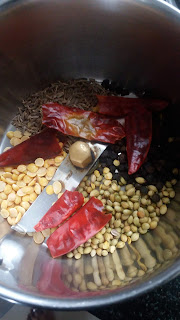
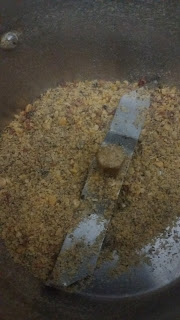
4. Meanwhile, grind tuwar, pepper, jeera, red chilli and dhaniya seeds together coarsely. (no need to add water)
5. Now after rasam has boiled for 10-15 min, add the ground mixture to the boiling rasam. Let it boil for 3 min.
6. Now add 1 to 1.5 glass water to it. Allow it to boil. Foam will be formed.
7. Remove the vessel from the flame and heat a small pan with ghee.
8. Add mustard/rai to it. When it crackles, switch off the flame and add it to the rasam.
9. Garnish it with dhaniya and curry leaves.
Pepper Rasam is Ready!!!!!!!!!!!!!
Kottu Rasam
Rasam is a popular gravy in South Indian meals. People would have many optional items in their South Indian thali, but rasam is a must.
There are many types of Rasams, the most popular and known is Paruppu Rasam. Kottu Rasam is a yummy variety without boiled tuwar dal as ingredient. Rasam is supposed to be mixed with rice and tastes best with fried papad/appalam.
Note:
Rasam is prepared in 'eeya sombu' - the traditional vessel(made of tin & other metals. Eeya stands for metal and sombu for vessel) used since ages to make rasam. Making rasam in this vessel really enhances the taste. There are two types of eeyam - kar-eeyam, vell-eeyam. This vessel for rasam is vell-eeyam which is safe. Kar-eeyam is lead which is not used to make vessels for cooking. Many people have confusions regarding 'eeyam' and that it is poisonous. The age old traditional eeya sombu is 100% safe. The only thing is that it melts very easily, so never keep an empty eeya sombu on stove, it will melt. Make sure it has atleast half of its quantity loaded before switching on the flame and keep the flame on low to medium. Always keep an eye on the eeya sombhu, if you forget rasam is boiling and if it is kept so for a long time, the vessel will start to melt and lose its shape.
Ingeredients:(serves 3-4)
Tamarind : Big amla size
Red chilli : 1
Tuwar dal (Tuwaram paruppu) : 1 tsp
Pepper (Molagu) : 1/4 tsp
Jeera : 1/4 to 1/2 tsp
Ghee : 1 tsp
Oil : 1/2 tsp
solid Asafoetida/powdered asafoetida : small piece/pinch
Tomato : 2
Mustard/Rai : 1/4 tsp
Salt : 1 1/4 tsp (or) as per taste
Turmeric : pinch
Dhaniya and curry leaves
Procedure:
1. Prepare 1.5 glass tamarind juice.
2. Add chopped tomato to it and keep it aside for now.
3. Add ghee in a small pan, add oil to it.
4. Add broken red chilli, mustard, let mustard crackle. Then add tuwar dal, pepper. Let its colour change.
5. Add Jeera and immediately switch off the flame.
6. Add it to the tamarind juice.
7. Now place the juice vessel on flame. Add salt, tumeric and asafoetida.
8. Bring it to boil (till quantity reduces to half its initial quantity).
9. Now add 2 to 2 1/2 glass water to it.
10. When foam forms, switch off the flame.
11. Garnish with dhaniya and curry leaves.
Kottu Rasam is Ready!!!!!!!!!!!!!!!!!!!
Jeera Rasam
Rasam is a popular gravy in South Indian meals. People would have many optional items in their South Indian thali, but rasam is a must.
There are many types of Rasams, the most popular and known is Paruppu Rasam. Jeera Rasam has a distinct aroma and is my daughters' favourite. Rasam is supposed to be mixed with rice and tastes best with fried papad/appalam.
Ingredients:(serves 3-4)
Tuwar dal (Tuwaram paruppu) : 1 tsp
Dhaniya seeds : 1/4 tsp
Jeera : 3/4 tsp
Red chilli : 1 medium
Tamarind : small lemon size
Salt : 1 1/4 tsp (or) as per taste
Turmeric : pinch
Tomato : 3 medium sized
Mustard/Rai : less than 1/4 tsp
Dhaniya and curry leaves for garnish
Procedure :
1. Soak tuwar dal, dhaniya seesds, red chilli and jeera in water for 45 min.
2. Prepare 1.5 glass (apprx) tamarind juice and pour it in a vessel.
3. Add chopped tomato and heat it on medium flame.
4. Add salt and turmeric powder.
5. Allow it to boil for 10-15 min ( so that quantity becomes half and that rawflavour of tamaring goes off.)
6. Now grind the soaked ingredients such that they are neither too fine nor too coarse (can add little water while grinding).
Note: For more flavour, you can add 2 garlic pulps while grinding.
7. Add the ground mixture to the boiling rasam and let it boil for 3-4 min with often stirring.
8. Now add 2 glasses (apprx) of water and stir well.
9. Foam will be formed, reduce the flame to minimum and keep stirring.
10. After 3-4 min, switch off the flame.
11. Now take a pan, add ghee and heat it.
12. Add mustard/rai and let it cracke. Switch off and add it to rasam.
13. Garnish with dhaniya and curry leaves.
Hot Jeera rasam is Ready!!!!!!!!!!!!!!!!!!
Mysore Rasam
Rasam is a popular gravy in South Indian meals. People would have many optional items in their South Indian thali, but rasam is a must.
There are many types of Rasams, the most popular and known is Paruppu Rasam. Try Mysore Rasam, wherein instead of rasam powder fresh spice powder is prepared and added. Rasam is supposed to be mixed with rice and tastes best with fried papad/appalam.
Note:
Rasam is prepared in 'eeya sombu' - the traditional vessel(made of tin & other metals. Eeya stands for metal and sombu for vessel) used since ages to make rasam. Making rasam in this vessel really enhances the taste. There are two types of eeyam - kar-eeyam, vell-eeyam. This vessel for rasam is vell-eeyam which is safe. Kar-eeyam is lead which is not used to make vessels for cooking. Many people have confusions regarding 'eeyam' and that it is poisonous. The age old traditional eeya sombu is 100% safe. The only thing is that it melts very easily, so never keep an empty eeya sombu on stove, it will melt. Make sure it has atleast half of its quantity loaded before switching on the flame and keep the flame on low to medium. Always keep an eye on the eeya sombhu, if you forget rasam is boiling and if it is kept so for a long time, the vessel will start to melt and lose its shape.
Ingredients (serves 3-4)
Tuwar dal (Tuwaram paruppu) : 50 g (or) one small cup
Tamarind : small lemon size
Salt : 1.5 tsp (or) as per taste
Asafoetida : pinch
Turmeric powder : pinch
Tomato : 2-3 medium
For powder :
Tuwar dal : 1 1/4 tsp
Pepper : 1/2 to 3/4 tsp
Red chilli : 2-3
Dhaniya seeds : 1/2 tsp
Jeera : 1/2 tsp
Procedure:
1. Fry pepper,tuwar dal, red chilli and dhaniya seeds in refined/groundnut oil (1 tsp) in a pan till golden brown. Switch off flame and keep it aside.
2. Pressure cook tuwar dal, mash it and keep it aside.
3. Take 1.5 to 2 glass of tamarind juice in a vessel. Add chopped tomato and heat it on medium flame.
4. Add salt, asafoetida and turmeric and boil for 10-15 min.
5. Grind jeera and the fried ingredients dry, neither too fine nor too coarse.
6. When rasam has boiled for 10-15 min, add the ground mixture and boil for 2-3 min.
7. Now add 1 to 1.5 glass water (apprx) to already cooked tuwar dal, mix well and add it to the mixture.
8. Allow it to boil for 2 min. Foam will be formed. Switch off flame.
9. Heat ghee in a small pan and add mustard/rai, let it crackle. Add it to rasam.
10. Garnish with dhaniya and curry leaves.
Hot Mysore rasam is Ready!!!!!!!!!!!!!!!
Mysore Lemon Rasam
Rasam is a popular gravy in South Indian meals. People would have many optional items in their South Indian thali, but rasam is a must.
There are many types of Rasams, the most popular and known is Paruppu Rasam. Try Mysore Lemon Rasam, wherein instead of rasam powder fresh spice powder is prepared and added; and lemons are used for the sour flavour instead of tamarind. Rasam is supposed to be mixed with rice and tastes best with fried papad/appalam.
Note:
Rasam is prepared in 'eeya sombu' - the traditional vessel(made of tin & other metals. Eeya stands for metal and sombu for vessel) used since ages to make rasam. Making rasam in this vessel really enhances the taste. There are two types of eeyam - kar-eeyam, vell-eeyam. This vessel for rasam is vell-eeyam which is safe. Kar-eeyam is lead which is not used to make vessels for cooking. Many people have confusions regarding 'eeyam' and that it is poisonous. The age old traditional eeya sombu is 100% safe. The only thing is that it melts very easily, so never keep an empty eeya sombu on stove, it will melt. Make sure it has atleast half of its quantity loaded before switching on the flame and keep the flame on low to medium. Always keep an eye on the eeya sombhu, if you forget rasam is boiling and if it is kept so for a long time, the vessel will start to melt and lose its shape.
Same as Mysore rasam. Instead of tamarind juice, take plain water. In the end, before step 9, squeeze 2 lemons into the rasam.
Pineapple Rasam
Rasam is a popular gravy in South Indian meals. People would have many optional items in their South Indian thali, but rasam is a must.
There are many types of Rasams, the most popular and known is Paruppu Rasam. But have you heard of pineapple rasam? There was a famous spiritual Guru named 'Kripananda Variyar' and seems he used to talk about pineapple rasam when it came to food. Try pineapple rasam, its different and yummy! Rasam is supposed to be mixed with rice and tastes best with fried papad/appalam.
Note:
Rasam is prepared in 'eeya sombu' - the traditional vessel(made of tin & other metals. Eeya stands for metal and sombu for vessel) used since ages to make rasam. Making rasam in this vessel really enhances the taste. There are two types of eeyam - kar-eeyam, vell-eeyam. This vessel for rasam is vell-eeyam which is safe. Kar-eeyam is lead which is not used to make vessels for cooking. Many people have confusions regarding 'eeyam' and that it is poisonous. The age old traditional eeya sombu is 100% safe. The only thing is that it melts very easily, so never keep an empty eeya sombu on stove, it will melt. Make sure it has atleast half of its quantity loaded before switching on the flame and keep the flame on low to medium. Always keep an eye on the eeya sombhu, if you forget rasam is boiling and if it is kept so for a long time, the vessel will start to melt and lose its shape.
Ingredients (serves 3-4)
Tuwar Dal (Tuwaram paruppu) : small cup/50 g
Pineapple : 1 cup finely chopped (if you do not want to add it as pieces, extract the juice from it)
Rasam powder : 1.5 to 2 tsp
Salt : 1.5 tsp (or) as per taste
Asafoetida/Hing : pinch
Turmeric : pinch
Tomato : 2 No.s
Dhaniya and curry leaves
Desi ghee : 1 tsp
Mustard/Rai : 1/4th tsp
Fresh coriander leaves : for garnish
Procedure
1. Boil or pressure cook the tuwar dal. Mash it well and keep it aside.
2. Take a cooking vessel and pour 1.5 tumblers of water (1 tumbler =~ 200ml). Keep it on medium flame. Add chopped tomatoes.
3. Add Rasam powder, salt, asafoetida,turmeric powder and bring the mixture to boiling.
4. Let it boil for 10-15 min.
5. Add 2 tumblers (apprx) water to mashed dal and add it to the boiling mixture.
6. Boil for 2 min. Foam will be formed. Then switch off the flame.
7. Add the pineapple juice into it and mix well. (if you like, you can also add it as pieces instead of juice)
8. Heat ghee in a small pan. For tempering/tadka add mustard seeds to it and let it crackle. Switch off the flame and add curry leaves to it and add this to the rasam.
9. Garnish with dhaniya leaves.
Vatha Kuzhambu
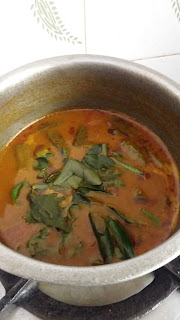
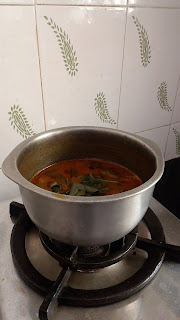
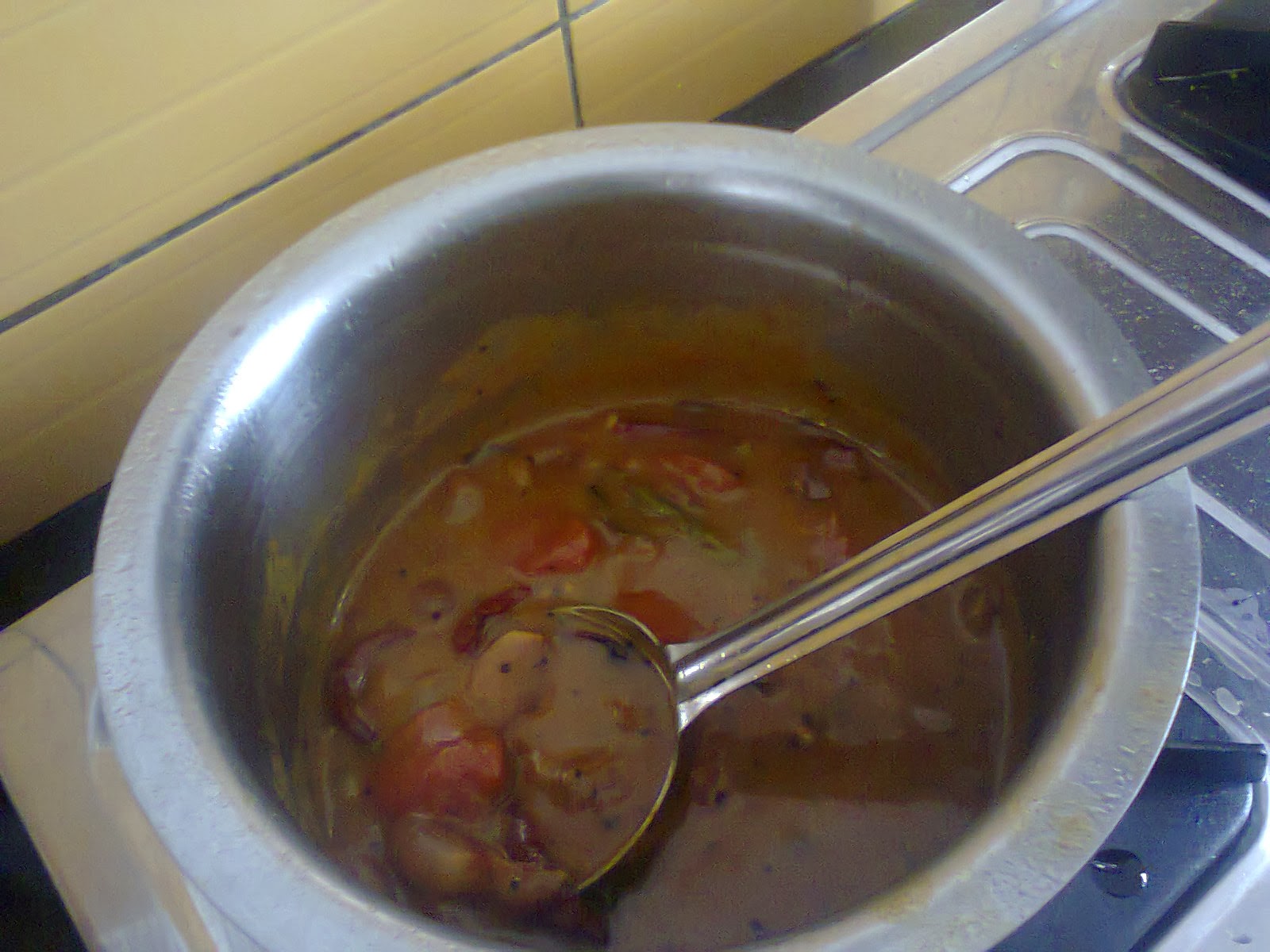
Vatha Kuzhambu is a very tasty gravy. It is a kind of thick spicy tamarind gravy with added vegetables. The name Vatha Kuzhambu is a popular dish in Brahmin households, whereas the same is generally known as Kara Kuzhambu.
Ingredients (serves 3-4)
Tamarind : Hold some tamarind in hand and roll it between palms. Should be of big lemon size
Red chilli : 3 No.s
Mustard/Rai (Kadugu) : 1/2 tsp
Turmeric : 1/4th tsp
Salt : 2 tsp (or) as per taste
Sambhar powder : 2 tsp
Asafoetida solid : Tamarind seed size
(If solid asafoetida is not available, use powdered asafoetida.)
Oil ( Refined/Groundnut) : 2-3 tbsp
Note: Gingley Oil will taste the best for Vatha Kuzhambu
Tomato : 2 No.s
Curry leaves : few
Vegetables : selected vegetables like shalots, yellow pumpkin, brinjal, drumstick, etc. 1 small cup
Procedure:
1. Prepare 3 tumbler/glass of tamarind juice by adding water to tamarind and squeezing it. (Note that it becomes easier to extract juice after soaking tamarind in hot water for 10-15 min).
2. Take oil in a vessel (with heavy/thick bottom) and add red chilli halved.
3. Then add mustard/rai, allow it to crackle. Then add curry leaves.
4. Add chopped vegetables and saute for a minute.
5. Now pour tamarind juice to it.
6. Add chopped tomato (this is optional).
7. Add salt, turmeric, asafoetida and sambhar powder.
8. Bring it to boil till quantity reduces to 3/4th of initial quantity.
(if you feel that the gravy needs to be more thick or concentrated, take a small cup, add 2-3 tsp of rice flour, mix it with little water and add it to the boiling mixture.)
VATHA KUZHAMBU IS READY!!!!!!!!!!!!!!!!!
More Kuzhambu
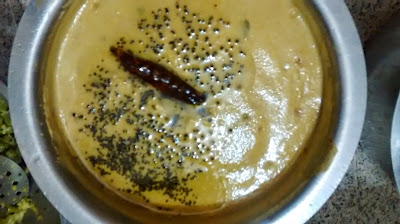
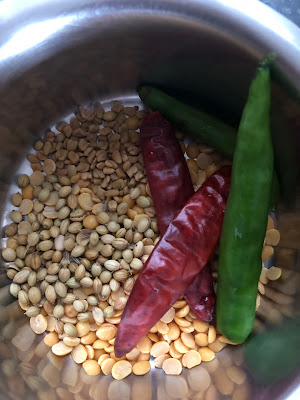
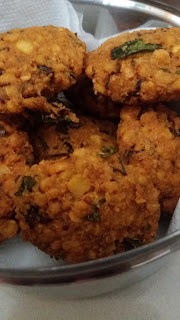
Paruppu Vada is easy to make than Medhu Vada. Paruppu Vada is made of chana dal whereas Medhu Vada is made of Urad dal. Medhu Vada is the 'Vada with a hole'. Many feel the process to make that Vada with hole is bit tricky and doesn't turn out well for some. Well it is all practice! Paruppu Vada is easy to make and equally tasty. Let's see its recipe.
Ingredients:
Coconut chutney:
Katrika Gothsu
Heat
2 tsp oil in a pan, add 1/2 tsp mustrad seeds,2 red chillies, 1/2 inch ginger
and 2-3 green chillies, some curry leaves and saute for 1 min.
Add 2 medium chopped tomatoes (the sour ones) and saute for 5 min or till its skin wrinkles.
Then add chopped brinjals (5-6)and saute till it gets half cooked.
Add 1.5 tumbler tamarind juice (less concentrated), add 1/4 tsp asafoetida, 1/4tsp turmeric, salt and 1/2 tsp sambhar powder and let it boil for 5-7 minutes. Serve hot with Rice upma or anything you like it with.
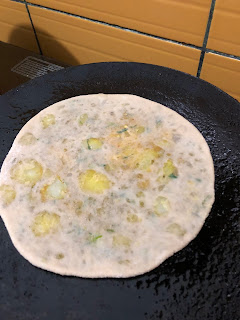
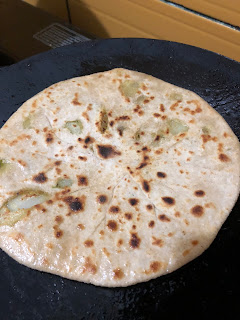
Step 2 (put enough flour on top of a dumpling)
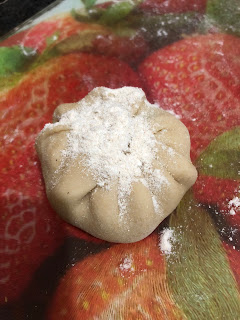
Step 3 (turn it and apply some flour)
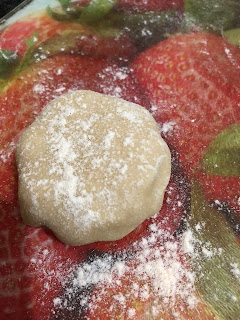
Step 4 (roll it and cook on tawa)
Ingredients :
Rice - 2 cups
tuwar dal : 1/2 cup
Chana dal : 1/4 cup
Urad dal : 1/8 cup
Salt : 1.5 tsp or as per taste
Asafoetida :1/8 tsp
coriander leaves : 1/2 cup chopped
curry leaves : few (7-8)
grated coconut (or) onion : 1/2 cup
Red Chilli : 3 to 4
Method:
Soak rice, tuwar dal, chana dal,urad dal in water for 2 hours. Soak the rice in a separate container.
Drain water. Add above ingredients in a big mixi jar, add salt, asafoetida, red chillies and grind it by adding little water till it turns into a coarse batter. Note that the batter should not be too smooth and too coarse.
Transfer it into a vessel and add chopped curry and coriander leaves.
Add the grated coconut or chopped onions.
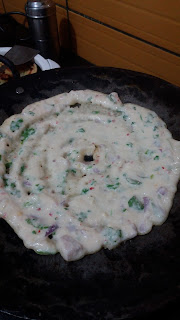
Heat the tawa, add little oil. When hot, pour one ladle of batter and spread it even and round like dosa. Make a hole in the center (else it might not cokk properly in the middle portion).
Pour 1/2 tsp oil in and around the batter.
After 1-2 min, with a spatula turn the Adai to cook the other side and add oil again.
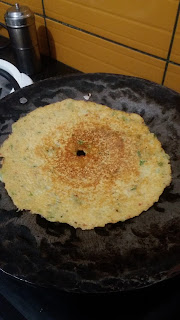
When both sides of Adai turn golden brown, take it out from pan. Serve hot.
Karacha Dosa
Ingredients
Wheat flour (atta) : 1/2 cup
Maida : 1/2 cup
Rava : 1/2 cup
Rice flour (arisi maavu) : 1/2 cup
Thin & sour buttermilk : 1/2 cup
Salt : 1/2 tsp or according to your taste
Jeera : 1 tsp
Oil : 1-2 tbsp
Mustard : 1/2 tsp
Urad dal : 1 tsp
Ginger : 1/2 inch finely chopped
Green chillies : 2 finely chopped
Curry leaves : 10-15 leaves
Note : you can reduce the quantity/proportion of wheat flour and maida as per your taste. But on the whole, Rava and rice flour should be in equal quantity and both(rava+rice flour) should be more in quantity compared to wheat flour and maida.
Also, you can add chopped onions to the batter if you like.
Method:
1. Mix wheat flour, maida, rava, rice flour, buttermilk into 2-3 cups of water and prepare a dosa batter which has loose consistency. (It should be much more loose than the normal dosa batter. Adjust water accordingly). Add salt and mix well. Keep this batter aside for 10-15 min.
2. Now we need to add tadka to the batter. Heat oil in a tadka pan, once hot, add mustard seeds and llow it to crackle. Then add Urad dal, ginger, green chillies and curry leaves. Once the dal turn golden brown, turn off the flame and add the tadka to the batter. Mix well.
If you like, you can add chopped onions to the batter too.
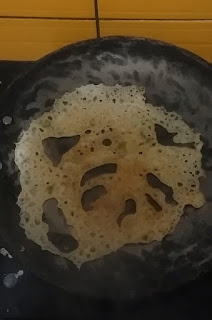
3. Now you make dosa with this batter. But you have to follow a different method. Normally for dosa, we pour one ladle of batter in the center and we move the ladle spirally to spread it over the hot tawa. But for Karacha Dosa, we need to pour the batter first forming the outward circle and then move the ladle inwards to the center. Also since the batter is very loose, the dosa will have lot of holes. So dont try to fill them. This dosa should be like that only which will help the batter to get cooked properly and evenly. Pour 1/2 tsp oil around the dosa. Let it cook till it can be easily removed with a spatula. Flip it and cook it on the other side also. Pour 1/2 tsp or less oil around the dosa. Remove the dosa from the tawa once it is golden brown on both sides.
Green Moong Dosa
Rice:
Tamarind Rice
Heat 1-2 tsp gingley oil in a pan. Add 4-5 red chillies, 1.5 tbsp of Urad dal, chana dal,dhaniya
seeds, 1 tsp fenugreek seeds and roast it till the dal turns golden brown.
Allow it to cool and then grind it into coarse powder.
Now take 8-9 tbsp of gingley oil in a pan. Add 1 tsp of mustard seeds, chana dal, urad dal, 18-20 red chillies (broken in small pieces) , curry leaves, 1/2 cup groundnuts (or dry kabuli chana) and saute for 1-2 min.
Add 3 tumblers of thick concentrated tamarind juice, add1 tsp turmeric, 1 big piece of asafoetida (one small gooseberry size), salt, let it bol till it reduces to 1/4th of its quantity.
Add the roasted and ground powder, some curry leaves again, mix well for a minute or two and switch off the flame.
When it cools down transfer it into a pickle bottle and you can store it for aout 2 months when stored in refrigerator and that too when it has enough oil floating on the top of the bottle.
To prepare the tamarind rice:
Just mix little amount of the prepared gravy (2-3 tsp) with cooked rice(2 cups or as you like it), taste and adjust salt if required. Done :)
Tomato Rice
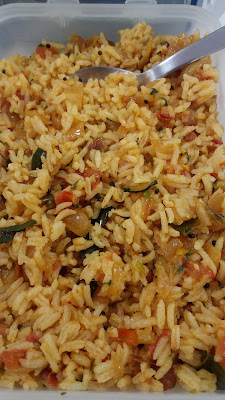
Ingredients:
onion - 2 medium
tomato : 2 medium
green chillies : 2-3
red chilly : 1
sambhar powder : 1 tsp
rai : half tsp
urad dal : 1 tsp
chana dal (kadala paruppu) : 1 tsp
curry leaves: few
ginger (finely chopped) : half tsp
salt to taste
oil : 2 tbsp
Ghee : 1 tsp
Method:
1. Chop the onions and tomatoes. Do not chop too finely or too roughly.
2. Heat oil in a pan, add mustard seeds and let it crackle. Then add broken red chilly, urad dal, chana dal, curry leaves, chopped green chillies and ginger. Saute for few seconds or till dal starts turning golden brown.
3. Add the chopped onions and saute for 2 min. Then add the chopped tomatoes, turmeric, salt and mix well.
4. Sprinkle little water and close the pan with lid, keep low to medium flame. Check and open lid every 2-3 min, mix well (sprinkle little water if required to avoid burning) and again close it. Repeat this till the onions and tomatoes seem mashed and soft.
5. Open the lid, add sambhar powder, mix well and saute for 2-3 minutes. (do not close the pan with lid anymore)
6. Switch off. Add little ghee to it and mix 1 cup of cooked rice (adjust rice quantity as per your taste).
Palak Rice
Its very simple and easy, but still yummy and healthy. :)
Method:
Clean spinach properly (add stem only if its very tender, else pluck only the leaves) and add it in boiling water..immediately switch off flame and close the vessel with lid for 5-7 min. Drain excess water and grind the spinach into smooth paste. (If you are running short of time, you can simply chop the leaves finely and use it in the remaining steps.)
Heat 2-3 tbsp oil in a pan, 1 bay leaf, add 4-5 chopped garlic, 2-3 green chillies chopped. Then add 3/4th cup chopped onions. Saute till the onions turn translucent.
Add 1/2 cup chopped tomato. Saute for 5 min.
Add palak, 1/2 tsp garam masala, 1/4 tsp jeera powder, salt, 1/4 tsp turmeric. Saute for 5-8 min. (or till palak gets cooked if you are using chopped palak.)
Add cooked rice , mix well. Serve hot.
Veg Biryani
When you get bored of your routine food, you do feel like eating a biryani right? Let's make a delicious biryani. Biryani does need a good amount of ginger garlic, and yes good basmati rice!
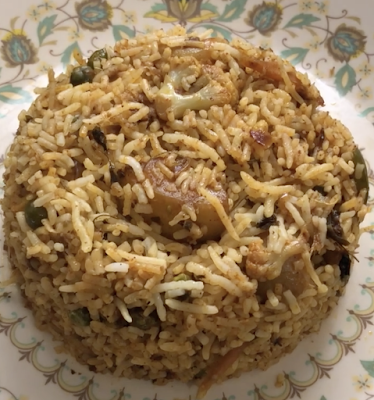
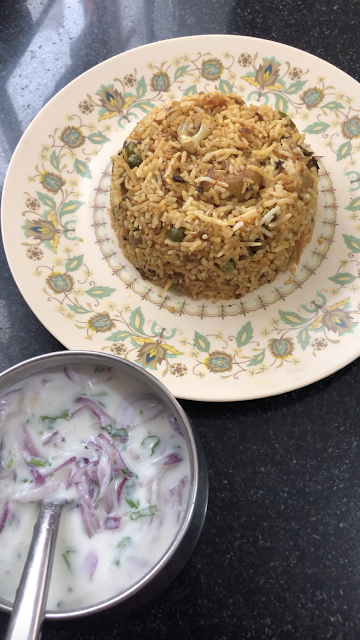
Ingredients : (serves 2-3)
Basmati Rice : 1 cup
Cauliflower : 1 cup
Carrot : 1 big
Beans : 7-8
Green Peas : 1/2 cup
Capsicum : 1 small or half of a big one
Potato : 1 medium
Onion : 1 medium
Ghee : 2 tsp
Bay leaf : 2
Cinnamon : 1 inch
Clove : 3-4
Black Pepper : 5-6
Saunf / Fennel seeds : 1/2 tsp
Oil : 3-4 tbsp
Ginger : 1 inch
Garlic : 9-10
Turmeric : 1/4 tsp
Red chilli powder : 1 to 1.5 tsp
Garam Masala :1 to 1.5 tsp
Dhaniya powder : 1 to 1.5 tsp
Kasoori methi : 1/4 tsp
Sugar : 1/2 tsp
Salt
Pudina leaves : 2-3 (optional)
Fresh Methi leaves : 4-5 (optional)
Milk: 1/4th cup (optional)
Method :
1. Soak the Basmati rice in water for minimum 30 min.
2. Drain the excess water from the soaked rice. Take a pan (thick bottom) , add ghee, add Bay leaf, cinnamon, cloves, black pepper, fennel seeds and saute for 30 to 60 sec. Add the soaked basmati rice and saute for 1 min.
3. Turn of the flame, transfer the rice into a another vessel. Add 1 + 3/4 cup of water, and 1/4 cup milk into the rice. Add 1/4 tsp salt and cook it in an electric cooker. (If you do not have an electric cooker, take a big kadhai, add 2-3 cup water into it, place a small stand in it(or any utensil which can give little height to the rice vessel), keep the rice vessel over it and close the kadhai with a lid.) Cook till the rice is long & well cooked, and if you put any spoon or knife into the rice, it should come out clean.
4. Take 3-4 tbsp oil in pan, add chopped onion, ginger, garlic and saute till onions turn translucent. Add the chopped vegetables, capsicum and green peas. Add turmeric, salt, red chilli powder, dhaniya powder and saute well on medium flame for 5 min. (Before adding salt, do remember that you have already added some salt into the rice and vegetables.)
Note: To reduce cooking time, you can also add chopped carrot, beans, cauliflower, potato in a vessel, add water which is just enough to immerse the vegetables, add pinch of salt and allow it to boil for 10-15 min. (or you can also use microwave oven to cook the vegetables). And then add the cooked vegetables in this step.
5. Add garam masala, kasoori methi, sugar, mix well and saute till all the vegetables including capsicum and peas are cooked 80 percent. (Pls do not overcook, else the vegetables will tend to mash easily and that will not help for a good biryani.) If you like, you can also add pudina and methi leaves by roughly tearing it into small pieces, it gives a fresh distinct flavour to your biryani. (Note: if you are adding fresh methi leaves, make sure you add less or no kasuri methi)
6. Check if the rice is cooked. Most of the whole spices would be on top of the rice. Remove as much as possible with your hand. Keep the flame in sim mode and start mixing rice into the vegetable pan. Cook it for 1-2 min with closed lid so that all the flavours blend together, then turn off the flame.
7. Serve with onion raita.
Note : You can also add mushrooms. But before step4, saute the mushrooms well in ghee/oil in a very hot pan till they stop oozing water and the water evaporates.Keep it aside and add the mushrooms along with other vegetables.
For paneer, before step4, chop the paneer into small cubes, slightly fry them in ghee till golden in colour. Add it in step6, before adding rice.
Coconut Milk Pulao
Vegetable pulao is aromatic basmati rice cooked with few vegetables like carrot,beans and few spices. But when made with coconut milk, it really adds to the flavour and it tastes very rich. It is easy to make and kids will like it.
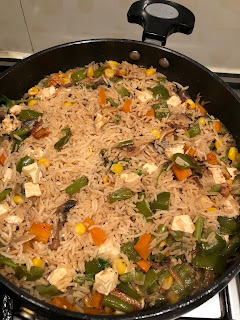
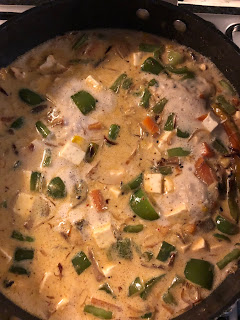
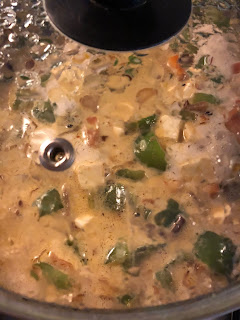
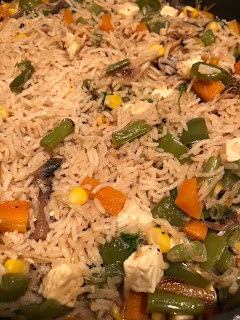
Ingredients : (serves 2-3)
Basmati Rice : 1 cup
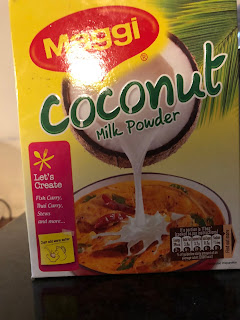
Fresh coconut milk (medium to thick consistency) : 2 cups. (or) mix coconut milk powder in 2 cups water forming medium to thick consistency
Carrot : 1
Beans : 5-6
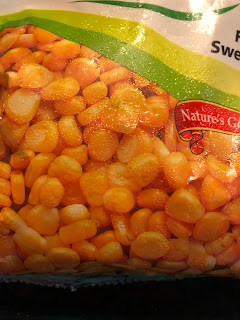
Corn kernels : 1/4th cup
Capsicum : 1 small
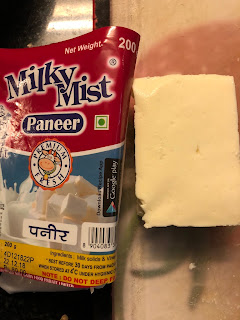
Fresh paneer small cubes: 75g
Onion : 1
Garlic : 4-5
Green Chilly : 1
Crushed Black Pepper : 2 tsp
Garam Masala : 0.5 tsp
Dhaniya powder : 0.5 tsp
Fresh Ghee : 1-2 tsp
Oil : 3 tbsp
Salt
Method :
1. Soak the Basmati rice in water for 45 min.
2. Heat oil and ghee in a pan, add chopped onions, chopped garlic and slit green chilly.
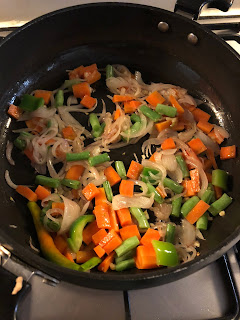
3. Once onions turn translucent, add chopped carrot, beans, capsicum, corn kernels. Mix well and saute for 5 min.
4. Add dhaniya powder and mix well. Add paneer pieces and give it a stir.
2. Drain the excess water from the soaked rice and add it into the pan.
3. Add the coconut milk. (Adjust water if required according to the type/quality of rice used).
4. Add crushed pepper powder, garam masala, salt and mix well. Cover the pan with lid and let it cook on low to medium flame for 8-10 min or till rice gets cooked.
Jeera Rice
Welcome to my page 'Curry&Spice', here I have put down a consolidated list of recipes which will definitely add stars to your cooking too. The South Indian recipes will be of the TamBram (Tamil Brahmin) style whereas the others are a mix of what I have seen across and also out of my experience.
South Indian Gravy/Curry :
Arachi-utta Sambhar (Sambhar with freshly ground spices)
Sambhar (simply with sambhar powder)
Paruppu Rasam
Lemon Rasam
Special Lemon Rasam
Molagu Rasam(Pepper Rasam)
Kottu Rasam
Jeeraga Rasam (Jeera Rasam)
Mysore Rasam
Mysore Lemon Rasam
Pineapple Rasam
Vatha Kuzhambu
More Kuzhambu (South style kadi) - 2 varieties
Poricha Kootu
Poricha Kuzhambu
Murunga Keerai Poricha Kuzhambu
Puli kootu
Puli-itta Keerai
Pitlai (south recipe for bitter guard)
Avial
Paruppu thenga thogayal (south style chutney for rice)
Curry leaves thogayal/kuzhambu
Coriander/Pudina thogayal
Peerkangaa/Chow-chow Thogayal
Inji(Ginger) Thogayal
Inji(Ginger) puli
Vegetable Curry
Potato Curry
Brinjal Curry
Manathakkali Keerai curry
Manathakkali Kai Vatha Kuzhambu
Orange thol Kuzhambu
Dal
Usli Curry
Banana Stem Curry(Vaazha Thandu)
North Indian Gravy/Curry :
Doodhi ki Sabji (Bottle guard sabji)
Palak Paneer
Palak Mushroom
Aloo mutter
Soya Bhurji
Paneer Tikka Masala
Baingan ka Bharta
Chole
Aloo Parval Sabji
Paneer Bhurji
Ridge gourd/Turai Sabji
Paneer Butter Mutter Masala
Karele ki sabji
Aloo Karela Curry
Parval Curry (Oriya Style)
Sliced Baingan Fry
Paneer Methi
Cauliflower Curry
Vegetable Kurma
Stuffed Capsicum
Brinjal Tuwar Sabji
Katol (green Moong dal)
Aloo Gobi Masala
Methi corn gravy/Methi Malai Mutter
Karela Barela
Aloo Methi
Snake guard sabji
Doodhi Curry
Upma/Khichdi/Vada:
Vegetable Rava Upma
Semiya (vermicelli) upma
Arisi Upma (Rice upma)
Avul Upma/Poha (Rice flakes)
Pongal
Idli upma
Sabudana Khichdi
Medhu Vada
Paruppu Vada
Chutney:
Coconut chutney
Coriander Chutney
Pudina Chutney
Onion Tomato Chutney
Katrika gothsu
Roti/parantha/dosa varieties:
Aloo parantha
Paneer parantha
Methi parantha
Mooli parantha
Oats Dosa
Adai
Karacha Dosa
Green Moong Dosa
Rice:
Lemon Rice
Coconut Rice
Tamarind Rice
Tomato Rice
Palak Rice
Veg Biryani
Coconut Milk Pulao
Jeera Rice
Methi Pulao
Salads/Raita:
Tomato Pachadi
Cucumber Pachadi
Maanga Pachadi (Raw Mango)
Neem Flower Pachadi
Snacks & others:
Pav Bhaji
Macroni
Vegetable Noodles
Corn Spinach Sandwich
Desi Maggi
Arachi-utta Sambhar (Sambhar with freshly ground spices)
Sambhar is a famous and delicious South Indian gravy which is taken with rice or idli/dosa. It is frequently cooked in South Indian households. Sambhar is of two types: One made with freshly ground spices and another one simply made with sambhar powder. This 'Arachi-utta Sambhar' is a special one. It has a fantastic aroma. You will not get in in restaurants. This tastes best with rice.
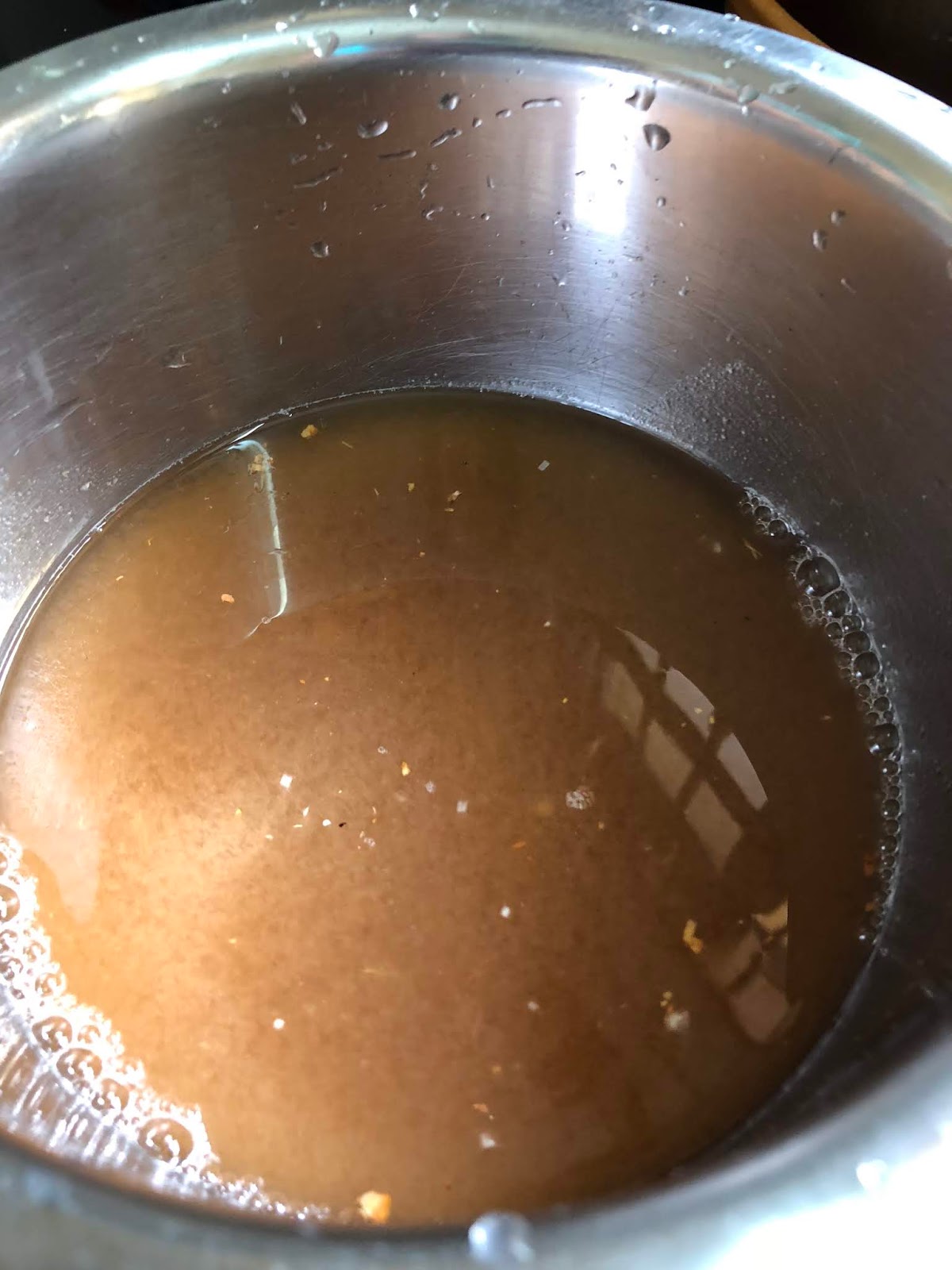
(tamarind juice)
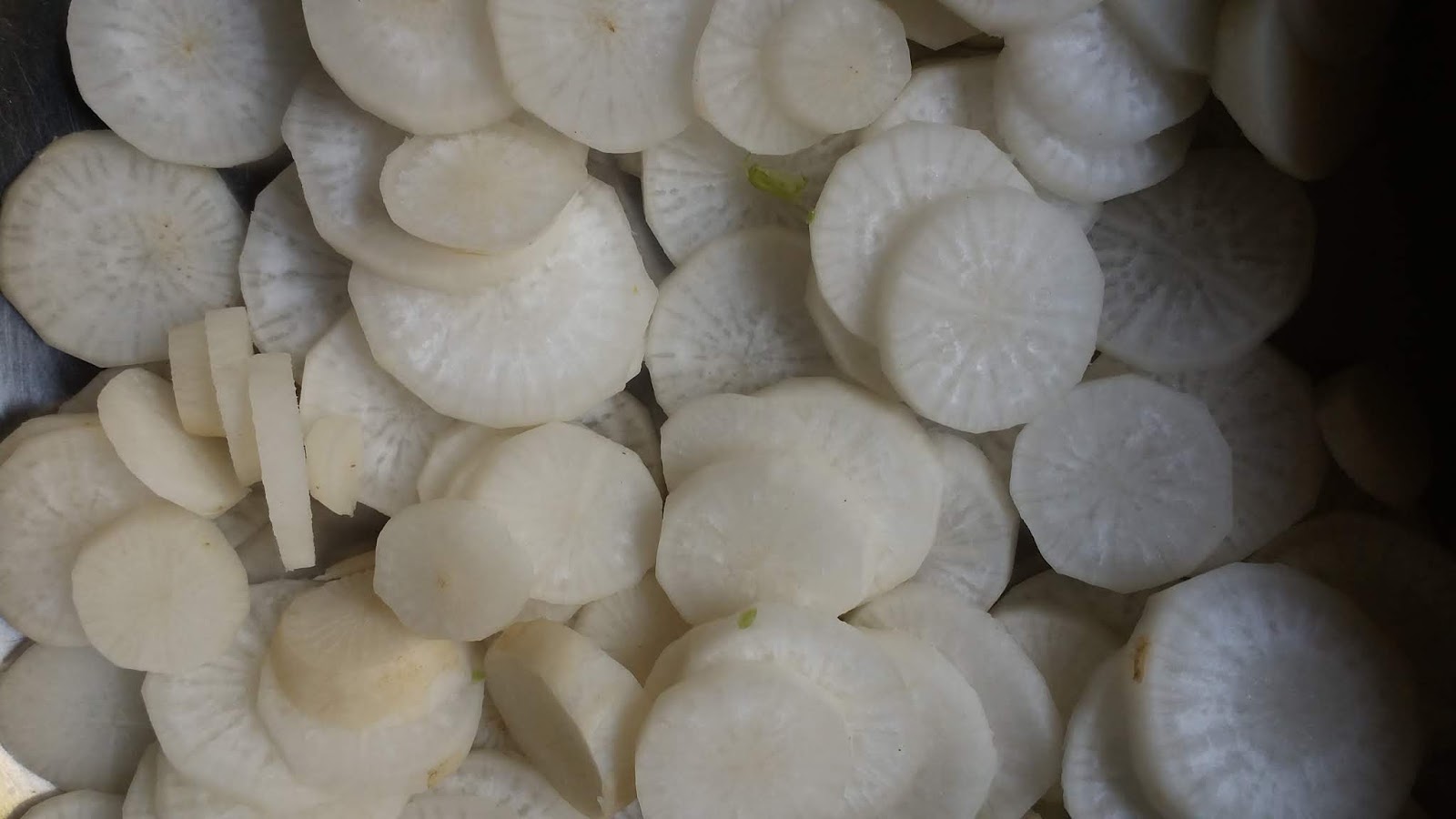
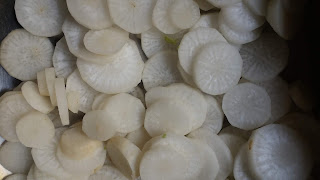
(radish or any veg)
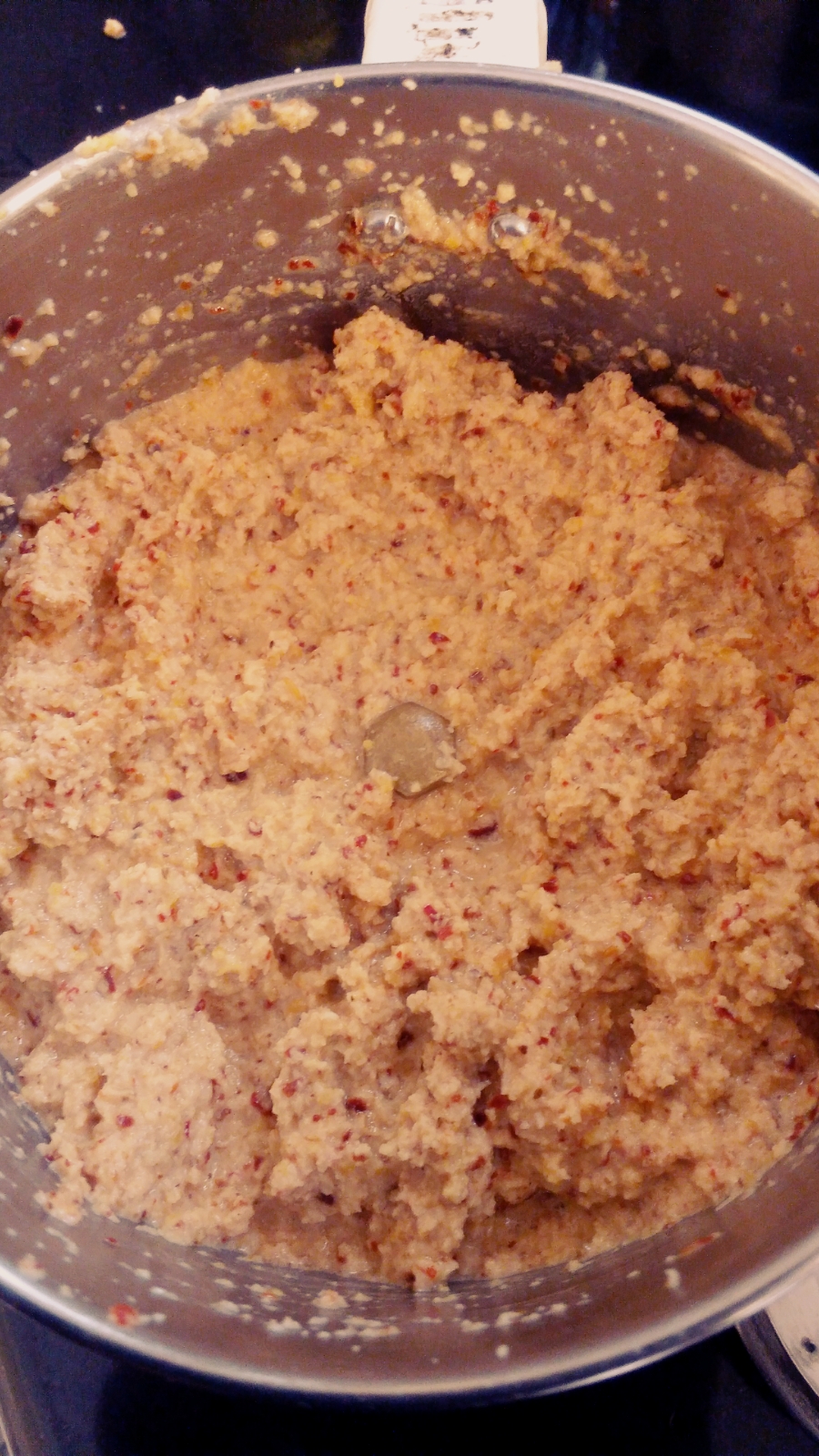
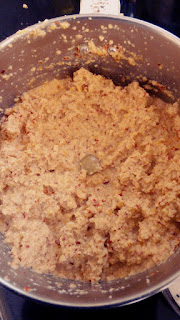
(ground spice mixture)
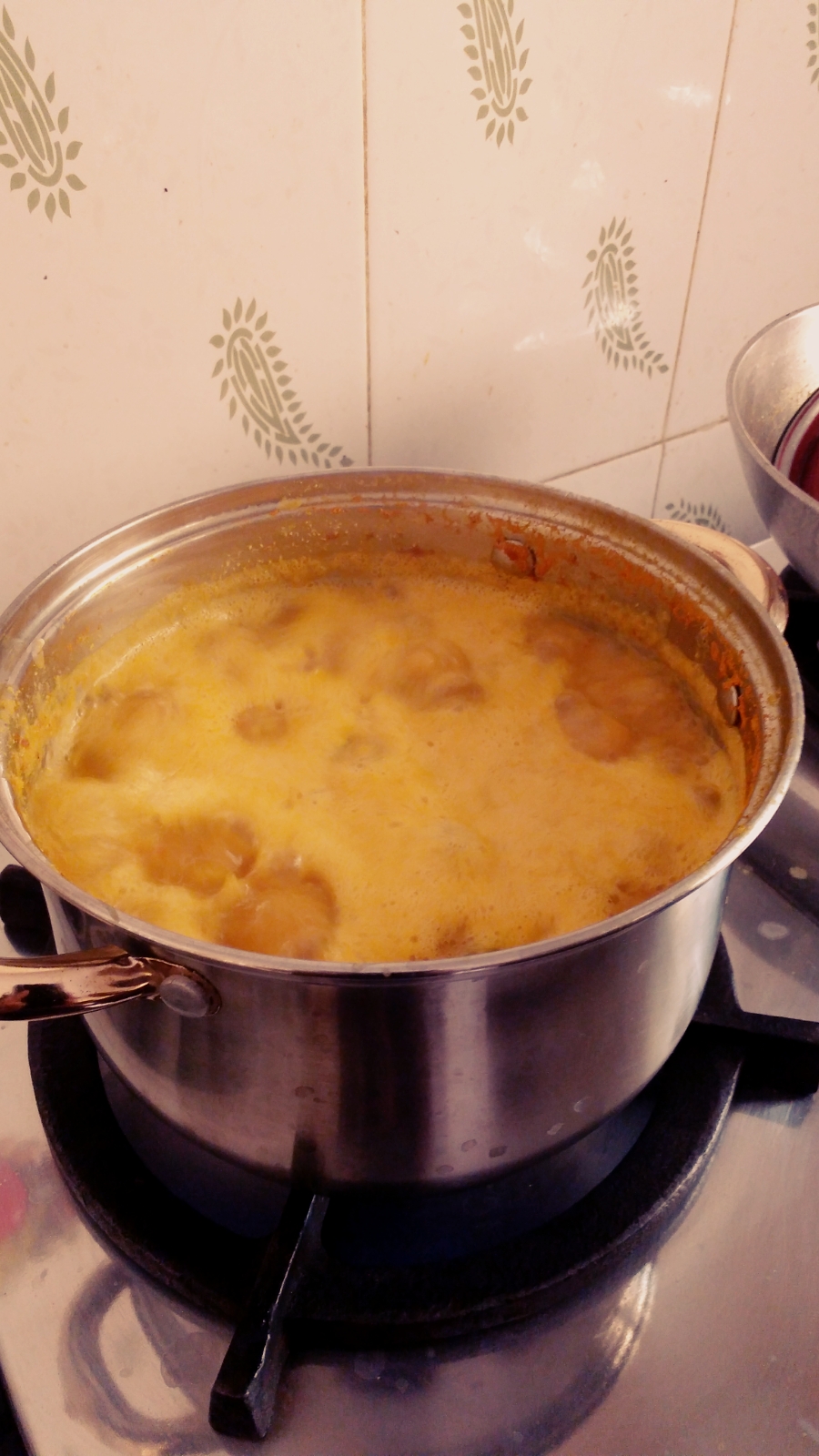
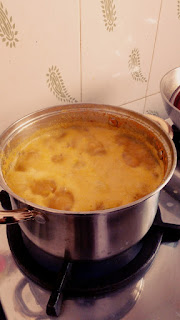
(boiling sambhar)
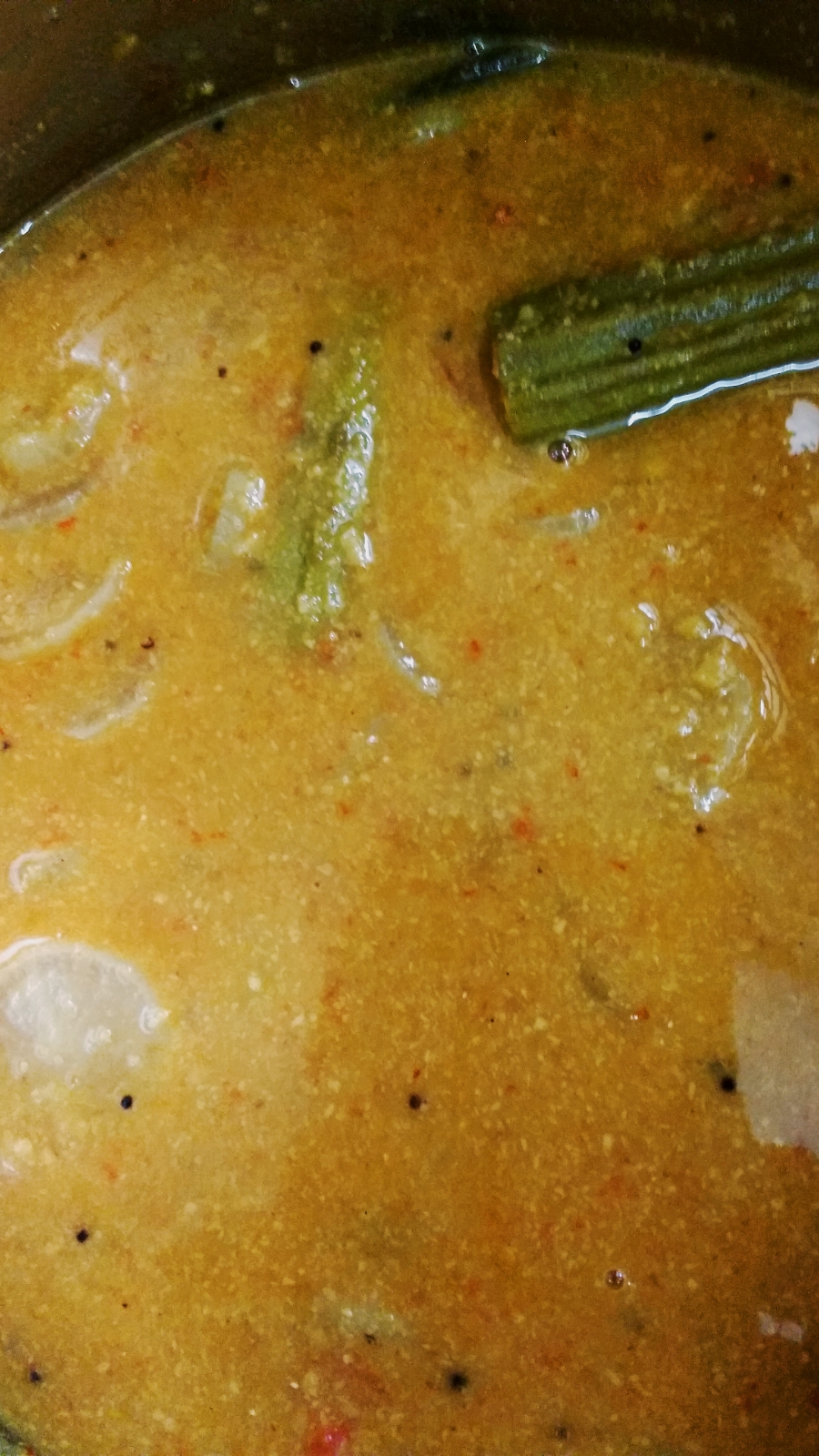
(close view of radish & drumstick sambhar)
Ingredients (serves 3-4)
Tuwar dal (Tuwaram paruppu) : 75-100 g
Red Chilli : 6-7
Channa dal (Kadala parupu) : 1 tbsp
Dhaniya seeds (Kothamalli vedhai): 1 tsp
Solid Asafoetida(hing/perungaayam) : Tamarind seed size
(If solid asafoetida is not available, use powdered asafoetida.)
Fresh grated Coconut : 3 tbsp
Tamarind : Take some in hand, press and roll it, shld be small lemon size
Salt : 1.5 tsp (or) as per taste
Turmeric : pinch
Sambhar powder : 1/4 - 1/2 tsp
Tomato (optional) : 2 No.s
Curry leaves
Desired Vegetables : 1 cup chopped (like Radish, shallots, Capsicum, Brinjal, Potato, Pumpkin,Drumstick,etc.)
Mustard (Rai/kadugu) : 1/4th - 1/2 tsp
Green chillies : 2 No.s (optional)
Oil- 2-3 tbsp
Note1: You can adjust salt/sambhar powder/asafoetida/chillies according to your taste.
Note2: If you are taking mixed vegetables including pumpkin, then pls take yellow pumpkin. White pumpkin doesn't go well with other vegetables. So if you want to add white pumpkin, then add only that.
Procedure
1. Pressure cook tuwar dal, mash it and keep it aside.
2. Prepare 2 tumblers (1 tumbler=~ 200ml) of tamarind juice. (It will be easier to squeeze the juice out of tamarind if soaked in hot water for 5-10 min).
3. Take a cooking vessel (thick bottom) and pour tamarind juice and keep on low flame.
4. Add salt, turmeric, sambhar powder, pinch of asafoetida, chopped tomatoes, slit green chillies and desired vegetables and allow it to boil.
Note: If you are adding shallots, saute shallots and slit green chillies first with oil and then add tamarind juice and continue with step 4.
5. Now heat oil on a separate pan and add solid asafoetida first.
6. Then add red chillies, chana dal, dhaniya seeds and mix well and saute till golden brown.
7. Switch off the flame. Add fresh coconut and grind this mixture. (In hot regions, separately fry coconut for 5 sec and then add it to avoid spoiling of sambhar with time).
8. When tamarind juice boils and when vegetables are well cooked and soft, add little water to the mashed tuwar dal, mix well and add it to the boiling gravy. Allow it to boil for 3-4 min.
9. Then add the ground mixture after liquidizing it with little water.
10. Keep low flame. Add curry leaves and allow it to boil for 3-4 min.Then switch off the flame.
11. Heat oil in a separate pan for tadka. Put mustard and let it crackle. Switch off the flame and add it to the gravy.
Note: If you are using Fresh Sundakkai(turkey berry) for Sambhar, follow the procedure for sambhar without freshly ground masala. But the tuwar dal quantity should be little less and tamarind little more.
HOT SAMBHAR IS READY!!!!!!!!!!!!!!!!
Sambhar (simply with sambhar powder)
Sambhar is a famous and delicious South Indian gravy which is taken with rice or idli/dosa. It is frequently cooked in South Indian households. Sambhar is of two types: One made with freshly ground spices and another one simply made with sambhar powder. This is the plain variety sambhar. It tastes best with rice and idli/dosa.
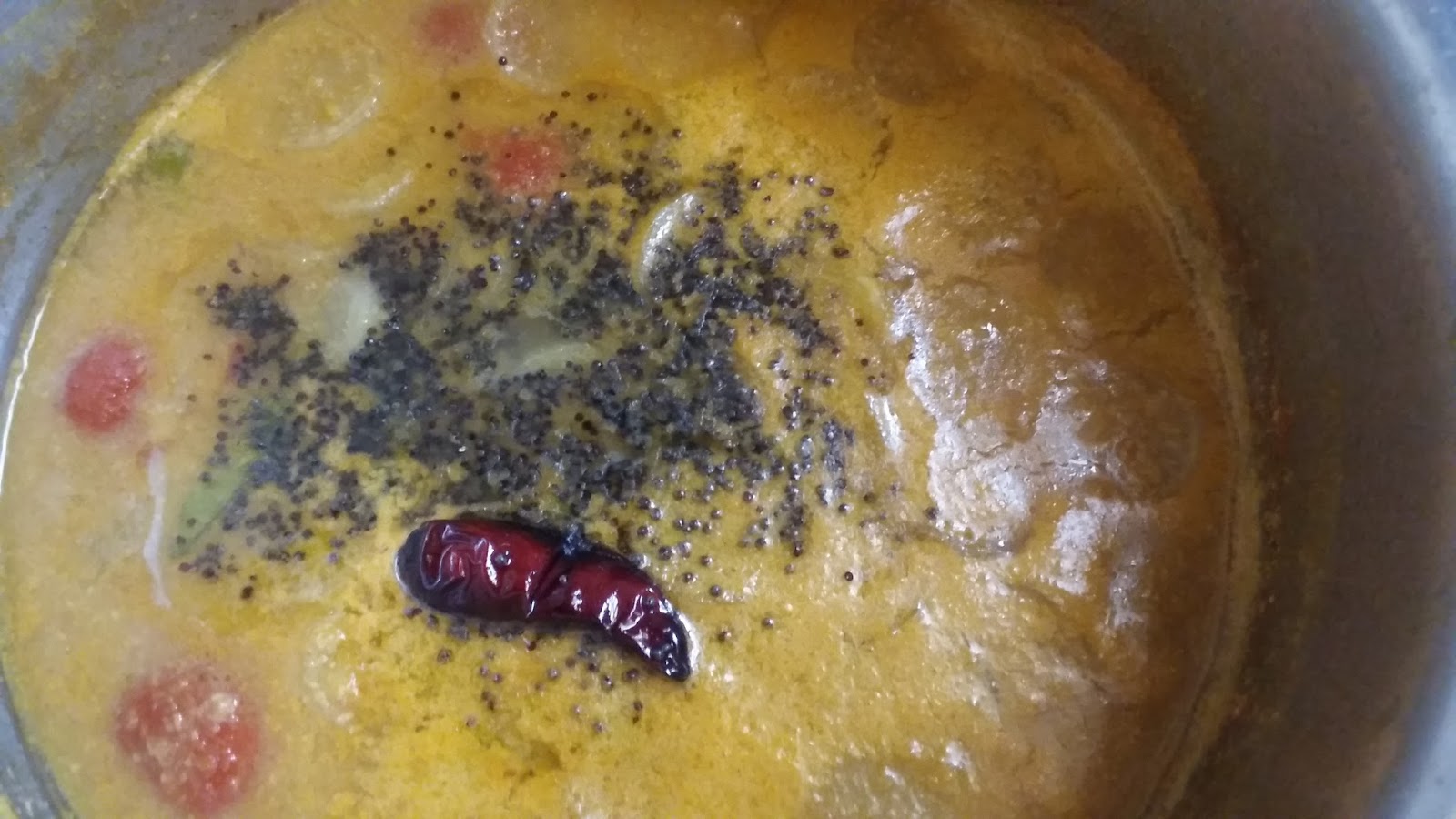
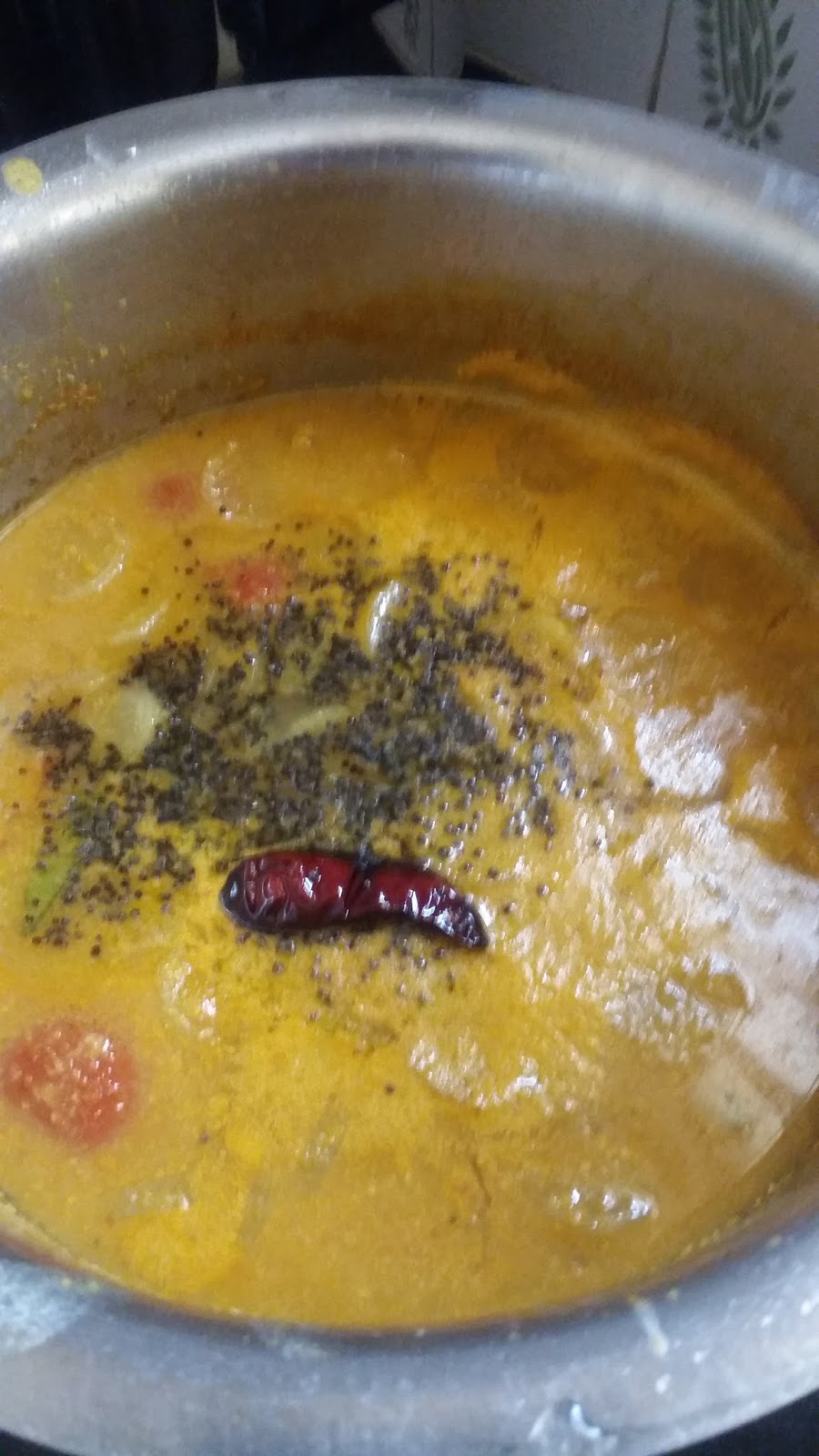
Tuwar dal (Tuwaram paruppu) : 75-100 g
Red Chilli :1-2
Solid/powdered Asafoetida : Tamarind seed size/ 1/4th tsp
Tamarind : Take some in hand, press and roll it, shld be small lemon size
Salt : 1.5 tsp (or) as per taste
Turmeric : pinch
Sambhar powder : 1.5 tsp
Tomato (optional) - 2 No.s
Curry leaves
Desired Vegetables - 1 cup (like Radish, shallots, Capsicum, Brinjal, Potato, Pumpkin,Drumstick,etc.)
Mustard (Rai/kadugu) - 1/4th - 1/2 tsp
Green chillies - 2 No.s (optional)
Oil- 2-3 tbsp
Note1: You can adjust salt/sambhar powder/asafoetida/chillies according to your taste.
Note2: If you are taking mixed vegetables including pumpkin, then pls take yellow pumpkin. White pumpkin doesn't go well with other vegetables. So if you want to add white pumpkin, then add only that.
Procedure
1. Pressure cook tuwar dal, mash it and keep it aside.
2. Prepare 2 tumblers (1 tumbler =~ 200ml) of tamarind juice. (It will be easier to squeeze the juice out of tamarind if soaked in hot water for 5-10 min).
3. Take a cooking vessel (thick bottom) and pour tamarind juice and keep on low flame.
4. Add salt, turmeric, sambhar powder, asafoetida, chopped tomatoes, slit green chillies and desired vegetables and allow it to boil.
Note: If you are adding shallots, saute shallots and slit green chillies first with oil and then add tamarind juice and continue with step 4.
5. When tamarind juice boils and when vegetables are well cooked and soft, add little water to the mashed tuwar dal, mix well and add it to the boiling gravy. Allow it to boil for 3-4 min.
6. Check the sambhar consistency, if you feel it should be thicker, take 1-2 tsp of rice flour/corn flour, mix it with 2-3 tsp cold water and add it to the boiling gravy. Stir well.
7. Keep low flame. Add curry leaves and allow it to boil for 3-4 min.Then switch off the flame.
8. Heat oil in a separate pan for tadka. Put mustard and let it crackle. Switch off the flame and add it to the gravy.
Note: If you are using Fresh Sundakkai(turkey berry) for Sambhar, follow the same procedure for sambhar without freshly ground masala. But the tuwar dal quantity should be little less and tamarind little more.
HOT SAMBHAR IS READY!!!!!!!!!!!!!!!!
Paruppu Rasam
Rasam is a popular gravy in South Indian meals. People would have many optional items in their South Indian thali, but rasam is a must.
There are many types of Rasams, the most popular and known is Paruppu Rasam. Rasam is supposed to be mixed with rice and tastes best with fried papad/appalam.
Eeya Sombu (the traditional vessel used for making rasam)
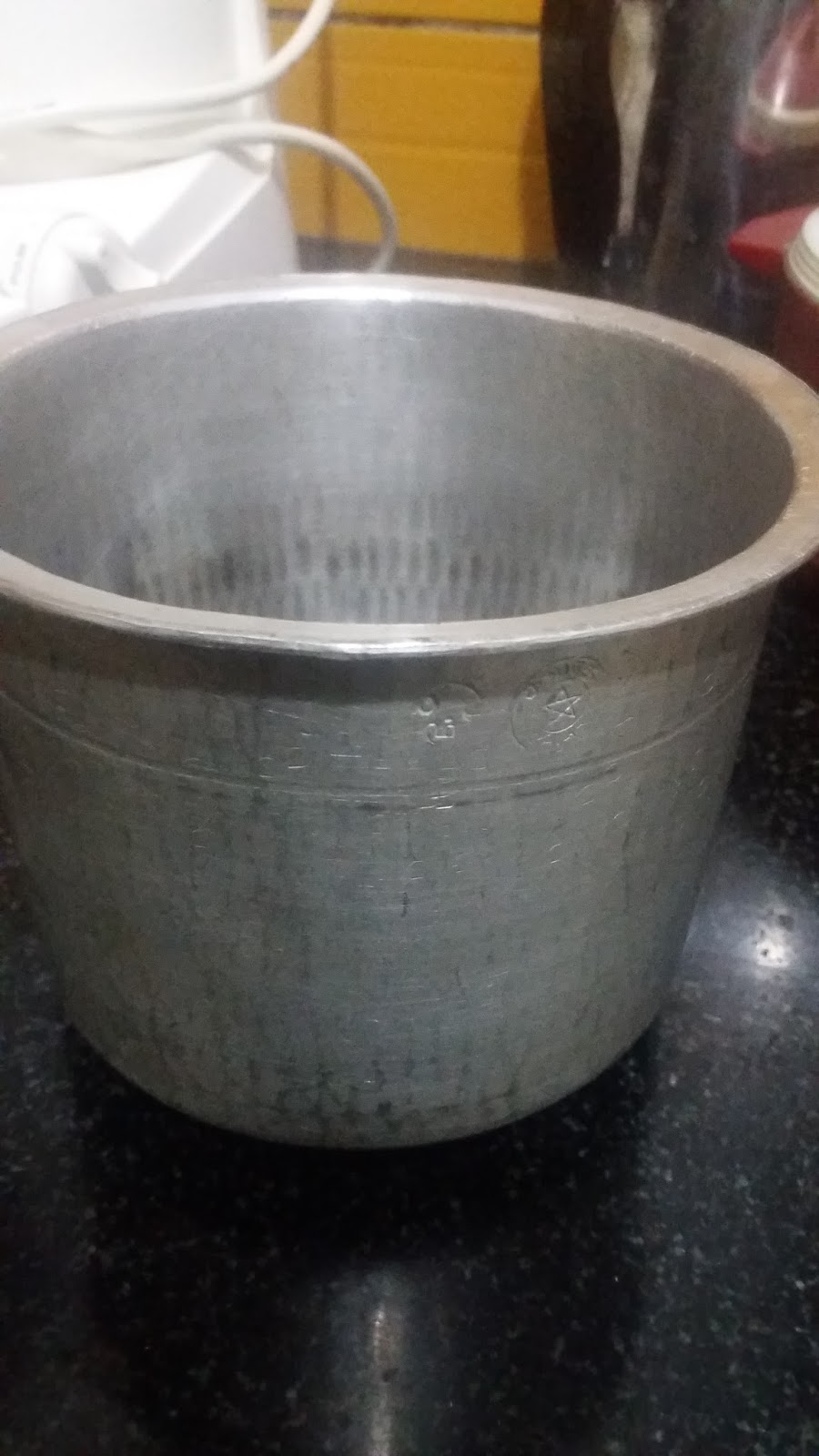
Rasam is prepared in 'eeya sombu' - the traditional vessel(made of tin & other metals. Eeya stands for metal and sombu for vessel) used since ages to make rasam. Making rasam in this vessel really enhances the taste. There are two types of eeyam - kar-eeyam, vell-eeyam. This vessel for rasam is vell-eeyam which is safe. Kar-eeyam is lead which is not used to make vessels for cooking. Many people have confusions regarding 'eeyam' and that it is poisonous. The age old traditional eeya sombu is 100% safe. The only thing is that it melts very easily, so never keep an empty eeya sombu on stove, it will melt. Make sure it has atleast half of its quantity loaded before switching on the flame and keep the flame on low to medium. Always keep an eye on the eeya sombhu, if you forget rasam is boiling and if it is kept so for a long time, the vessel will start to melt and lose its shape.
Ingredients (serves 3-4)
Tuwar Dal (Tuwaram paruppu) : small cup/50 g
Tamarind : hold raw tamarind in hand and roll it in ur palms. it should be small lemon size.
Rasam powder : 1.5 to 2 tsp
Salt : 1.5 tsp (or) as per taste
Asafoetida/Hing : pinch
Turmeric : pinch
Tomato : 2 No.s
Dhaniya and curry leaves
Desi ghee : 1 tsp
Mustard/Rai : 1/4th tsp
Procedure
1. Boil or pressure cook the tuwar dal. Mash it well and keep it aside.
2. Soak tamarind in hot water for 5-10 min so that it becomes easier to extract juice from it. By adding water prepare approximately 1.5 glass of tamarind juice.
3. Take a cooking vessel and pour the tamarind juice. Keep it on flame. Add chopped tomatoes. Heat on medium flame.
4. Add Rasam powder, salt, asafoetida,turmeric powder and bring the mixture to boiling.
5. Let it boil for 10-15 min.
6. Add 2 glasses (apprx) water to mashed dal and add it to the boiling mixture.
7. Boil for 2 min. Foam will be formed. Then switch off the flame.
8. Heat ghee in a small pan. Add mustard to it and let it crackle. Switch off the flame and add curry leaves to it and add this to the rasam.
9. Garnish with dhaniya leaves.
HOT PARUPPU RASAM IS READY!!!!!!
NOTE: For Paruppu rasam, you can add green chilli halved to the boiling rasam (after step 4). For this, you can reduce the rasam powder to 1 tsp.
Lemon Rasam
Rasam is a popular gravy in South Indian meals. People would have many optional items in their South Indian thali, but rasam is a must.
There are many types of Rasams, the most popular and known is Paruppu Rasam. But you should try Lemon Rasam, instead of tamarind, here lemons give the tangy taste. Rasam is supposed to be mixed with rice and tastes best with fried papad/appalam.
Eeya Sombu (the traditional vessel used for making rasam)
Rasam is prepared in 'eeya sombu' - the traditional vessel(made of tin & other metals. Eeya stands for metal and sombu for vessel) used since ages to make rasam. Making rasam in this vessel really enhances the taste. There are two types of eeyam - kar-eeyam, vell-eeyam. This vessel for rasam is vell-eeyam which is safe. Kar-eeyam is lead which is not used to make vessels for cooking. Many people have confusions regarding 'eeyam' and that it is poisonous. The age old traditional eeya sombu is 100% safe. The only thing is that it melts very easily, so never keep an empty eeya sombu on stove, it will melt. Make sure it has atleast half of its quantity loaded before switching on the flame and keep the flame on low to medium. Always keep an eye on the eeya sombhu, if you forget rasam is boiling and if it is kept so for a long time, the vessel will start to melt and lose its shape.
Ingredients (serves 3-4)
Tuwar Dal (Tuwaram paruppu) : small cup/50 g
Lemon : 2
Rasam powder : 1.5 to 2 tsp
Salt : 1.5 tsp (or) as per taste
Asafoetida/Hing : pinch
Turmeric : pinch
Tomato : 2 No.s
Dhaniya and curry leaves
Desi ghee : 1 tsp
Mustard/Rai : 1/4th tsp
Fresh coriander leaves : for garnish
Procedure
1. Boil or pressure cook the tuwar dal. Mash it well and keep it aside.
2. Take a cooking vessel and pour 1.5 tumblers of water (1 tumbler =~ 200ml). Keep it on medium flame. Add chopped tomatoes.
3. Add Rasam powder, salt, asafoetida,turmeric powder and bring the mixture to boiling.
4. Let it boil for 10-15 min.
5. Add 2 tumblers (apprx) water to mashed dal and add it to the boiling mixture.
6. Boil for 2 min. Foam will be formed. Then switch off the flame.
7. Squeeze two lemons into it.
8. Heat ghee in a small pan. For tempering/tadka add mustard seeds to it and let it crackle. Switch off the flame and add curry leaves to it and add this to the rasam.
9. Garnish with dhaniya leaves.
NOTE: For lemon rasam, you can add green chilli halved to the boiling rasam (after step 3). For this, you can reduce the rasam powder to 1 tsp.
Special Lemon Rasam
Rasam is a popular gravy in South Indian meals. People would have many optional items in their South Indian thali, but rasam is a must.
There are many types of Rasams, the most popular and known is Paruppu Rasam. But try making this Special Lemon Rasam, here lemons give the tangy taste instead of tamarind and the addition of ground spices gives a special aroma. Rasam is supposed to be mixed with rice and tastes best with fried papad/appalam.
Eeya Sombu (the traditional vessel used for making rasam)
Rasam is prepared in 'eeya sombu' - the traditional vessel(made of tin & other metals. Eeya stands for metal and sombu for vessel) used since ages to make rasam. Making rasam in this vessel really enhances the taste. There are two types of eeyam - kar-eeyam, vell-eeyam. This vessel for rasam is vell-eeyam which is safe. Kar-eeyam is lead which is not used to make vessels for cooking. Many people have confusions regarding 'eeyam' and that it is poisonous. The age old traditional eeya sombu is 100% safe. The only thing is that it melts very easily, so never keep an empty eeya sombu on stove, it will melt. Make sure it has atleast half of its quantity loaded before switching on the flame and keep the flame on low to medium. Always keep an eye on the eeya sombhu, if you forget rasam is boiling and if it is kept so for a long time, the vessel will start to melt and lose its shape.
Ingredients (serves 3-4)
Tuwar Dal (Tuwaram paruppu) : small cup/50 g
Lemon : 2
Rasam powder : 1.5 to 2 tsp
Salt : 1.5 tsp (or) as per taste
Asafoetida/Hing : pinch
Turmeric : pinch
Tomato : 2 No.s
Dhaniya and curry leaves
Desi ghee : 1 tsp
Mustard/Rai : 1/4th tsp
Fresh coriander leaves : for garnish
Spices for final Garnish:
Dhaniya seeds: 1/4th tsp
Tuwar dal : 1/4th tsp
Jeera : 1/4th tsp
Black pepper : 1/4th tsp
Procedure
1. Boil or pressure cook the tuwar dal. Mash it well and keep it aside.
2. Take a cooking vessel and pour 1.5 tumblers of water (1 tumbler =~ 200ml). Keep it on medium flame. Add chopped tomatoes.
3. Add Rasam powder, salt, asafoetida,turmeric powder and bring the mixture to boiling.
4. Let it boil for 10-15 min.
5. Add 2 tumblers (apprx) water to mashed dal and add it to the boiling mixture.
6. Boil for 2 min. Foam will be formed. Then switch off the flame.
7. Squeeze two lemons into it.
8. Heat ghee in a small pan. For tempering/tadka add mustard seeds to it and let it crackle. Switch off the flame and add curry leaves to it and add this to the rasam.
9. Garnish with dhaniya leaves.
10. Take Dhaniya seeds, tuwar dal, jeera, black pepper and roast all without oil/ghee in a pan. Then grind it coarsely and sprinkle over rasam after garnishing.
Molagu Rasam (pepper rasam)
Rasam is a popular gravy in South Indian meals. People would have many optional items in their South Indian thali, but rasam is a must.
There are many types of Rasams, the most popular and known is Paruppu Rasam. Try Pepper Rasam, when someone falls sick, he/she loses interest to eat, that time Pepper Rasam is the best for him/her. Rasam is supposed to be mixed with rice and tastes best with fried papad/appalam.
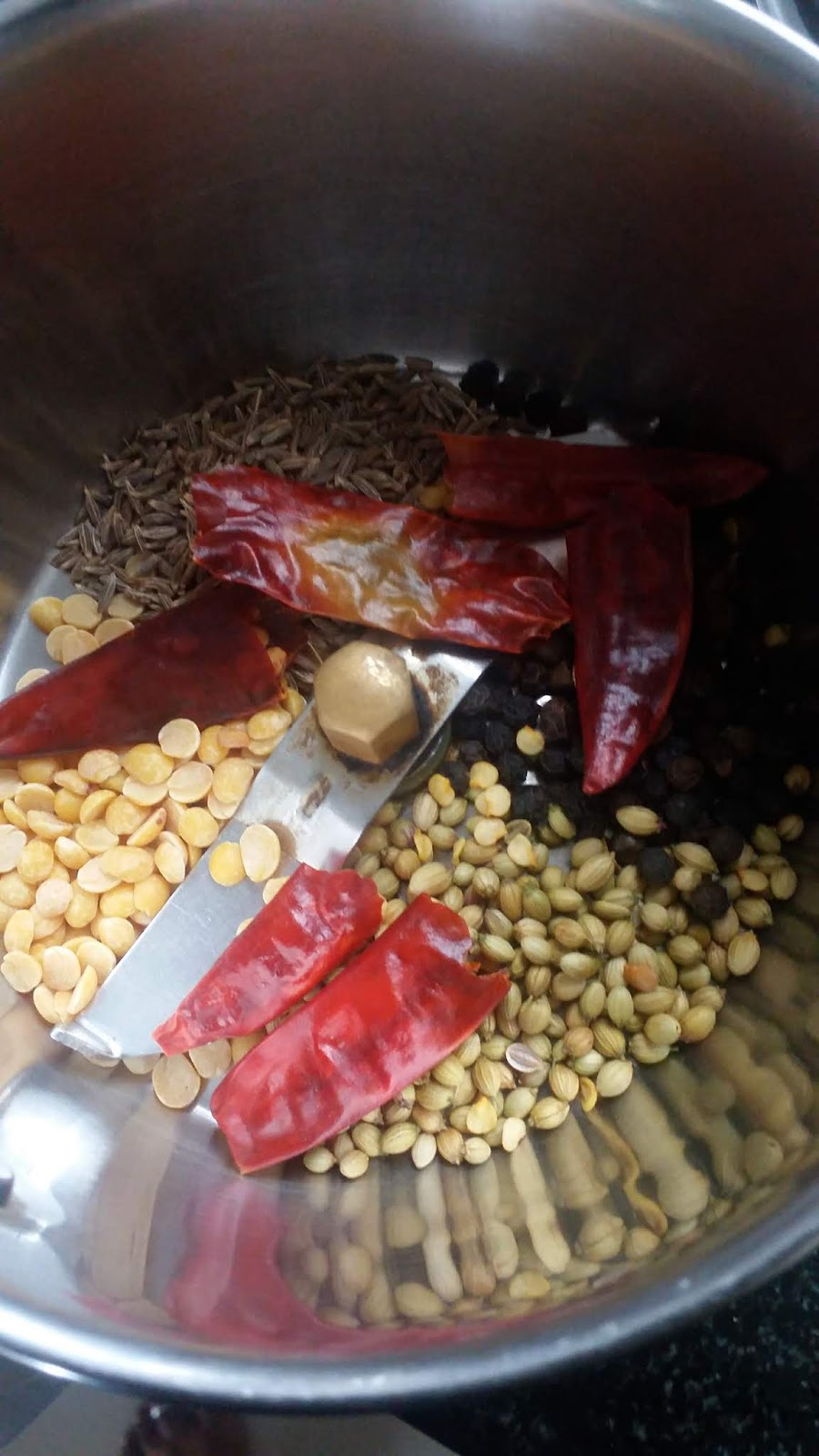
Eeya Sombu (the traditional vessel used for making rasam)
Note:
Rasam is prepared in 'eeya sombu' - the traditional vessel(made of tin
& other metals. Eeya stands for metal and sombu for vessel) used
since ages to make rasam. Making rasam in this vessel really enhances
the taste. There are two types of eeyam - kar-eeyam, vell-eeyam. This
vessel for rasam is vell-eeyam which is safe. Kar-eeyam is lead which is
not used to make vessels for cooking. Many people have confusions
regarding 'eeyam' and that it is poisonous. The age old traditional eeya
sombu is 100% safe. The only thing is that it melts very easily, so
never keep an empty eeya sombu on stove, it will melt. Make sure it has
atleast half of its quantity loaded before switching on the flame and
keep the flame on low to medium. Always keep an eye on the eeya sombhu,
if you forget rasam is boiling and if it is kept so for a long time, the
vessel will start to melt and lose its shape.
Tamarind : Small lemon size
Tuwar dal (Tuwaram paruppu) : 1 tsp
Pepper (molagu) : 1/2 tsp
Jeera : 1/2 tsp
Red chilli : 1 small
Dhaniya seeds : 1/4 tsp
Salt : 1.5 tsp (or) as per taste
Turmeric powder : pinch
Asafoetida/hing : pinch
Tomato : 2 medium size
Dhaniya & curry leaves for garnish
Procedure :
1. Soak tamarind for 10-15 min in hot water. Prepare tamarind juice for about 1.5 glass.
2. Add the juice and chopped tomato in a vessel and heat it on medium flame.
3. Add turmeric, asafoetida, salt and allow the mixture to boil for 10-15 min.
4. Meanwhile, grind tuwar, pepper, jeera, red chilli and dhaniya seeds together coarsely. (no need to add water)
5. Now after rasam has boiled for 10-15 min, add the ground mixture to the boiling rasam. Let it boil for 3 min.
6. Now add 1 to 1.5 glass water to it. Allow it to boil. Foam will be formed.
7. Remove the vessel from the flame and heat a small pan with ghee.
8. Add mustard/rai to it. When it crackles, switch off the flame and add it to the rasam.
9. Garnish it with dhaniya and curry leaves.
Pepper Rasam is Ready!!!!!!!!!!!!!
Kottu Rasam
Rasam is a popular gravy in South Indian meals. People would have many optional items in their South Indian thali, but rasam is a must.
There are many types of Rasams, the most popular and known is Paruppu Rasam. Kottu Rasam is a yummy variety without boiled tuwar dal as ingredient. Rasam is supposed to be mixed with rice and tastes best with fried papad/appalam.
Eeya Sombu (the traditional vessel used for making rasam)
Rasam is prepared in 'eeya sombu' - the traditional vessel(made of tin & other metals. Eeya stands for metal and sombu for vessel) used since ages to make rasam. Making rasam in this vessel really enhances the taste. There are two types of eeyam - kar-eeyam, vell-eeyam. This vessel for rasam is vell-eeyam which is safe. Kar-eeyam is lead which is not used to make vessels for cooking. Many people have confusions regarding 'eeyam' and that it is poisonous. The age old traditional eeya sombu is 100% safe. The only thing is that it melts very easily, so never keep an empty eeya sombu on stove, it will melt. Make sure it has atleast half of its quantity loaded before switching on the flame and keep the flame on low to medium. Always keep an eye on the eeya sombhu, if you forget rasam is boiling and if it is kept so for a long time, the vessel will start to melt and lose its shape.
Ingeredients:(serves 3-4)
Tamarind : Big amla size
Red chilli : 1
Tuwar dal (Tuwaram paruppu) : 1 tsp
Pepper (Molagu) : 1/4 tsp
Jeera : 1/4 to 1/2 tsp
Ghee : 1 tsp
Oil : 1/2 tsp
solid Asafoetida/powdered asafoetida : small piece/pinch
Tomato : 2
Mustard/Rai : 1/4 tsp
Salt : 1 1/4 tsp (or) as per taste
Turmeric : pinch
Dhaniya and curry leaves
Procedure:
1. Prepare 1.5 glass tamarind juice.
2. Add chopped tomato to it and keep it aside for now.
3. Add ghee in a small pan, add oil to it.
4. Add broken red chilli, mustard, let mustard crackle. Then add tuwar dal, pepper. Let its colour change.
5. Add Jeera and immediately switch off the flame.
6. Add it to the tamarind juice.
7. Now place the juice vessel on flame. Add salt, tumeric and asafoetida.
8. Bring it to boil (till quantity reduces to half its initial quantity).
9. Now add 2 to 2 1/2 glass water to it.
10. When foam forms, switch off the flame.
11. Garnish with dhaniya and curry leaves.
Kottu Rasam is Ready!!!!!!!!!!!!!!!!!!!
Jeera Rasam
Rasam is a popular gravy in South Indian meals. People would have many optional items in their South Indian thali, but rasam is a must.
There are many types of Rasams, the most popular and known is Paruppu Rasam. Jeera Rasam has a distinct aroma and is my daughters' favourite. Rasam is supposed to be mixed with rice and tastes best with fried papad/appalam.
Eeya Sombu (the traditional vessel used for making rasam)
Note:
Rasam is prepared in 'eeya sombu' - the traditional vessel(made of tin
& other metals. Eeya stands for metal and sombu for vessel) used
since ages to make rasam. Making rasam in this vessel really enhances
the taste. There are two types of eeyam - kar-eeyam, vell-eeyam. This
vessel for rasam is vell-eeyam which is safe. Kar-eeyam is lead which is
not used to make vessels for cooking. Many people have confusions
regarding 'eeyam' and that it is poisonous. The age old traditional eeya
sombu is 100% safe. The only thing is that it melts very easily, so
never keep an empty eeya sombu on stove, it will melt. Make sure it has
atleast half of its quantity loaded before switching on the flame and
keep the flame on low to medium. Always keep an eye on the eeya sombhu,
if you forget rasam is boiling and if it is kept so for a long time, the
vessel will start to melt and lose its shape.
Tuwar dal (Tuwaram paruppu) : 1 tsp
Dhaniya seeds : 1/4 tsp
Jeera : 3/4 tsp
Red chilli : 1 medium
Tamarind : small lemon size
Salt : 1 1/4 tsp (or) as per taste
Turmeric : pinch
Tomato : 3 medium sized
Mustard/Rai : less than 1/4 tsp
Dhaniya and curry leaves for garnish
Procedure :
1. Soak tuwar dal, dhaniya seesds, red chilli and jeera in water for 45 min.
2. Prepare 1.5 glass (apprx) tamarind juice and pour it in a vessel.
3. Add chopped tomato and heat it on medium flame.
4. Add salt and turmeric powder.
5. Allow it to boil for 10-15 min ( so that quantity becomes half and that rawflavour of tamaring goes off.)
6. Now grind the soaked ingredients such that they are neither too fine nor too coarse (can add little water while grinding).
Note: For more flavour, you can add 2 garlic pulps while grinding.
7. Add the ground mixture to the boiling rasam and let it boil for 3-4 min with often stirring.
8. Now add 2 glasses (apprx) of water and stir well.
9. Foam will be formed, reduce the flame to minimum and keep stirring.
10. After 3-4 min, switch off the flame.
11. Now take a pan, add ghee and heat it.
12. Add mustard/rai and let it cracke. Switch off and add it to rasam.
13. Garnish with dhaniya and curry leaves.
Hot Jeera rasam is Ready!!!!!!!!!!!!!!!!!!
Mysore Rasam
Rasam is a popular gravy in South Indian meals. People would have many optional items in their South Indian thali, but rasam is a must.
There are many types of Rasams, the most popular and known is Paruppu Rasam. Try Mysore Rasam, wherein instead of rasam powder fresh spice powder is prepared and added. Rasam is supposed to be mixed with rice and tastes best with fried papad/appalam.
Eeya Sombu (the traditional vessel used for making rasam)
Rasam is prepared in 'eeya sombu' - the traditional vessel(made of tin & other metals. Eeya stands for metal and sombu for vessel) used since ages to make rasam. Making rasam in this vessel really enhances the taste. There are two types of eeyam - kar-eeyam, vell-eeyam. This vessel for rasam is vell-eeyam which is safe. Kar-eeyam is lead which is not used to make vessels for cooking. Many people have confusions regarding 'eeyam' and that it is poisonous. The age old traditional eeya sombu is 100% safe. The only thing is that it melts very easily, so never keep an empty eeya sombu on stove, it will melt. Make sure it has atleast half of its quantity loaded before switching on the flame and keep the flame on low to medium. Always keep an eye on the eeya sombhu, if you forget rasam is boiling and if it is kept so for a long time, the vessel will start to melt and lose its shape.
Ingredients (serves 3-4)
Tuwar dal (Tuwaram paruppu) : 50 g (or) one small cup
Tamarind : small lemon size
Salt : 1.5 tsp (or) as per taste
Asafoetida : pinch
Turmeric powder : pinch
Tomato : 2-3 medium
For powder :
Tuwar dal : 1 1/4 tsp
Pepper : 1/2 to 3/4 tsp
Red chilli : 2-3
Dhaniya seeds : 1/2 tsp
Jeera : 1/2 tsp
Procedure:
1. Fry pepper,tuwar dal, red chilli and dhaniya seeds in refined/groundnut oil (1 tsp) in a pan till golden brown. Switch off flame and keep it aside.
2. Pressure cook tuwar dal, mash it and keep it aside.
3. Take 1.5 to 2 glass of tamarind juice in a vessel. Add chopped tomato and heat it on medium flame.
4. Add salt, asafoetida and turmeric and boil for 10-15 min.
5. Grind jeera and the fried ingredients dry, neither too fine nor too coarse.
6. When rasam has boiled for 10-15 min, add the ground mixture and boil for 2-3 min.
7. Now add 1 to 1.5 glass water (apprx) to already cooked tuwar dal, mix well and add it to the mixture.
8. Allow it to boil for 2 min. Foam will be formed. Switch off flame.
9. Heat ghee in a small pan and add mustard/rai, let it crackle. Add it to rasam.
10. Garnish with dhaniya and curry leaves.
Hot Mysore rasam is Ready!!!!!!!!!!!!!!!
Mysore Lemon Rasam
Rasam is a popular gravy in South Indian meals. People would have many optional items in their South Indian thali, but rasam is a must.
There are many types of Rasams, the most popular and known is Paruppu Rasam. Try Mysore Lemon Rasam, wherein instead of rasam powder fresh spice powder is prepared and added; and lemons are used for the sour flavour instead of tamarind. Rasam is supposed to be mixed with rice and tastes best with fried papad/appalam.
Eeya Sombu (the traditional vessel used for making rasam)
Rasam is prepared in 'eeya sombu' - the traditional vessel(made of tin & other metals. Eeya stands for metal and sombu for vessel) used since ages to make rasam. Making rasam in this vessel really enhances the taste. There are two types of eeyam - kar-eeyam, vell-eeyam. This vessel for rasam is vell-eeyam which is safe. Kar-eeyam is lead which is not used to make vessels for cooking. Many people have confusions regarding 'eeyam' and that it is poisonous. The age old traditional eeya sombu is 100% safe. The only thing is that it melts very easily, so never keep an empty eeya sombu on stove, it will melt. Make sure it has atleast half of its quantity loaded before switching on the flame and keep the flame on low to medium. Always keep an eye on the eeya sombhu, if you forget rasam is boiling and if it is kept so for a long time, the vessel will start to melt and lose its shape.
Same as Mysore rasam. Instead of tamarind juice, take plain water. In the end, before step 9, squeeze 2 lemons into the rasam.
Pineapple Rasam
Rasam is a popular gravy in South Indian meals. People would have many optional items in their South Indian thali, but rasam is a must.
There are many types of Rasams, the most popular and known is Paruppu Rasam. But have you heard of pineapple rasam? There was a famous spiritual Guru named 'Kripananda Variyar' and seems he used to talk about pineapple rasam when it came to food. Try pineapple rasam, its different and yummy! Rasam is supposed to be mixed with rice and tastes best with fried papad/appalam.
Eeya Sombu (the traditional vessel used for making rasam)
Rasam is prepared in 'eeya sombu' - the traditional vessel(made of tin & other metals. Eeya stands for metal and sombu for vessel) used since ages to make rasam. Making rasam in this vessel really enhances the taste. There are two types of eeyam - kar-eeyam, vell-eeyam. This vessel for rasam is vell-eeyam which is safe. Kar-eeyam is lead which is not used to make vessels for cooking. Many people have confusions regarding 'eeyam' and that it is poisonous. The age old traditional eeya sombu is 100% safe. The only thing is that it melts very easily, so never keep an empty eeya sombu on stove, it will melt. Make sure it has atleast half of its quantity loaded before switching on the flame and keep the flame on low to medium. Always keep an eye on the eeya sombhu, if you forget rasam is boiling and if it is kept so for a long time, the vessel will start to melt and lose its shape.
Ingredients (serves 3-4)
Tuwar Dal (Tuwaram paruppu) : small cup/50 g
Pineapple : 1 cup finely chopped (if you do not want to add it as pieces, extract the juice from it)
Rasam powder : 1.5 to 2 tsp
Salt : 1.5 tsp (or) as per taste
Asafoetida/Hing : pinch
Turmeric : pinch
Tomato : 2 No.s
Dhaniya and curry leaves
Desi ghee : 1 tsp
Mustard/Rai : 1/4th tsp
Fresh coriander leaves : for garnish
Procedure
1. Boil or pressure cook the tuwar dal. Mash it well and keep it aside.
2. Take a cooking vessel and pour 1.5 tumblers of water (1 tumbler =~ 200ml). Keep it on medium flame. Add chopped tomatoes.
3. Add Rasam powder, salt, asafoetida,turmeric powder and bring the mixture to boiling.
4. Let it boil for 10-15 min.
5. Add 2 tumblers (apprx) water to mashed dal and add it to the boiling mixture.
6. Boil for 2 min. Foam will be formed. Then switch off the flame.
7. Add the pineapple juice into it and mix well. (if you like, you can also add it as pieces instead of juice)
8. Heat ghee in a small pan. For tempering/tadka add mustard seeds to it and let it crackle. Switch off the flame and add curry leaves to it and add this to the rasam.
9. Garnish with dhaniya leaves.
Vatha Kuzhambu
Vatha Kuzhambu is a very tasty gravy. It is a kind of thick spicy tamarind gravy with added vegetables. The name Vatha Kuzhambu is a popular dish in Brahmin households, whereas the same is generally known as Kara Kuzhambu.
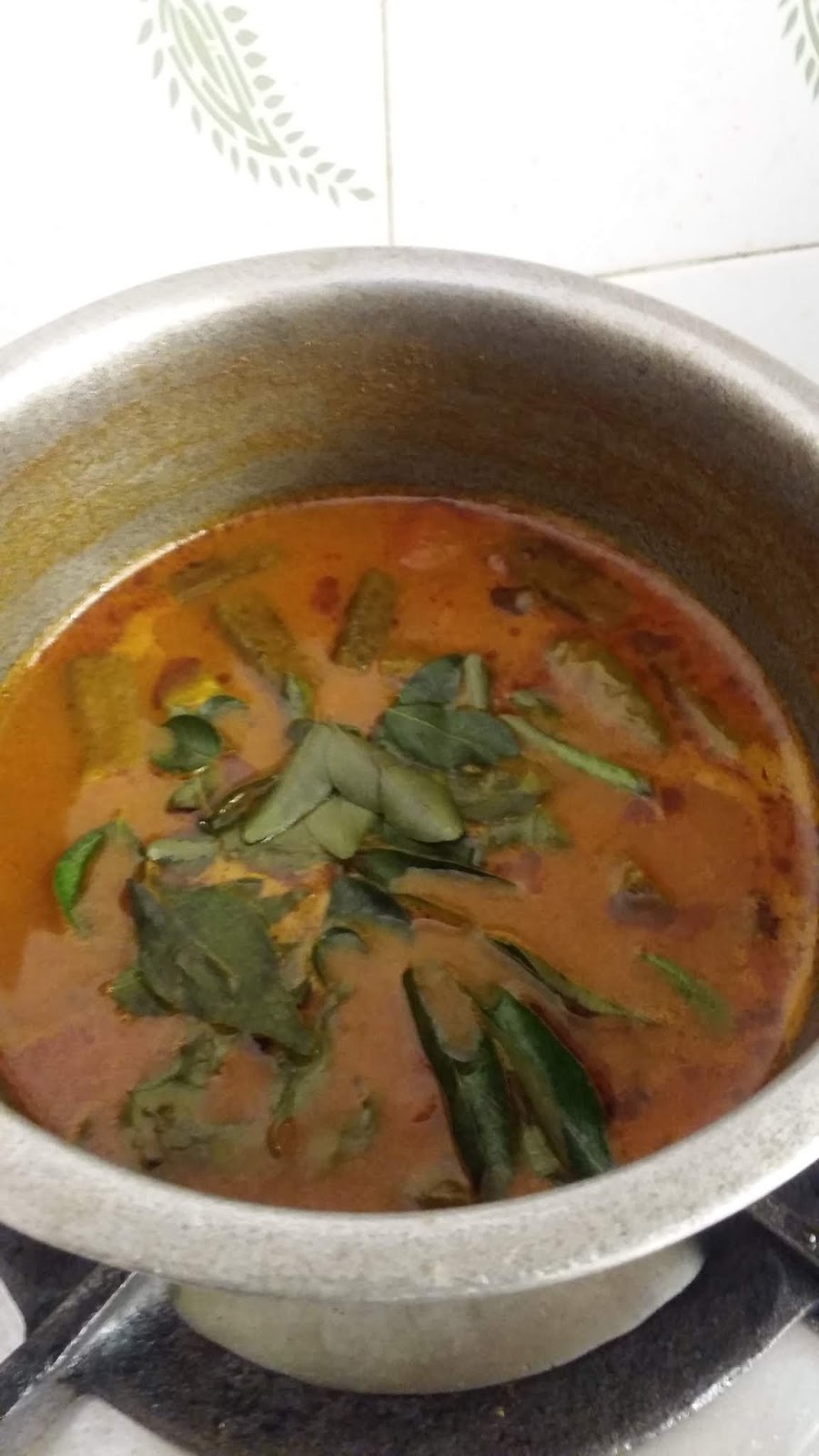
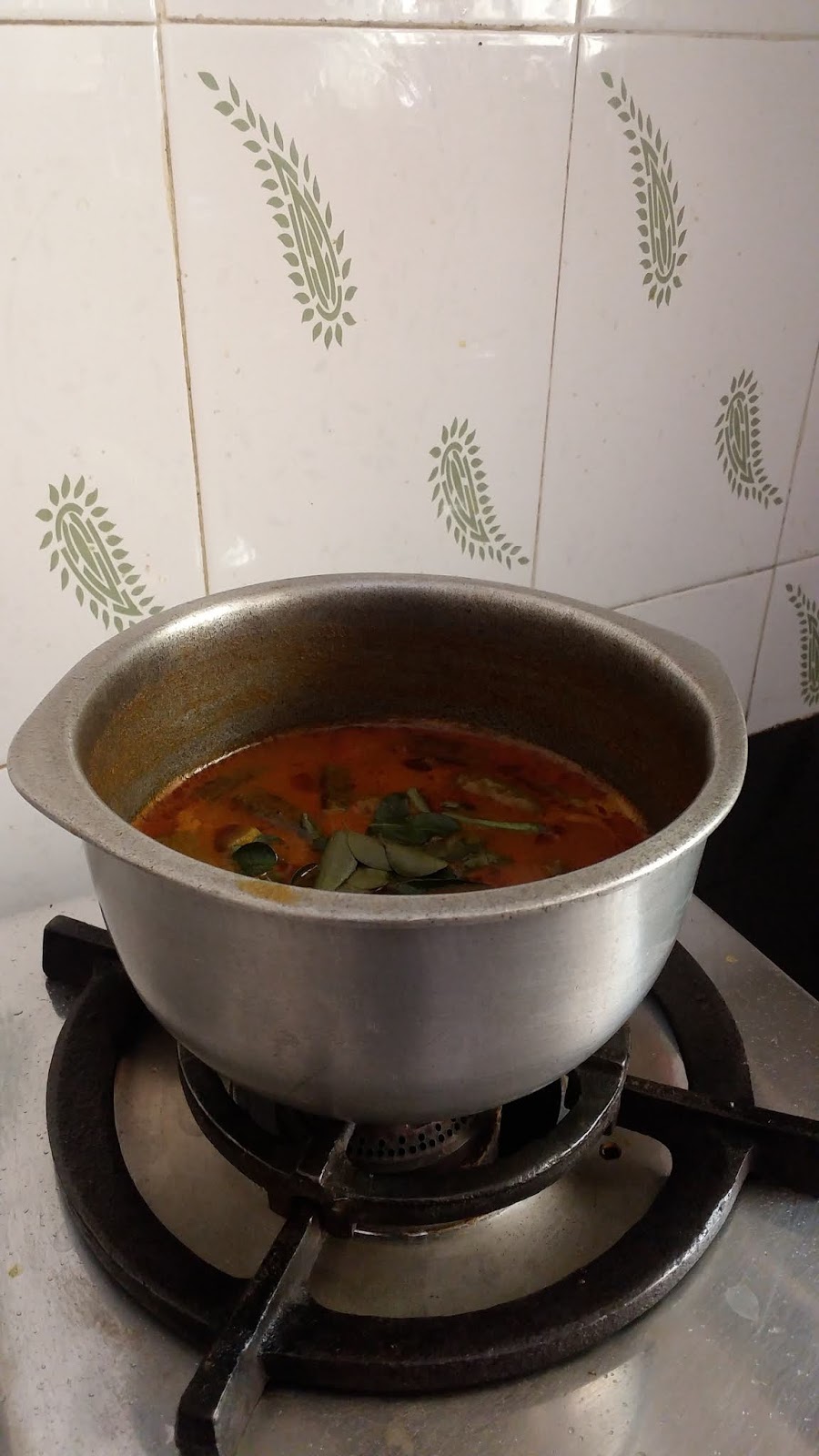
Ingredients (serves 3-4)
Tamarind : Hold some tamarind in hand and roll it between palms. Should be of big lemon size
Red chilli : 3 No.s
Mustard/Rai (Kadugu) : 1/2 tsp
Turmeric : 1/4th tsp
Salt : 2 tsp (or) as per taste
Sambhar powder : 2 tsp
Asafoetida solid : Tamarind seed size
(If solid asafoetida is not available, use powdered asafoetida.)
Oil ( Refined/Groundnut) : 2-3 tbsp
Note: Gingley Oil will taste the best for Vatha Kuzhambu
Tomato : 2 No.s
Curry leaves : few
Vegetables : selected vegetables like shalots, yellow pumpkin, brinjal, drumstick, etc. 1 small cup
Procedure:
1. Prepare 3 tumbler/glass of tamarind juice by adding water to tamarind and squeezing it. (Note that it becomes easier to extract juice after soaking tamarind in hot water for 10-15 min).
2. Take oil in a vessel (with heavy/thick bottom) and add red chilli halved.
3. Then add mustard/rai, allow it to crackle. Then add curry leaves.
4. Add chopped vegetables and saute for a minute.
5. Now pour tamarind juice to it.
6. Add chopped tomato (this is optional).
7. Add salt, turmeric, asafoetida and sambhar powder.
8. Bring it to boil till quantity reduces to 3/4th of initial quantity.
(if you feel that the gravy needs to be more thick or concentrated, take a small cup, add 2-3 tsp of rice flour, mix it with little water and add it to the boiling mixture.)
VATHA KUZHAMBU IS READY!!!!!!!!!!!!!!!!!
More Kuzhambu
More kuzhambu is a tasty gravy like the north Indian kadi, but
that it has vegetables like pumpkin or ladies finger. It has no tamarind in it,
has butter milk, hence cools the body. It is served with rice and with some
curry as sidedish to savour it to the fullest. There are two ways you can
prepare it – with a ground paste, without ground paste. Let’s see both the
varities. And note that, for this dish, butter milk should be sour. So at home,
if your curd gets sour, don’t worry. A delicious dish awaits!

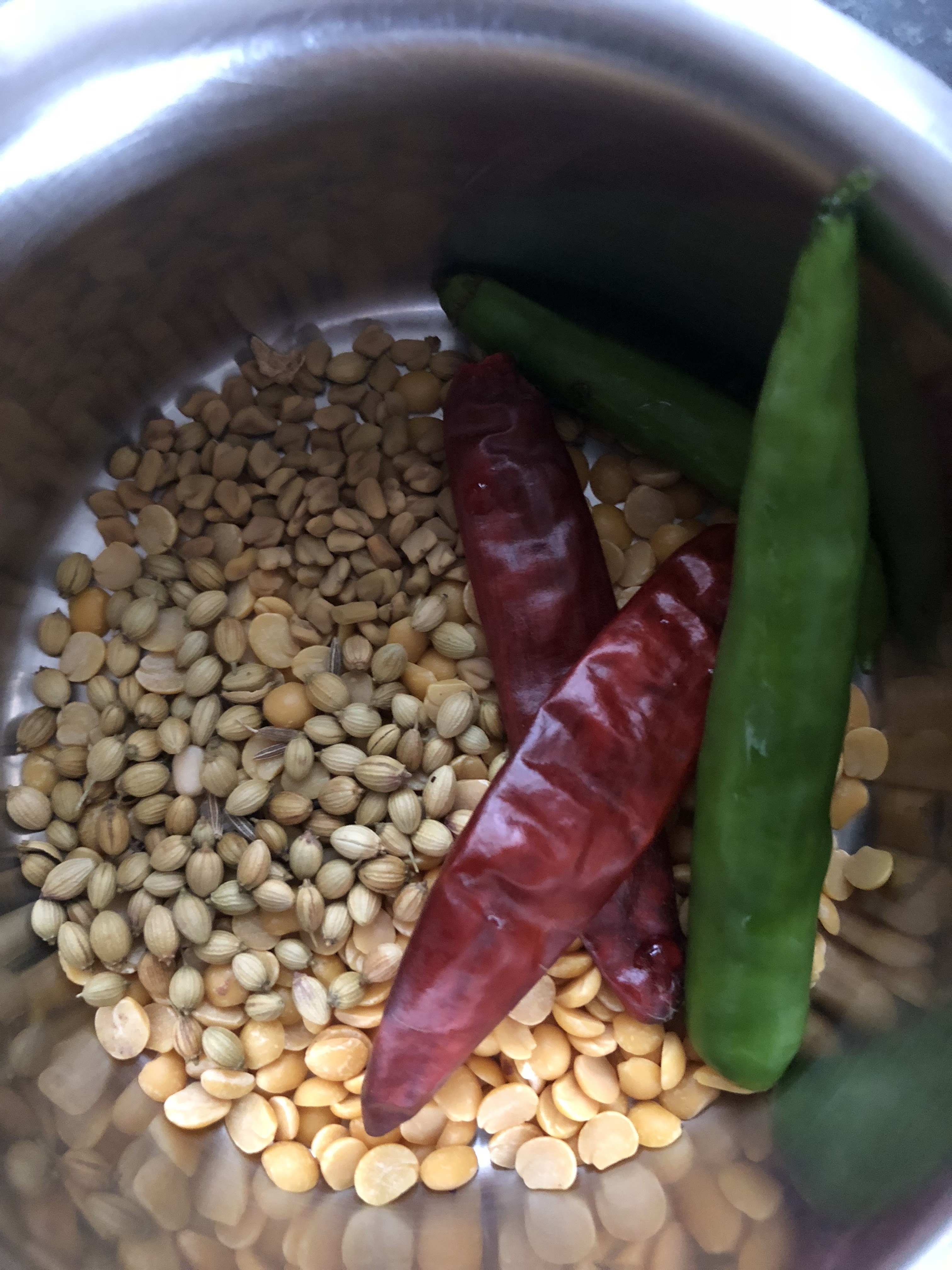
Arachi Utta More Kuzhambu (with ground paste)
Ingredients: (serves 3-4)
Tuwar dal (Tuwaram paruppu) : 1tsp
Dhaniya seeds : ½ tsp
Fenugreek/Vendayam : ¼ tsp
Red chilli : 2 No.
Jeera : ¼ tsp
Green chilli : 2 No.s
Tomato – 1 medium sized
Vegetables – pumpkin/lady’s finger (1 small cup chopped)
Grated coconut -
2tbsp
Oil
Mustard/Rai : 1/4 tsp
Butter milk (little thick and sour) – 1 tumbler
Sambhar powder : ¼ to ½ tsp
Salt : as per taste
Salt : as per taste
Method:
1. Soak tuwar dal ,dhaniya seeds , fenugreek, red chilli
,jeera and green chilli in water for 45min – 1hr.
Drain water, add coconut to it and grind it into coarse
paste.
2. Heat a vessel, pour 1 tumbler water in it.
3. Add chopped tomato
a6nd vegetable.
4. Add turmeric,salt,hing/asafoetida, sambhar powder. Let it
boil till vegetable gets cooked.
5. Now add the coarsely ground
paste and let it boil for 2-3 min
6. Then add 1 tumbler butter milk and keep stirring. As the gravy boils and foam is formed on its surface, stir well 2-3 times and then switch off flame.
7. Take a tadka pan, add oil, mustard seeds, allow it to
crackle. Then add curry leaves. Add this tadka to the More Kuzhambu.
Vedika utta More Kuzhambu (without ground paste):
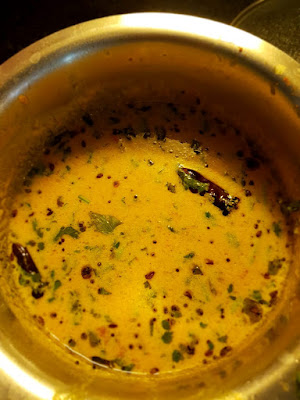
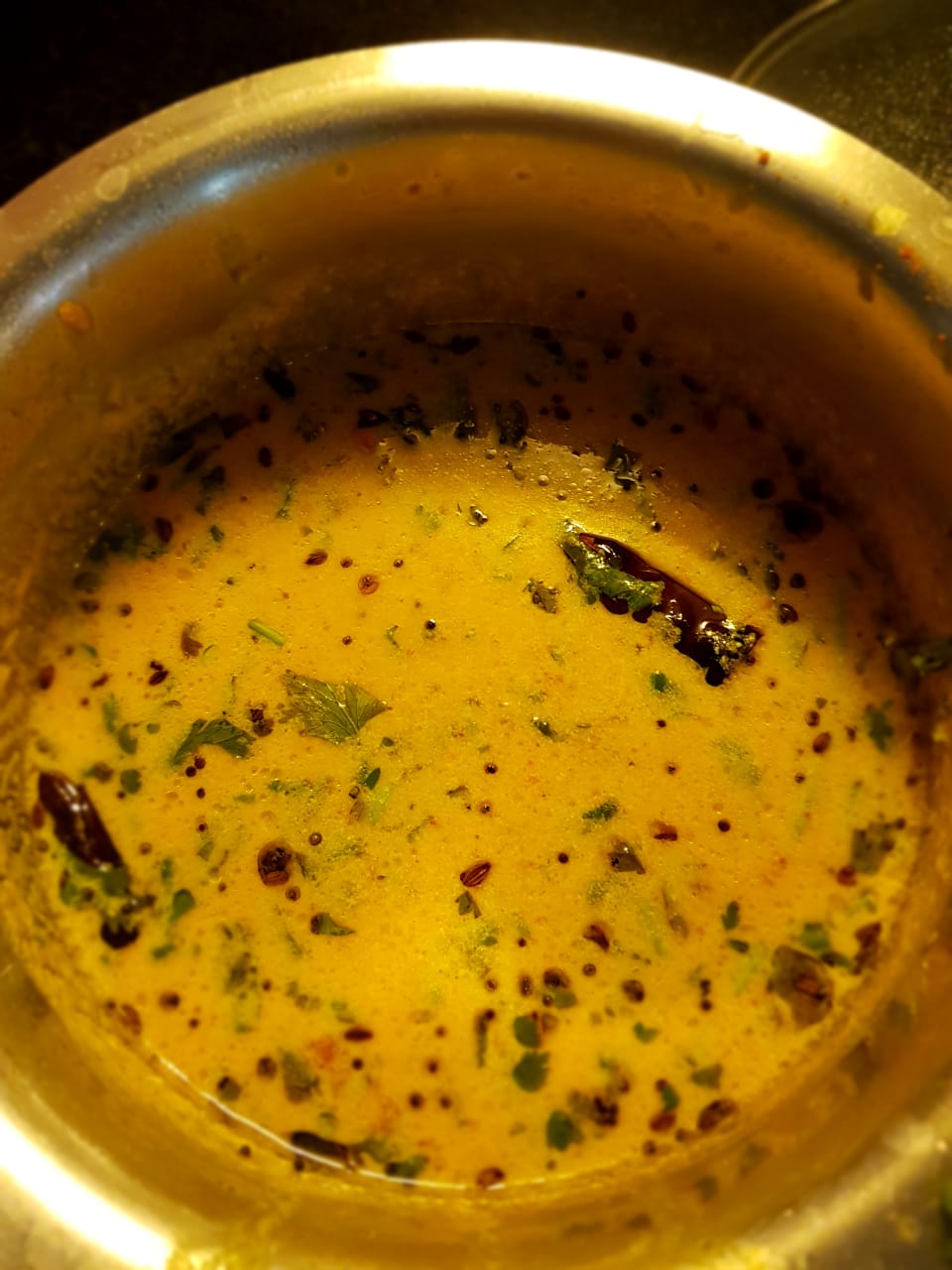
Ingredients: (serves 3-4)
Butter Milk (little thich and sour) – 2 tumbler
Besan/kadala maav – 2 tsp
Mustard/Rai – ¼ to ½ tsp
Ajwain/omam – ¼ tsp
Green chilli – 1
Red Chilli - 1
Fenugreek seeds/Vendhayam – ¼ tsp
Jeera – ¼ tsp
Sambhar powder– ½ tsp
Curry leaves – 2 strands
Salt – 1 tsp (or) as per taste
Asafoetida/Hing – pinch
Ginger – ½ inch
Tomato – 1 medium
Pumpkin/ladies finger – 150g (chopped)
Method:
1. Heat oil in a vessel, add mustard seeds and let it crackle.
2. Add chopped Green chilli,ginger, fenugreek,curryy leaves,
jeera.
3. Add ajwain and immediately add chopped tomato. Add chopped
pumpkin/ladies finger.
4. Saute for 2 minutes and then add ½ tumbler water
5.Add turmeric, asafetida, salt and sambhar powder. Mix well.
6. Close vessel with lid and let it boil till vegetable gets
cooked.
7.Now make sure Flame is at sim. Mix besan and butter milk. Make sure there are no lumps. Add
it to the boiling mixture, mix well and keep stirring.
8. As the gravy boils and foam is formed on its surface, stir well 2-3 times and then switch off flame.
Delicious More Kuzhambu is Ready!!!
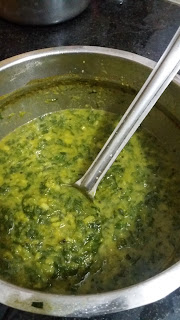
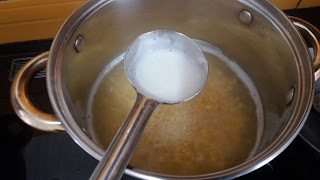
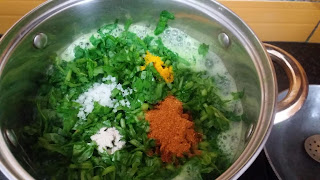
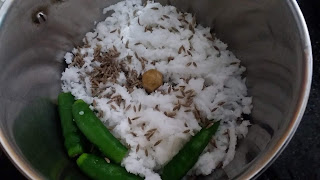
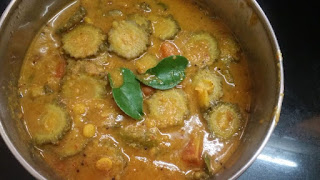
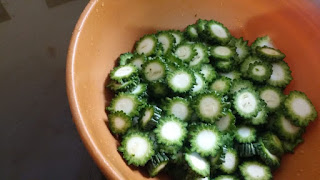
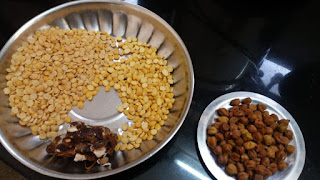
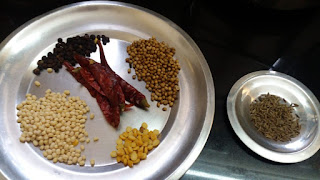
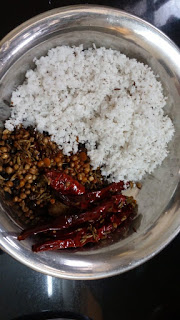
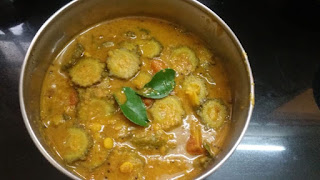
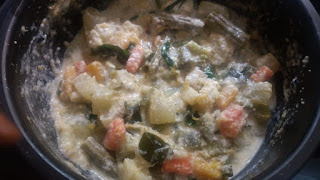
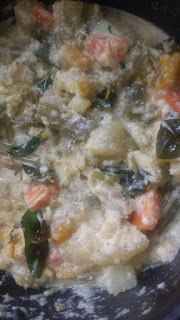
Paruppu thenga thogayal
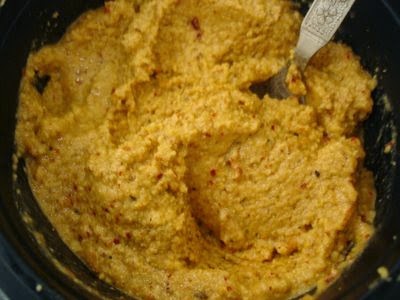
Curry leaves thogayal/kuzhambu
Ingredients: (Serves 3 to 4)
Curry leaves : 1 bundle
Mustard : 1/2 tsp
Asafoetida solid : small tamarind seed size
Salt : 3/4 - 1 tsp
Urad dal : 1.5 tbsp
Red chilli : 2
Pepper : 7
Tamarind : 1/2 Amla size
Oil : 2 tsp
Method for thogayal:
1. Take oil in a pan, add mustard, then asafoetida, red chilli, urad dal and pepper.
2. Fry the above till they turn golden brown and switch off the flame.
3. Now take the fried mixture, add curry leaves, salt, tamarind and grind it little coarsely.
Method for Kuzhambu:
Same as above, instead of tamarind pulp, add tamarind juice.
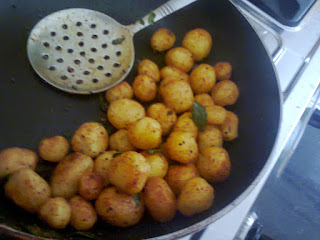
Ingredients:
Potato : 3-4 medium
Onion : 1 medium (optional)
Green chillies : 3-4
Chana dal (kadala paruppu) : 1 tsp
Urad dal : 1 tsp
Mustard seeds : 1/2 tsp
Turmeric : 1/4 tsp
Asafoetida : pinch
Salt to taste
Oil : 3-4 tsp
Method:
Boil the potatoes, peel the skin and keep it aside.
In a pan, heat oil and add mustard seeds. Once they crackle, add chana dal and urad dal and saute. ONce they start turning golden brown add chopped green chillies and onion and saute till onions just start turning brown. (if you are not adding onions, then once you add green chillies, saute for few seconds and then add the potatoes.)
Now take the boiled potaoes one by one in hand, crush and add into the pan. Add turmeric, asafoetida, salt, mix well and saute for 5-8 min. (Break the potatoes into smaller pieces if needed with the help of the spatula).
Switch off the flame.
Note : If you are using baby potatoes, boil them, peel skin & add them whole without crushing and do not add onions. Roast the baby potatoes till they turn crispy golden brown. You may need to adjust oil accordingly. And instead of green chillies, use red chilly powder as per your taste.
Brinjal Curry (southern style)
Its a delicious side dish for sambhar/kuzhambu rice. Also tastes good when simply mixed with rice and little ghee.
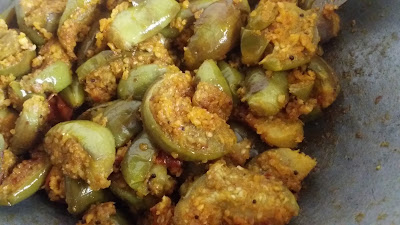
Ingredients : (Servesd 3 to 4)
Brinjals : 500 g
Oil : 5 tsp
Asafoetida : 1/4th tsp
Red Chillies : 4-5
Chana Dal : 1 tsp
Urad dal : 2 tsp
Tomato (medium) : 2
Turmeric : pinch
Salt : 1.5 tsp (or) as per taste
Tamarind juice : 2tbsp (less concentrated)
Method :
1. Take 1 tsp oil in a pan and fry red chillies, chana dal and urad dal with asafoetida.
2. Stir for 3 min, le tthe colour change. Now switch off the flame and allow mixture to cool.
3. Take another pan, take 4 tsp oil. Add chopped brinjals to it and fry.
4. Add chopped tomato, salt, turmeric and tamarind juice.
5. Keep mixing it for 2-3 min and then close it with a lid.
6. Stir it occasionally. Do this for 12-15 min till brinjals get cooked.
7. Now add the ground mixture that we had prepared in the beginning and add it to the brinjals.
8. Again mix well for 2-3 min and switch off the flame.
Note : You can also add dry/fresh coconut in the grinding mixture for more taste.
Manathakkali Keerai Curry:
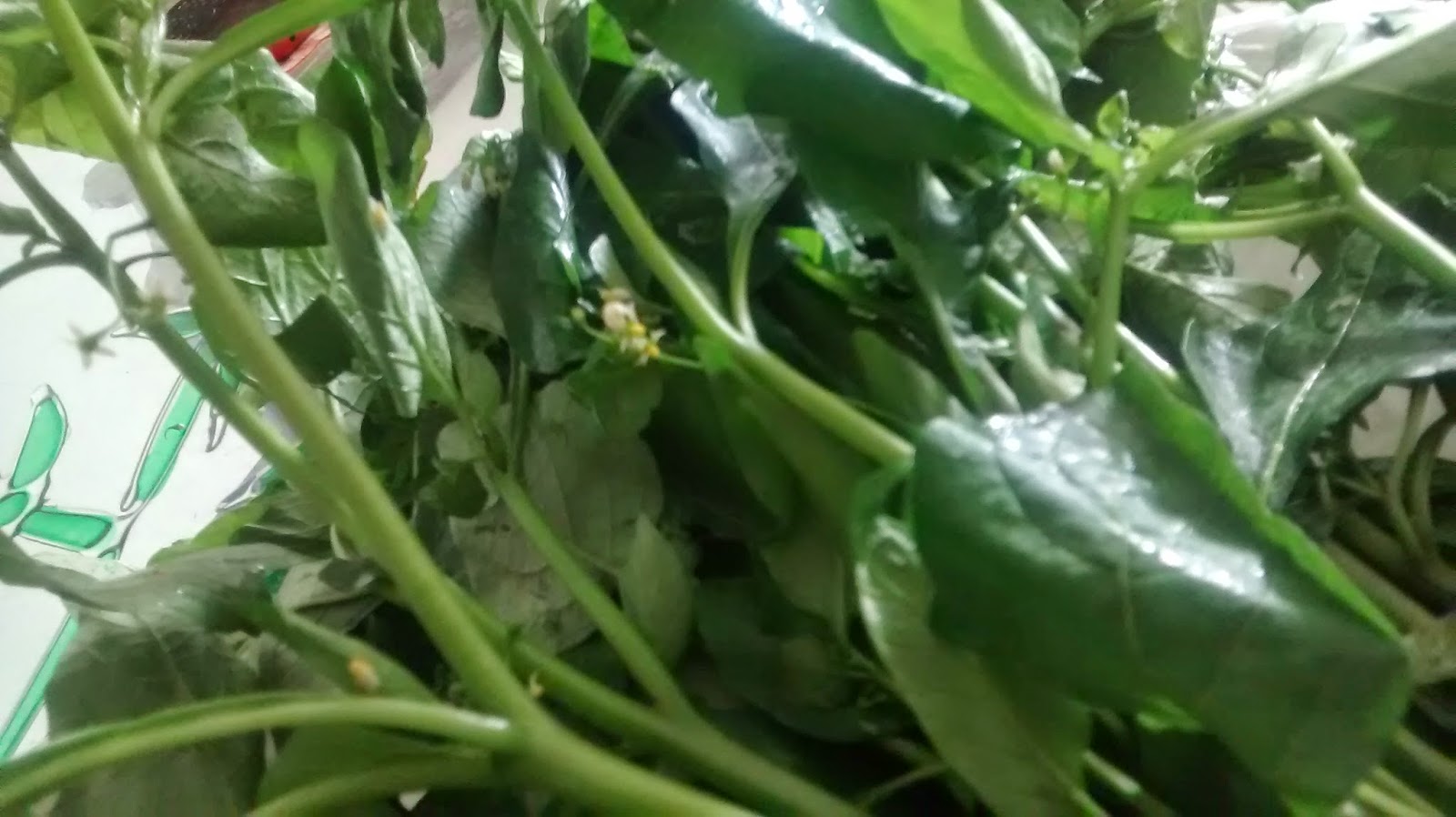
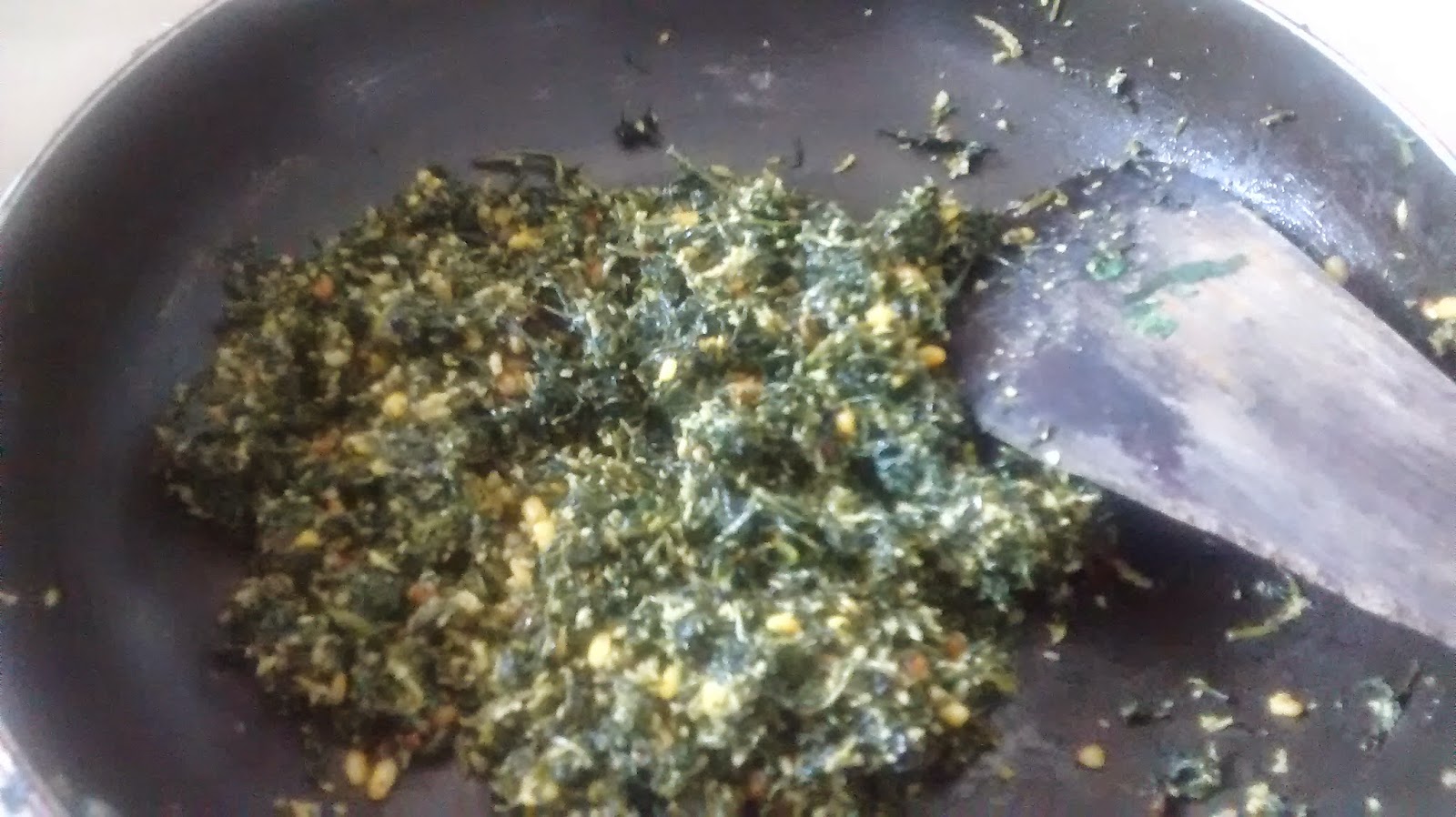
Ingredients :
Keerai : 1 big bundle
Moog dal : 3 tbsp (soaked in water for 10-15 min)
Grated coconut : 3 tbsp
Oil : 2 tbsp
Red chilli : 1
Mustard : 1/4 tsp
Jeera : 1/4 tsp
Urad dal : 1 tsp
Salt : as per taste
Turmeric : pinch
Asafoetida : pinch
Sugar : 3 to 4 tsp
NOTE: From the keerai bundle, do not include the stems as they will not get cooked properly and hence is difficult to digest. So pluck the leaves, flowers & berries and just the top soft part of the stem. i.e. a top small portion of the stem will be soft, just pluck that.
Method:
1. Take oil in a pan. Add red chilli halved, mustard, Urad dal.
2. When golden brown, add jeera and asafoetida, give a stir and immediately add chopped keerai. Add turmeric,salt and 1 tsp sugar and mix well.
3. Sprinkle water and cover pan with lid. Keep low flame, let it steam inside.
4. Once the keerai is half cooked, add moog dal, mix well and again close the lid.
5. When keerai gets cooked, add remaining sugar and mix well.
6. Finally garnish with coconut, mix and remove the pan from stove.
Note : You can adjust sugar/coconut quantity as per taste.
Manathakkali Kai Vatha Kuzhambu
Is it difficult to pronounce? Chill,let's leave the name and go into its details. There are many leafy vegetables available in the market. The very commonly known to all is Palak. Then there are some types of leafy greens which are not known to all and are used for cooking only in some regions of India and known to respective people. That way Siru Keerai, Mola Keerai, Arai Keerai, Manathakkali keerai are some of the leafy greens which are commonly known to people from Tamilnadu. (Keerai means leafy vegetable or leafy greens.)
Manathakkali Keerai has high medicinal values.You will see flowers (white in colour) in this leafy vegetable and also the fruits (small green berries which turn purple black when they ripen) which has high medicinal values. It helps in fighting mouth & stomach ulcers. Manathakali Keerai curry is generally given as a part of daily diet to women after delivery which is considered to heal many ailments within the body.
This leafy green(along with the flowers & berries) is used to make curries, whereas the small green berries of this leafy greens, also known as 'wonder berries' are used in making Kuzhambu. These berries are bitter in taste and hence its bitterness, the sourness of tamarind and the hot spices together make a great combination and render a tasty delicious Vatha Kuzhambu.
These berries can be used when they are fresh green or also can be used by sun drying them and preserving them with salt.
These fresh leafy greens are available in vegetable markets, and the fresh green wonder berries are also kept separate and sold by the market vendors. Whereas packets of salted dry berries are available in grocery stores.
Lets see how to make 'Manathakali Kai Vatha Kuzhambu'.
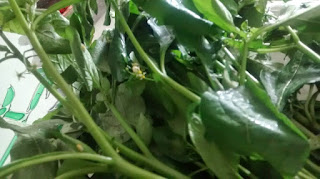
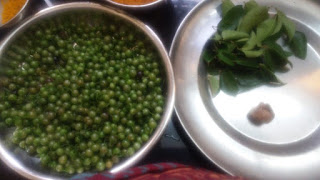
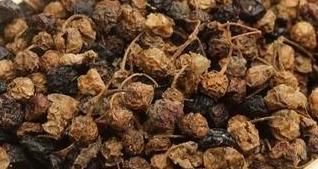
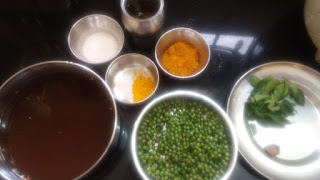
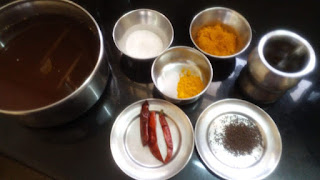
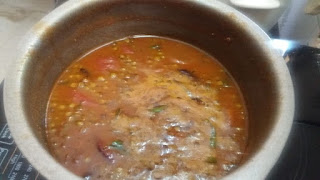
Ingredients (serves 3-4)
Tamarind : Hold some tamarind in hand and roll it between palms. Should be of big lemon size
NOTE: If you are using dried manathakkali kai, then note that it already contains salt, so add salt little less.
Procedure:
1. Prepare 3 tumbler/glass of tamarind juice by adding water to tamarind and squeezing it. (Note that it becomes easier to extract juice after soaking tamarind in hot water for 10-15 min).
2. Take oil in a vessel (with heavy/thick bottom) and add red chilli halved.
3. Then add mustard/rai, allow it to crackle. Then add curry leaves.
4. Add fresh berries and saute for a minute.
5. Now pour tamarind juice to it.
6. Add chopped tomato (this is optional).
7. Add salt, turmeric, asafoetida and sambhar powder.
8. Bring it to boil till quantity reduces to 3/4th of initial quantity. Add jaggery 2 min before you switch off the flame.
(if you feel that the gravy needs to be more thick or concentrated, take a small cup, add 2-3 tsp of rice flour, mix it with little water and add it to the boiling mixture. You can also add few curry leaves in the end.)
Orange thol Kuzhambu
Recipes for many varieties of Kuzhambu have been shared in earlier posts. This one is a 'chatpata' tasting Kuzhambu. This is made from the peeled off orange skin. Please note that the orange variety 'Kamala orange' is preferred for this. Also choose the part of the skin which is orange in colour rather than green.
Orange as a fruit is mostly liked by all, it's skin too has many uses. We can let the peeled off skin dry for few days (just roll them in a paper and keep it aside for 10-15 days) and then grind it into a powder and use it as a facial scrub mask. This scrub is really effective when mixed with little curd. Also during peeling the orange, the moisture/water content in the skin sometimes gets into our eyes (it escapes out like a spray when you tear or peel the skin) which is considered to be good for the eyes.
Let's see how to use Orange skin for cooking. 'Orange thol(skin) Kuzhambu' is a traditional recipe, it is savoured by mixing it with hot cooked rice and accompanied by any vegetable curry, but tastes best with roasted rice papad. In those days the 'kolinjikai' peeled skin was actually used for this recipe. Kolinjikai/Naarthangai/Kadaarangai are varieties of the citron fruit. If we do not get the kolinjikai fruit, we use the native 'Kamala orange' fruit's skin as a replacement.
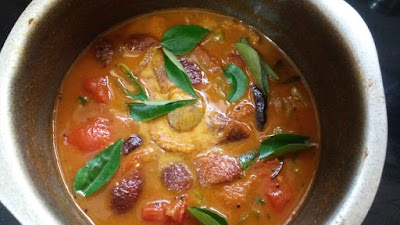
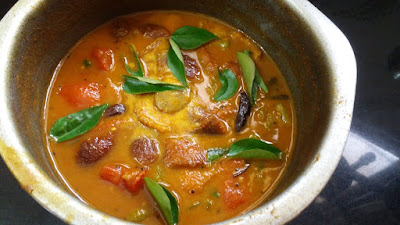
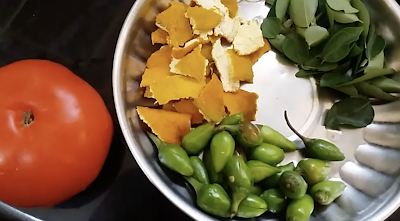
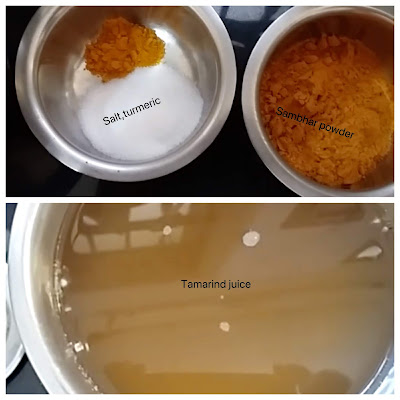
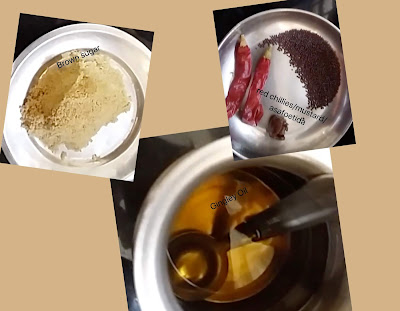
Ingredients (serves 3-4)
Tamarind : Hold some tamarind in hand and roll it between palms. Should be of lemon size
Orange skin : Peel one Kamala Orange, half of the peeled skin quantity should be enough, choose the part which is orange in colour rather than green. And please wash it well.
Red chillies : 2
Green chillies : 5
Mustard/Rai (Kadugu) : 1/2 tsp
Turmeric : 1/4th tsp
Salt : 2 tsp (or) as per taste
Sambhar powder : 2 tsp
Jaggery : one small Indian gooseberry (amla/nellikai) size
Asafoetida solid : Tamarind seed size
(If solid asafoetida is not available, use powdered asafoetida.)
Oil : 5-6 tbsp
Note: Gingley Oil will taste the best for Kuzhambu
Tomato : 1 (optional)
Curry leaves : few
Note1 : Adjust the chillies as per its hotness
Note2: The peeled off orange skin can be used fresh (or) if you are going to prepare the dish later or after few days, then you can store it dry (roll the skin pieces in a paper and keep in refrigerator) and use it later when needed.
Procedure:
1. Prepare 3 tumbler (1 tumbler =~ 200ml) of tamarind juice by adding water to tamarind and squeezing it. (Note that it becomes easier to extract juice after soaking tamarind in hot water for 10 min).
2. Take oil in a vessel (with heavy/thick bottom) and add red chilli halved.
3. Then add mustard/rai, allow it to crackle. Then add few curry leaves.
4. Add the orange skin pieces and saute for 2-3 minutes.
5. Now pour tamarind juice to it.
6. Add chopped tomato (this is optional).
7. Add salt, turmeric, asafoetida and sambhar powder. Mix well.
8. Let it boil till quantity reduces to 3/4th of the initial quantity. Add crushed/powdered jaggery, mix well, let it boil for 1 to 2 min, then switch off the flame.
(if you feel that the gravy is of thin consistency and needs to be more thick, take a small cup, add 2 tsp of rice flour, mix it with little cold water and add it to the boiling mixture, boil for 2 min and switch off.) Garnish with few curry leaves.
Dal
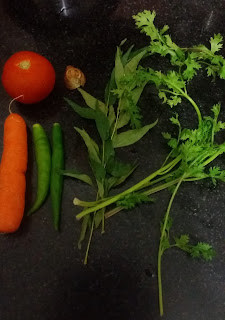
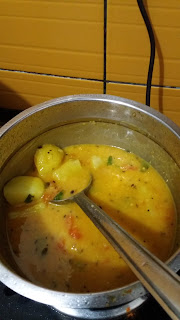
This is a quick and tasty one.You can prepare it plain without any vegetables or with vegetables. But instead of making plain dal, better add some carrot to it. You can savour this with rice or idli/dosa.
Ingredients:
Vegetable : 1 medium potato (or) 1 medium carrot (or) 1 capsicum
mustard seeds: 1/2 tsp
Jeera : 1/2 tsp
asafoetida : 1/4 tsp
green chillies : 2 chopped
ginger : 1/2 inch chopped
Tomatoes: 1 medium
Moog dal : 1/2 cup & Tuwar dal : 1/2 cup (both pressure cooked)
sambhar powder : 1 tsp
Turmeric powder : 1/8 to 1/4 tsp
Fresh coriander leaves: 1/4 cup chopped
Salt to taste
Method:
1. Take oil in a pan/vessel and add mustard seeds. Once it crackles, add jeera, asafoetida, green chillies, ginger.
2. Saute for half a minute and add chopped tomatoes. Saute for 1-2 min. (If you are using carrot/capsicum/potato, add them first before adding the tomatoes, saute for 1-2 min, then add tomatoes and again saute for 1-2 min.) (note: if you are using uncooked potatoes, you can follow step2, otherwise for boiled potatoes, you can add them during step 3)
3. Once tomatoes are half cooked, add 1 cup water, turmeric, sambhar powder, salt and stir well. Bring the mixture to boil. Let it boil for 5-7 min (to allow the carrot/capsicum/potato to get cooked).
4. Add mashed dal (pressure cooked), if required add some water to bring to right consistency. Stir well and bring it to boil for 3-4 min.
5. Garnish with dhaniya leaves.
Note : If you are going to have it for idli/dosa, let the consistency be little thinner.
Usli Curry
Usli is a very tasty curry or sabji - a mix of vegetable, dal and
spices. (Pronounce it as oosli, U as in 'Uttar Pradesh' ). It goes
really well with More Kuzhambu/Rasam/Vatha Kuzhambu rice. (Find these
recipes in 'Curry&Spice' page). You can make this curry with
vegetables like Kottarangai (cluster beans), Beans and Vazhai Poo
(Banana flower).
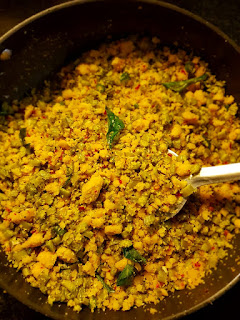
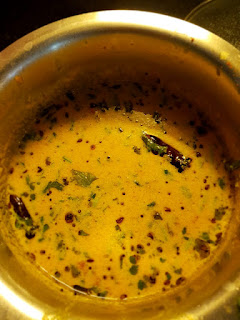
Ingredients:
Vegetables (kottarangai/cluster beans or beans) : 250g (or) Banana Flower : 1
[Note: If you are choosing banana flower, please remove the black stigma from the flowers. Chop the flowers and put them in water mixed with little butter milk which helps in stopping them from turning black]
Salt : 1 tsp or as per taste
Turmeric : 1/4 tsp
Dal : 200g (40% tuwar dal=80g, 60% Chana dal=120g)
Red chillies : 2
Green chillies : 2
Asafoetida : 1/4 tsp
Oil : 3-4 tbsp
Rai : 1/4 tsp
Urad dal : 1 tsp
Freshly grated coconut : 1 tbsp
Fresh Curry leaves
Fresh Coriander leaves
Method:
1. Clean and chop the vegetables, add salt (1/4th tsp or as per your taste) and pinch turmeric to it and cook it in a pressure cooker for 1 whistle.
2. Soak the dal (both tuwar and chana dal) in water for 1 to 1.5 hrs. Then drain the water, add red chillies, green chillies (you can adjust the chillies as per your taste), salt(3/4 tsp or as per your taste), asafoetida, pinch turmeric (turmeric here is optional) and then grind it coarsely. Then add chopped curry leaves(say 6-7) and few chopped coriander leaves. Mix well.
3. Divide the ground dal mixture into small portions and steam them (just like you steam idlis, place them on a idli plate greased with little oil), steam them for 7- 10 min.
4. Then let it cool down and crumble them down.
5. Drain water from the vegetables by squeezing them gently.
6. Now heat oil in a pan on medium flame, once hot add mustard seeds and let it crackle. Then add urad dal, few curry leaves (say 6-7) sauté for few seconds and then add the crumbled dal mixture. Saute it well for 4-5 min. (dont over sauté , else it will become dry).
7. Then add the vegetables, mix and saute again for 4-5 min, adjust salt if required.
8. Add few chopped curry leaves and coriander leaves. Add freshly grated coconut, saute for 1 min on low flame and then switch off the flame.
Banana Stem Curry/Sabji
Every part of a banana plant is useful. It gives us bananas, its leaves are used for serving food in south India, banana flower, fruit and stem are used for cooking, the plant fibres are used as natural craft materials, used in making flower garlands, etc. In the olden days, every house used to have banana plants and coconut trees in their backyards and once in a month banana flower curry or banana stem curry would a part of the lunch menu, but now in the modern times we don't have them but get it from the markets.
Banana stem has lot of fibre content and hence it aids digestion, good for stomach and prevents constipation. You can also consume it in the form of juice, after cleaning and chopping the stem, grind it in a mixer and strain it, add some salt and buttermilk to the juice and gulp it. It doesn't taste great but it's so very beneficial for health, people who suffer from stones in kidney should have this juice once in a week. The benefits are many, not all can be listed here. Now let's see how to make Banana Stem Curry. Cleaning & chopping the stem is the difficult part, whereas making the curry is easy. Please refer video for details on how to chop the stem.
It will be great if you can get the bottom part of the banana stem. As you move up the banana plant, the stem becomes less fibrous, smaller in diameter and also taste varies by little. So try to get the bottom part of the plant for better taste & benefits.
Ingredients : (Serves 4)
Banana stem : 1 piece
Mustard seeds/Rai/Kadugu : 0.5 tsp
Red chilly : 1
Green chilly : 1
Fresh grated coconut : 3 to 4 tbsp
Fresh Curry leaves : few
Oil : 3-4 tsp
Salt : as per taste
Turmeric : 1/4th tsp
Asafoetida/Hing : 1/4th tsp
Urad dal : 1 tbsp
Chana dal : 1 tbsp
Moog dal : 50g soaked in water for 10 to 15 minutes
Note : You can adjust chillies as per taste or its hotness.
Procedure:
1. Slit and remove the outer layers of the stem, then peel off the waxy smooth surface till you reach the fibrous non-smooth centre portion.
Chop the stem and put it in curd+water mixture, otherwise the chopped stem will turn blackish. For this curd+water mixture you would need 3-4 tbsp curd. Also while chopping, you need to remove the extra fibres coming out from the chopped portions. Refer the video for better details of this step.
2. Boil some water in a pressure pan, strain the chopped stem from the curd+water mixture and add it into the boiling water. Add some salt, turmeric and 2 tbsp curd. Pressure cook it for 2-3 whistles. Wait for few minutes and once you can open the cooker, strain excess water, also try to squeeze the chopped stem and remove excess water. Keep it aside.
3. Heat oil in a pan/kadhai, add mustard and let it crackle, add red chillies, Urad and chana dal, curry leaves and chopped green chillies. Saute for a min till dal turns golden brown.
4. Add the strained banana stem pieces into the pan, mix well, close the pan with a lid and allow it to cook for a minute.
5. Open the lid, add little salt, again close pan with lid and let it cook for 1-2 min.
Note: We have already added salt in step2, so add salt accordingly.
6. Open lid, add the soaked Moog dal(after straining and removing excess water from dal), mix well again close with lid and let it cook for 2-3 min.
Note: The dal need not cook completely. Hence 2-3 min is enough.
7. Open the lid, add freshly grated coconut, mix well, saute for a 1-2 min and switch off the flame.
Note : If you want, you can add 1/2 tsp sugar in this step.
Doodhi ki Sabji (Bottle guard sabji)
It's a very simple and easy recipe... Tastes best with rotis..Can also have it with rice.
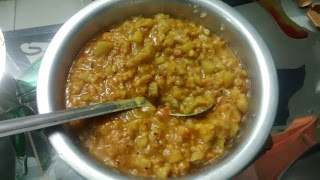
Ingredients :
Oil - 2 tbsp
Moog dal (paasi paruppu) - 50 g (1 small cup)
Mustard/Rai - 1/4 to 1/2 tsp
Jeera - 1/4 th tsp
Green chilli - 1 or 2
Garlic - 5 to 7
Bottle guard - 500 g
Tomato - 2
Salt
Turmeric - pinch
Dhaniya powder - 1 tsp
Sambhar powder - 1 tsp
Red Chilli powder - 1/2 tsp
Dhaniya leaves for garnish
(note : If family members are more or if bottle guard is small, you can adjust quantity by adding potatoes. You can also add some yellow pumpkin, it enhances the taste.)
Method :
1. Take oil in a pressure pan. Add Mustard/Rai and allow it to crackle.
2. Add jeera, chopped green chillies and garlic. Add chopped tomato and saute for 2-3 min.
3. Now add chopped bottle guard. Add turmeric, salt to it and mix well. Saute for 3-4 min.
4. Add 1.5 cup of water. (adjust water if required)
6. Add dhaniya powder, sambhar powder, Red chilli powder. Stir well.
7. Add moog dal and mix well.
8. Now close the pressure pan and wait for 3 whistles.
9. Garnish with dhaniya leaves.
Delicious Doodhi Sabji Ready!!!!!!!!!
Palak Paneer
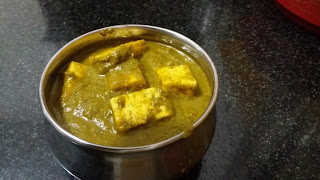
Ingredients:
Palak : 1 bundle (big)
Paneer : 200g
Cooking Butter : 2-3 tbsp
Refined oil : 2 tbsp
Ginger : 1/2 inch
Onion : 2 or 1cup
Garlic : 4-5 big pulps
green chilly : 1-2 (according to taste)
Tomato : 1 big or 3/4 cup (make puree)
Tomato ketchup : 1.5 tsp
Dhaniya powder: 1.5 tsp
Garam masala : 1 to 1.5 tsp
Turmeric powder : 1/4 tsp
Red chilli powder : 3/4 tsp
Sugar : 1/2 tsp
Fresh cream : 2-3 tbsp
Kaju : 3-4
Milk : 2 tbsp
Salt : 1-2 tsp
Method:
1. Clean spinach properly (add stem only if its very tender, else pluck only the leaves) and add it in boiling water..immediately switch off flame and close the vessel with lid for 5-7 min. Drain excess water and grind the spinach into smooth paste.
2. Heat butter & oil in a pan. Add finely chopped ginger and onion and fry till golden brown.
3. Add chopped garlic. Now add tomato puree.
4. Add dhaniya powder, turmeric powder and red chilli powder. Also add the sugar.
5. Fry well till oil leaves the mixture and oozes out into sides of the pan.
6. Add palak to the pan. Add salt, garam masala. Mix well.
7. Grind kaju with milk. Add this paste to the pan. Mix well. (Soak kaju for 10min in milk before grinding)
8. Cut paneer into cubes and add it. Mix well and let it boil for 3 min with closed lid on low flame.
Note: You can also fry paneer cubes in 1 tbsp ghee till it becomes golden in colour and then add to the gravy. It will give an enhanced taste.
9. Add fresh cream. (Note : If cream is not available, take boiled milk, take the malai from it and add it to the pan. Add 2-3 tbsp milk also in addition. Else, boil creamy milk, let it cool down, keep it in fridge for 2 to 3 hours. Creamy layer will be formed on the top, you can take the creamy layer out with a ladle and use it instead of cream.)
10. Let it boil for 30sec min. Switch off the flame. Add one more tbsp of cream and close with lid.
Palak Mushroom
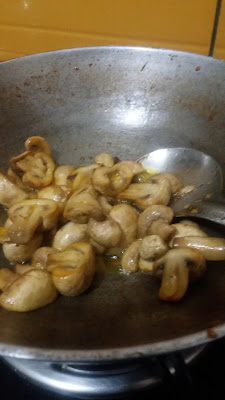
Ingredients:
Palak : 1 bundle (big)
Mushroom : 200g
Cooking Butter : 2-3 tbsp
Refined oil : 2 tbsp
Ginger : 1/2 inch
Onion : 2 or 1cup
Garlic : 4-5 big pulps
Tomato : 1 big or 3/4 cup
Tomato ketchup: 1.5 tsp
Dhaniya powder: 1.5 tsp
Garam masala : 1 to 1.5 tsp
Turmeric powder : 1/4 tsp
Red chilli powder : 3/4 tsp
green chillies : 1-2 (optional)
Black Pepper: 8-9 crushed (or) 1/2 tsp pepper powder
Jeera powder : 0.5 tsp
Sugar : 1/2 tsp
Fresh cream/milk : 2-3 tbsp
Kaju : 3-4
Milk : 2 tbsp
Salt : 1-2 tsp
Mostly for Mushroom recipes, you need to take care of the below steps so that mushrooms dont become soggy:
1. Wash mushrooms in cold running water. Dont soak in water and clean them.
2. After cleaning , put the mushrooms over a dry cloth so that excess water is absorbed or put them in a strainer.
3. Fry the mushrooms with little oil for 3-5 min (or till quantity reduces by half) in high flame before starting the recipe and keep it aside on a tissue paper.
Method:
1. Cut each of the button mushrooms into four.
2. Heat 1-2 tsp oil in a pan/kadhai, and when its really hot, add these mushrooms and fry them for 3-5 min(or till quantity reduces by half). You need to saute them in high flame, but if u feel mushrooms are getting burnt keep adjusting the flame from high to medium and medium to high. You will see that in 2 min..mushrooms leave out lot of water. That is why high flame is necessary to evaporate that water, else mushrooms will start steaming in their own water and hence become soggy and mushrooms will taste bad. Once done, keep mushrooms aside on tissue paper.
3. Clean spinach properly (add stem only if its very tender, else pluck only the leaves) and add it in boiling water..immediately switch off flame and close the vessel with lid for 5 min. Drain excess water and grind the spinach into smooth paste.
2. Heat butter & remaining oil in a pan. Add finely chopped ginger and onion and fry till golden brown.
3. Add chopped garlic. Grind tomato & green chillies to make puree and add it to kadhai. (green chillies are optional)
4. Add dhaniya powder, turmeric powder and red chilli powder. Also add the sugar.
5. Fry well till oil leaves the mixture and oozes out into sides of the pan.
6. Add palak puree & mushrooms to the pan. Add salt, garam masala, jeera powder and pepper powder (or crushed pepper). Mix well.
7. Grind kaju with milk. Add this paste to the pan. Mix well. (Soak kaju for 10min in milk before grinding)
8. Let the gravy simmer with closed lid for 4-5 min.
9. Add fresh cream. (Note : If cream is not available, take boiled milk, take the malai from it and add it to the pan. Add 2-3 tbsp milk also in addition. Else, boil creamy milk, let it cool down, keep it in fridge for 2 to 3 hours. Creamy layer will be formed on the top, you can take the creamy layer out with a ladle and use it instead of cream.)
10. Let it boil for 30sec min. Switch off the flame.
Aloo Mutter
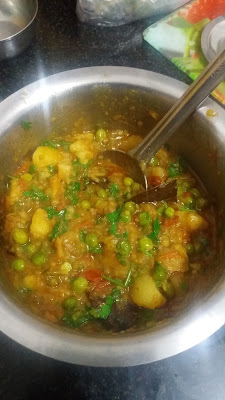
Ingredients:
Boiled Potato : 3 medium sized
Peas/mutter: 1 cup
Onion: 2
Tomato: 2
Ginger garlic paste : 1.5 tbsp
Green Chillies : 2
Turmeric : 1/4 tsp
Garam Masala : 1.5 tsp
Dhaniya powder : 1.5 tsp
Red Chilli powder : 1 tsp
Roasted Jeera powder : 1/2 tsp
Bay leaf -1
Cinnamon - 1 inch
Cardamom - 2 small
Salt to taste
Oil : 3 tbsp
Ghee - 1 tbsp
Fresh coriander leaves
Method:
1. Heat oil+gheein the kadhai. Add cardamom, bay leaf and cinnamon.
2. Add finely chopped onions. Saute for 2 min.
3. Add green chillies, ginger garlic paste and saute till onions start turning golden brown..
4. Now add finely chopped tomatoes to it. Saute for 5-8 min or till oil oozes out from the masala into the sides of the kadhai.
5. Add turmeric, garam masala, dhaniya powder, red chilli powder, jeera powder and saute them for a min.
6. Add green peas and little chopped coriander leaves (say 1 tbsp), saute for 2-3 min.
7. Now add 1 cup water and cook for 2 min with closed lid.
8. Now add mashed potatoes and salt, Mix them well and saute for 2-3 min.
9. Transfer it to another vessel and place it in pressure cooker and wait for one whistle.
10. Garnish with fresh coriander leaves.
Soya Bhurji
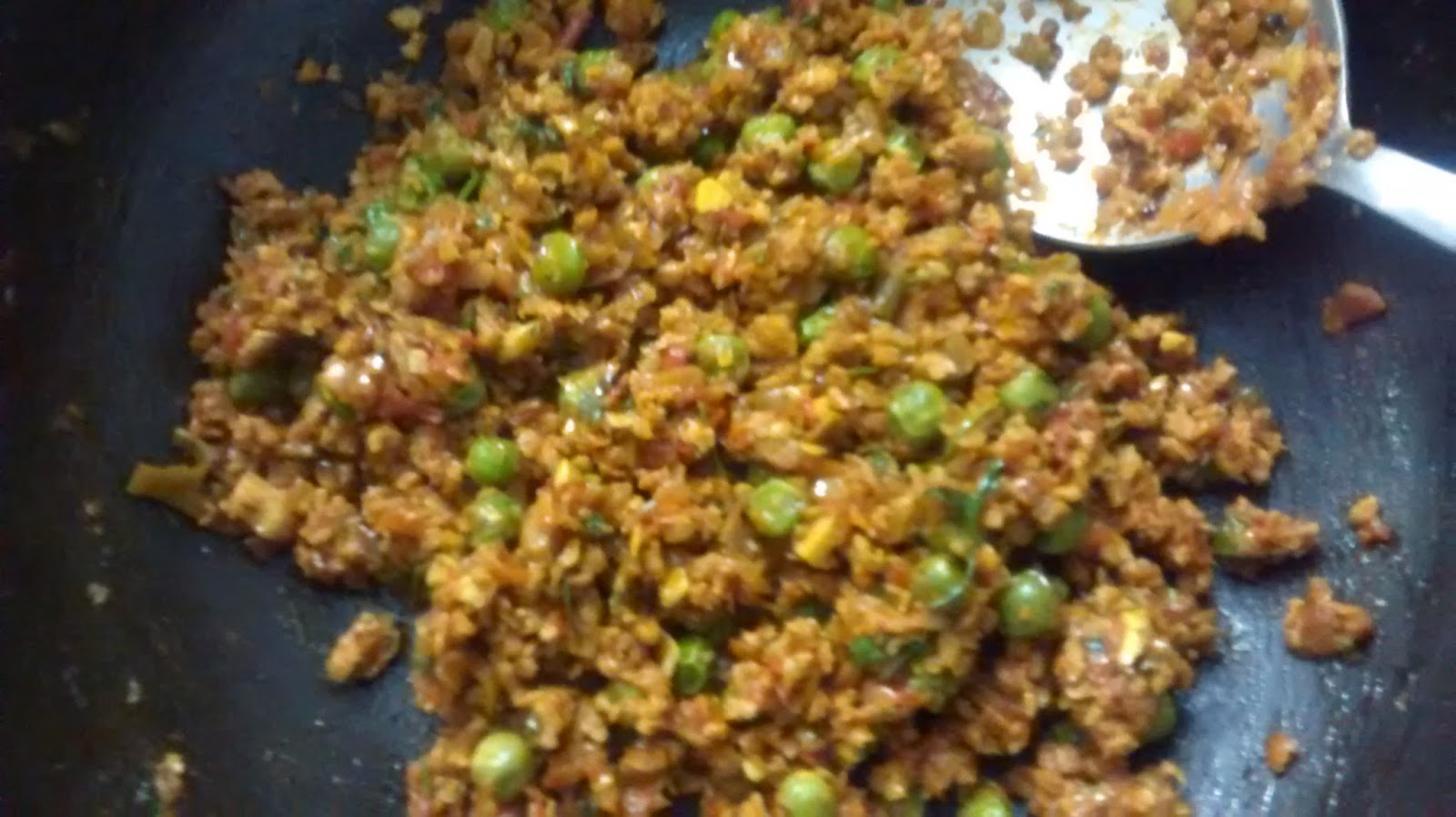
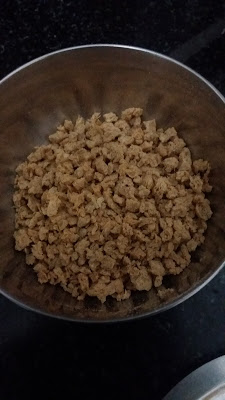
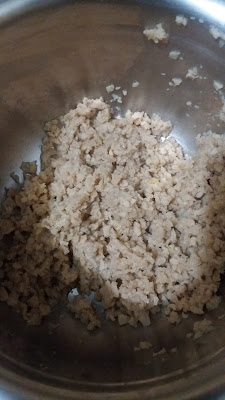
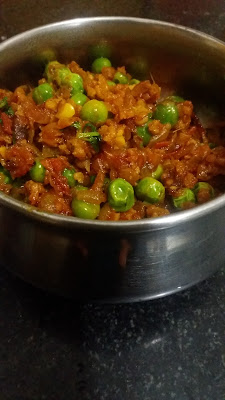
Ingredients: (serves 2)
nutrella soya granules : 1/3 rd cup
mutter : 1/3rd to 1/2 cup
onion : 1 medium
tomato : 2 medium
ginger garlic paste : 1 tsp
green chilli : 1
garam masala : 1/2 tsp
red chilli powder : 1/2 tsp
Turmeric : 1/4 tsp
Dhaniya leaves to garnish
Oil : 2-3 tbsp
Salt to taste
Method:
1. Boil water in a pan. Add soya granules to it, let it boil for 2-3 min. Switch off flame and close pan with a lid. After 5 to 10 min squeeze water from the soya and keep soya aside.
2. Boil water in a pan (take pan used for soya) with little salt and then add the mutter. Let it boil for 5 to 7 min. Switch off flame and close it with lid.
3. Take oil in another pan. Add chopped green chilly, chopped onions, ginger garlic paste and fry for 5 min.
4. Add chopped tomato, turmeric, garam masala, red chilli powder and fry it well for 10-15 min. Stir often. Sprinkle water if needed to avoid over roasting of masala.
(Note: To save time, you can cook the soya and mutter while performing steps 3 & 4.)
5. Now add soya to the onion-tomato masala, stir well for 2 min. Add the boiled mutter . Add salt, cook for 5 min. Add little water (1/3 cup), add chopped dhaniya leaves and close pan with a lid and let it simmer for 2-3 min.
Paneer Tikka Masala
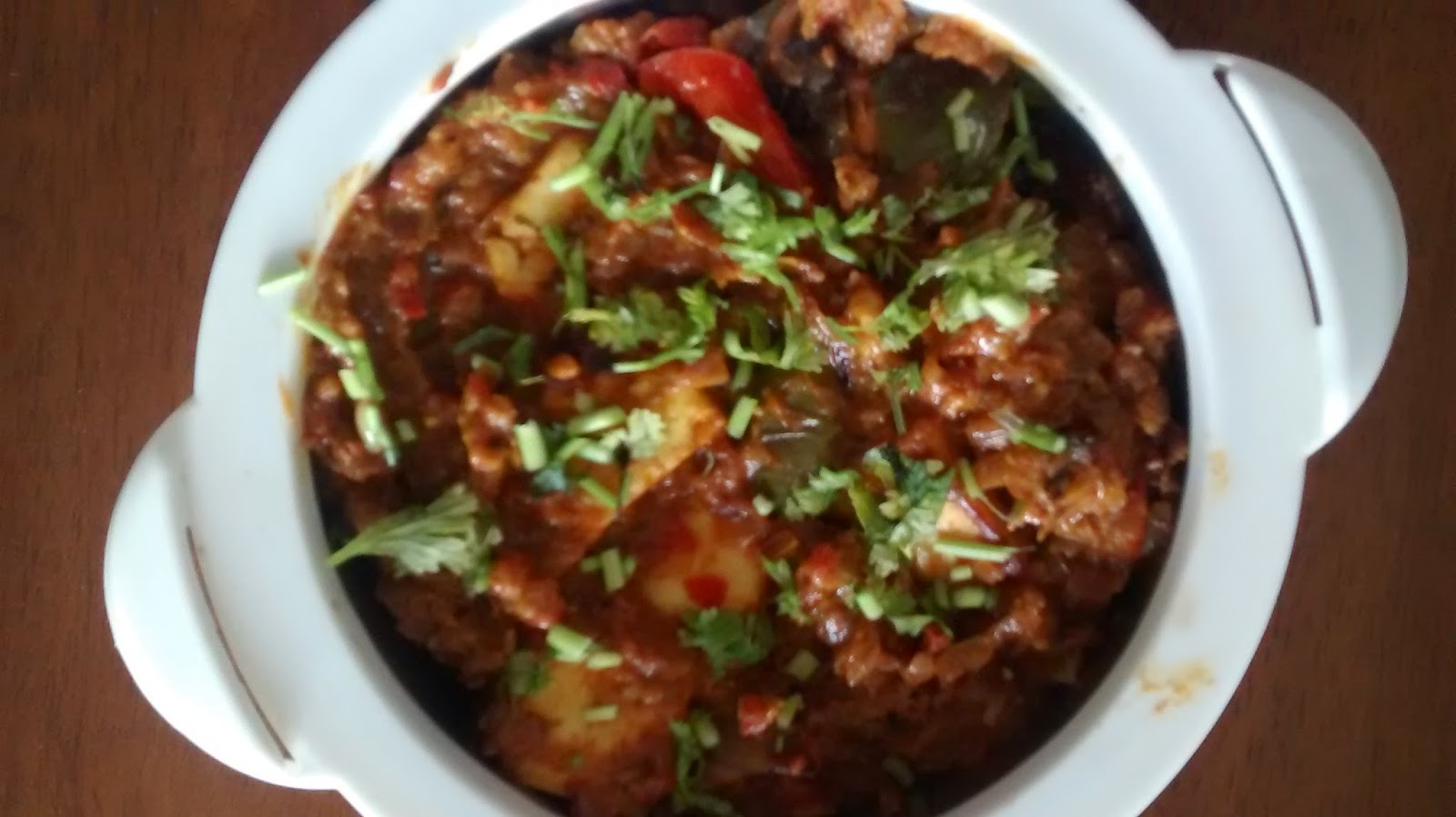
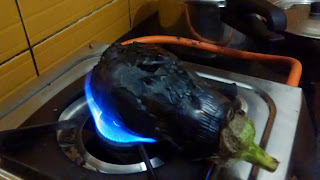
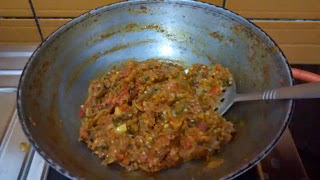
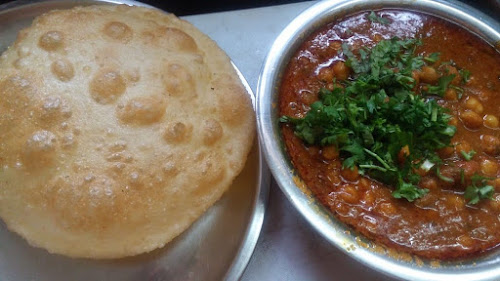
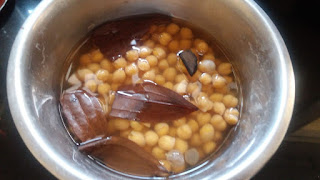
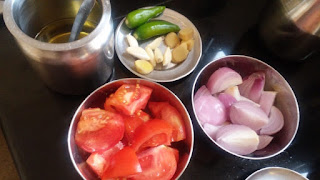
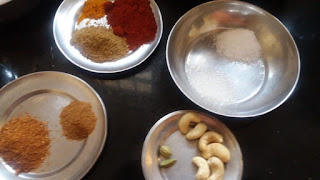
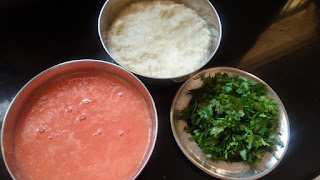
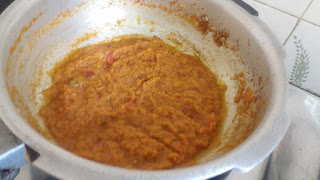
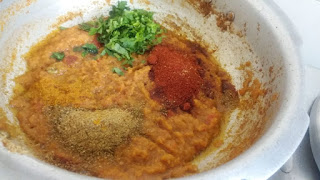
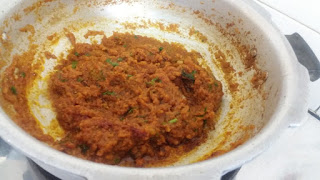
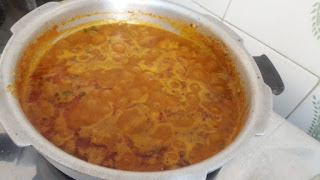
Method
Stuffed Capsicum
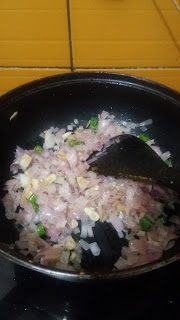
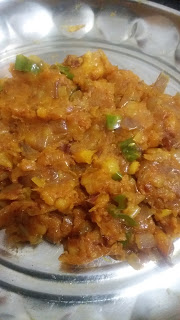
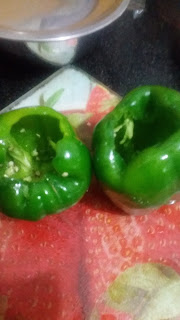
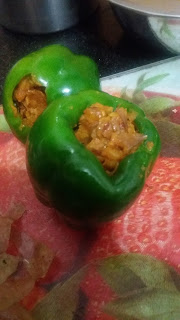
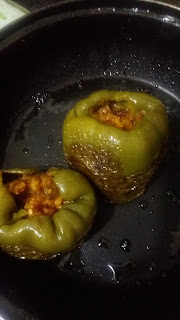
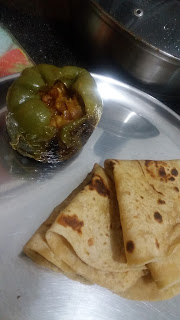
Ingredients:
Capsicum : 2-3 small
Boiled potatoes : 2
Onion : 1 big
green chillies : 2
Ginger garlic paste : 1 tsp
Turmeric : 1/4 tsp
red chilli powder : 1 tsp
Jeera powder : 1/2 tsp
garam masala : 1/2 tsp
Salt to taste
Oil : 3-4 tbsp
Method:
1. 2-3 tsp oil in pan, add ginger garlic paste, finely chopped onions, chopped green chillies.
2. When onions turn translucent, add the boiled and mashed potatoes, turmeric, red chilli powder, jeera powder, garam masala, salt and mix well and saute for 4-5 min.
3. Cut the top stem-like portion of capsicum, remove the seeds, apply little oil and salt inside and then stuff it with the potato mixture.
4. Shallow fry the stuffed capsicums in a pan with 2-3 tbsp oil till the capsicum skin wrinkles and changes the colour. (adjust oil quantity if required)
Brinjal Tuwar Sabji
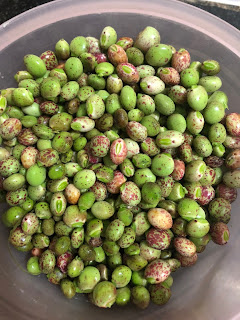
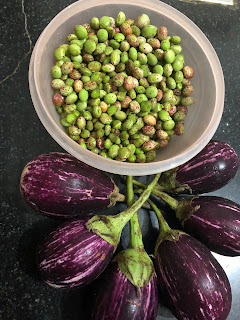
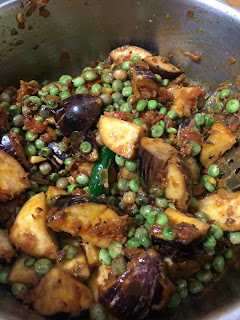
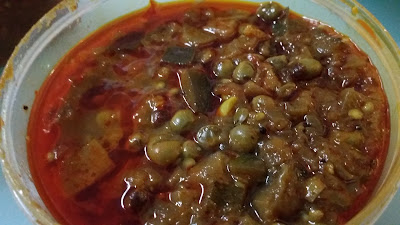
Ingredients:
Eggplant : 1 medium (or) brinjals : 5 to 6
Fresh green tuwar : 1 cup
Onion : 1
Tomato : 2
Ginger : 1 inch
Garlic : 4 to 5
Green chillies : 2
Mustard : 1/2 tsp
Jeera : 1/2 tsp
Turmeric : 1/4 tsp
Dhaniya powder : 1 tsp
Red chilli powder : 1 tsp
Garam masala : 1 tsp
Jeera powder : 1/2 tsp
Salt to taste
Oil : 4-5 tbsp
Method:
1. Take the eggplant or the little brinjals and cube them.
2. Take oil in a cooker pan . Add mustard and jeera. Add chopped ginger, garlic & greenchillies. Saute for few seconds.
3. Add chopped onions. Saute well till light brown. Add chopped tomatoes. Add turmeric, dhaniya powder, red chilli powder and saute till oil separates and oozes out into the sides of the pan.
4. Now add chopped brinjal and fresh green tuwar and saute well till they are almost half cooked.
5. Add 1.5 to 2 cup water (till the mixture just starts to immerse in water). Add salt, jeera powder and garam masala.
6. Close the cooker pan and cook for 3-4 whistles. Serve hot with roti/phulka.
Katol (green Moong dal)
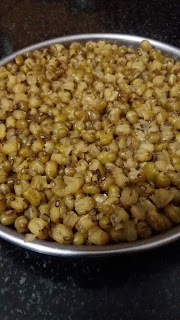
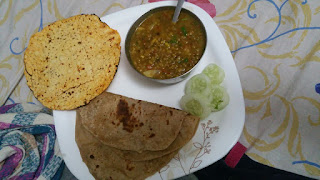
Ingredients :
Green moog dal : 1/2 cup
Boiled Potato : 1
Onion : 1 medium
Tomato : 1
Ginger : 1/2 inch
Garlic : 2
Green chillies : 2
Turmeric : 1/4 tsp
Red chilli powder : 1/2 tsp
Dhaniya powder : 1/2 tsp
Jeera powder : 1 tsp
Garam masala : 1 tsp
sugar : 1/2 tsp
Oil : 2-3 tbsp
Method:
1. Soak 1/2 cup green moog dal overnight. And pressure cook it for 3 whistles.(if you dont get time to soak or if you have forgetten to soak, saute the dal on dry pan till the dal gets heated up well. Then pressure cook it for 4 whistles.)
2. Heat oil in a pressure pan, add chopped ginger, chopped garlic, chopped green chillies. Saute for few seconds and then add chopped onion. Mix well and saute.
3. When the onion turns translucent, add chopped tomato, add turmeric, dhaniya powder & red chilli powder and saute for 5 min.
4. Add the cooked green moog dal and the boiled & mashed potato. Mix well.
5. Add jeera powder, garam masala and sugar. Add 1 cup water and pressure cook for 1 or 2 whistles. Serve hot with roti/phulka.
(Note : By chance,if u feel the consistency has become loose or watery and should be thicker, you can add 0.5 to 1 tsp cornflour , bring to boil and switch off the flame.)
Aloo Gobi Masala
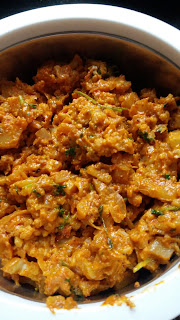
Methi Corn Gravy/ Methi Malai Mutter
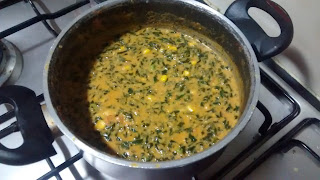
Dhaniya powder : 1.5 to 2 tsp
Red chilli powder : 1 tsp
Boiled corn or boiled mutter : 3/4th cup
Garam masala : 1.5 tsp
Sugar : 2 tsp
Fresh cream : 4 tbsp
Salt to taste
Method :
Clean and pluck the methi leaves. Chop them. Add little salt to it, mix well and keep it aside
Take onion, ginger, garlic, kaju and grind them into smooth paste
Heat oil/cooking butter in a pan and saute the ground paste for 5 min. Then add jeera powder, dhaniya powder, red chilli powder and mix well. Then add tomato puree, mix and saute well till oil oozes out of the masala into the sides of the pan.
Squeeze water from methi and add methi into the pan. Saute well till methi gets cooked.
Add boiled corn/mutter, garam masala, sugar. Mix well and saute for 1-2 min.
Add fresh cream and saute for a minute. Switch off the flame. Serve with roti/phulka.
Karela Barela
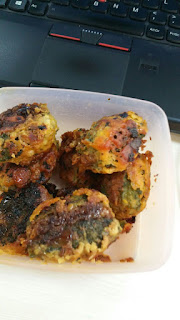 Method:
Take baby bitter guards (200g), slit them and take out the inner stuff. Take some water in a vessel add little turmeric and salt and boil these guards till they are half cooked. Drain the water and allow them to cool.
Chop the spring onions(1 bundle). Take 3-4 tsp oil in a pan, add 1 tsp jeera, chopped green chillies 2-3, 1 tsp ginger garlic paste and add the spring onions. Add 1 tsp salt, turmeric, 2-3 tsp sugar (or more if you cannot cherish the bitterness of the guards), 1 tsp garam masala, 1 tsp red chilli powder and saute it till the onions turn soft and they leave all the water and the water evaporates. Add 2 -3 tsp of gram flour and saute for 1-2 min. Squeeze half lemon and switch off the flame.
Stuff the bitter guards with the spring onion mixture. Take 4-5 tbsp oil in a pan, 1/4 tsp jeera (optional) and the stuffed bitter guards. Sprinkle little turmeric , little salt, 1/4 tsp red chilli powder and some sugar and fry them by flipping the guards occasionally till they get cooked on all sides.
Aloo Methi
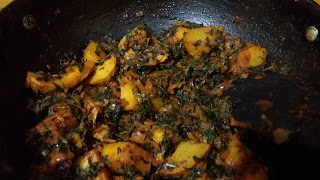
Ingredients:
Methi: 1 medium bunch
Aloo : 2 medium
Ginger : 1/2inch
green chillies : 2
Jeera: 1/2 tsp
Turmeric powder : 1/4 tsp
Red chilli powder : 1 tsp
jeera powder : 1/2 tsp
Salt to taste
Oil : 4 tbsp
ghee : 1 tsp
sugar : 2 tsp
Method:
1. Dice the potatoes and shallow fry them with 4 tbsp oil. ( can adjust oil if required)
2. In the remaining oil jeera, chopped ginger (1/2 inch), green chillies.saute for a min.
3. add chpped methi and turmeric and red chilli powder, salt and suga, jeera powder.
4. cook with closed lid for 3-4 min. then cook with open lid for 2-3 min.5. Add the potatoes, mix well and cook with closed lid for 2 min. then witth open lid saute for 2-3 min.
6. then add ghee, saute for a min an switch off flame.
Snake guard Sabji
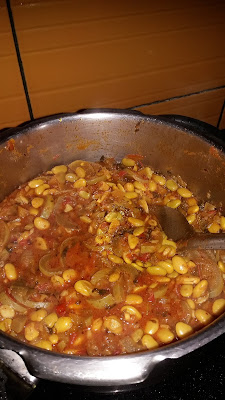
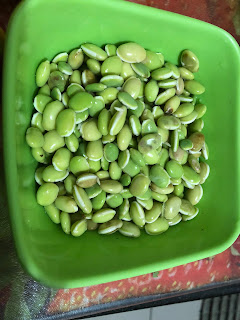
Method:
Add 2-3 tbsp oil to a cooker pan.
Add Jeera 1/2 tsp. 1 green chilli and chopped ginger (1 inch) and chopped garlic(4-5).
Add 1 finely chopped onion and saute till it starts turning brown.
Add 2 finely chopped tomatoes (the sour ones) , add 1/2 tsp turmeric and 1 tsp dhaniya powder, 1 tsp chilli powder. Saute till it oozes oil into the sides of the pan.
Now add 2 tbsp chopped fresh coriander leaves, saute for 2 min.
Add 3/4 cup fresh lima beans (mochai/papdi), mix well and saute for 5 min.
Then add chopped snake guard, salt. Saute for 5 min.
Add 1 to 1.5 cup water, 1tsp garam masala and cook for 2-3 whistles.
Garnish with coriander leaves. Serve hot with rotis.
Doodhi Curry
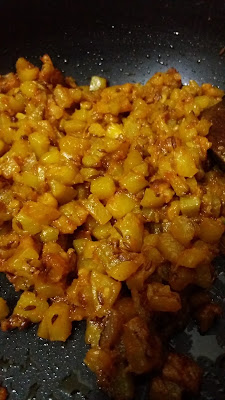
Ingredients
Doodhi/Lauki/Bottle guard : 1 medium size
Oil : 2-3 tbsp
Jeera : 1 tsp
turmeric : 1/4 tsp
asafoetida : 1/8 tsp
salt : 1 tsp (or) as per taste
red chilli powder : 1/2 tsp
dhaniya powder : 1/2 tsp
Besan/ bengal gram flour : 1 tbsp (or) 2 tbsp dry roasted & coarsely ground Peanut powder
Sugar : 1/4 tsp
Method :
Chop the bottle guard into small pieces.
Heat 2 tbsp oil in a pan, add jeera, then the chopped bottle guard.
Add turmeric and salt, mix well and close the pan with a lid and cook on low to medium flame for 8-10 min. The bottle guard will cook in its own oozed out water. Stir occasionally in between to avoid burning of food.
Open the lid and add asafoetida, red chilli powder, dhaniya powder and 1tbsp oil and saute on low flame for 5 min.
Add besan and sugar, mix well and saute for 5 min. (or ) instead of besan, you can add 2 tbsp Dry Roasted & coarsely ground Peanut powder and saute for 2 min.
Dal fry:
Garlic : 5-7
ginger : 1/2 inch
green chilli : 2
Red chilli powder : 1 tsp
dhaniya powder : 1 tsp
turmeric : pinch
Jeera : 1/2 tsp
whole red chillies : 2
oil : 4tbsp
Tuwar dal : 1 cup (pressure cooked and mashed)
Sugar : 1/4 tsp
Method:
Chop garlic, ginger an green chillies.
Heat oil , add jeera, let it crackle. Then add whole red chillies. Then add ginger, garlic and green chillies. Saute for 30-60 sec.
Then add red chilli powder, dhaniya powder, turmeric. Immediately add the mashed dal. Add little water (not more than 1/4 cup), add salt and mix well. Add sugar.
Let it boil for 1-2 min, stir well to avoid burning (since consistency is thick, it might burn). Switch off and garnish with coriander leaves.
Note: You can follow the same above steps for masoor dal.
Sabudana Khichdi
It's one of the favourite dishes of my daughters.Its very yummy and filling.
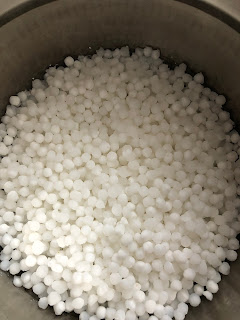
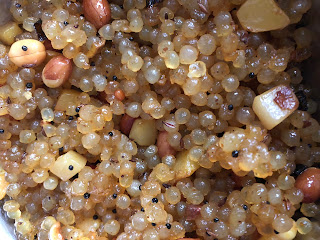
Ingredients :
Sabudana (jevarasi) - 100g
Potato - 2
Green chilli - 5 to 6 (small)
Red chilli : 2 (small)
Oil : 4 tsp
Mustard/Rai : 1 tsp
Urad dal : 1 tsp
Jeera : pinch
Turmeric powder : pinch
Salt : 1 tsp
Chilli powder : pinch
Note : You can also add 1/4 cup groundnuts
Method :
1. Soak sabudana in water till it becomes soft (apprx. 1.5 - 2hrs)
2. TAke oil in a pan. Add mustard, jeera, urad dal, red chilli, green chilli(chopped) and fry. (If you are including groundnuts, add them and fry till the skin starts changing colour and cracks)
3. Then add chopped potatoes and mix well for 5 min.
4. Now add sabudana (drain water) and mix well.
5. Add turmeric and salt.
6. Mix well for 5 min.
7. Add chilli powder and mix well.
Poricha Kootu
Steamed vegetables in a blend of coconut & spices, served with rice, with a teaspoon of gingely oil or ghee.
Kootu can be made of cabbage, brinjal, ridge guard, snake guard, chayote (chow chow),fresh leaves like palak, mulai/mola keerai, siru keerai, ara keerai.
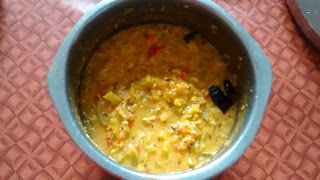
Palak keerai Poricha Kootu
chow chow Poricha Kootu

Palak keerai Poricha Kootu
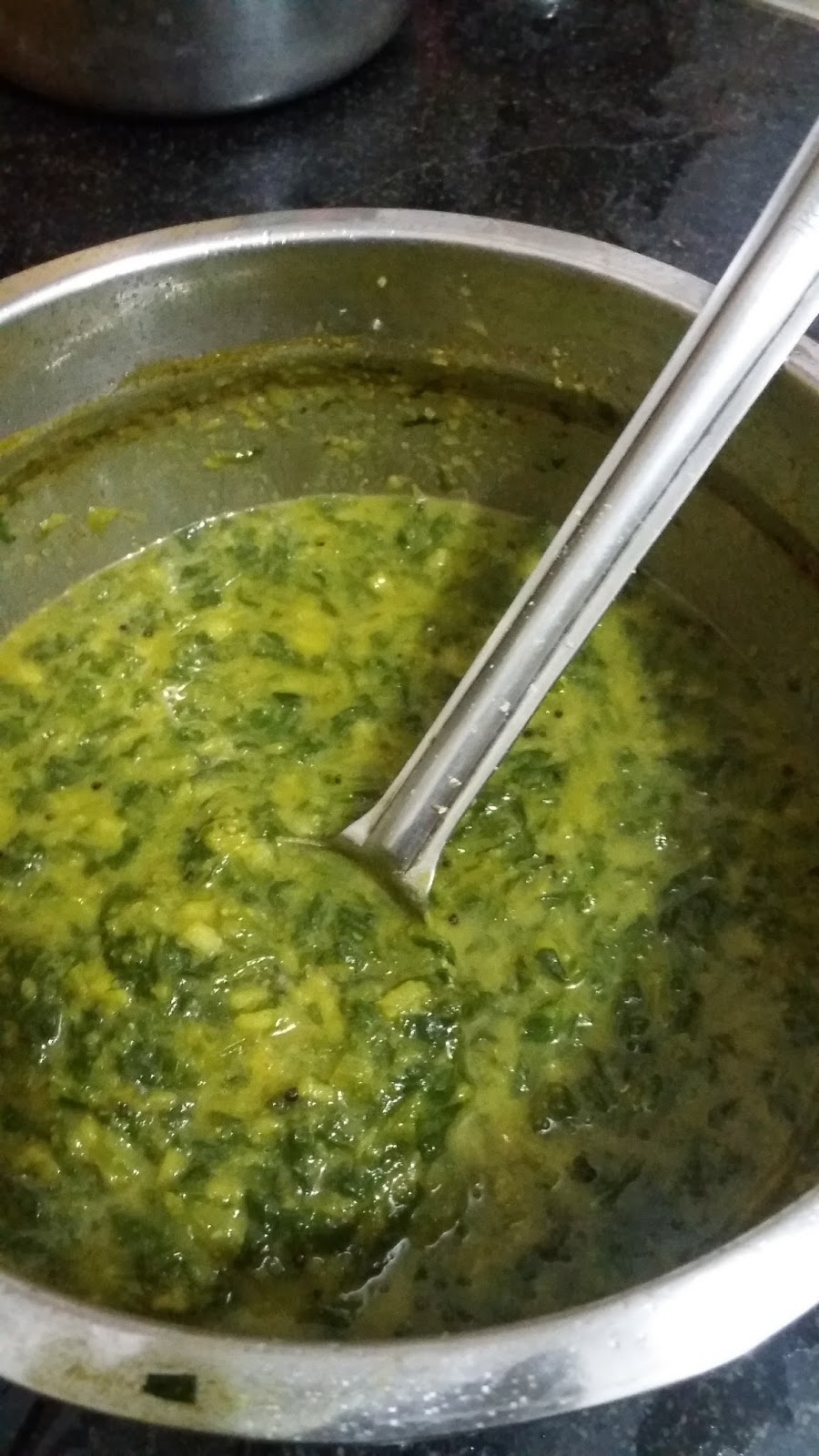
step3 : foam formed
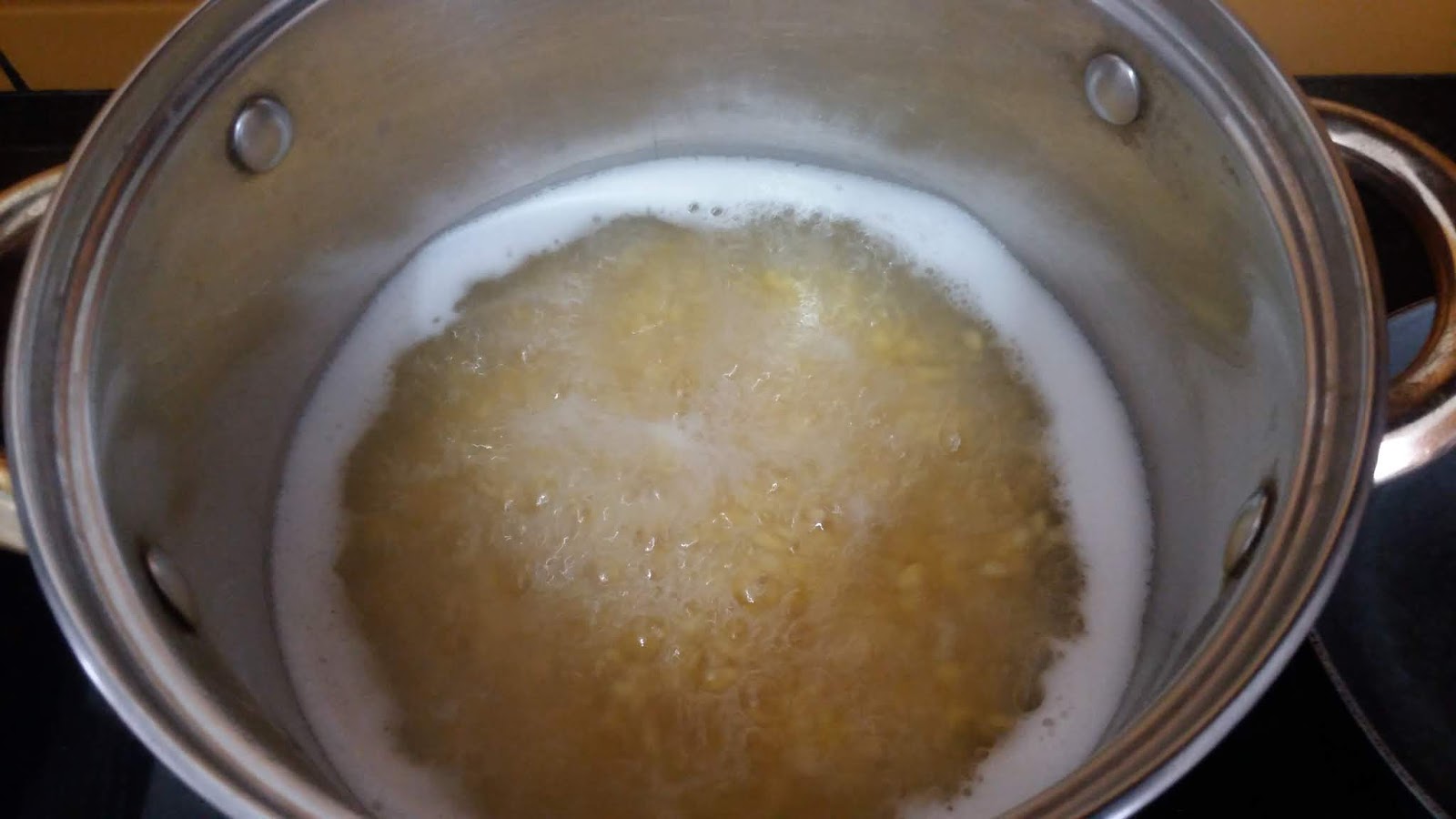
removing the foam
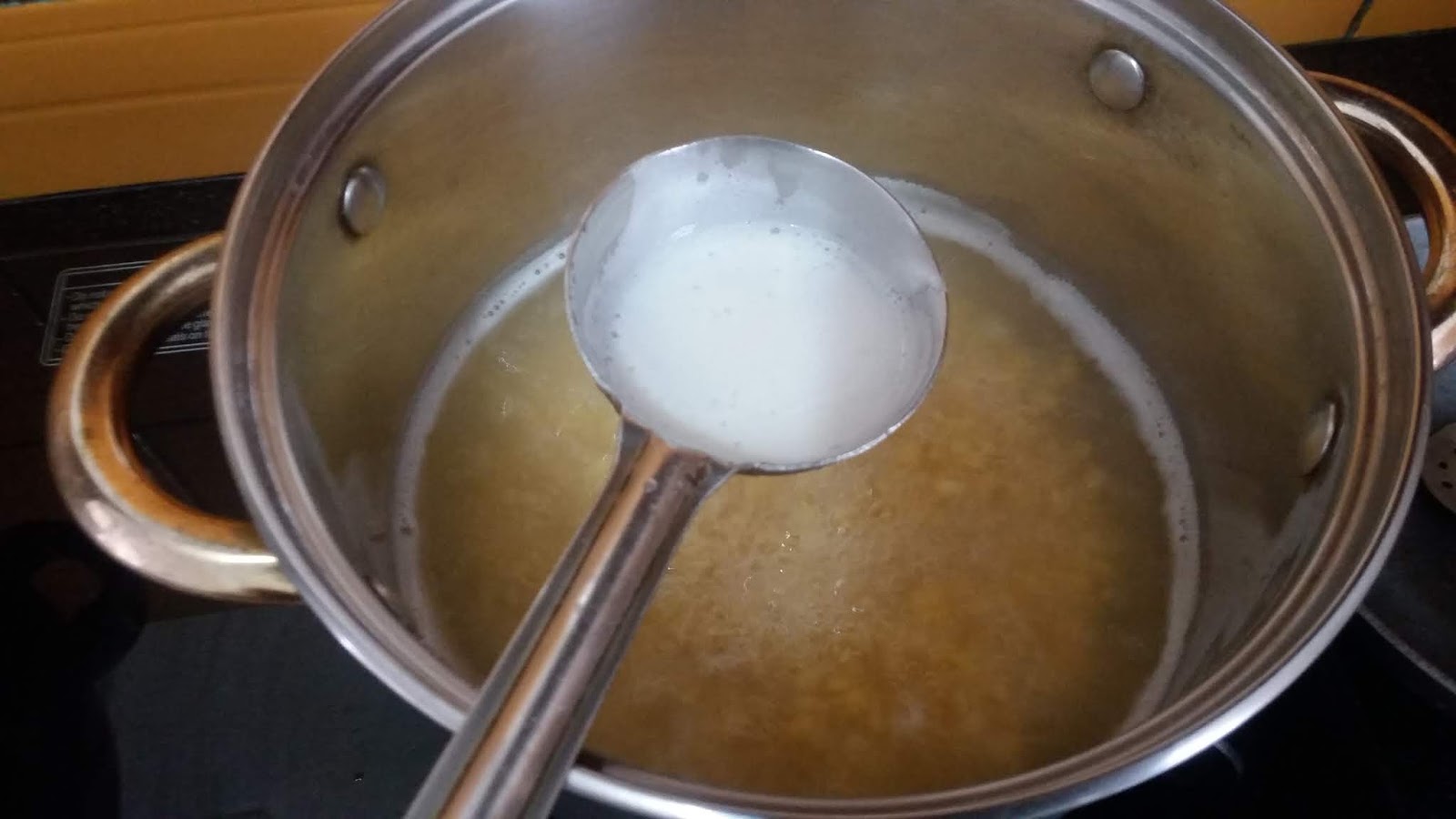
step 6: adding the ingredients
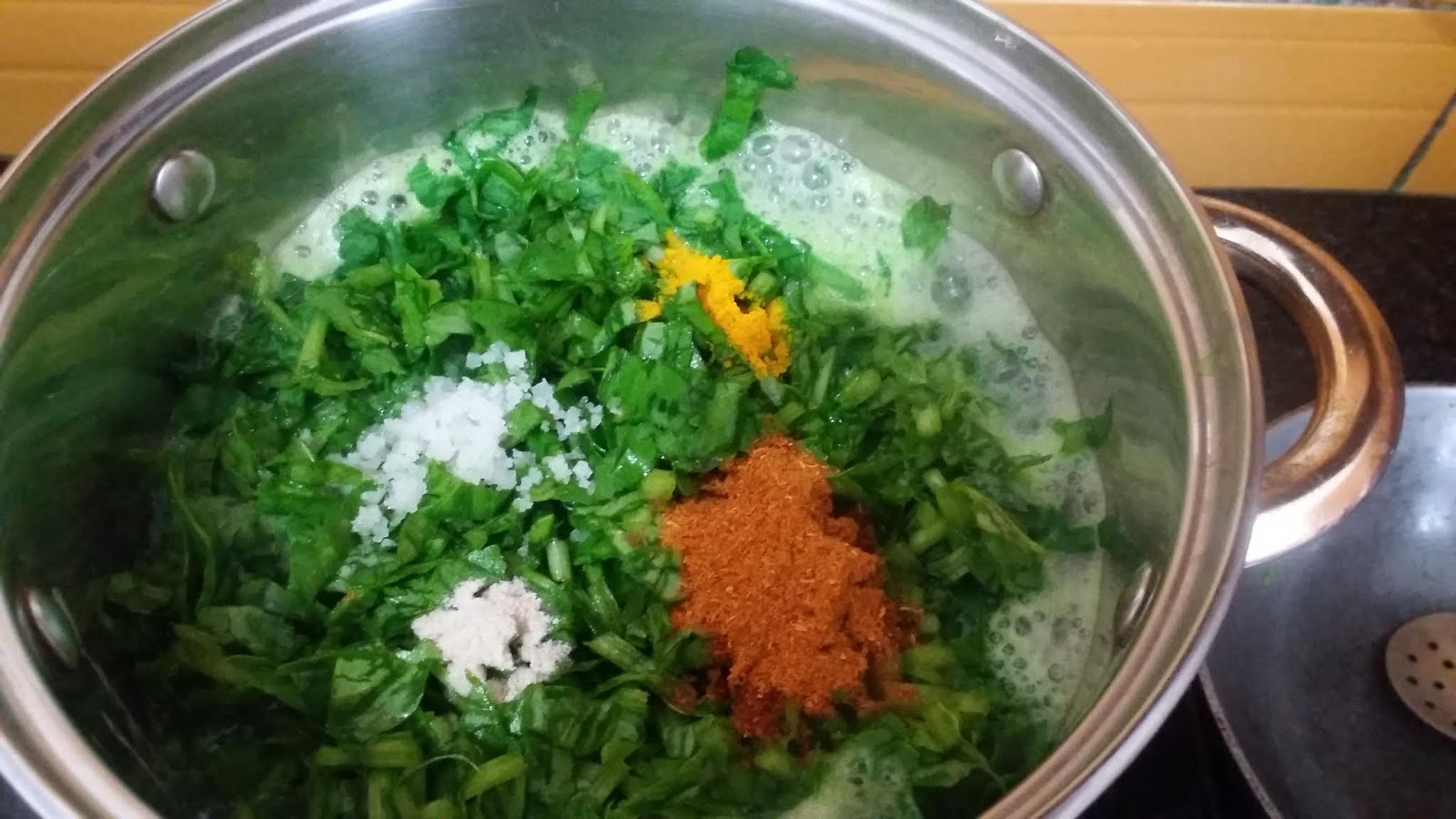
for step 7
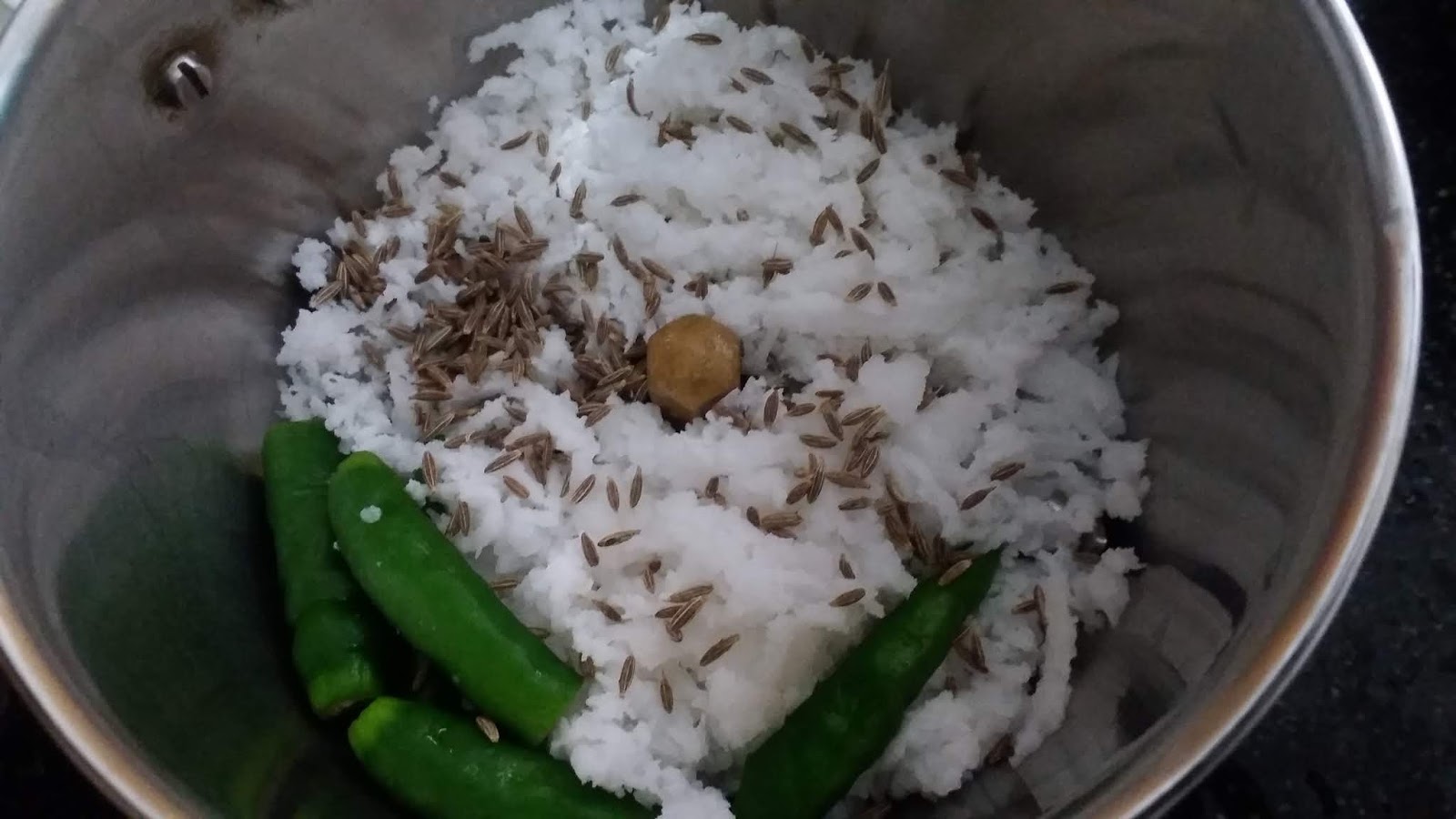
Here is the video for chow-chow (chayote) poricha kootu!
For all the above mentioned vegetables, method is the same. Let's see how to make snake guard kootu.
Ingredients : (serves 3-4)
Snake guard : 350g
Moog dal (paasi paruppu) : 50g
Drumstick (optional): 1 or 2 depending on the size
Turmeric : pinch
Asafoetida/Hing/perungayam : pinch
Rasam powder : 1/2 or 3/4 tsp
Coconut (grated) : 2 tbsp
Green chilli : 3
Jeera : 1/2 tsp
Oil : 1 tbsp
Red chilli : 1
Mustard/Rai/kadugu : 1 tsp
Salt : 1 tsp (or) as per taste
Tomato : 1/2 (optional)
Curry leaves
Method :
1. Take a vessel and pour 3 glasses of water.Heat on medium flame.
2. When it starts boiling, add moog dal.
3. After 2-3 min, some foam will be formed. Remove all the foam.
4. When moog dal becomes little soft, add chopped drumstick.
5. After 5 min, add chopped snake guard. (Add tomato if used)
6. Add salt, turmeric, asafoetida and rasam powder. Stir well and let it boil on medium flame.
7. Meanwhile, take grated coconut, jeera and green chillies in a mixi jar and grind it with little water, not too fine, not too coarse.
8. When snake guard and drumstick both get cooked well, add the ground mixture to it. Stir well and allow it to boil for 3-5 min.
9. Then add some curry leaves and remove from flame.
10. Take oil in a small pan, add red chilli and add mustard seeds. After mustard seeds crackle, add pinch of asafoetida. Switch off flame and add this to the kootu.
Hot and tasty kootu is ready! :)
Poricha Kuzhambu
It's a tasty and spicy gravy made of vegetables like carrot, beans, cabbage. Though we add green chillies and red chillies for the hotness, it is the black pepper that adds a distinct and spicy flavour to this dish. In earlier posts, we saw recipe for 'Poricha Kootu'. In that we had used Moong Dal and jeera-coconut-chilly paste, whereas this has Tuwar dal and more spices into it. Also consistency for 'Poricha Kootu' is thicker than 'Poricha Kuzhambu'. Some prefer 'Poricha Kootu' to mix and eat with rice, while some prefer eating it as a side. Whereas, 'Poricha Kuzhambu' is savoured by mixing it with rice. It's different from the usual Kuzhambu, try it!
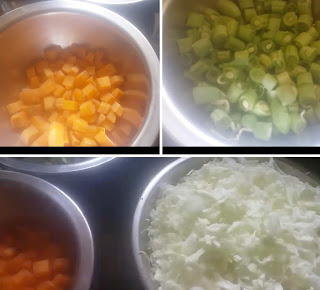
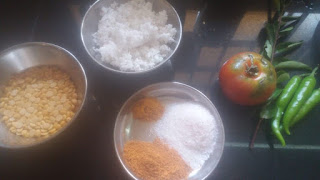
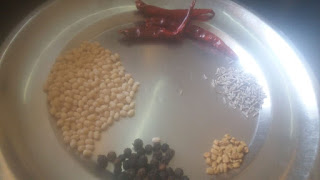
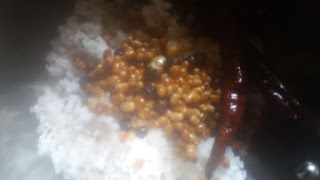
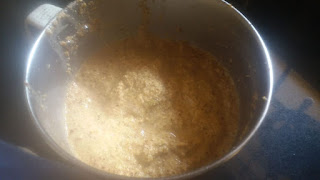
Ingredients:
Chopped cabbage : 1 cup
Diced carrot & beans: 1 cup
Tuwar dal : 50g
Tomato (sour variety) : 2
Green chillies : 3
Red chillies : 3 to 4
Urad dal : 1 tbsp
Jeera : 1 tsp
Black pepper : 1 tsp
Fenugreek seeds : 1/4 tsp
freshly grated coconut : 1/2 cup
Turmeric : 1/4th tsp
Rasam powder : 1 tsp
Asafoetida/hing : 1/4th tsp
Mustard seeds : 1/2 tsp
Curry leaves : few
Salt to taste
Oil : 2 tbsp apprx
Note1 : If you do not get the sour variety tomatoes, add one tomato and 1/2 tsp tamarind paste in step2
Note2: You can also add drumstick and fresh green tuwar if you like. Adjust the quantity of other vegetables accordingly.
Method:
1. Pressure cook tuwar dal and keep it aside.
2. Add 1.5 tumbler water in a vessel and bring it to boil. Then add chopped cabbage, carrot and beans to it. (If you are adding drumstick, add that first and let it be at the bottom). Add chopped tomatoes, salt, turmeric, rasam powder, slit green chillies and close it with a lid and let it boil on low to medium flame for 10-15 min or till veggies get cooked.
3. Meanwhile, heat some oil in a small pan, add red chillies, urad dal, fenugreek seeds and black pepper. Once dal starts turning golden brown switch off the flame, then immediately add jeera. Transfer it into a mixer jar, let it cool, add fresh grated coconut and grind it into a little coarse paste and keep it aside.
4. Once the veggies get cooked, mash and add the cooked tuwar dal. (Adjust water if required)
5. Let it boil for 3-4 min. Then add the ground coconut-spice paste , mix well and let it simmer for 4-5 min. Switch off the flame.
6. For tempering, in a small pan, heat oil and add mustard seeds. Once it crackles switch off the flame and add asafoetida. Also add the curry leaves. Add this to the gravy.
Serve it hot with rice and papad/appalam.
Note : The consistency should be neither too thin nor too thick.
Murunga Keerai Poricha Kuzhambu
Drumstick leaves are very good for health, it is very rich in iron. When ghee is prepared at home, in the end few strands of drumstick leaves are added to the hot ghee, it adds to the aroma of the ghee and then these leaves are removed and children eat those ghee roasted leaves very happily as it tastes awesome.
Try the 'Murunga Keerai Poricha Kuzhambu' for lunch and have a happy and healthy day!
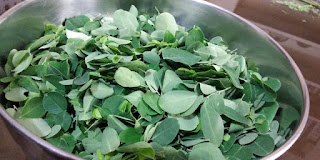
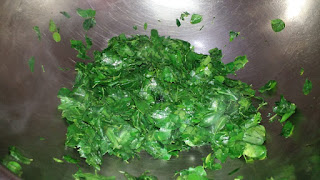
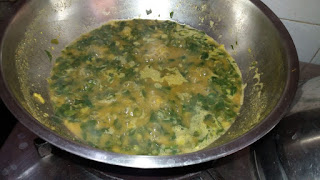
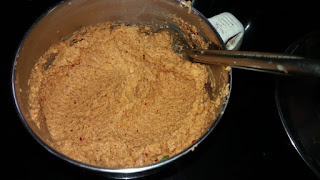
Ingredients:
Murunga Keerai (drumstick leaves) : 1 thick bunch
Tuwar dal : 50g
Red chillies : 3 to 4 (adjust as per its hotness)
Urad dal : 1 tbsp
Jeera : 1 tsp
Dhaniya seeds : 1 tsp
Black pepper : 1 tsp
freshly grated coconut : 1/2 cup
Turmeric : 1/4th tsp
Rasam powder : 0.5 tsp
Sambhar powder : 0.5 tsp
Asafoetida/hing : 1/4th tsp
Mustard seeds : 1/2 tsp
Curry leaves : few
Salt to taste
Oil : 2 tbsp apprx
Method:
1. Pressure cook tuwar dal and keep it aside. Clean the drumstick leaves well and chop them roughly.
2. In a pan/thick bottom vessel saute the chopped drumstick leaves in oil till the leaves leave water and shrink. Then add 1.5 tumbler (1 tumbler=~200ml) water to it. Add salt, turmeric, rasam powder, sambhar powder and close it with a lid and let it boil on low to medium flame for 5-7 min.
3. Meanwhile, heat some oil in a small pan, add red chillies, urad dal, dhaniya seeds and black pepper. Once dal starts turning golden brown switch off the flame, then immediately add jeera. Transfer it into a mixer jar, let it cool, add fresh grated coconut and grind it into a little coarse paste and keep it aside.
4. Mash and add the cooked tuwar dal into the boiling mixture. (Adjust water if required)
5. Let it boil for 3-4 min. Then add the ground coconut-spice paste , mix well and let it simmer for 4-5 min. Switch off the flame.
6. For tempering, in a small pan, heat oil and add mustard seeds. Once it crackles switch off the flame and add asafoetida. Add this to the gravy.
Serve it hot with rice and papad/appalam.
Note : The consistency should be neither too thin nor too thick.
Note: If you like you can avoid grinding the ingredients in step 7 and instead add crushed jeera, slit or chopped green chillies and grated coconut as in the video attached. Refer the video.
Poricha Kuzhambu
It's a tasty and spicy gravy made of vegetables like carrot, beans, cabbage. Though we add green chillies and red chillies for the hotness, it is the black pepper that adds a distinct and spicy flavour to this dish. In earlier posts, we saw recipe for 'Poricha Kootu'. In that we had used Moong Dal and jeera-coconut-chilly paste, whereas this has Tuwar dal and more spices into it. Also consistency for 'Poricha Kootu' is thicker than 'Poricha Kuzhambu'. Some prefer 'Poricha Kootu' to mix and eat with rice, while some prefer eating it as a side. Whereas, 'Poricha Kuzhambu' is savoured by mixing it with rice. It's different from the usual Kuzhambu, try it!
(Poricha Kuzhambu)
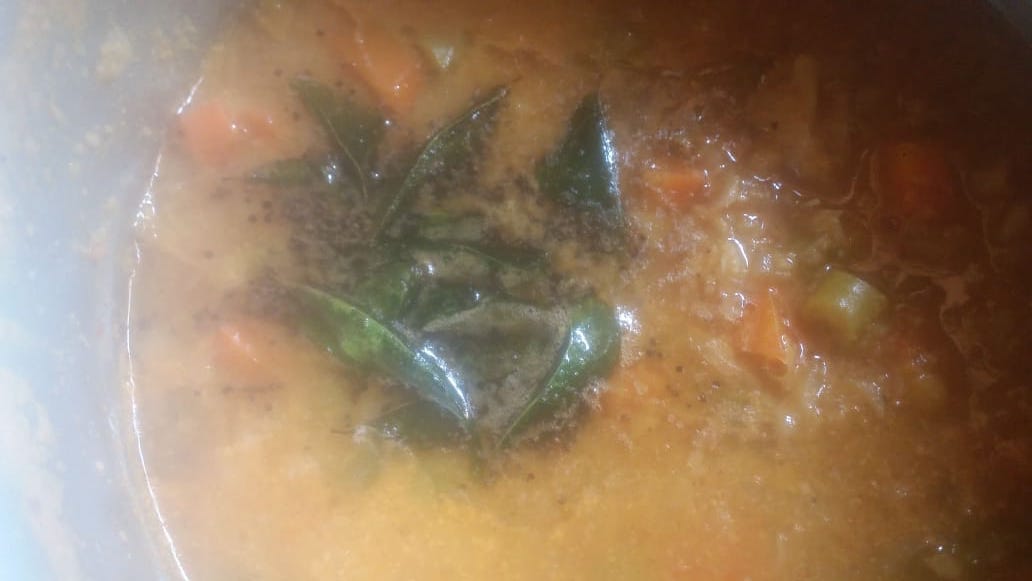
(Vegetables - carrot/beans/cabbage)
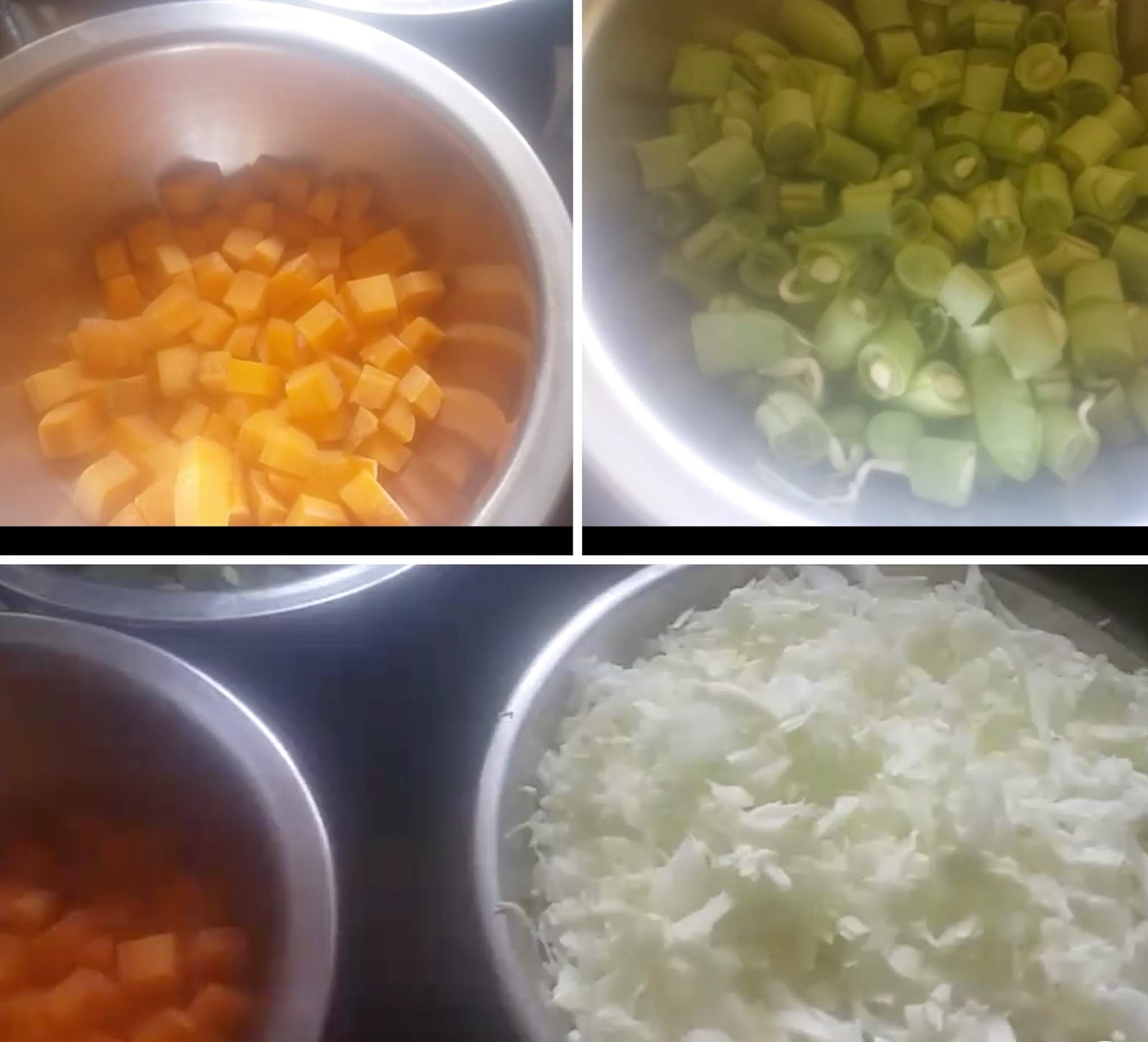
(Other ingredients)
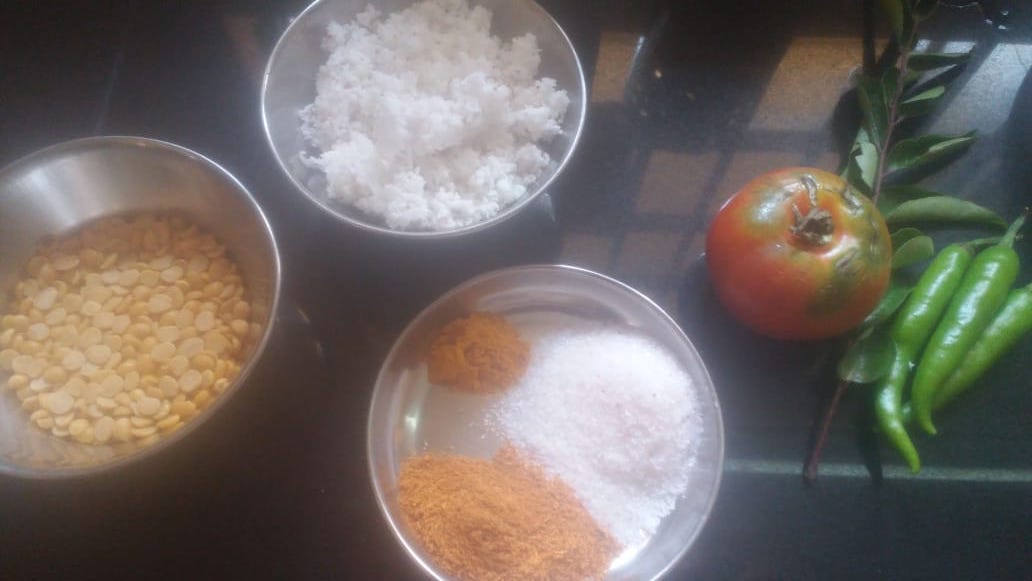
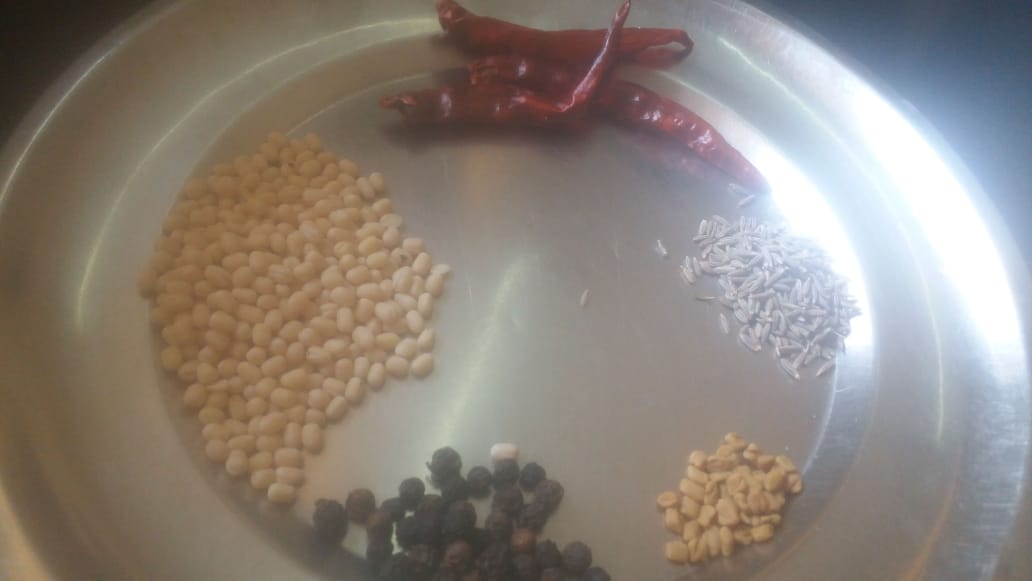
(Roasted spices)
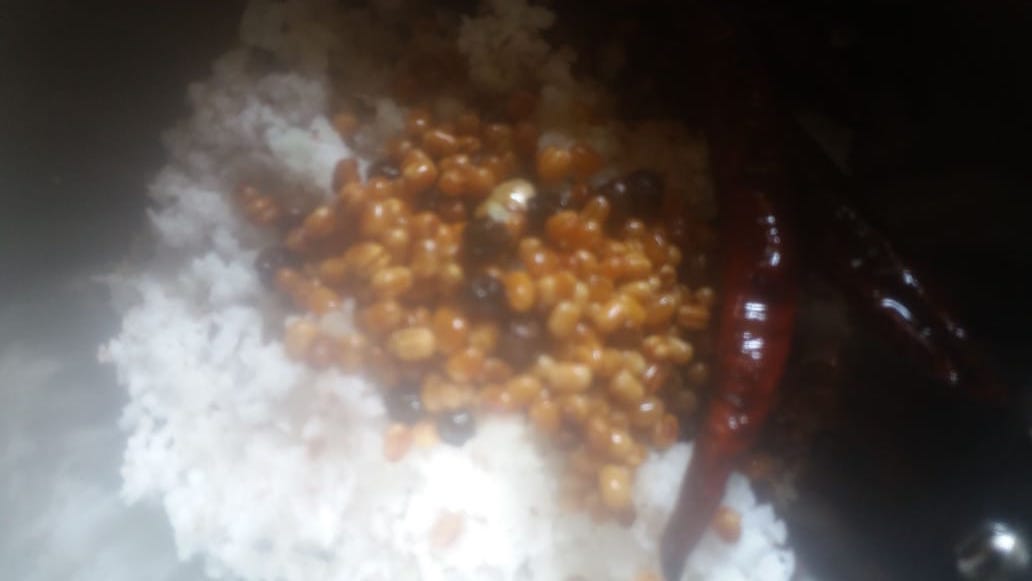
(ground spice-coconut paste)
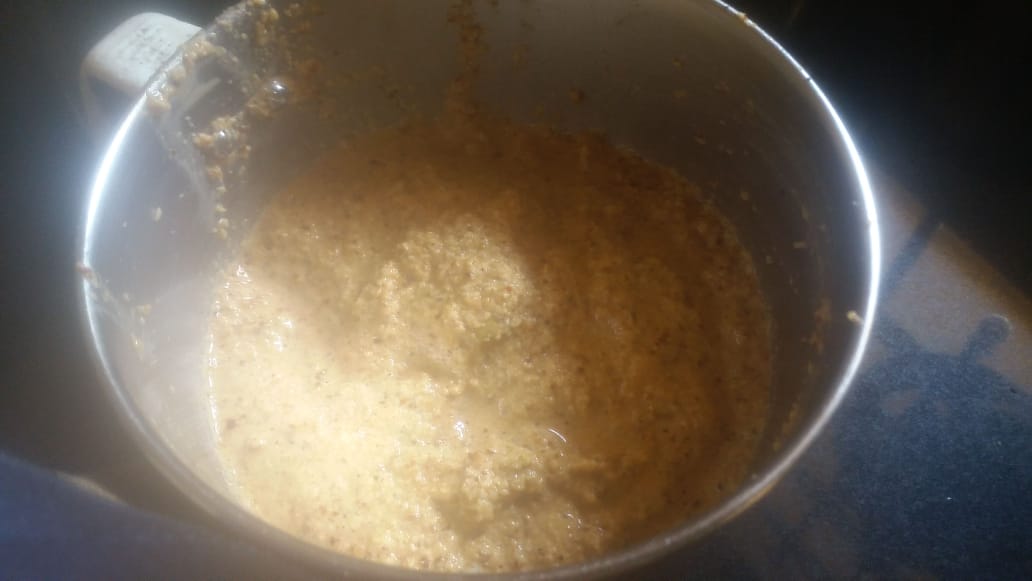
Chopped cabbage : 1 cup
Diced carrot & beans: 1 cup
Tuwar dal : 50g
Tomato (sour variety) : 2
Green chillies : 3
Red chillies : 3 to 4
Urad dal : 1 tbsp
Jeera : 1 tsp
Black pepper : 1 tsp
Fenugreek seeds : 1/4 tsp
freshly grated coconut : 1/2 cup
Turmeric : 1/4th tsp
Rasam powder : 1 tsp
Asafoetida/hing : 1/4th tsp
Mustard seeds : 1/2 tsp
Curry leaves : few
Salt to taste
Oil : 2 tbsp apprx
Note1 : If you do not get the sour variety tomatoes, add one tomato and 1/2 tsp tamarind paste in step2
Note2: You can also add drumstick and fresh green tuwar if you like. Adjust the quantity of other vegetables accordingly.
Method:
1. Pressure cook tuwar dal and keep it aside.
2. Add 1.5 tumbler water in a vessel and bring it to boil. Then add chopped cabbage, carrot and beans to it. (If you are adding drumstick, add that first and let it be at the bottom). Add chopped tomatoes, salt, turmeric, rasam powder, slit green chillies and close it with a lid and let it boil on low to medium flame for 10-15 min or till veggies get cooked.
3. Meanwhile, heat some oil in a small pan, add red chillies, urad dal, fenugreek seeds and black pepper. Once dal starts turning golden brown switch off the flame, then immediately add jeera. Transfer it into a mixer jar, let it cool, add fresh grated coconut and grind it into a little coarse paste and keep it aside.
4. Once the veggies get cooked, mash and add the cooked tuwar dal. (Adjust water if required)
5. Let it boil for 3-4 min. Then add the ground coconut-spice paste , mix well and let it simmer for 4-5 min. Switch off the flame.
6. For tempering, in a small pan, heat oil and add mustard seeds. Once it crackles switch off the flame and add asafoetida. Also add the curry leaves. Add this to the gravy.
Serve it hot with rice and papad/appalam.
Note : The consistency should be neither too thin nor too thick.
Murunga Keerai Poricha Kuzhambu
Drumstick leaves are very good for health, it is very rich in iron. When ghee is prepared at home, in the end few strands of drumstick leaves are added to the hot ghee, it adds to the aroma of the ghee and then these leaves are removed and children eat those ghee roasted leaves very happily as it tastes awesome.
Try the 'Murunga Keerai Poricha Kuzhambu' for lunch and have a happy and healthy day!
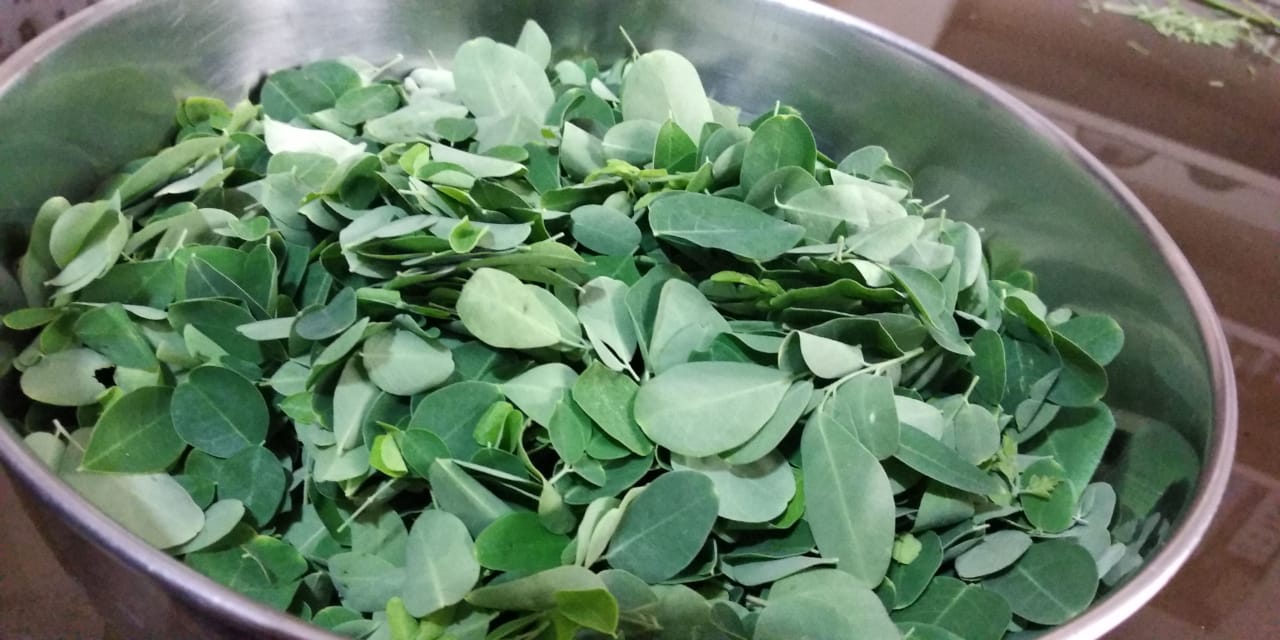
(Making of Murunga Keerai Poricha Kuzhambu - a glimpse)
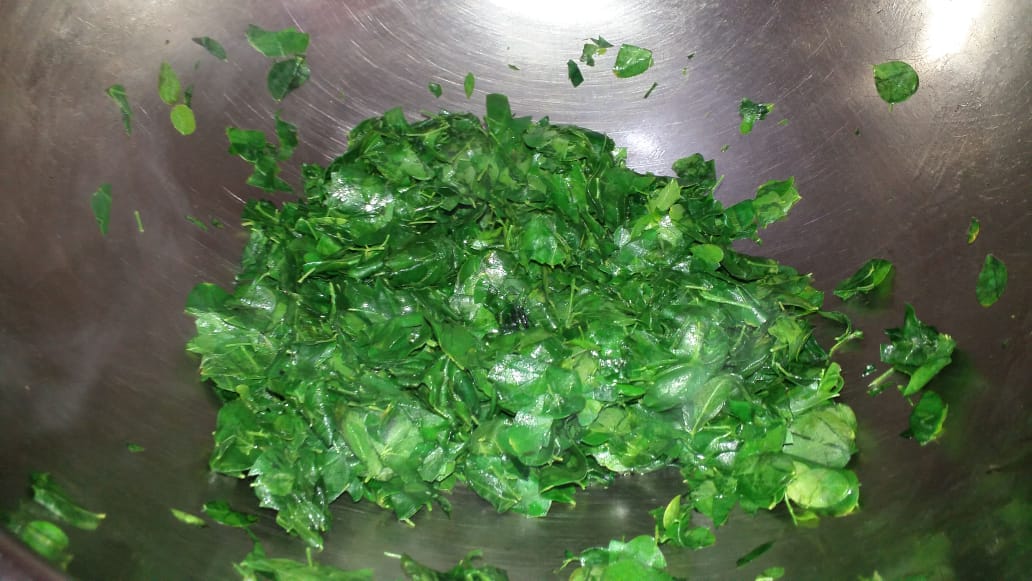
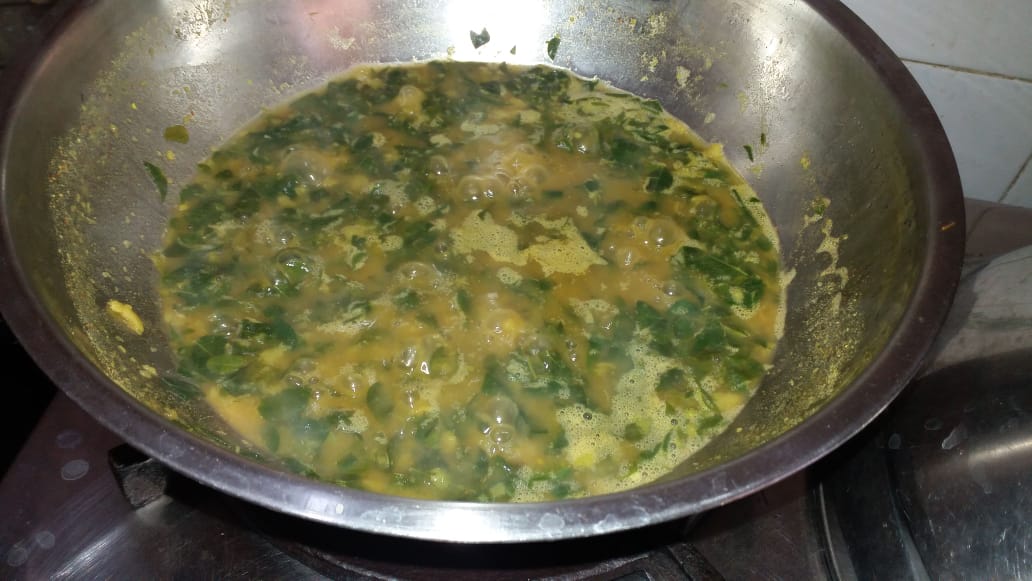
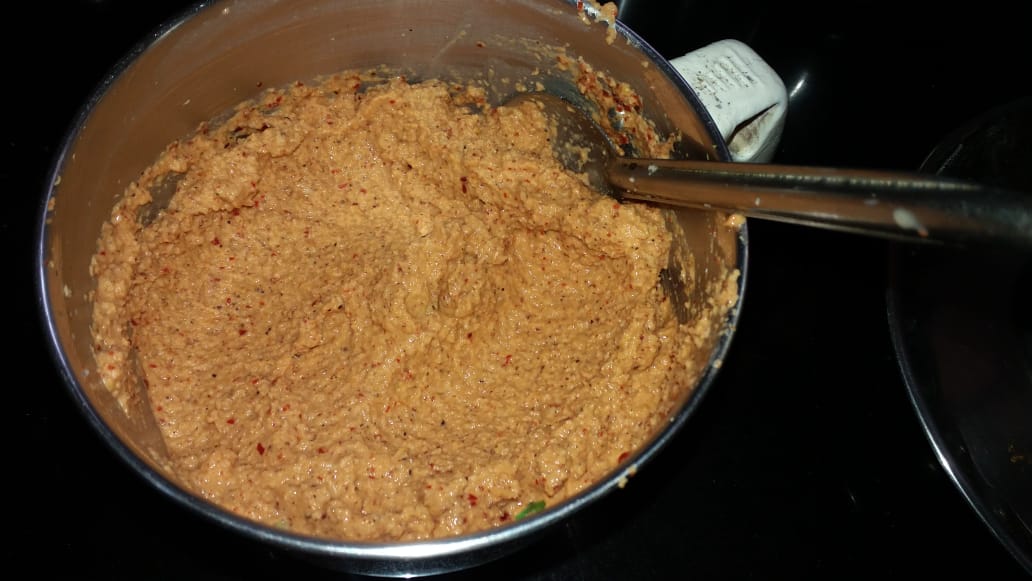
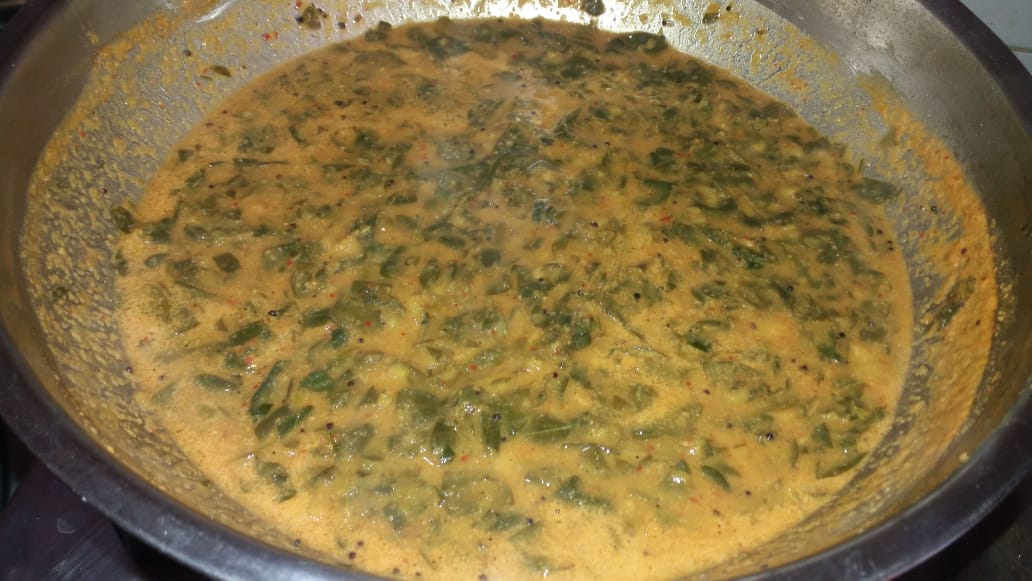
Ingredients:
Murunga Keerai (drumstick leaves) : 1 thick bunch
Tuwar dal : 50g
Red chillies : 3 to 4 (adjust as per its hotness)
Urad dal : 1 tbsp
Jeera : 1 tsp
Dhaniya seeds : 1 tsp
Black pepper : 1 tsp
freshly grated coconut : 1/2 cup
Turmeric : 1/4th tsp
Rasam powder : 0.5 tsp
Sambhar powder : 0.5 tsp
Asafoetida/hing : 1/4th tsp
Mustard seeds : 1/2 tsp
Curry leaves : few
Salt to taste
Oil : 2 tbsp apprx
Method:
1. Pressure cook tuwar dal and keep it aside. Clean the drumstick leaves well and chop them roughly.
2. In a pan/thick bottom vessel saute the chopped drumstick leaves in oil till the leaves leave water and shrink. Then add 1.5 tumbler (1 tumbler=~200ml) water to it. Add salt, turmeric, rasam powder, sambhar powder and close it with a lid and let it boil on low to medium flame for 5-7 min.
3. Meanwhile, heat some oil in a small pan, add red chillies, urad dal, dhaniya seeds and black pepper. Once dal starts turning golden brown switch off the flame, then immediately add jeera. Transfer it into a mixer jar, let it cool, add fresh grated coconut and grind it into a little coarse paste and keep it aside.
4. Mash and add the cooked tuwar dal into the boiling mixture. (Adjust water if required)
5. Let it boil for 3-4 min. Then add the ground coconut-spice paste , mix well and let it simmer for 4-5 min. Switch off the flame.
6. For tempering, in a small pan, heat oil and add mustard seeds. Once it crackles switch off the flame and add asafoetida. Add this to the gravy.
Serve it hot with rice and papad/appalam.
Note : The consistency should be neither too thin nor too thick.
Puli Kootu
Puli kootu is a delicious, yummy gravy, made of steamed vegetables in a blend of tamarind pulp, coconut and spices. It is served hot with rice and papad.
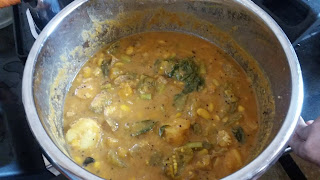
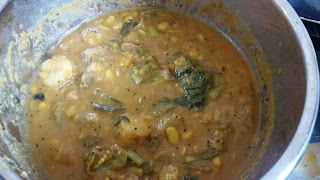
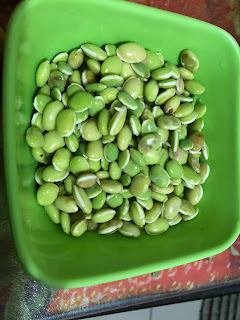
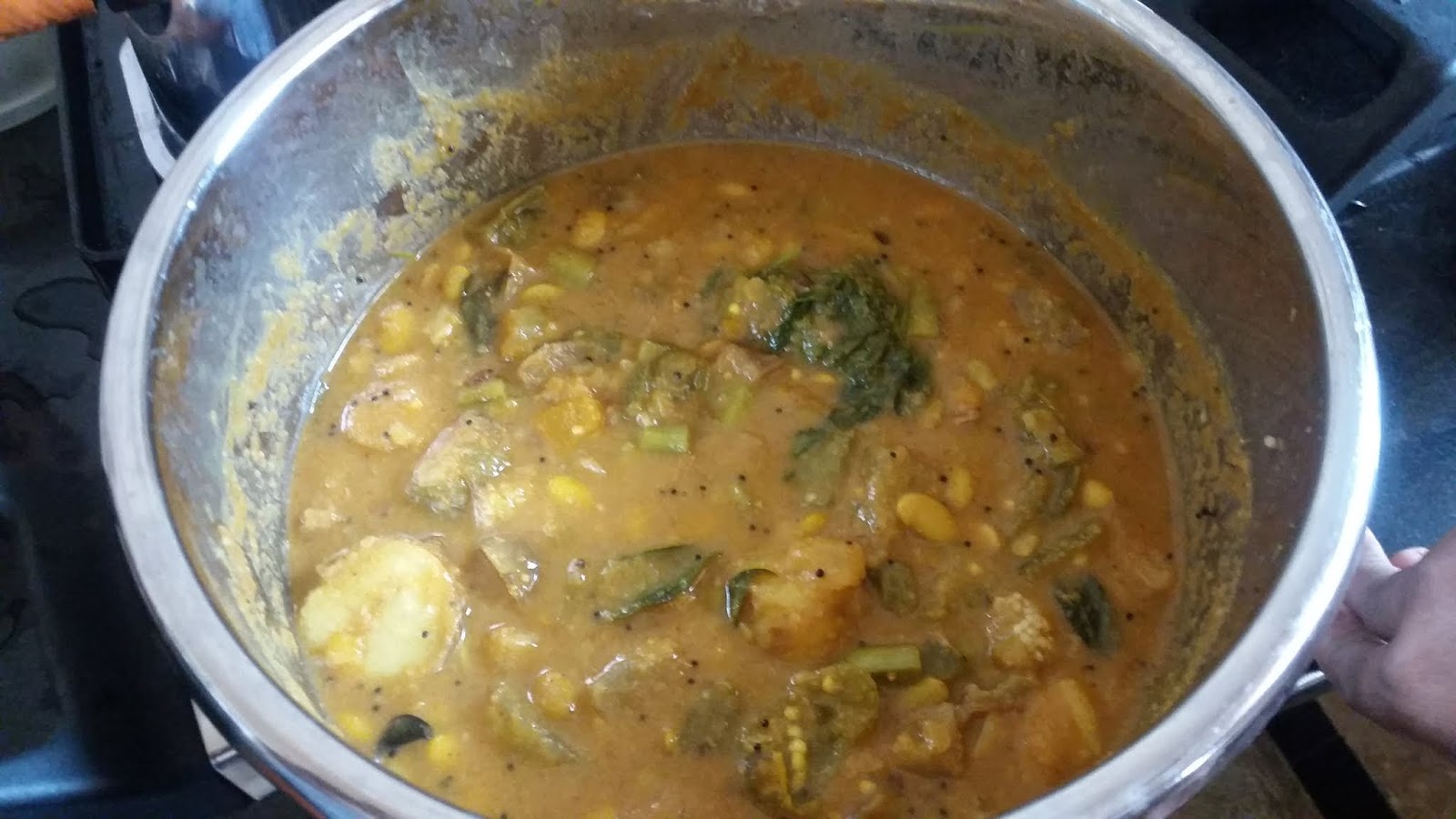
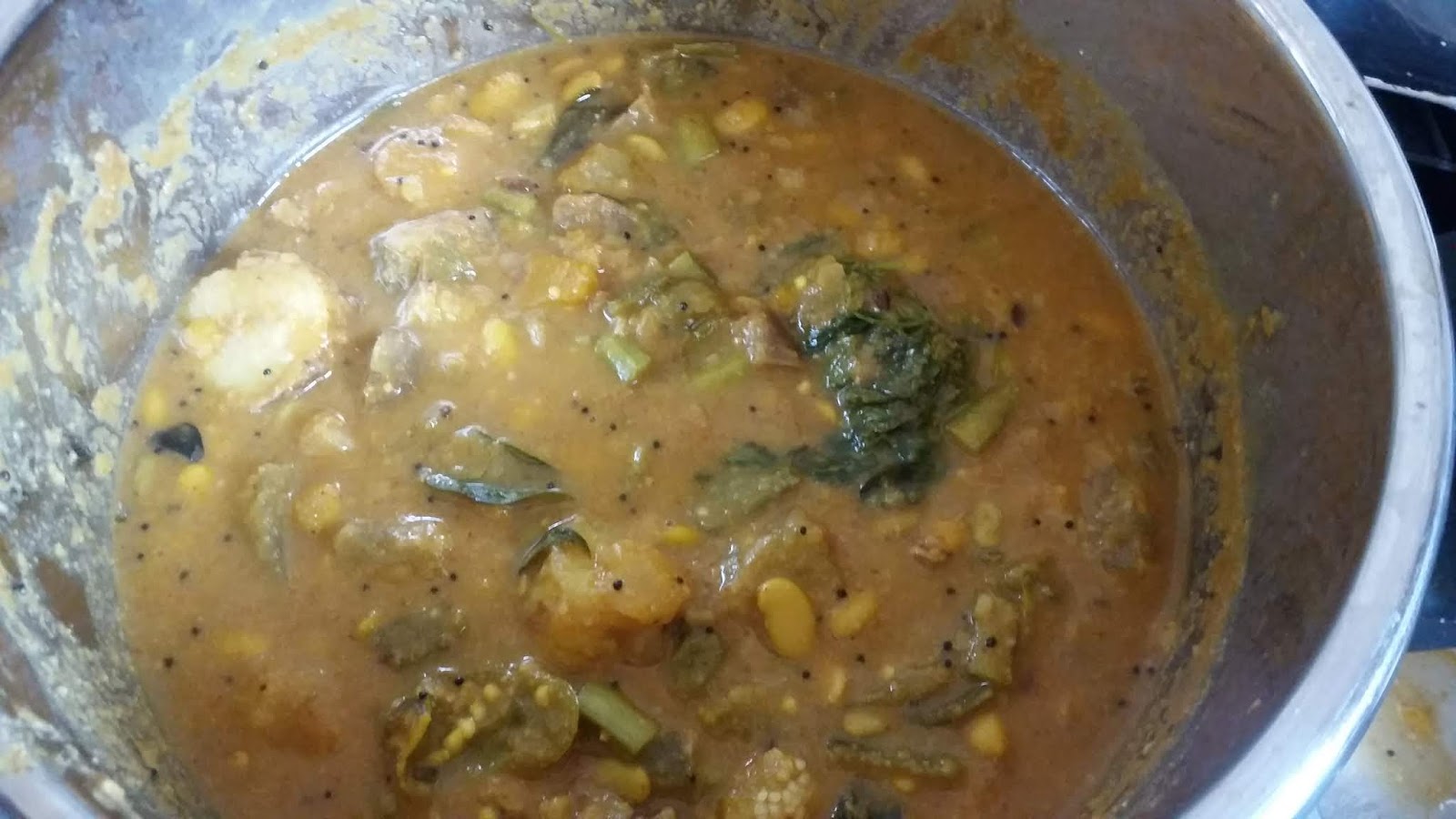
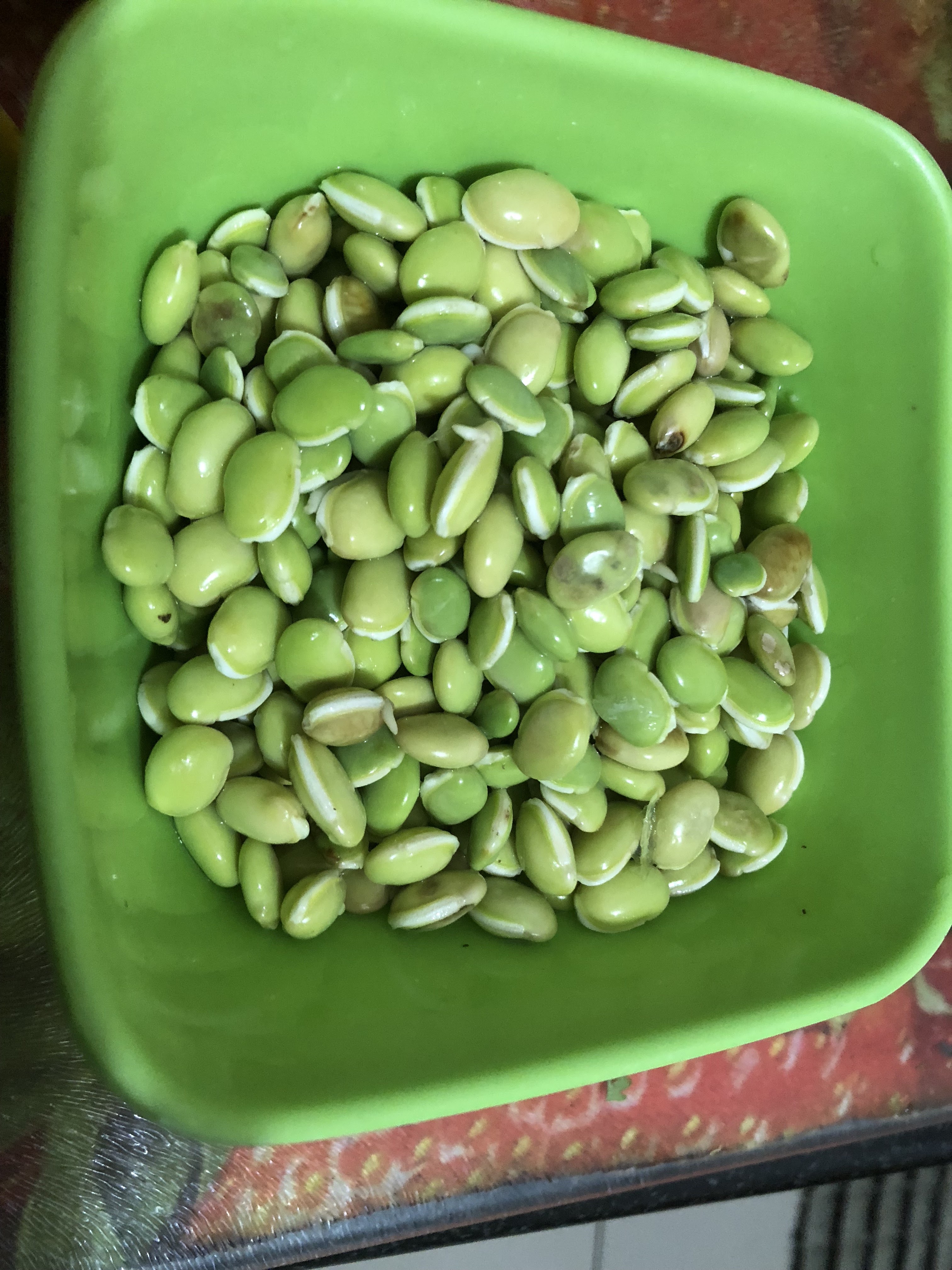
(mochakottai)
Ingredients : (serves 3-4)
White pumpkin: 300-350g
Mixed chopped vegetables (mainly brinjals,cluster beans & other optional ones like beans,yam,carrot,flat beans): 1.5 cup
Mochakottai/lima beans: 100g
Mixed chopped vegetables (mainly brinjals,cluster beans & other optional ones like beans,yam,carrot,flat beans): 1.5 cup
Mochakottai/lima beans: 100g
Tamarind juice (medium consistency): 1.5 tumbler
Turmeric : 1/4 tsp
Salt : 1.5 tsp (or) as per taste
Rasam powder : 1/4 to 1/2 tsp
Tuwar dal : 50 g
Oil : 1 tbsp
Dhaniya seeds : 1 1/4 tsp
Urad dal : 1 tsp
Red chillies :5-6
solid asafoetida : tamarind seed size
Jeera : 1/4 tsp
Mustard : 1/4 to 1/2 tsp
Coconut : 3 tbsp
Green chillies : 2-3
Green chillies : 2-3
Curry leaves : few
Fresh coriander leaves : few for garnish
Note : If lima bean is not available, you can add black chana or lobia.
You can dry saute chana or lobia till they heat up well and then pressure cook it for 5-6 whistles. Else soak them in water for 5-6 hours and pressure cook it for 3-4 whistle.
Add it before adding tuwar dal in step 6.
Fresh coriander leaves : few for garnish
Note : If lima bean is not available, you can add black chana or lobia.
You can dry saute chana or lobia till they heat up well and then pressure cook it for 5-6 whistles. Else soak them in water for 5-6 hours and pressure cook it for 3-4 whistle.
Add it before adding tuwar dal in step 6.
Method :
1. Chop the white pumpkin into big pieces. Also chop the other vegetables into little big pieces else they may tend to get mashed. Pressure cook tuwar dal and keep it aside.
2. Take 1 tumbler water in a thick bootom vessel and heat on medium flame.
3. Add all the chopped vegetables,lima beans and slit green chillies into it and let it boil for 10 min. (Add some salt so that vegetables cook well).
4. Now add tamarind juice. Add salt, turmeric, rasam powder. Let it boil for 5-7 min.
5. Meanwhile, take oil in a pan, add solid asafoetida, dhaniya seeds, urad dal, red chillies. Stir well for a min, then add jeera and switch off the flame. Add coconut and grind this mixture.
6. Now add tuwar dal to the boiling kootu. Mix well and let it boil for 2-3 min.
7. Now add the ground mixture and let it boil for 3-5 min. Stir often.
8. Now switch off the flame.
9. In another pan, heat little oil and add mustard. Let it crackle. Switch off flame, add curry leaves and add this tadka to the kootu. Garnish with fresh coriander leaves.
Yummy Puli Kootu is ready !!!!!!!
Puli-itta Keerai
Variety of leafy greens (keerai in Tamil) are cooked in south indian households. Puli-itta keerai can be prepared with greens like Siru keerai, mulai keerai, arai keerai. Puli means 'Tamarind', so it's keerai with tamarind and spices. You can make this gravy with or without onion, as you like it. Serve it hot with rice and papad.
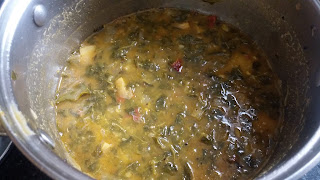
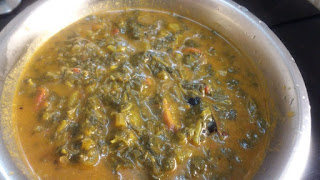
Variety of leafy greens (keerai in Tamil) are cooked in south indian households. Puli-itta keerai can be prepared with greens like Siru keerai, mulai keerai, arai keerai. Puli means 'Tamarind', so it's keerai with tamarind and spices. You can make this gravy with or without onion, as you like it. Serve it hot with rice and papad.
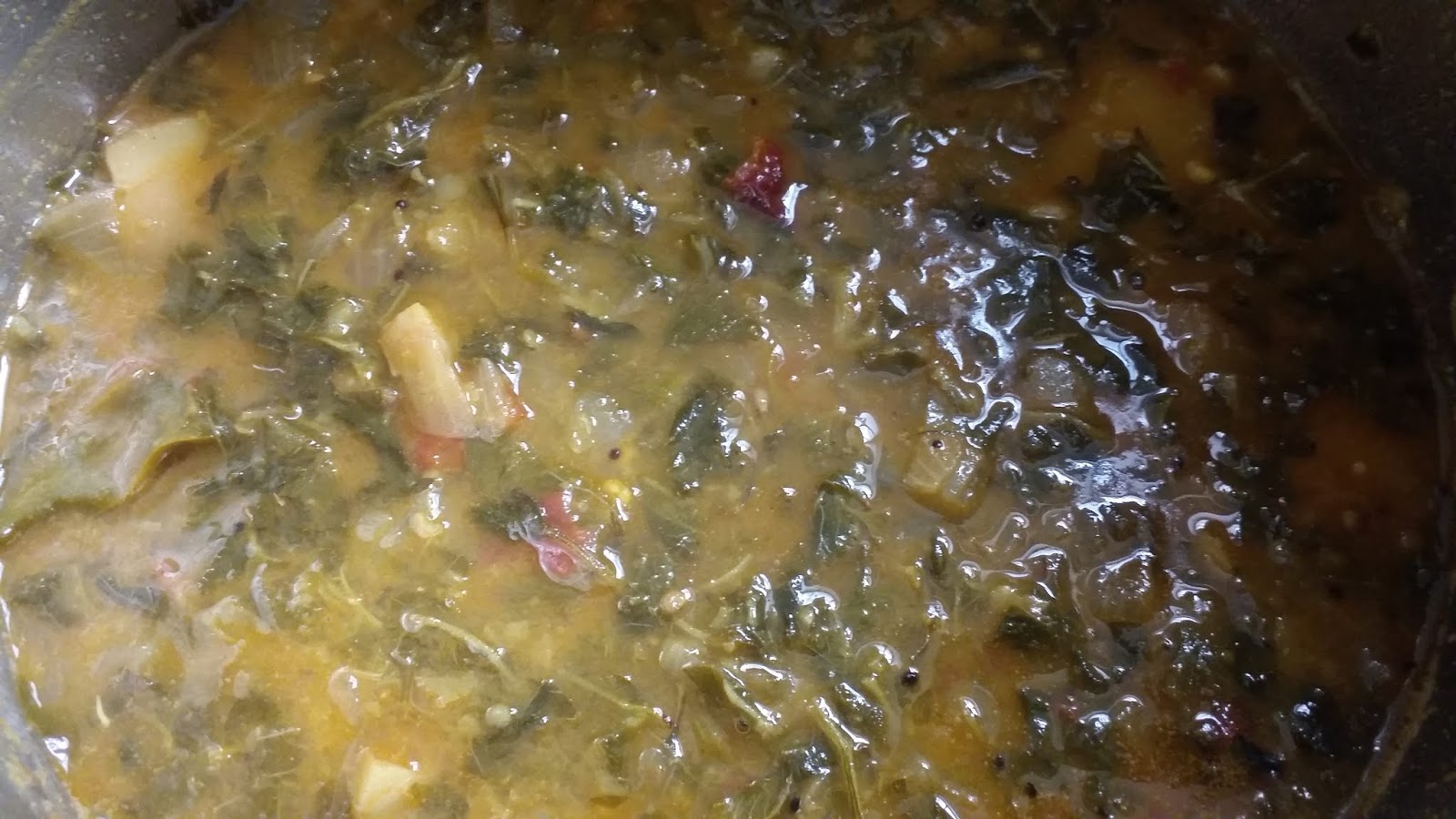
(with onion)
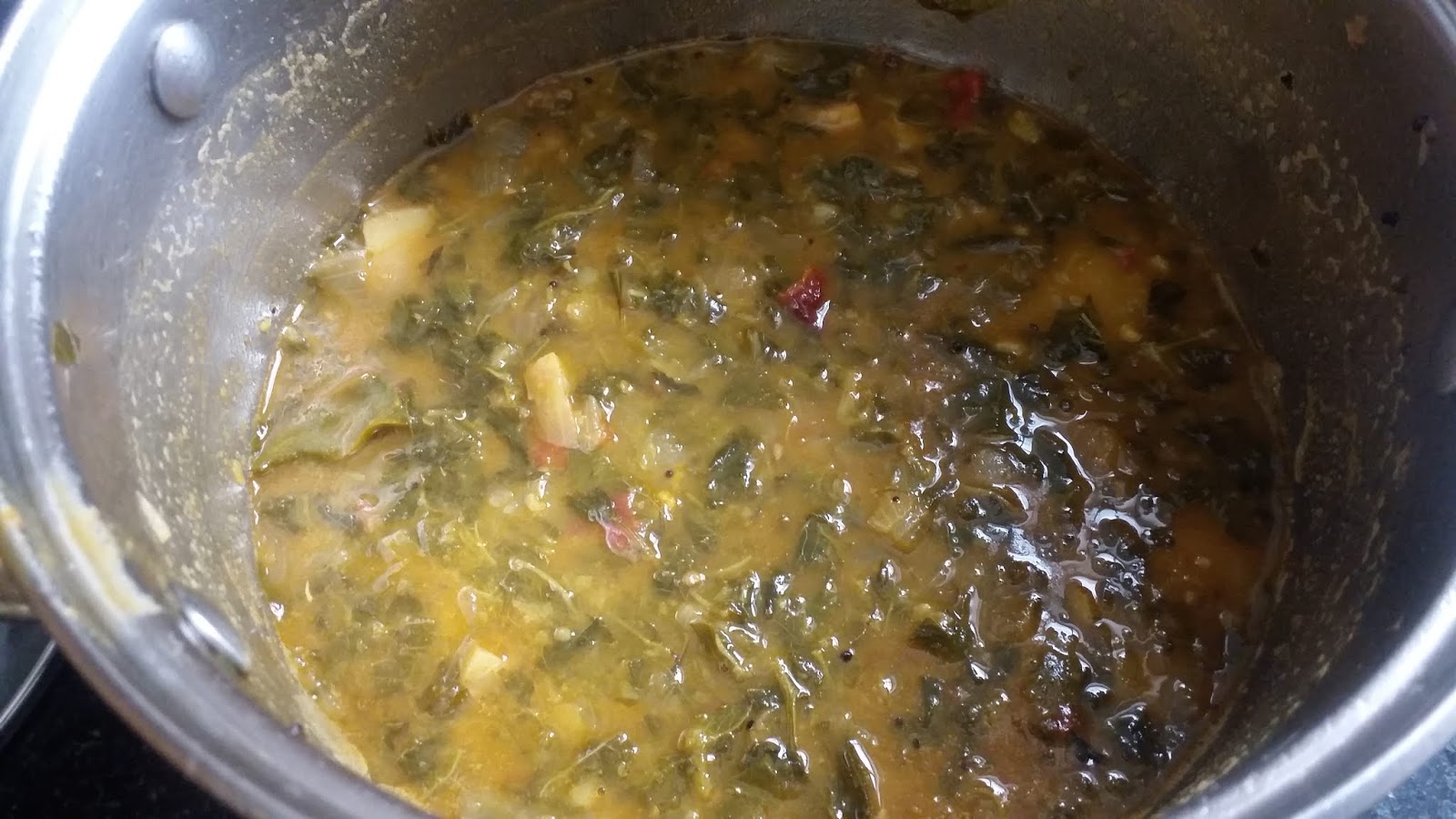
(with onion)
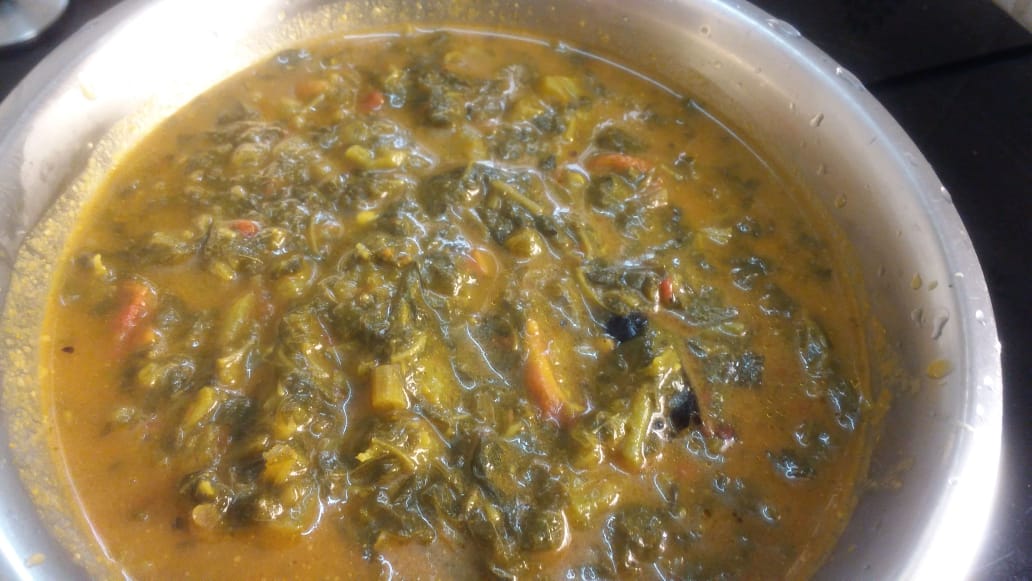
(without onion)
Ingredients: (serves 3-4)
Siru/Mola/Ara Keerai - 2 bundles
Onion : 2 medium (optional)
Green Chilli : 2
Tomato : 2 medium
Tamarind juice : 1.5 glass (thin consistency)
Mustard - 1/2 tsp
Sambhar powder : 2 tsp
Red chillies : 2
Salt - 1.5 tsp (or) as per taste
Asafoetida/Hing/perungayam : 1/4th tsp
Turmeric powder : 1/4th tsp
Method :
1. Take oil in a pan. Add halved red chillies, mustard.
2. Then fry chopped onions and green chillies with it.Saute till onions
turn translucent. Then add chopped tomatoes and saute till tomato skin
wrinkles/turn soft.
3. Add chopped keerai/leaves to it. Mix well. Add tamarind juice.
4. Add sambhar powder, salt, turmeric, asafoetida and bring it to boil for 10-15 min.
5. The leaves and liquid mixture should blend well. If not, add 1 tsp
rice flour/corn flour to 1 tbsp cold water, mix well and add it to
boiling mixture. This will help in binding.
6. When well blended and cooked, switch off flame.
Pitlai
Well, Pitlai is a favourite of my daughters. It is made of bitterguard with tamarind pulp,dal and lots of spices. Tastes best when served hot with rice.
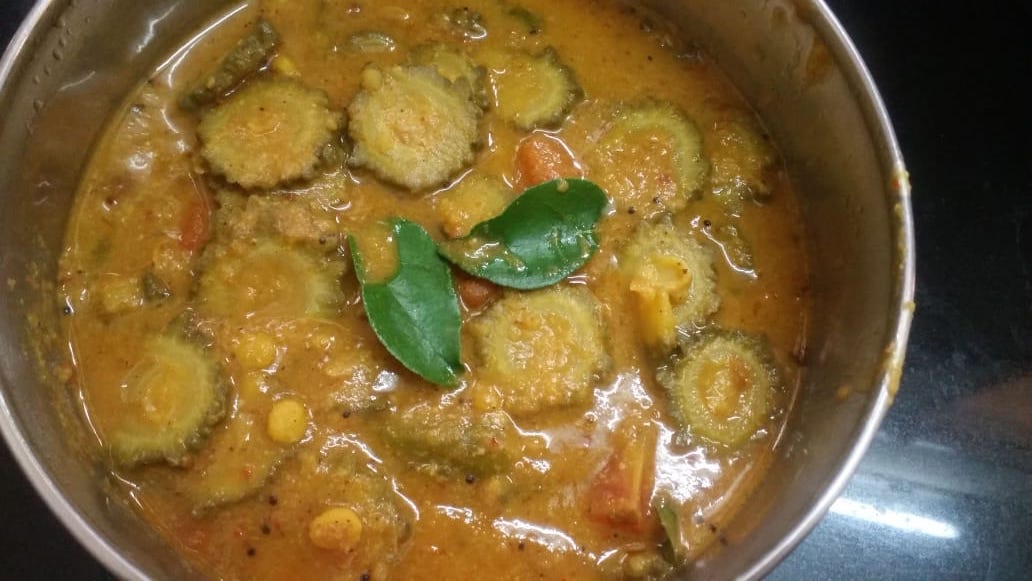
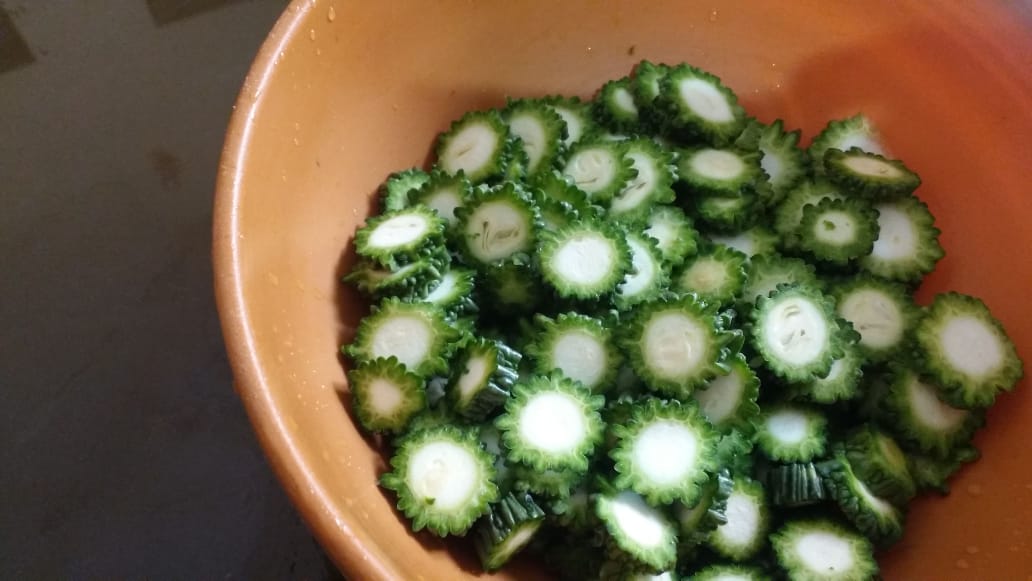
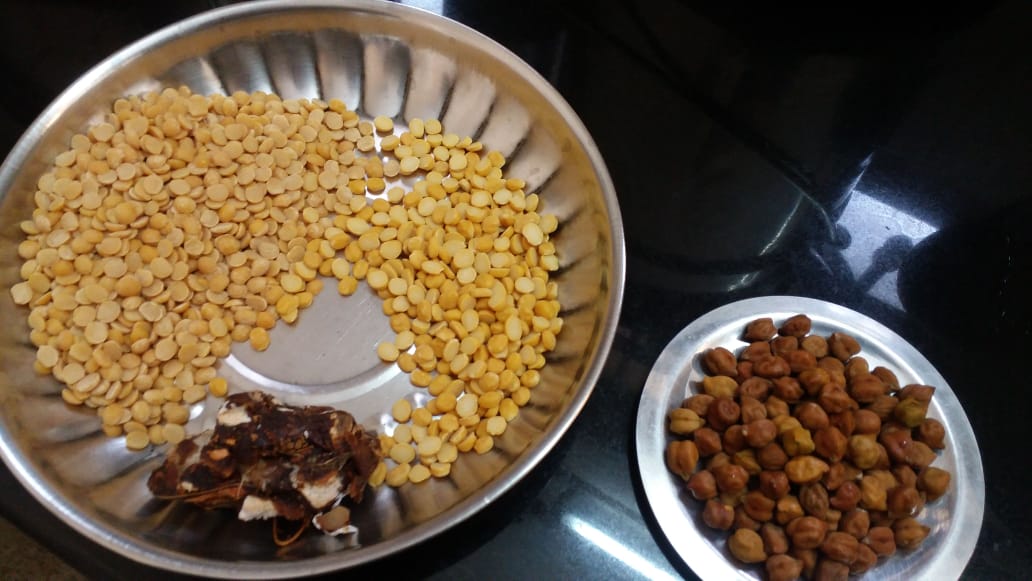
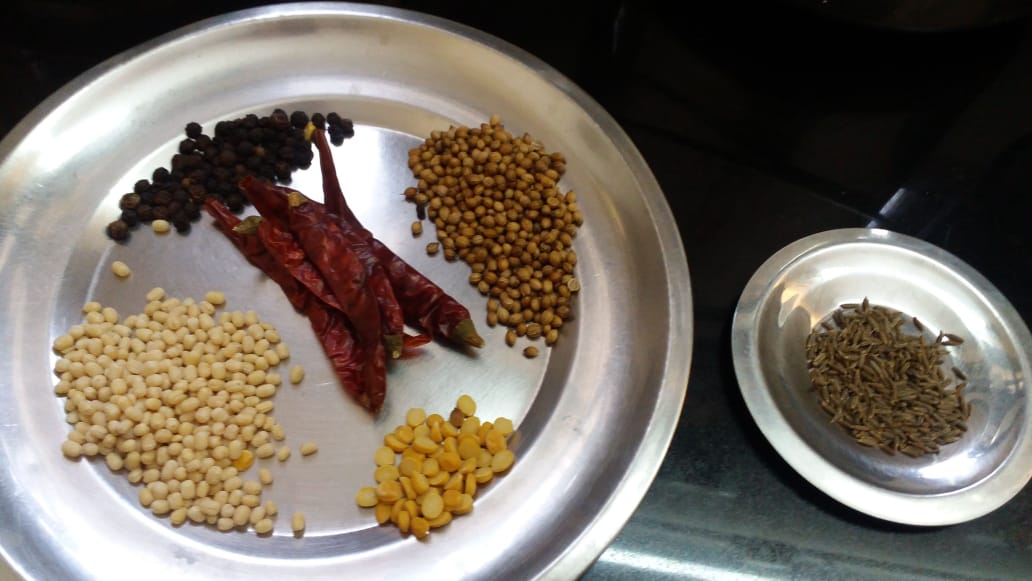
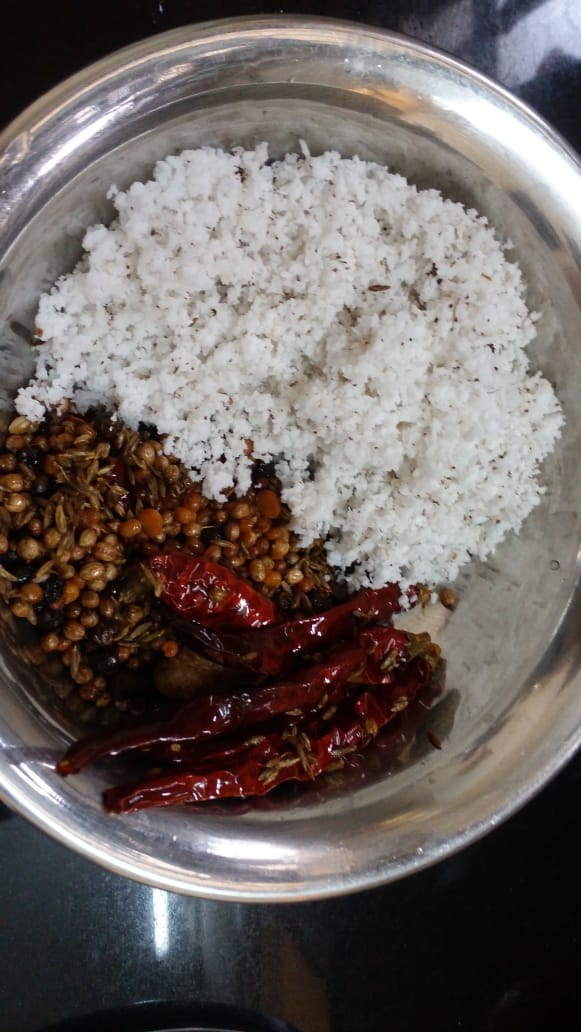
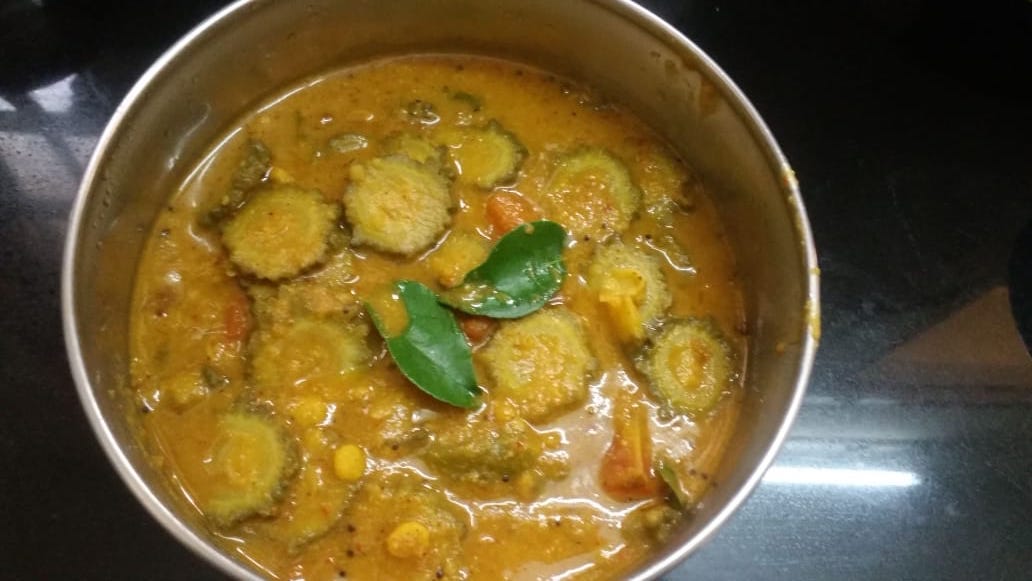
Pitlai-video
Ingredients: (serves 3-4)
Tamarind : gooseberry(amla) size
Tuwar dal (Tuwaram paruppu) – 1/4th cup
Chana dal (kadala paruppu) – 1/8th cup
Black chana : 1/8th cup (note: if black chana is not available, you can also use lima bean seeds or black eyed peas)
Black chana : 1/8th cup (note: if black chana is not available, you can also use lima bean seeds or black eyed peas)
Bitter guard/ Karela – 200g to 250g
Turmeric : ½ tsp
Mustard/Rai/kadugu – ½ tsp
Green Chilli – 2 No.s
Seasame/gingely Oil (or any cooking oil) – 3 tbsp
Salt – 1.5 to 2 tsp (as per taste)
Asafoetida – 1/4 tsp
Rasam powder – 1 tsp
Tomato : 1 medium
Curry leaves : 10-15 leaves
fresh coriander leaves : few (optional)
For spice mixture:
Seasame/gingely Oil (or any cooking oil) – 1 tsp
Red Chillies – 4 No.s
Tomato : 1 medium
Curry leaves : 10-15 leaves
fresh coriander leaves : few (optional)
For spice mixture:
Seasame/gingely Oil (or any cooking oil) – 1 tsp
Red Chillies – 4 No.s
Urad dal (Ulutham paruppu) – 2 tsp
chana dal : 1 tsp
chana dal : 1 tsp
Dhaniya seeds – 2 tsp
Black pepper (molagu) – 3/4th tsp
Fresh Grated coconut – 3 tbsp
Jeera – ¾ tsp
Method:
1. Cut the karela in round shapes. (if karela is not tender and has seeds, remove the seeds. Just press with your thumb finger and seeds will come out.)
2. Soak tamarind in hot water so that it’s easier to extract the pulp. Squueze and prepare 2 tumbler tamarind juice approximately (1 tumbler =~ 200ml).
3.Pressure cook the tuwar dal and chana dal. (Add pinch of turmeric to dal before cooking.) Also pressure cook Black chana alongwith it but in a separate container.
(Note: Soak the black chana for 4 hours and then pressure cook it. Else if you do not have time or if you forgot to soak it, saute it dry for few minutes and pressure cook it for 2-3 extra cooker whistles
4. Take a small pan, add little oil (1 tsp) ,urad dal, red chillies , dhaniya seeds, chana dal(1 tsp), pepper/molagu and saute it on medium flame till dal turns golden brown. Switch off flame and add jeera immediately and mix well. Allow the mixture to cool.Then add fresh grated coconut and grind it coarsely.
(Note: Soak the black chana for 4 hours and then pressure cook it. Else if you do not have time or if you forgot to soak it, saute it dry for few minutes and pressure cook it for 2-3 extra cooker whistles
4. Take a small pan, add little oil (1 tsp) ,urad dal, red chillies , dhaniya seeds, chana dal(1 tsp), pepper/molagu and saute it on medium flame till dal turns golden brown. Switch off flame and add jeera immediately and mix well. Allow the mixture to cool.Then add fresh grated coconut and grind it coarsely.
5.Heat a pan/thick bottom vessel. Pour tamarind juice in it,
6.Then add salt, turmeric, asafoetida, rasam powder. Let it boil on medium flame for around 15 min.
7. Now check if the karela got cooked (if not let it boil for few more minutes). Add the cooked tuwar+chana dal mixture(you can add the excess dal water if any) and add black chana(after draining the excess water since black chana water will spoil the colour & taste of the gravy). Let it boil for 3-4 min.
(Note: tuwar/chana dal is generally mashed and then added to any gravy like sambhar,rasam. But for pitlai, you need not mash the dal, simply add it.)
(Note: tuwar/chana dal is generally mashed and then added to any gravy like sambhar,rasam. But for pitlai, you need not mash the dal, simply add it.)
9. Then add the coarsely ground spice mixture, mix well and let it boil for 8-10 min. Then switch off the flame.
10. Heat little oil(for tempering) in a tadka pan, add mustard seeds, let it crackle, add curry leaves. Add it to the gravy. Garnish with some chopped coriander leaves if you like.
Note:
Salt, Red chillies, Green chillies, asafoetida quantity can be adjusted as per taste
Salt, Red chillies, Green chillies, asafoetida quantity can be adjusted as per taste
If needed, add jaggery(tamarind seed size) for enhanced taste.
Yummmyyyy Pitlai is ready!!!!!
Avial
It is a colourful south indian dish with belnded aroma of vegetables,
coconut oil and curry leaves. It can be savoured with rice or adai
(Click here for Adai recipe).
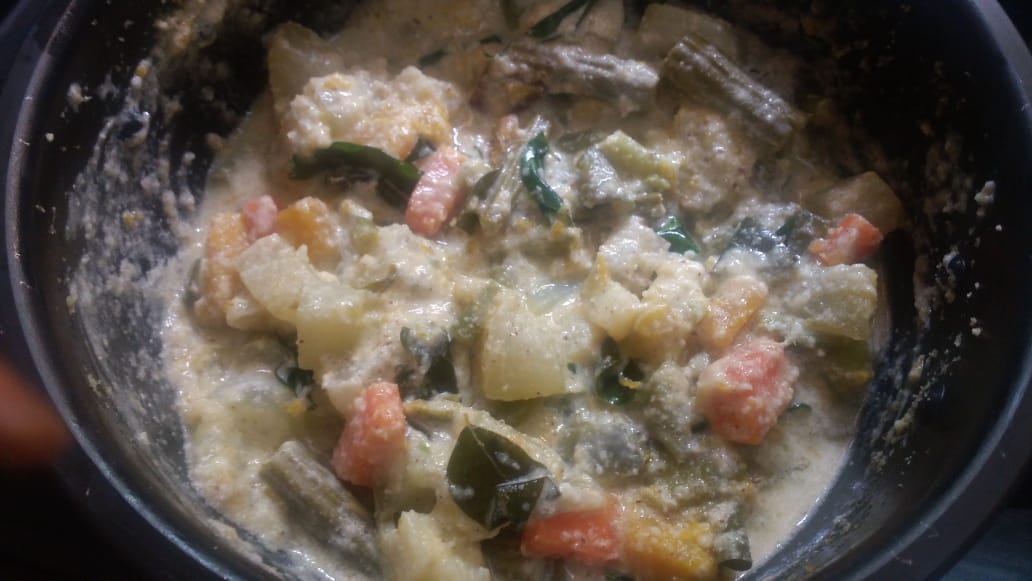
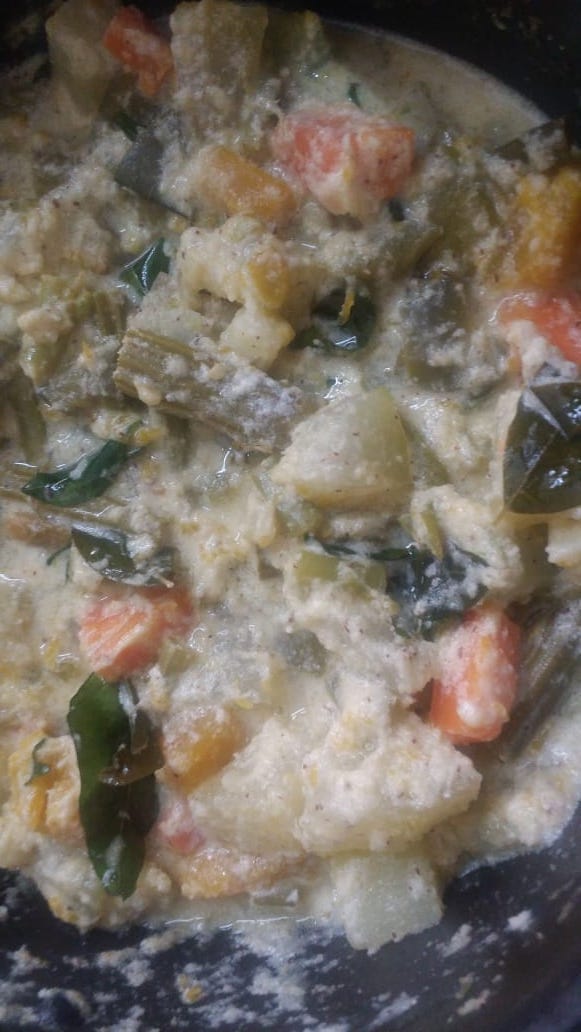
Ingredients: (serves 3-4)
White pumpkin : 150-200g
Mixed chopped vegetables : 300-350g
[Main vegetables - Kottaranga(cluster beans), drumstick, brinjals, Sena Kazhangu (Yam/Suran)
Other vegetables you can mix : carrot, potato, raw banana, avarakkai (broad/flat beans), Beans]
Coconut freshly grated : 1.25 cup
Green chillies : 6-7 (you can adjust as per your taste/hotness)
Fresh thick butter milk (no sourness) : 250ml
Salt : 1.5tsp (or) as per taste
Coconut oil : 4-6 tbsp
Curry leaves - 4-5 strands
Method:
1. Boil 200 ml (approximately) water, add salt to it, 3-4 slit green
chillies, curry leaves (2 strands). Then add all the chopped vegetables.
Please note that the vegetables should be chopped into little big pieces
(the veg pieces should be distinctly seen in the dish). Also if they
are not big enough, then they get mashed which spoils the look and
flavour of the dish.
Also note that the water level should be half the level of all
vegetables. Here altogether we have taken around 450-550g of vegetables.
Hence we have taken approximately 200ml of water in this step.
Make sure you add the vegetables which take more time to get cooked at
the bottom and the ones which get easily cooked at the top. Take care of
this stacking.
After adding all the vegetables close the vessel with a lid and allow it to boil for 5 min on medium flame.
2. After 5 min open the lid, add 2 tbsp coconut oil and mix well the
vegetables i.e. with a flat ladle bring the vegetables at the bottom to
top, so the mixing should be down-to-up:down-to-up. You have to do it
carefully so that you dont mash the vegetables. Again close the vessel
with the lid. Check the vegetables every 3-4 min and repeat this step
#2 till vegetables are cooked.
3. Grind the freshly grated coconut and remaining green chillies with
1/2 tsp rice flour and once the vegetables are cooked add it to the
boiling mixture. Add 2 tbsp coconut oil and mix well (down-to-up). Wait
for 3-4 min but stir it often(down-to-up). Then switch off the flame.
4. Heat 1-2 tsp coconut oil, add remaining curry leaves for tadka and
switch off flame. Add it to the avial. Close it with a lid and allow it
to rest for some 5-10 minutes..
5. Then take the thick butter milk (you can take freshly set curd and
whip it into buttermilk without adding water) and add to the avial and
mix well (down-to-up).
6. Add little more coconut oil to the avial as per your taste and liking.
6. Add little more coconut oil to the avial as per your taste and liking.
Note: If u feel water is excess at the end of step2...remove some water
before performing step3..You can use this water later for making soup.
:)
Paruppu thenga thogayal
This is a kind of chutney. You need to mix it with rice, add 1 tsp of gingely oil/ghee to it and then savor it. The best combination is, prepare this thogayal and vatha kuzhambu, also have roasted rice papad. Mix thogayal with rice, have vatha kuzhambu and rice papad as side dish. Will taste awesome!
Ingredients: (serves 3-4)
Gingelly Oil – 1 tbsp
Tuwar dal (Tuwaram paruppu) - ½ cup
Red chilli – 4
Asafoetida/Hing/Perungayam – ¼ tsp
Fresh grated coconut – ¾ cup
Salt – 1 tsp (or) as per taste
Method:
1. Heat oil in a pan. Add tuwar dal, red chilli and hing. Saute well till dal turns golden brown in colour.
2. Now switch off the flame. Allow it to cool.
3.Then add it in a mixi jar, add grated coconut, salt. Don’t grind it into a smooth paste. Grind it little coarse.Ingredients: (Serves 3 to 4)
Curry leaves : 1 bundle
Mustard : 1/2 tsp
Asafoetida solid : small tamarind seed size
Salt : 3/4 - 1 tsp
Urad dal : 1.5 tbsp
Red chilli : 2
Pepper : 7
Tamarind : 1/2 Amla size
Oil : 2 tsp
Method for thogayal:
1. Take oil in a pan, add mustard, then asafoetida, red chilli, urad dal and pepper.
2. Fry the above till they turn golden brown and switch off the flame.
3. Now take the fried mixture, add curry leaves, salt, tamarind and grind it little coarsely.
Method for Kuzhambu:
Same as above, instead of tamarind pulp, add tamarind juice.
Coriander/Pudina thogayal
Ingredients:
Coriander leaves- 1 bundle (or) Pudina leaves- 1 bundle (or) both half bundles
Mustard : 1/2 tsp
Salt : 3/4th tsp (or) as per taste
Urad dal : 1.5 to 2 tbsp
Red chilli :3
Pepper :0.5 tsp
Tamarind :paste 0.5 tsp
Freshly Grated coconut : 2 tbsp
Oil : 3-4 tsp
Method for thogayal:
1. Heat 1-2 tsp oil in a pan, add mustard and let it crackle, add red chillies, urad dal and pepper.
2. Fry the above till dal turns golden brown and then switch off the flame. Transfer the content in mixi jar.3. Heat remaining oil in pan on medium flame and add the pudina/coriander leaves(Make sure you have cleaned the leaves and strained all the water well beforehand). Saute till the leaves shrink and raw flavour goes away.
4. Now add the pudina/coriander leaves too into the mixi jar, and once it cools down add salt, tamarind paste, grated coconut and grind it little coarsely.
Peerkangai/Chow-Chow Thogayal
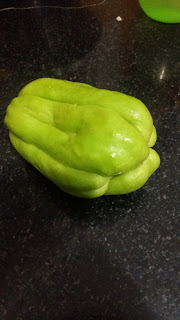
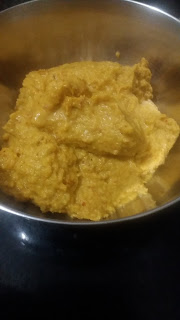
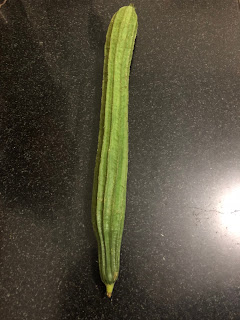
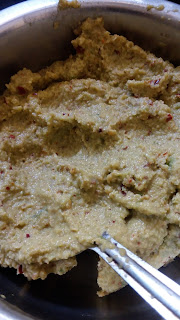
Ingredients:
Method:
1. Take 1/2 tbsp oil in a pan, add tuwar dal, red chillies. Stir till dal turns golden brown and remove from flame. Transfer it in a mixi jar.
2. In same pan, add 1 tbsp oil and fry chopped ridge guard or chow-chow (peeled & chopped) till the raw flavour goes off.
3. Add this too into the mixi jar, add grated coconut, tamarind, asafoetida, salt and grind it little coarsely.
Inji(Ginger) Thogayal
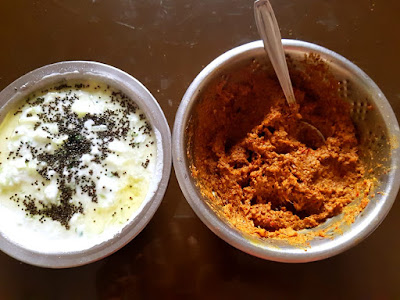
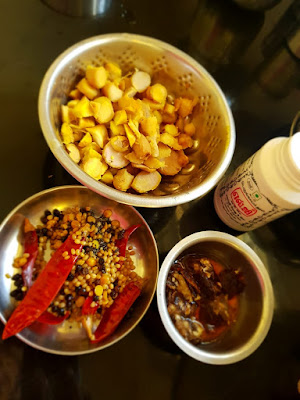
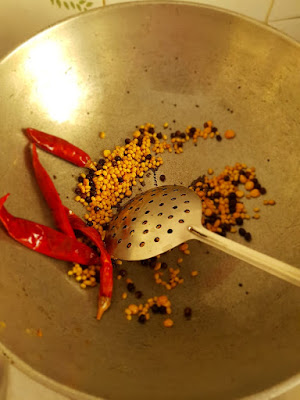
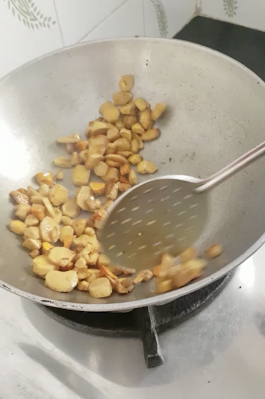
Note: Mix with hot rice adding little ghee to it. Serve hot with tomato/cucumber raita. It will be very delicious. :)
Inji(Ginger) puli
Ingredients:
Mustard/Rai : 1/2 tsp
Green chillies : 8-10 medium size
Red Chilli : 2 No.s
Ginger : 75-100 g
Tamarind : Roll tamarinf in your palm, should be lemon size
Turmeric : pinch
Salt : 1-2 tsp (or) as per taste
Jaggery : 5g
Urad dal : 1.5 tsp
Rice flour : 1 tsp
Method:
1. In a pan, add oil and mustard, red chillies. Then add chopped green chillies and finely chopped ginger. Fry for a min.
2. Add tamarind juice, turmeric, salt and jaggery. Bring it to boil.
3. In another pan, add oil, Urad dal and fry till golden brown. Grind it coarsely and add it to boiling mixture.
4. Add rice flour mixed in little cold water and boil for 2-3 min.
Note: You can store it in refrigerator for upto 20 days. Make sure you bring it to room temperature and transfer it in a dry and clean container before refrigerating.
You can serve it with hot rice or idli/dosa or curd rice.
Vegetable Curry (southern style):
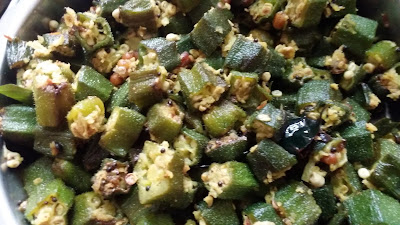
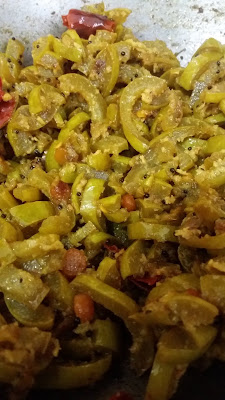
Ingredients : (Serves 2 to 3)
Any veg (carrot, beans, cabbage,ladies finger) - 250 g
Red chilli : 1
Mustard/Rai : 1 tsp
Urad dal : 1 tsp
Chana dal : 1 tsp
Salt : 1/2 tsp
Turmeric : pinch
Asafoetida : pinch
Grated coconut : 5-6 tsp
Oil : 4-5 tsp
Method :
1. Heat Oil in a pan. Add red chilli halved and add mustard.
2. When mustard crackles, add urad dal, chana dal and fry for few sec till golden brown.
3. Add chopped vegetable. Add salt, turmeric and asafoetida. Mix well.
4. Pour little water and close the pan with a lid. Stir occasionally.
5. Once veg gets cooked, add grated coconut and mix well. Stir for a min and switch off flame.
Potato Curry (southern style)
You can prepare the curry in two ways, boil it and saute it with/without onions or chop them and stir fry in oil. Let's see both the methods.
Stir fried Potato Curry
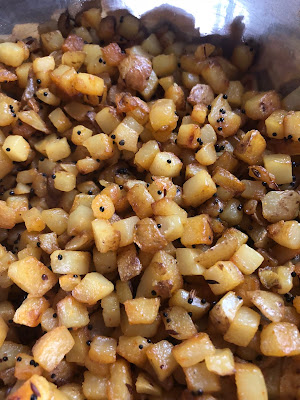
Potato: 3-4 medium
Oil: 4-5 tsp
Mustard seeds : 1/2 tsp
Jeera : 1/4 tsp
Turmeric : 1/4th tsp
Asafoetida : 1/8th tsp
Red chili powder : 1/2 to 3/4 tsp
Salt to taste
Oil : 2 tbsp
Note : Wash the potatoes well and its your choice to peel the skin or not to peel skin. I generally wash the potatoes very well and do not peel the skin. After chopping potatoes, put them in water else they will start turning dark in colour.
Method:
Heat oil in a pan, add mustard seeds, once they crackle, add jeera.
Add chopped potatoes, mix well and saute for a minute. Add turmeric, asafoetida, salt, mix well and saute for a minute.
Sprinkle little water and close the pan with a lid and let it cook on medium flame for 2 min.
Open the lid, mix well, again sprinkle little water and cook it with closed lid upto 2 min on medium flame.
Open the lid, add red chilly powder, mix well and now cook it with open lid with frequent stirring until they get cooked and get roasted as required.
Potato curry - boiled & sauted
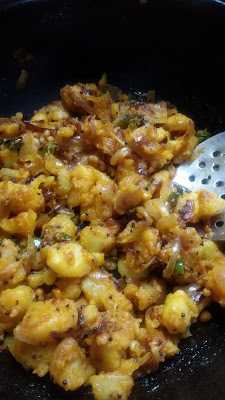
sauted pudina
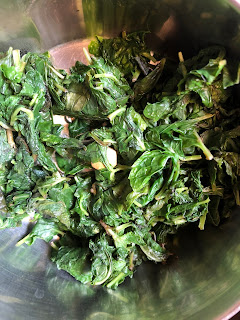
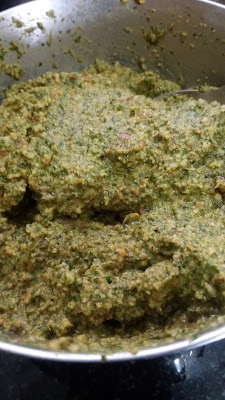
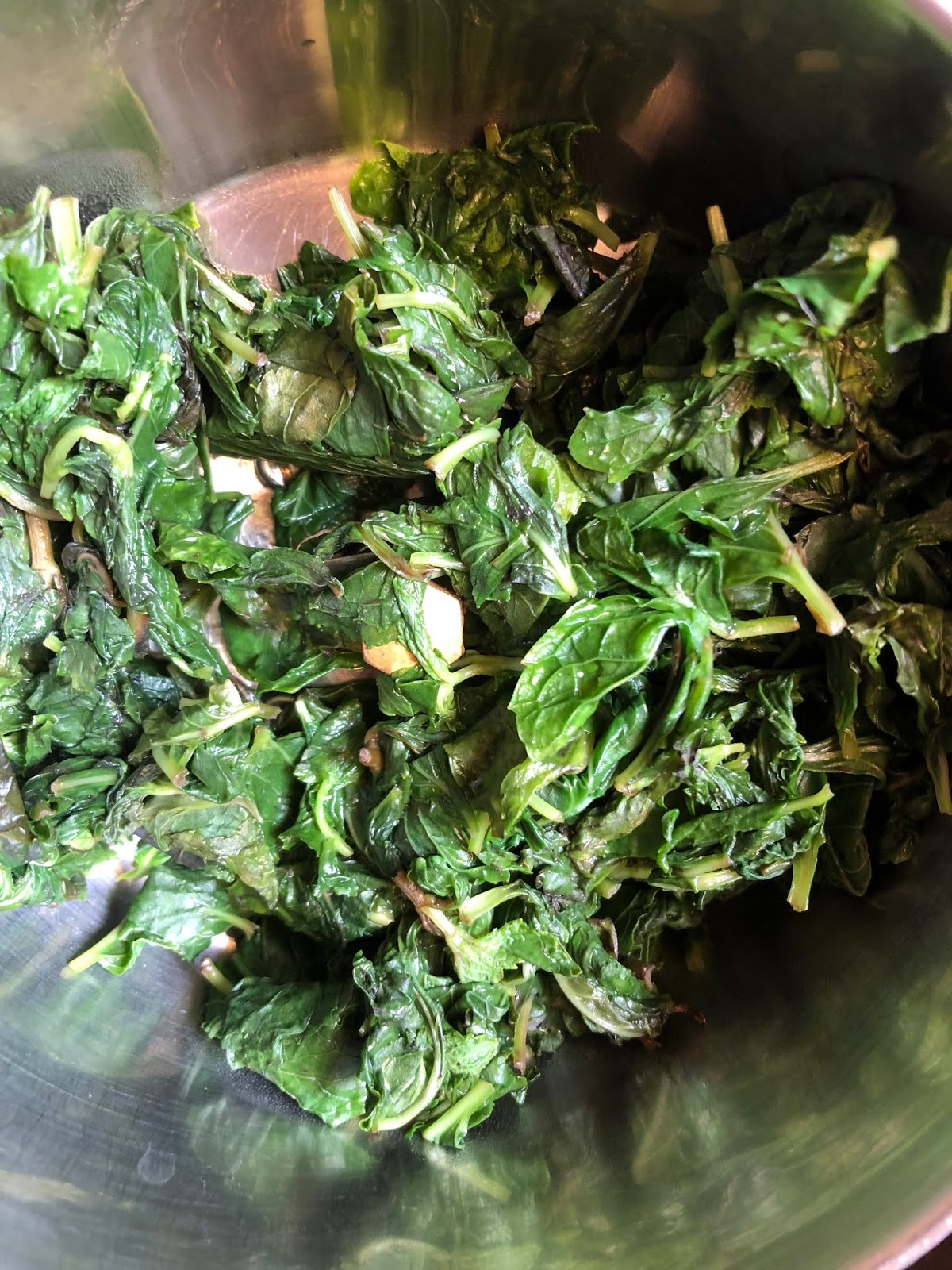
Pudina Thogayal
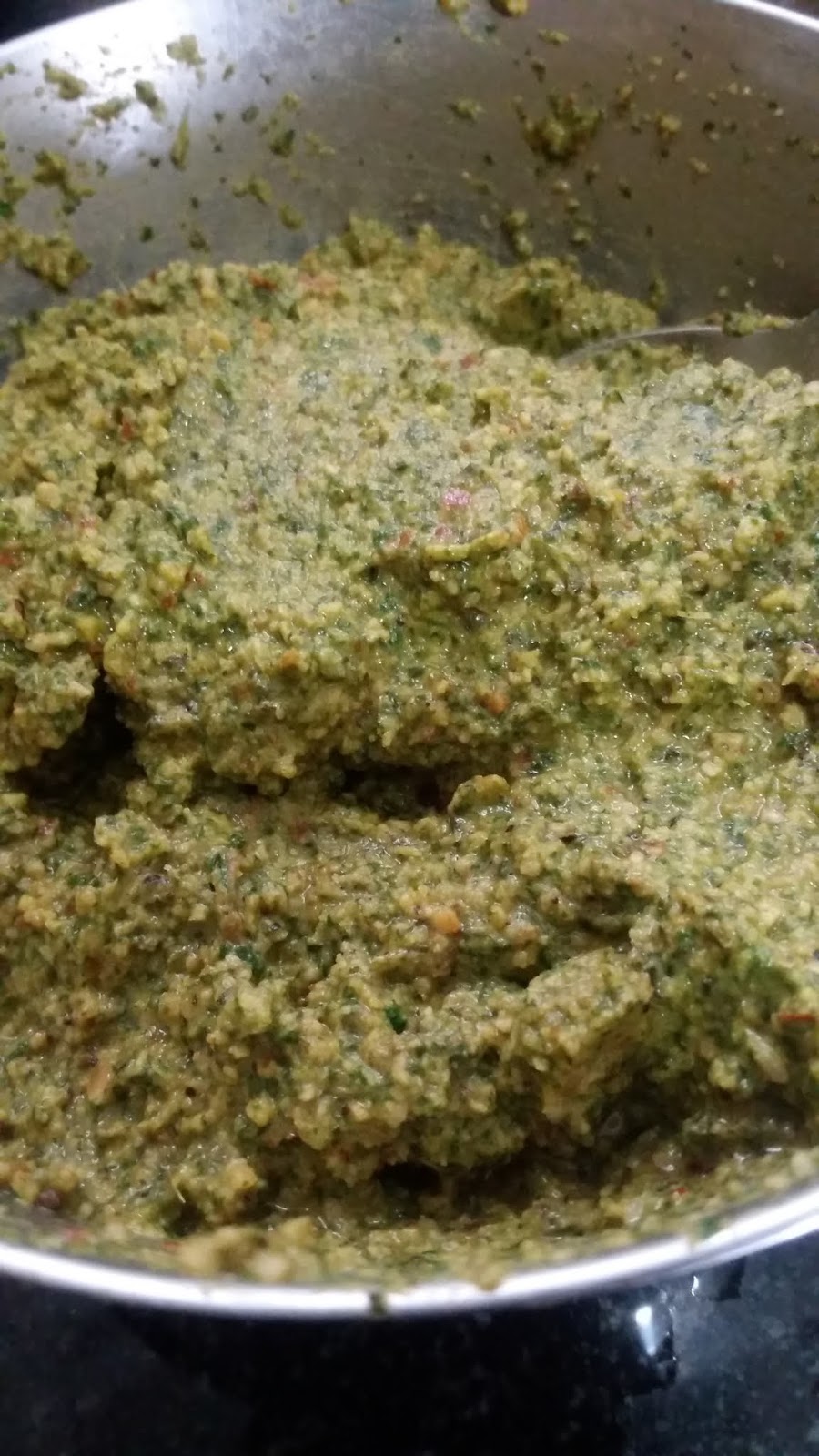
Ingredients:
Coriander leaves- 1 bundle (or) Pudina leaves- 1 bundle (or) both half bundles
Mustard : 1/2 tsp
Salt : 3/4th tsp (or) as per taste
Urad dal : 1.5 to 2 tbsp
Red chilli :3
Pepper :0.5 tsp
Tamarind :paste 0.5 tsp
Freshly Grated coconut : 2 tbsp
Oil : 3-4 tsp
Method for thogayal:
1. Heat 1-2 tsp oil in a pan, add mustard and let it crackle, add red chillies, urad dal and pepper.
2. Fry the above till dal turns golden brown and then switch off the flame. Transfer the content in mixi jar.3. Heat remaining oil in pan on medium flame and add the pudina/coriander leaves(Make sure you have cleaned the leaves and strained all the water well beforehand). Saute till the leaves shrink and raw flavour goes away.
4. Now add the pudina/coriander leaves too into the mixi jar, and once it cools down add salt, tamarind paste, grated coconut and grind it little coarsely.
Peerkangai/Chow-Chow Thogayal
(chow chow)
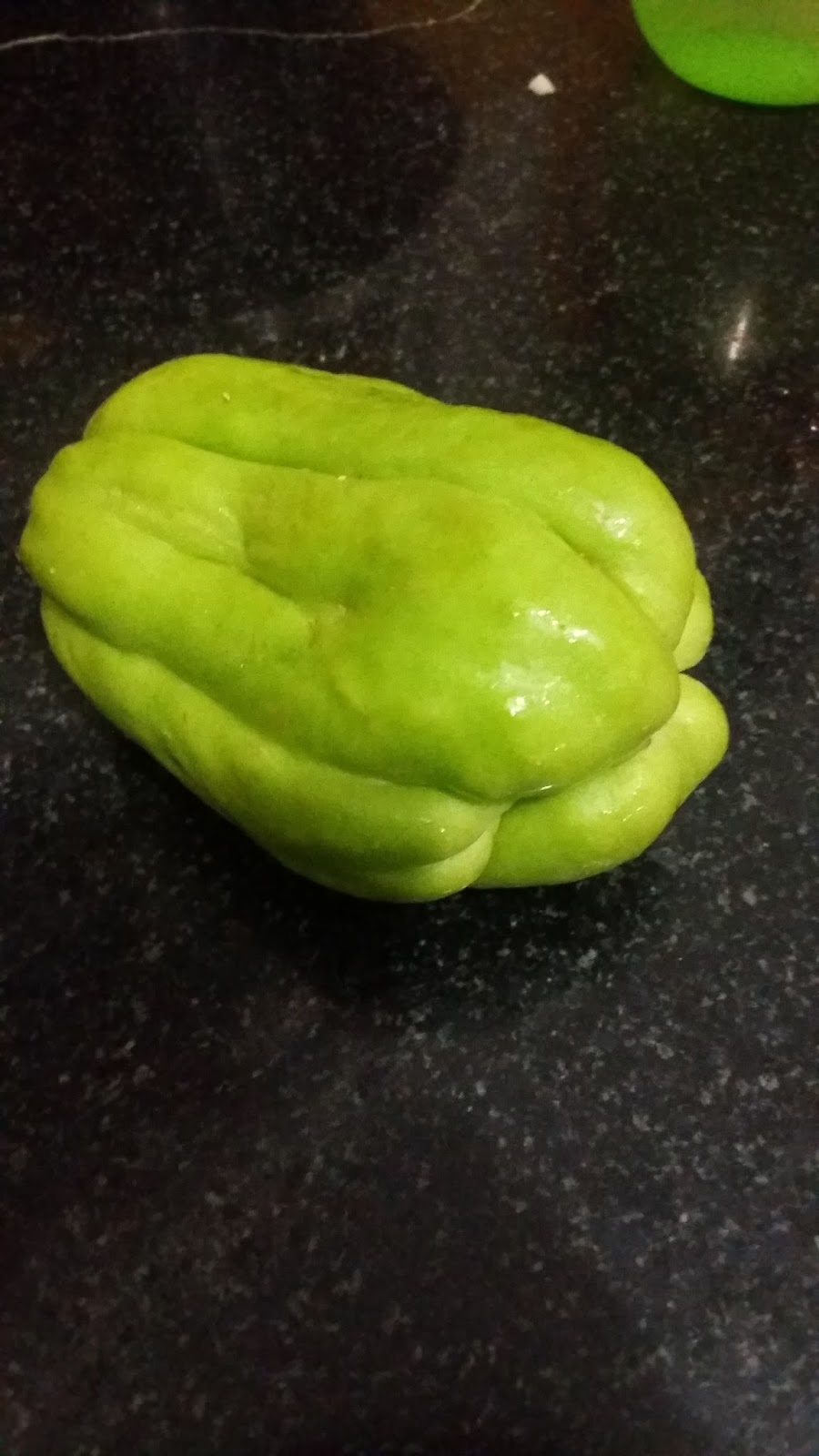
(chow chow thogayal)
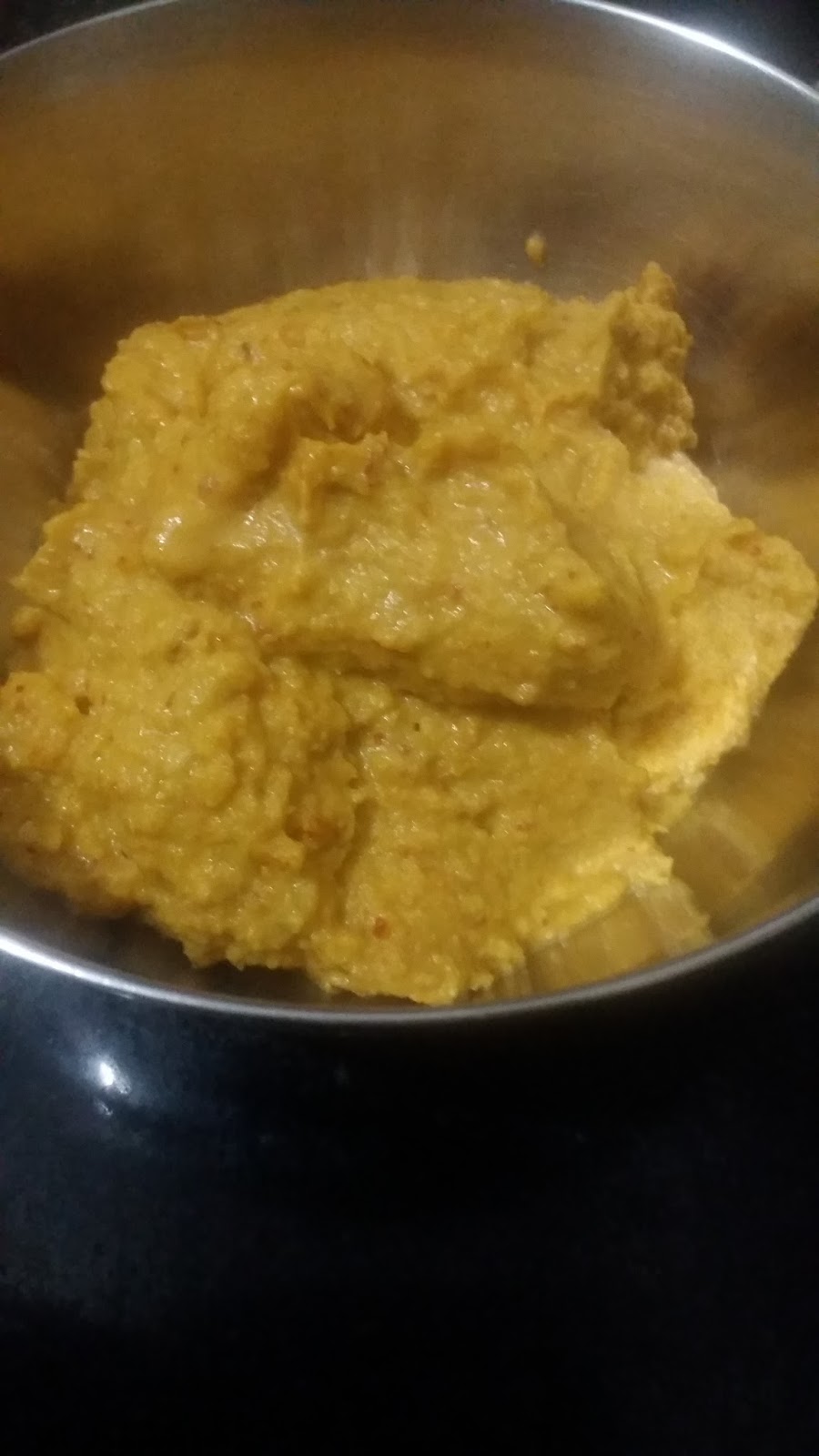
(peerkangai)
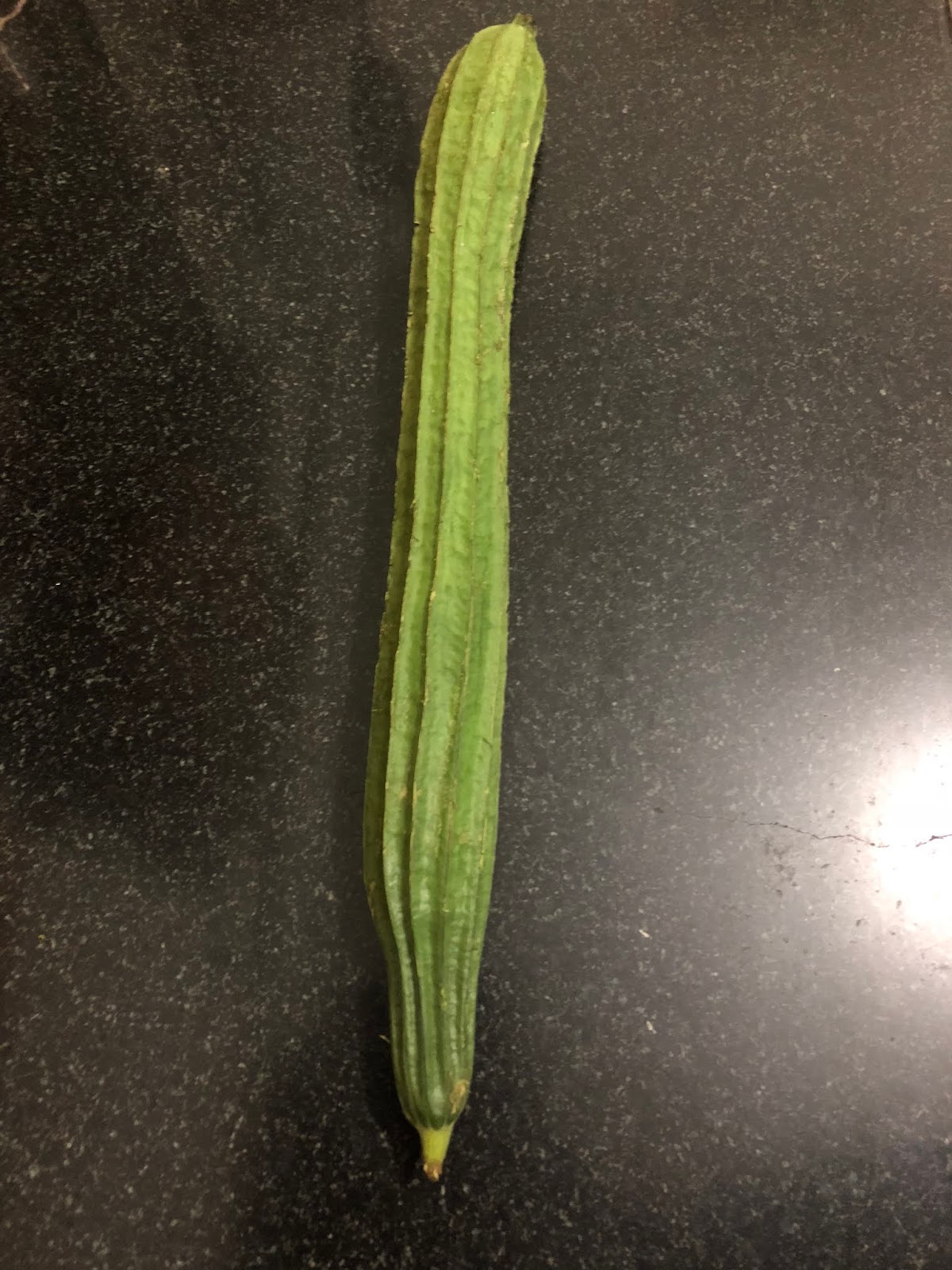
(peerkangai thogayal)
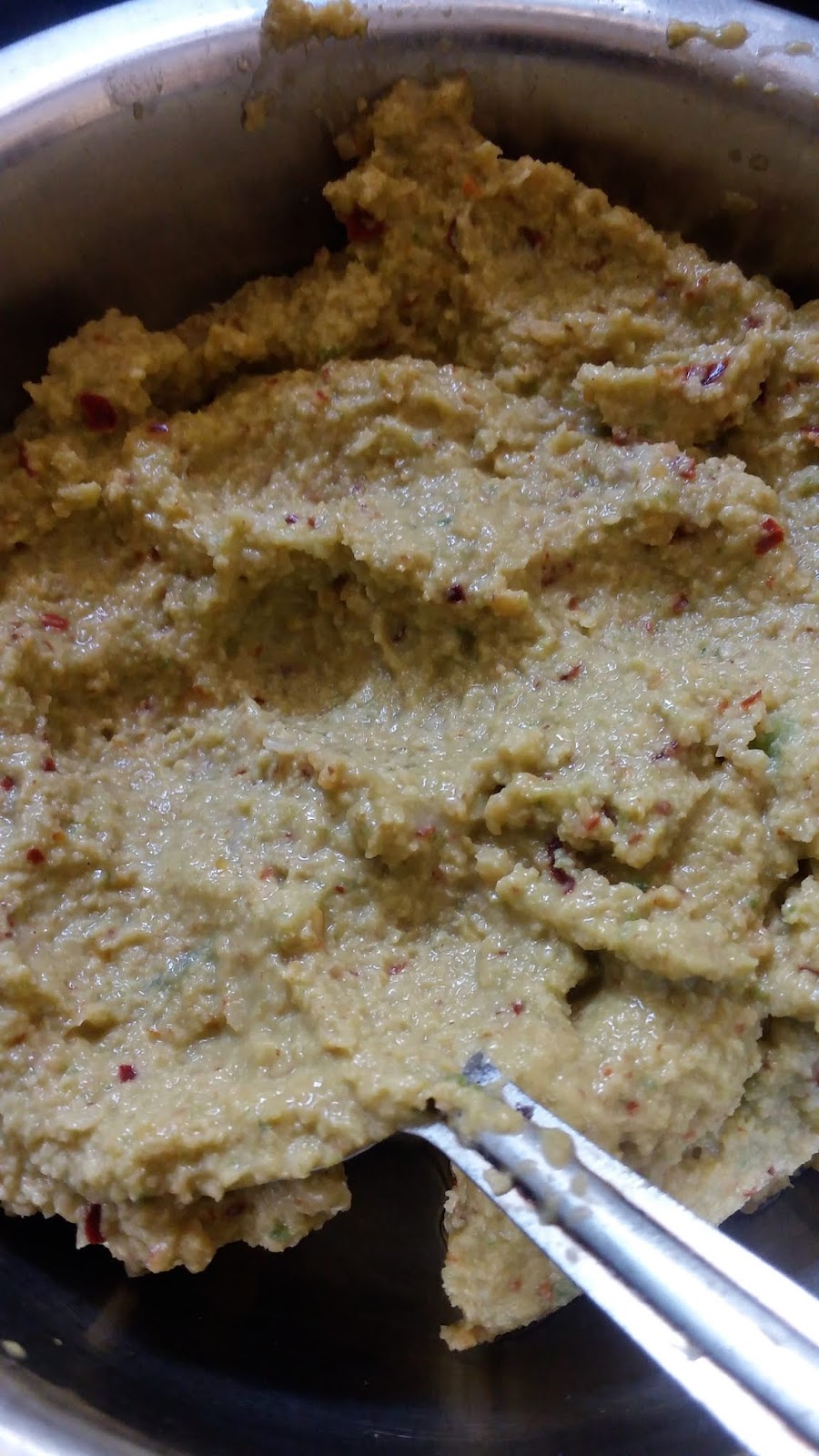
Ingredients:
Peerkangai (ridge guard) or Chow-chow: 1 small (250-300g)
Tuwar dal - 1.5 tbsp
Red chilli - 2 to 3
Asafoetida - 1/4 tsp
Freshly Grated coconut - 2 tbsp
Tamarind paste : 1/4 tsp
Salt - 0.5 to 0.75 tsp (or) as per taste
Oil - 1.5 tbsp
Tuwar dal - 1.5 tbsp
Red chilli - 2 to 3
Asafoetida - 1/4 tsp
Freshly Grated coconut - 2 tbsp
Tamarind paste : 1/4 tsp
Salt - 0.5 to 0.75 tsp (or) as per taste
Oil - 1.5 tbsp
Method:
1. Take 1/2 tbsp oil in a pan, add tuwar dal, red chillies. Stir till dal turns golden brown and remove from flame. Transfer it in a mixi jar.
2. In same pan, add 1 tbsp oil and fry chopped ridge guard or chow-chow (peeled & chopped) till the raw flavour goes off.
3. Add this too into the mixi jar, add grated coconut, tamarind, asafoetida, salt and grind it little coarsely.
Inji(Ginger) Thogayal
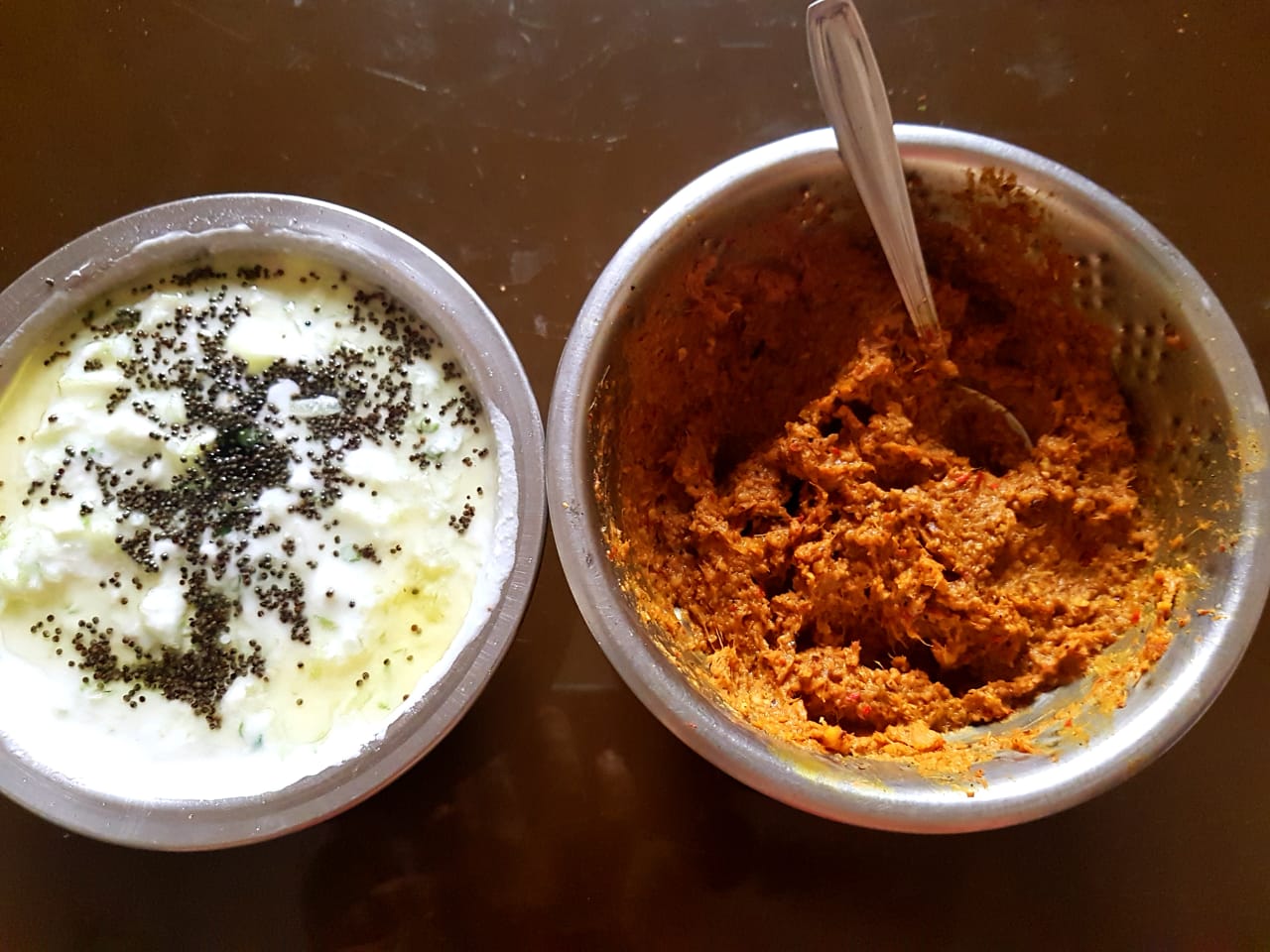
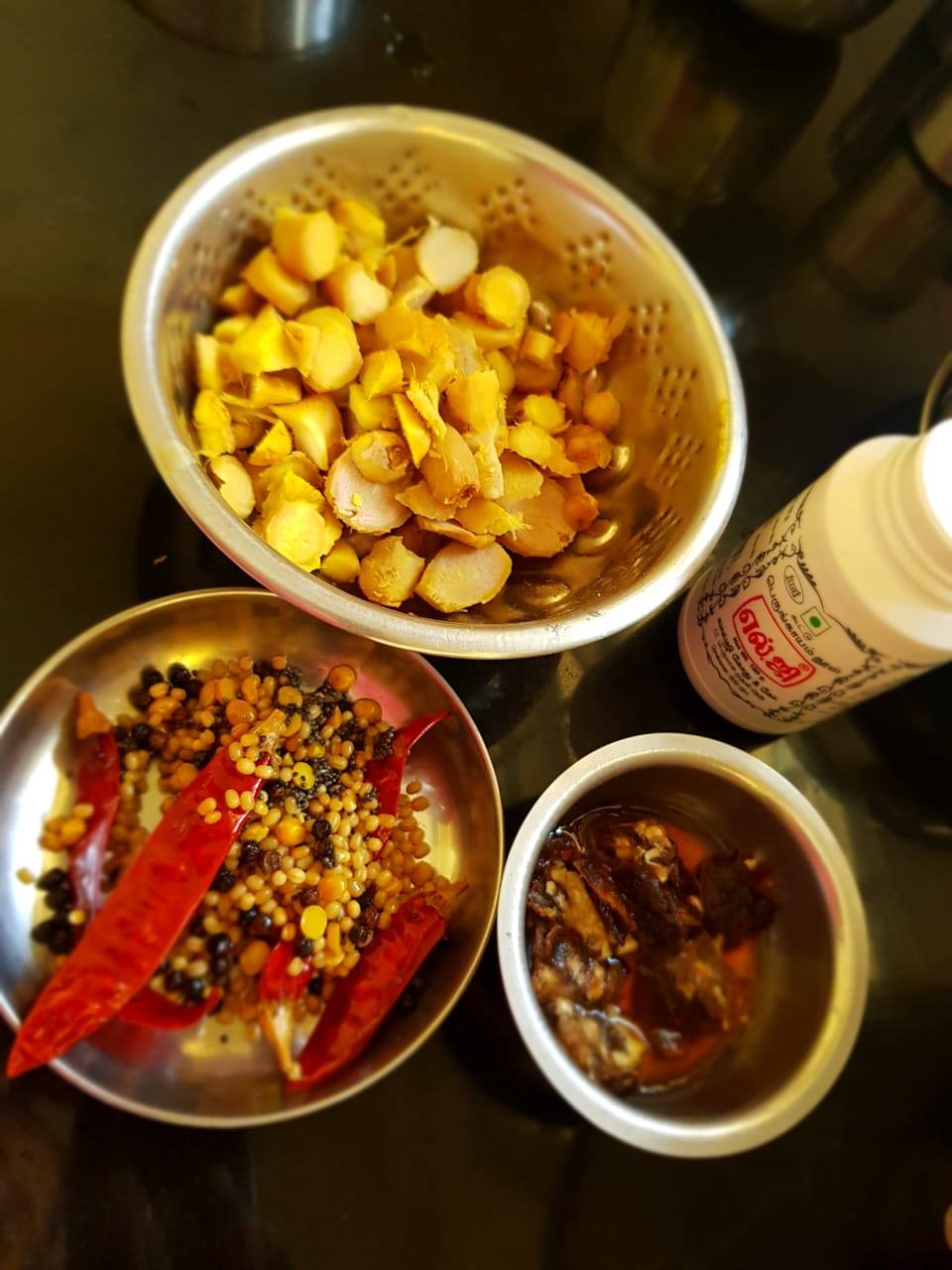
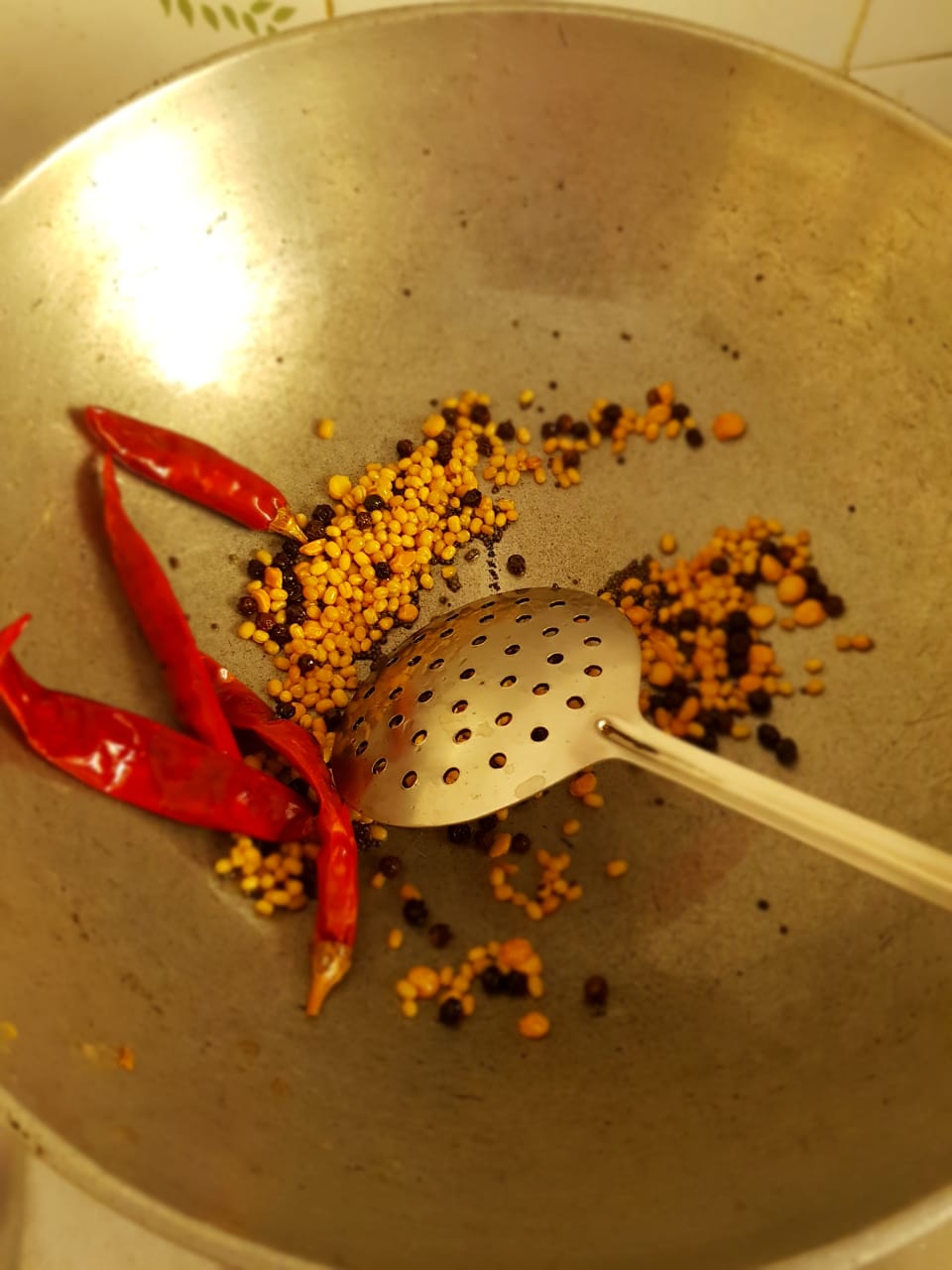
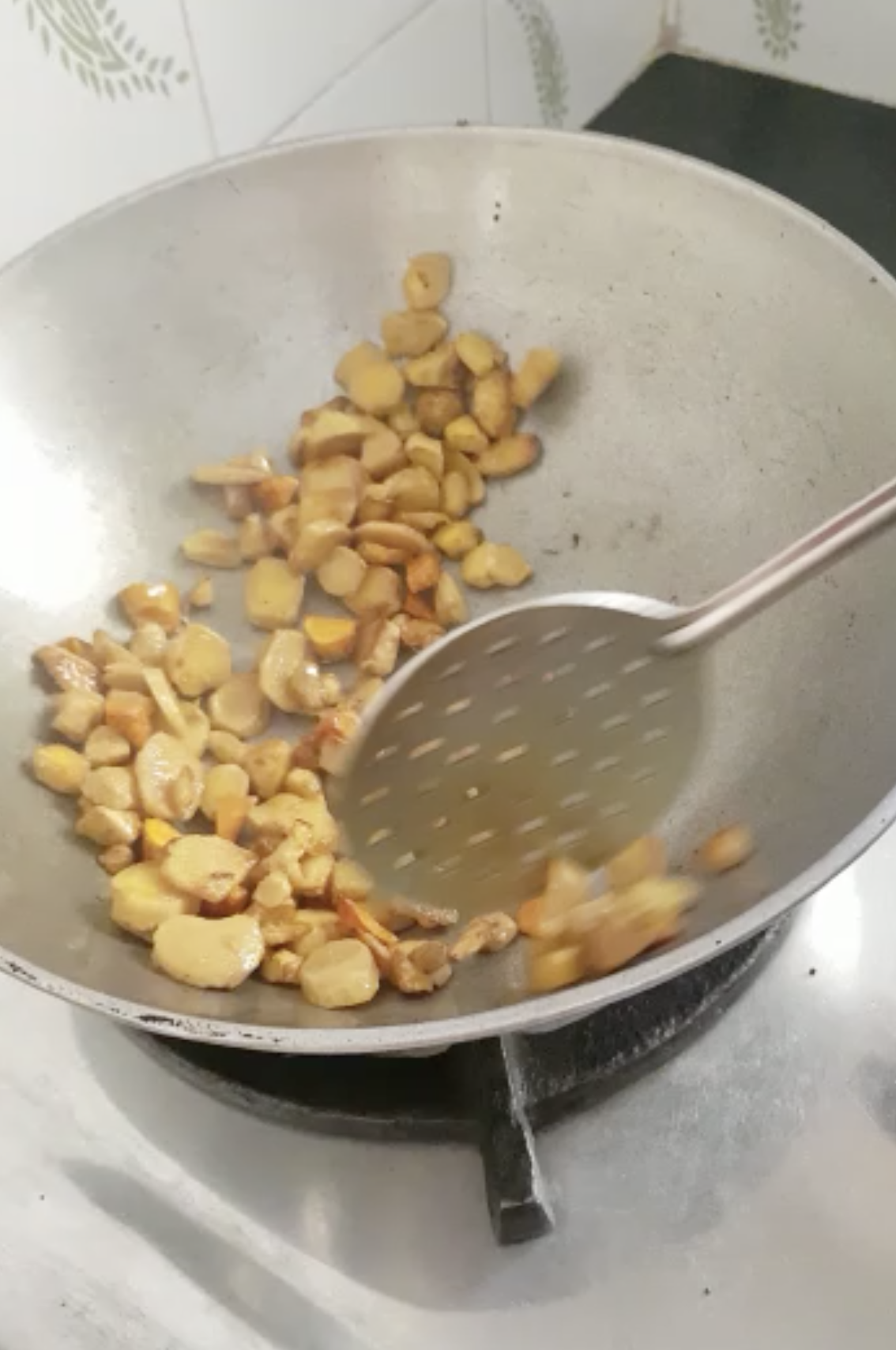
Ingredients:
Ginger : 75-100g
Mustard : 1/4 tsp
Asafoetida/Hing : 1/4 tsp
Urad dal : 1.5 to 2 tbsp
Pepper : 10-15
Salt : 3/4th tsp (or) as per taste
Oil : 3-4 tsp
Red Chilli : 4-5
Tamarind paste : 1/2 to 1 tsp
Jaggery : small tamarind seed size
Mustard : 1/4 tsp
Asafoetida/Hing : 1/4 tsp
Urad dal : 1.5 to 2 tbsp
Pepper : 10-15
Salt : 3/4th tsp (or) as per taste
Oil : 3-4 tsp
Red Chilli : 4-5
Tamarind paste : 1/2 to 1 tsp
Jaggery : small tamarind seed size
Method:
1. Heat 1-2 tsp oil in a pan, add mustard and let it crackle, then add urad dal, pepper and red chillies and fry till dal turns golden brown in colour. Remove from flame and transfer contents into a mixi jar.
2. In the same pan add the remaining oil and fry chopped ginger on medium flame for 5 min. Switch off the flame. Transfer contents into the mixi jar.
3. Once it cools down, grind both these mixitures little coarsely with salt, asafoetida, jaggery and tamarind paste.
2. In the same pan add the remaining oil and fry chopped ginger on medium flame for 5 min. Switch off the flame. Transfer contents into the mixi jar.
3. Once it cools down, grind both these mixitures little coarsely with salt, asafoetida, jaggery and tamarind paste.
Note: Mix with hot rice adding little ghee to it. Serve hot with tomato/cucumber raita. It will be very delicious. :)
Inji(Ginger) puli
Ingredients:
Mustard/Rai : 1/2 tsp
Green chillies : 8-10 medium size
Red Chilli : 2 No.s
Ginger : 75-100 g
Tamarind : Roll tamarinf in your palm, should be lemon size
Turmeric : pinch
Salt : 1-2 tsp (or) as per taste
Jaggery : 5g
Urad dal : 1.5 tsp
Rice flour : 1 tsp
Method:
1. In a pan, add oil and mustard, red chillies. Then add chopped green chillies and finely chopped ginger. Fry for a min.
2. Add tamarind juice, turmeric, salt and jaggery. Bring it to boil.
3. In another pan, add oil, Urad dal and fry till golden brown. Grind it coarsely and add it to boiling mixture.
4. Add rice flour mixed in little cold water and boil for 2-3 min.
Note: You can store it in refrigerator for upto 20 days. Make sure you bring it to room temperature and transfer it in a dry and clean container before refrigerating.
You can serve it with hot rice or idli/dosa or curd rice.
Vegetable Curry (southern style):
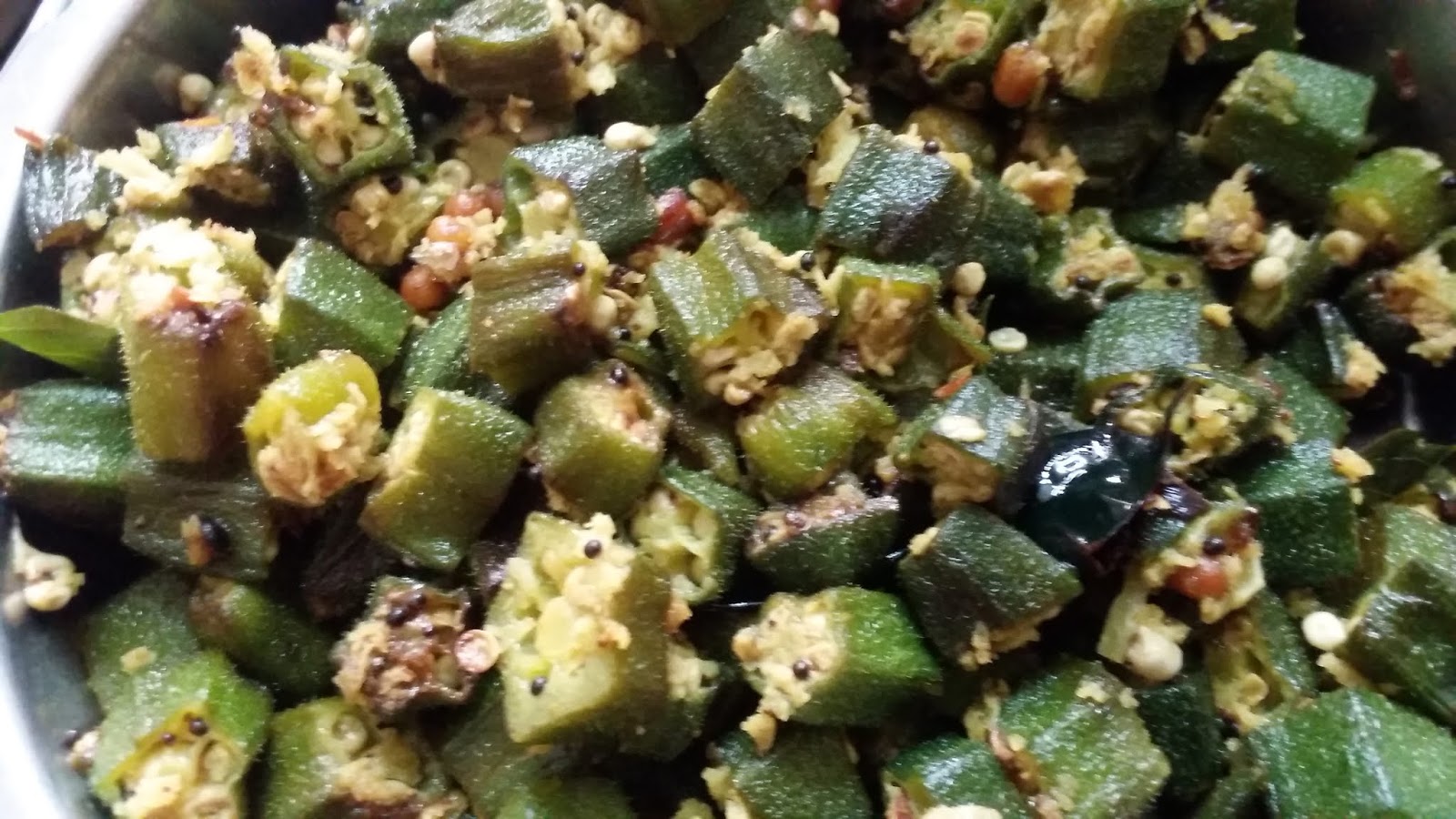
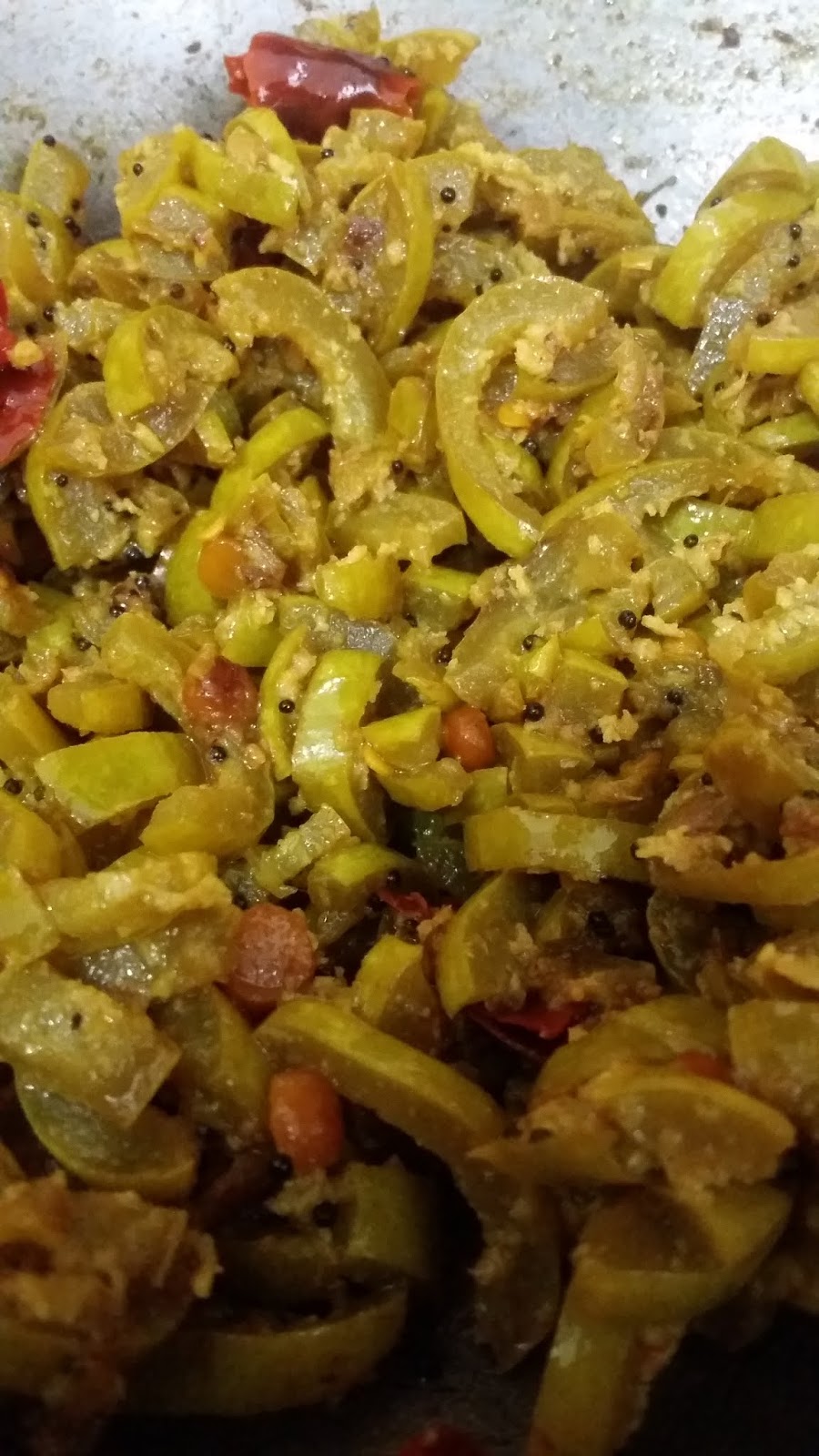
Ingredients : (Serves 2 to 3)
Any veg (carrot, beans, cabbage,ladies finger) - 250 g
Red chilli : 1
Mustard/Rai : 1 tsp
Urad dal : 1 tsp
Chana dal : 1 tsp
Salt : 1/2 tsp
Turmeric : pinch
Asafoetida : pinch
Grated coconut : 5-6 tsp
Oil : 4-5 tsp
Method :
1. Heat Oil in a pan. Add red chilli halved and add mustard.
2. When mustard crackles, add urad dal, chana dal and fry for few sec till golden brown.
3. Add chopped vegetable. Add salt, turmeric and asafoetida. Mix well.
4. Pour little water and close the pan with a lid. Stir occasionally.
5. Once veg gets cooked, add grated coconut and mix well. Stir for a min and switch off flame.
Potato Curry (southern style)
You can prepare the curry in two ways, boil it and saute it with/without onions or chop them and stir fry in oil. Let's see both the methods.
Stir fried Potato Curry
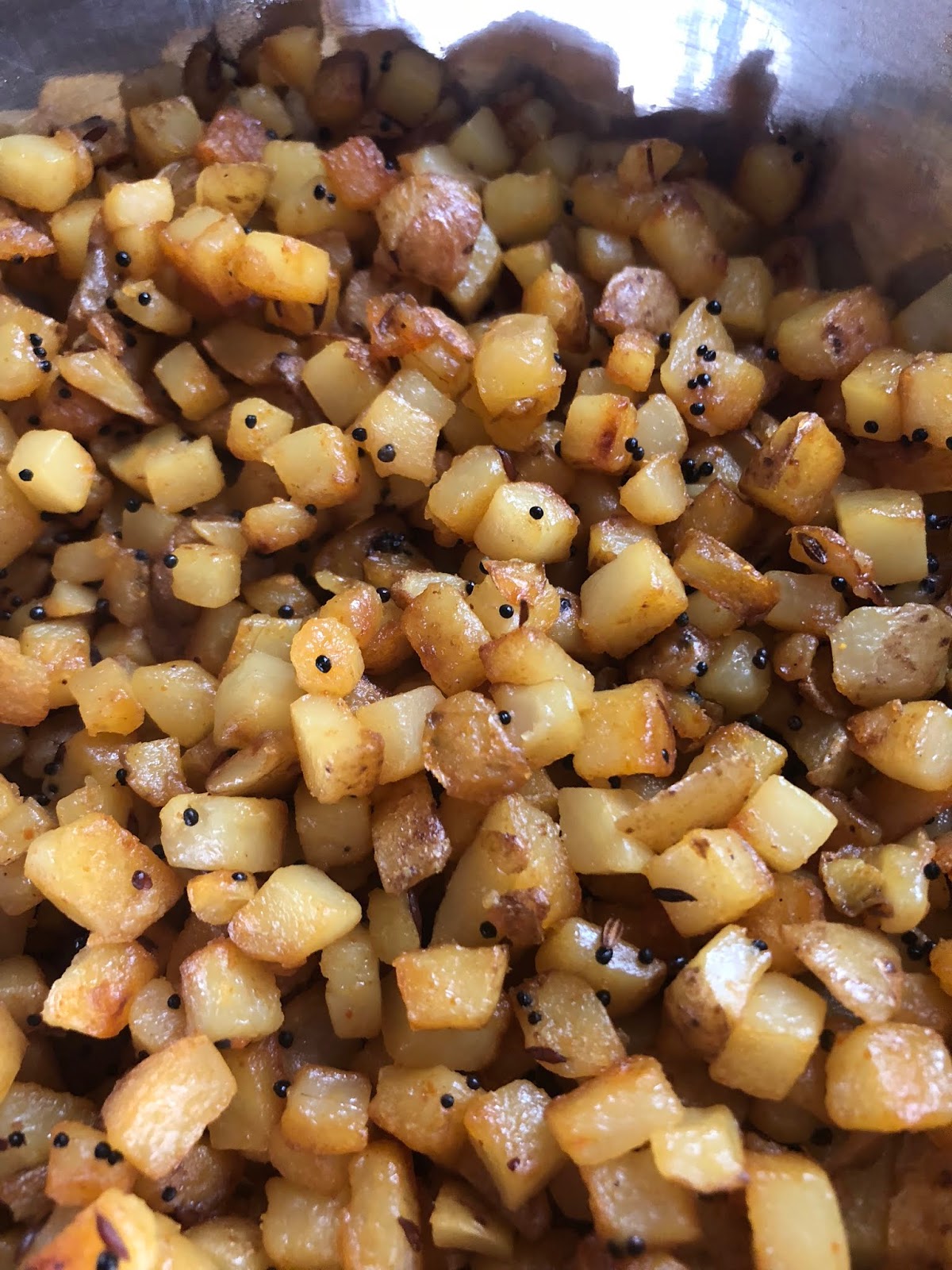
Potato: 3-4 medium
Oil: 4-5 tsp
Mustard seeds : 1/2 tsp
Jeera : 1/4 tsp
Turmeric : 1/4th tsp
Asafoetida : 1/8th tsp
Red chili powder : 1/2 to 3/4 tsp
Salt to taste
Oil : 2 tbsp
Note : Wash the potatoes well and its your choice to peel the skin or not to peel skin. I generally wash the potatoes very well and do not peel the skin. After chopping potatoes, put them in water else they will start turning dark in colour.
Method:
Heat oil in a pan, add mustard seeds, once they crackle, add jeera.
Add chopped potatoes, mix well and saute for a minute. Add turmeric, asafoetida, salt, mix well and saute for a minute.
Sprinkle little water and close the pan with a lid and let it cook on medium flame for 2 min.
Open the lid, mix well, again sprinkle little water and cook it with closed lid upto 2 min on medium flame.
Open the lid, add red chilly powder, mix well and now cook it with open lid with frequent stirring until they get cooked and get roasted as required.
Potato curry - boiled & sauted
Potato curry(boiled & sauted)
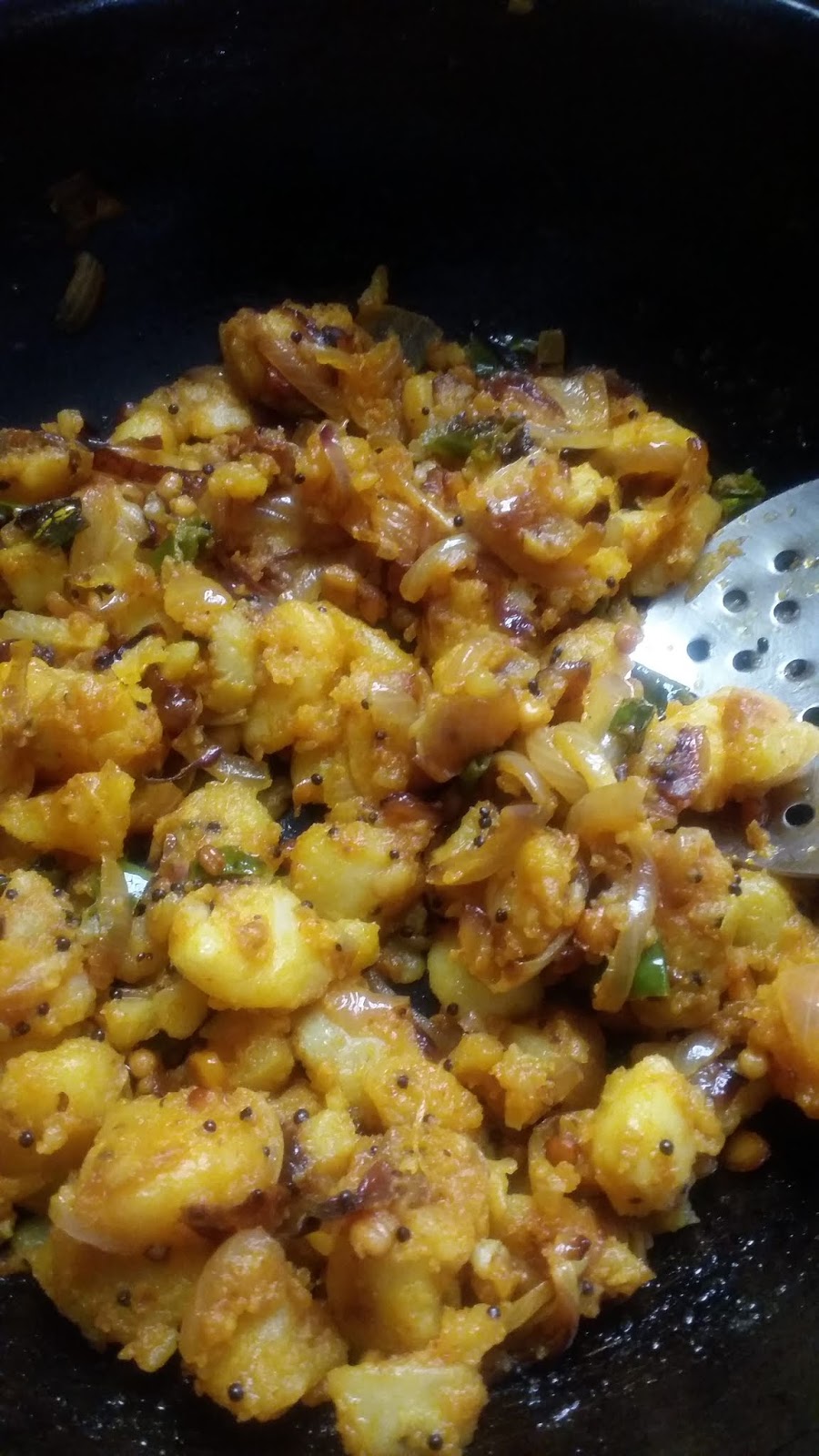
Baby Potato Roast(boiled & roasted)
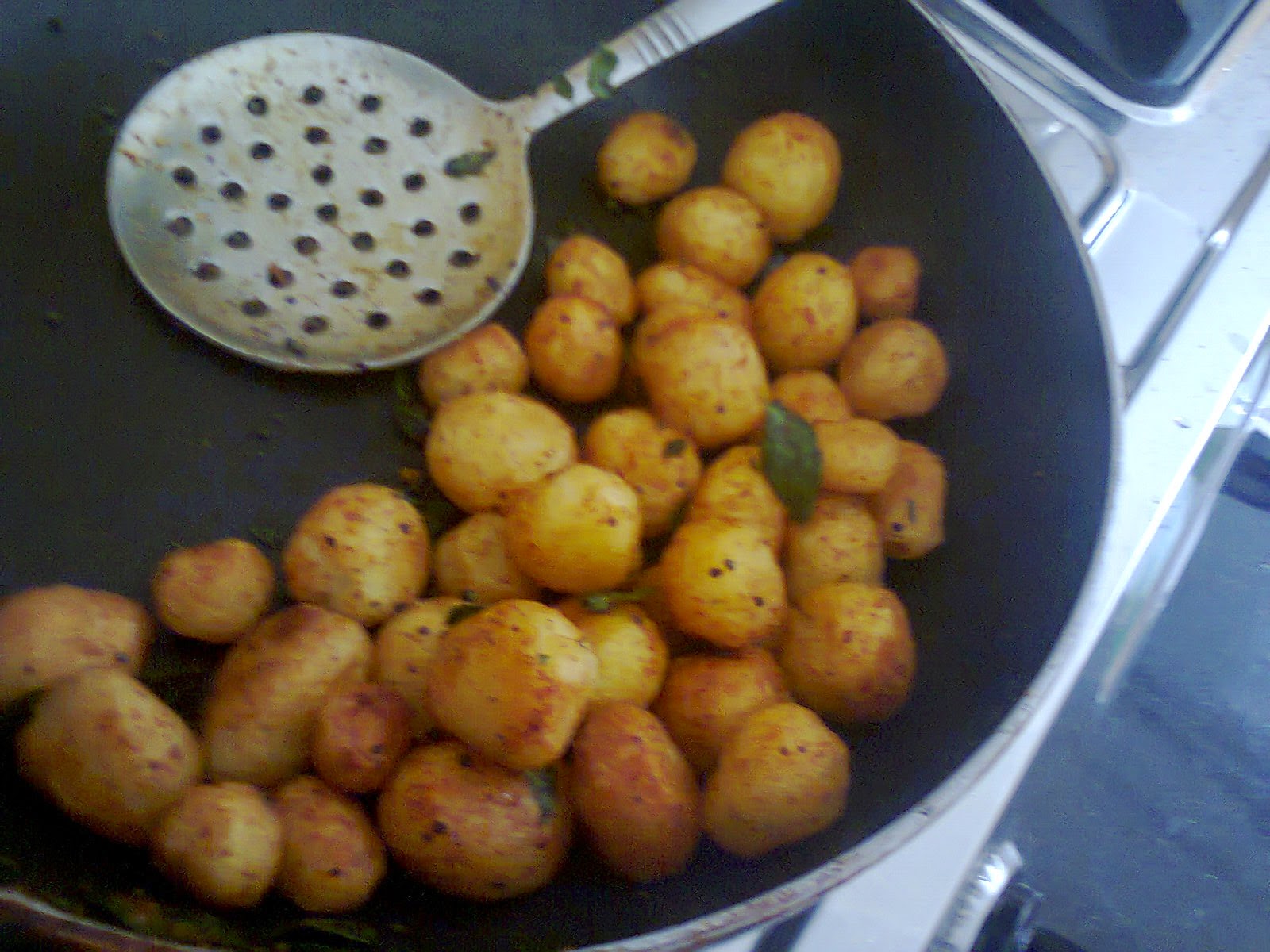
Ingredients:
Potato : 3-4 medium
Onion : 1 medium (optional)
Green chillies : 3-4
Chana dal (kadala paruppu) : 1 tsp
Urad dal : 1 tsp
Mustard seeds : 1/2 tsp
Turmeric : 1/4 tsp
Asafoetida : pinch
Salt to taste
Oil : 3-4 tsp
Method:
Boil the potatoes, peel the skin and keep it aside.
In a pan, heat oil and add mustard seeds. Once they crackle, add chana dal and urad dal and saute. ONce they start turning golden brown add chopped green chillies and onion and saute till onions just start turning brown. (if you are not adding onions, then once you add green chillies, saute for few seconds and then add the potatoes.)
Now take the boiled potaoes one by one in hand, crush and add into the pan. Add turmeric, asafoetida, salt, mix well and saute for 5-8 min. (Break the potatoes into smaller pieces if needed with the help of the spatula).
Switch off the flame.
Note : If you are using baby potatoes, boil them, peel skin & add them whole without crushing and do not add onions. Roast the baby potatoes till they turn crispy golden brown. You may need to adjust oil accordingly. And instead of green chillies, use red chilly powder as per your taste.
Brinjal Curry (southern style)
Its a delicious side dish for sambhar/kuzhambu rice. Also tastes good when simply mixed with rice and little ghee.
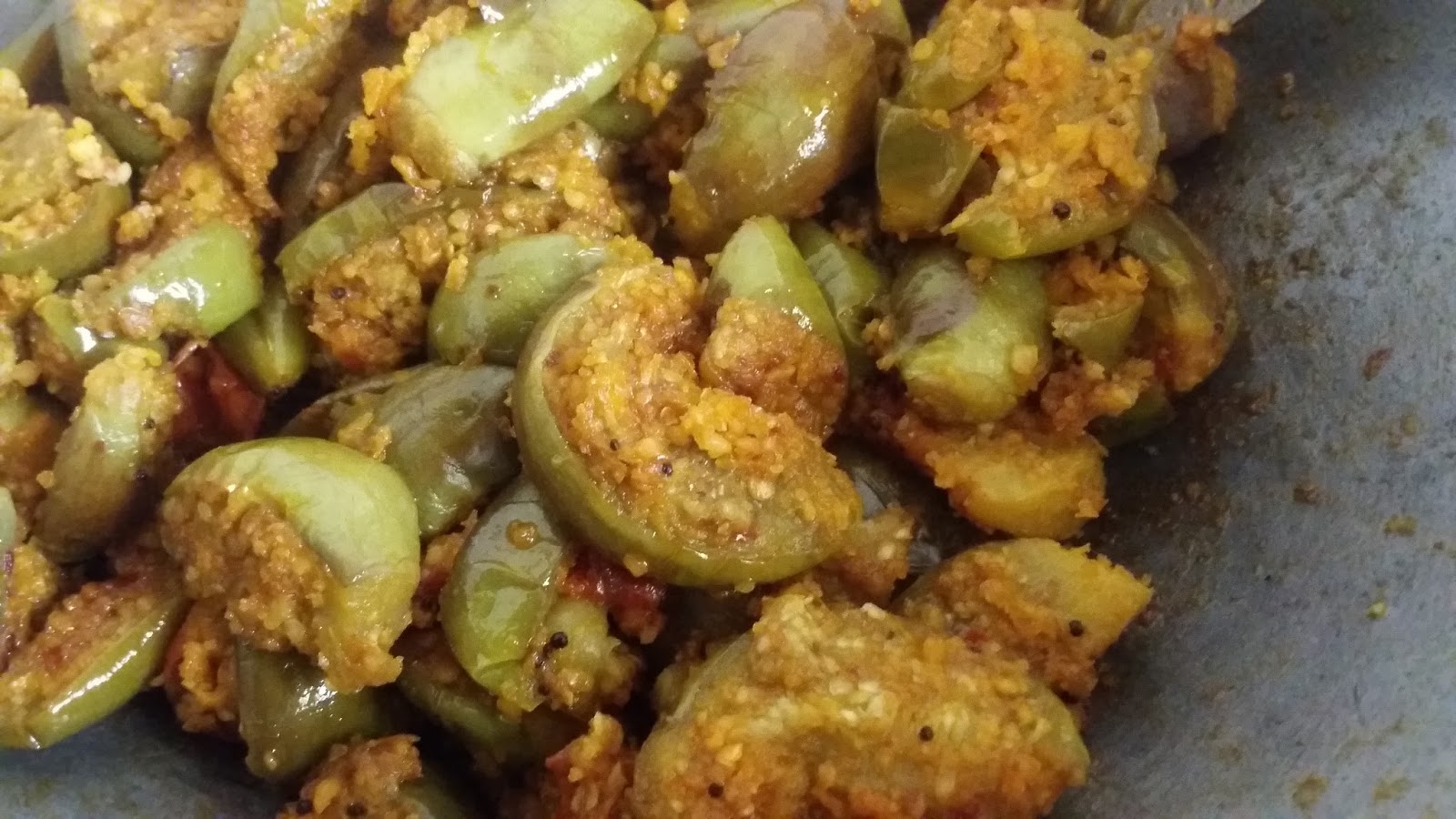
Ingredients : (Servesd 3 to 4)
Brinjals : 500 g
Oil : 5 tsp
Asafoetida : 1/4th tsp
Red Chillies : 4-5
Chana Dal : 1 tsp
Urad dal : 2 tsp
Tomato (medium) : 2
Turmeric : pinch
Salt : 1.5 tsp (or) as per taste
Tamarind juice : 2tbsp (less concentrated)
Method :
1. Take 1 tsp oil in a pan and fry red chillies, chana dal and urad dal with asafoetida.
2. Stir for 3 min, le tthe colour change. Now switch off the flame and allow mixture to cool.
3. Take another pan, take 4 tsp oil. Add chopped brinjals to it and fry.
4. Add chopped tomato, salt, turmeric and tamarind juice.
5. Keep mixing it for 2-3 min and then close it with a lid.
6. Stir it occasionally. Do this for 12-15 min till brinjals get cooked.
7. Now add the ground mixture that we had prepared in the beginning and add it to the brinjals.
8. Again mix well for 2-3 min and switch off the flame.
Note : You can also add dry/fresh coconut in the grinding mixture for more taste.
TASTY BRINJALS ARE READY TO BE SERVED!!!!!!!!!
Manathakkali Keerai Curry:
Ingredients :
Keerai : 1 big bundle
Moog dal : 3 tbsp (soaked in water for 10-15 min)
Grated coconut : 3 tbsp
Oil : 2 tbsp
Red chilli : 1
Mustard : 1/4 tsp
Jeera : 1/4 tsp
Urad dal : 1 tsp
Salt : as per taste
Turmeric : pinch
Asafoetida : pinch
Sugar : 3 to 4 tsp
NOTE: From the keerai bundle, do not include the stems as they will not get cooked properly and hence is difficult to digest. So pluck the leaves, flowers & berries and just the top soft part of the stem. i.e. a top small portion of the stem will be soft, just pluck that.
Method:
1. Take oil in a pan. Add red chilli halved, mustard, Urad dal.
2. When golden brown, add jeera and asafoetida, give a stir and immediately add chopped keerai. Add turmeric,salt and 1 tsp sugar and mix well.
3. Sprinkle water and cover pan with lid. Keep low flame, let it steam inside.
4. Once the keerai is half cooked, add moog dal, mix well and again close the lid.
5. When keerai gets cooked, add remaining sugar and mix well.
6. Finally garnish with coconut, mix and remove the pan from stove.
Note : You can adjust sugar/coconut quantity as per taste.
Manathakkali Kai Vatha Kuzhambu
Is it difficult to pronounce? Chill,let's leave the name and go into its details. There are many leafy vegetables available in the market. The very commonly known to all is Palak. Then there are some types of leafy greens which are not known to all and are used for cooking only in some regions of India and known to respective people. That way Siru Keerai, Mola Keerai, Arai Keerai, Manathakkali keerai are some of the leafy greens which are commonly known to people from Tamilnadu. (Keerai means leafy vegetable or leafy greens.)
Manathakkali Keerai has high medicinal values.You will see flowers (white in colour) in this leafy vegetable and also the fruits (small green berries which turn purple black when they ripen) which has high medicinal values. It helps in fighting mouth & stomach ulcers. Manathakali Keerai curry is generally given as a part of daily diet to women after delivery which is considered to heal many ailments within the body.
This leafy green(along with the flowers & berries) is used to make curries, whereas the small green berries of this leafy greens, also known as 'wonder berries' are used in making Kuzhambu. These berries are bitter in taste and hence its bitterness, the sourness of tamarind and the hot spices together make a great combination and render a tasty delicious Vatha Kuzhambu.
These berries can be used when they are fresh green or also can be used by sun drying them and preserving them with salt.
These fresh leafy greens are available in vegetable markets, and the fresh green wonder berries are also kept separate and sold by the market vendors. Whereas packets of salted dry berries are available in grocery stores.
Lets see how to make 'Manathakali Kai Vatha Kuzhambu'.
(Manathakkali keerai)
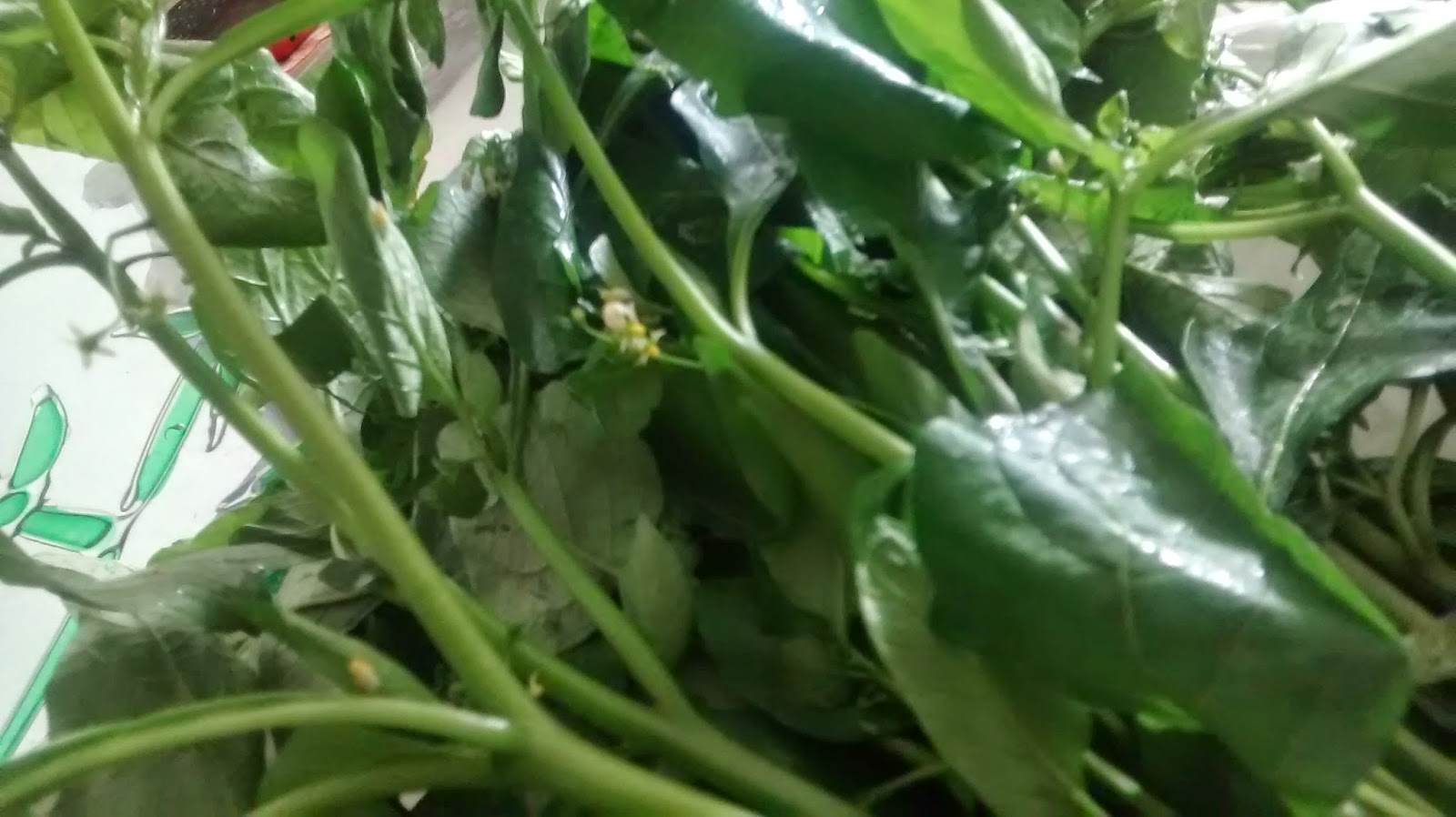
(Manathakkali kai/fresh wonder berries on the left)
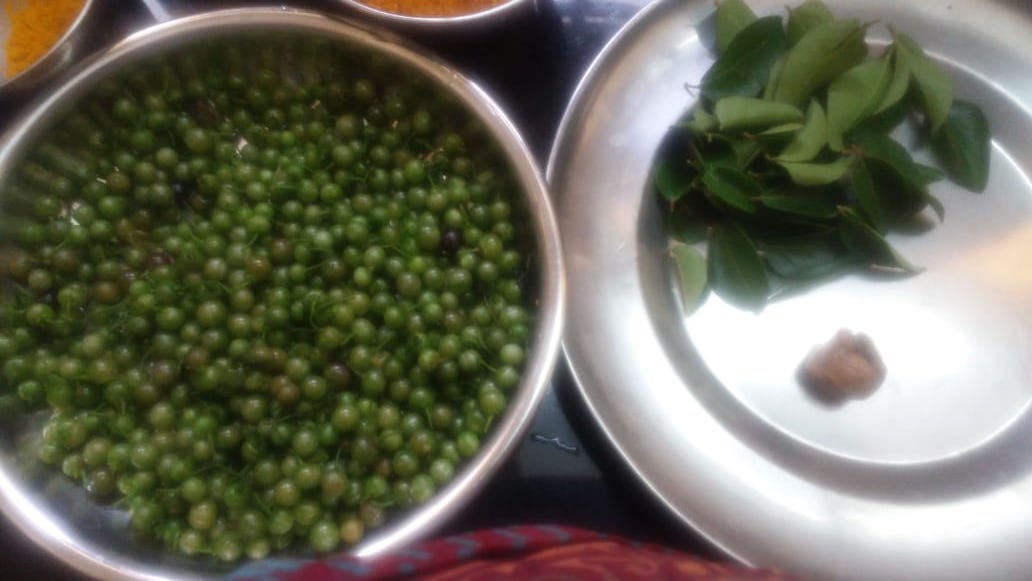
(dried berries)
(ingredients for Vatha Kuzhambu)
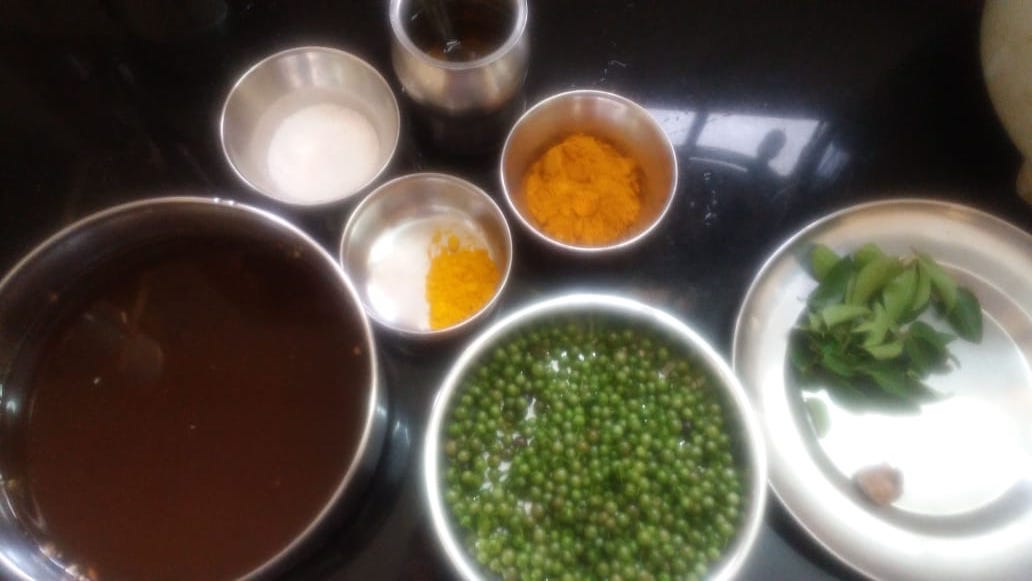
(Ingredients for Vatha Kuzhambu)
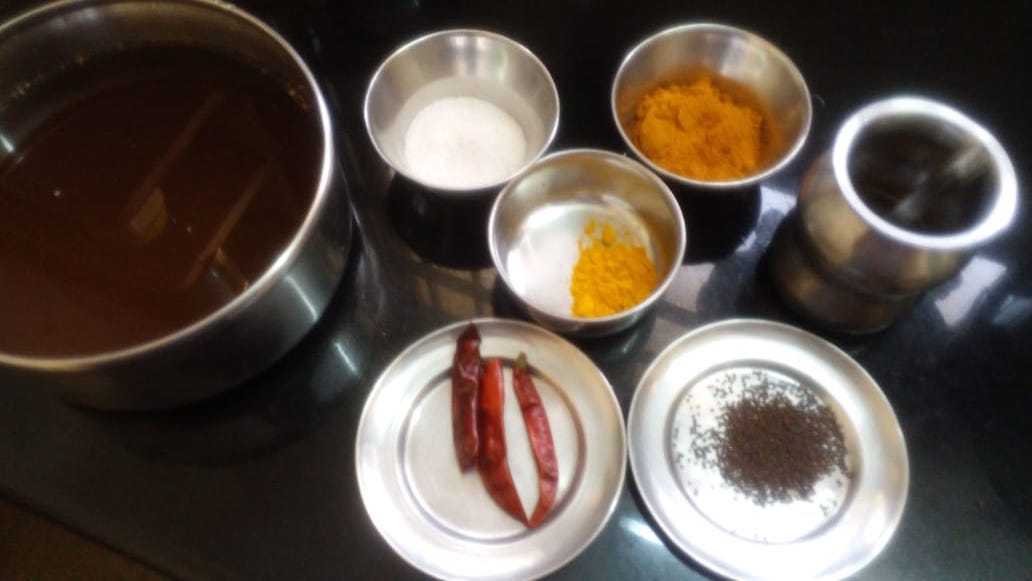
(Manathakkali Kai Vatha Kuzhambu)
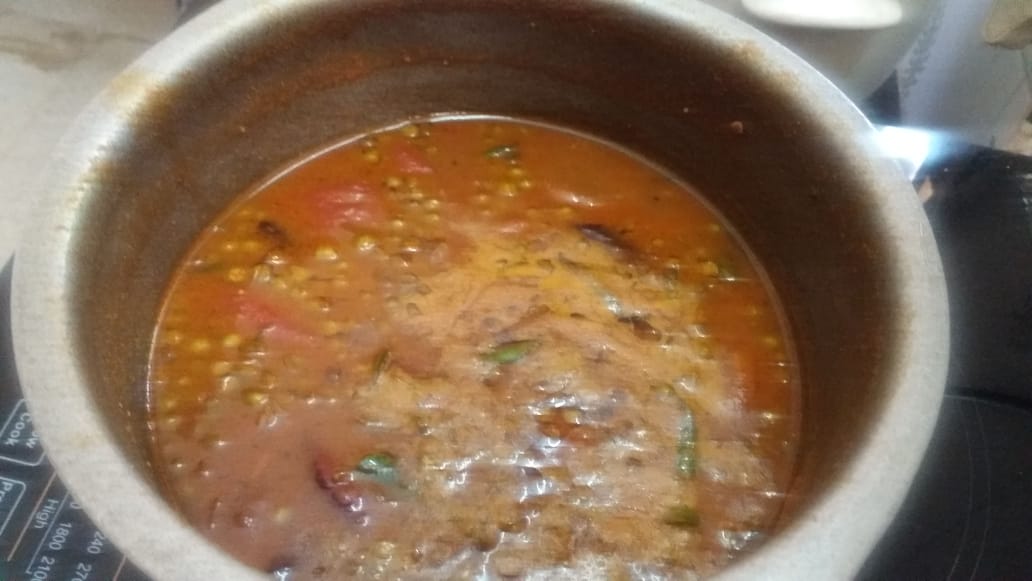
Ingredients (serves 3-4)
Tamarind : Hold some tamarind in hand and roll it between palms. Should be of big lemon size
Fresh manathakkali kai (wonder berries) : 1/4 cup or dried Manathakkali kai : 2 tbsp
Red chilli : 3 No.s
Mustard/Rai (Kadugu) : 1/2 tsp
Turmeric : 1/4th tsp
Salt : 2 tsp (or) as per taste
Sambhar powder : 2 tsp
Asafoetida solid : Tamarind seed size
(If solid asafoetida is not available, use powdered asafoetida.)
Oil ( Refined/Groundnut) : 2-3 tbsp
Note: Gingley Oil will taste the best for Vatha Kuzhambu
Tomato : 2 No.s (optional)
Curry leaves : few
Red chilli : 3 No.s
Mustard/Rai (Kadugu) : 1/2 tsp
Turmeric : 1/4th tsp
Salt : 2 tsp (or) as per taste
Sambhar powder : 2 tsp
Asafoetida solid : Tamarind seed size
(If solid asafoetida is not available, use powdered asafoetida.)
Oil ( Refined/Groundnut) : 2-3 tbsp
Note: Gingley Oil will taste the best for Vatha Kuzhambu
Tomato : 2 No.s (optional)
Curry leaves : few
Jaggery : little
NOTE: If you are using dried manathakkali kai, then note that it already contains salt, so add salt little less.
Procedure:
1. Prepare 3 tumbler/glass of tamarind juice by adding water to tamarind and squeezing it. (Note that it becomes easier to extract juice after soaking tamarind in hot water for 10-15 min).
2. Take oil in a vessel (with heavy/thick bottom) and add red chilli halved.
3. Then add mustard/rai, allow it to crackle. Then add curry leaves.
4. Add fresh berries and saute for a minute.
5. Now pour tamarind juice to it.
6. Add chopped tomato (this is optional).
7. Add salt, turmeric, asafoetida and sambhar powder.
8. Bring it to boil till quantity reduces to 3/4th of initial quantity. Add jaggery 2 min before you switch off the flame.
(if you feel that the gravy needs to be more thick or concentrated, take a small cup, add 2-3 tsp of rice flour, mix it with little water and add it to the boiling mixture. You can also add few curry leaves in the end.)
Recipes for many varieties of Kuzhambu have been shared in earlier posts. This one is a 'chatpata' tasting Kuzhambu. This is made from the peeled off orange skin. Please note that the orange variety 'Kamala orange' is preferred for this. Also choose the part of the skin which is orange in colour rather than green.
Orange as a fruit is mostly liked by all, it's skin too has many uses. We can let the peeled off skin dry for few days (just roll them in a paper and keep it aside for 10-15 days) and then grind it into a powder and use it as a facial scrub mask. This scrub is really effective when mixed with little curd. Also during peeling the orange, the moisture/water content in the skin sometimes gets into our eyes (it escapes out like a spray when you tear or peel the skin) which is considered to be good for the eyes.
Let's see how to use Orange skin for cooking. 'Orange thol(skin) Kuzhambu' is a traditional recipe, it is savoured by mixing it with hot cooked rice and accompanied by any vegetable curry, but tastes best with roasted rice papad. In those days the 'kolinjikai' peeled skin was actually used for this recipe. Kolinjikai/Naarthangai/Kadaarangai are varieties of the citron fruit. If we do not get the kolinjikai fruit, we use the native 'Kamala orange' fruit's skin as a replacement.
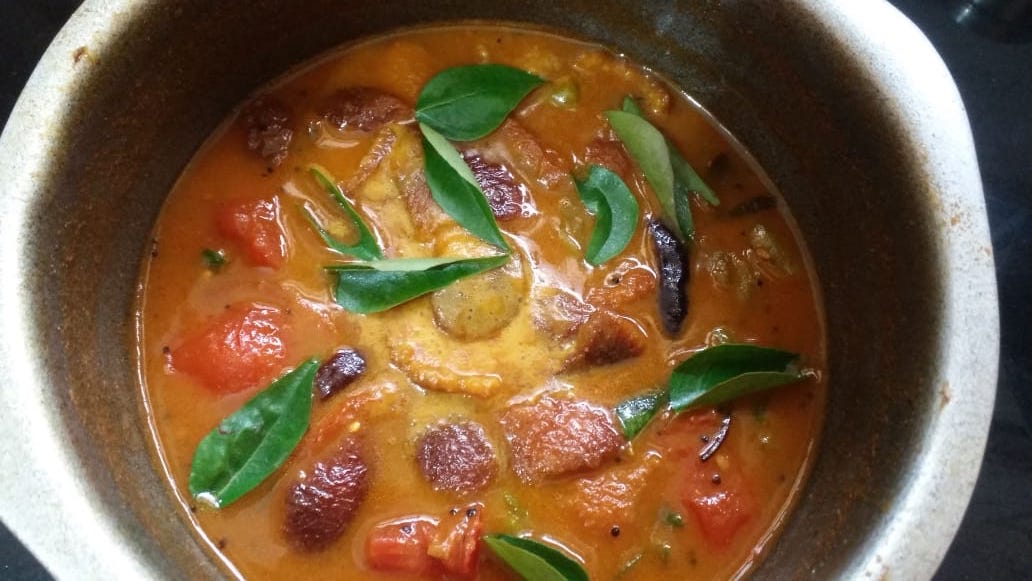
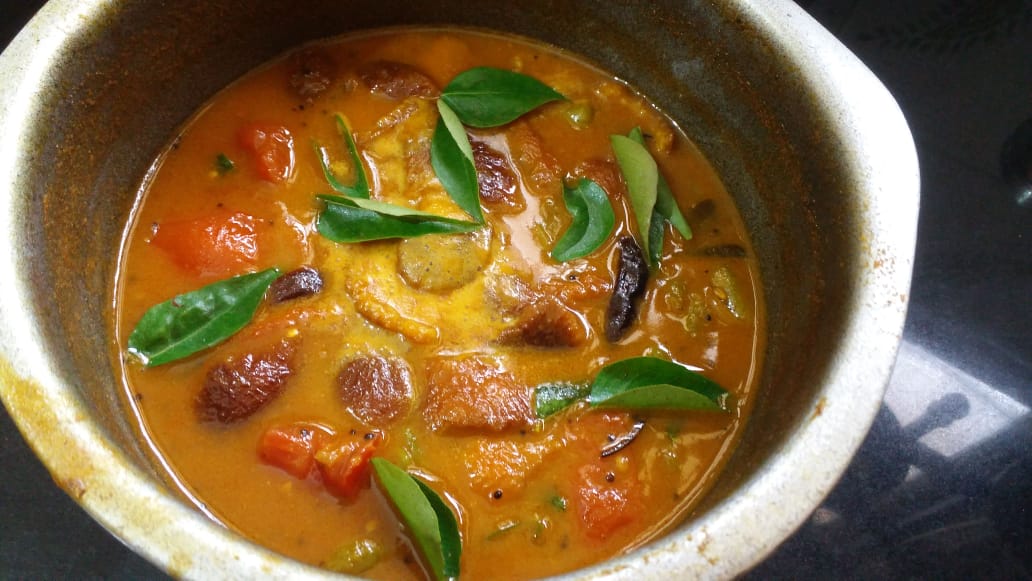
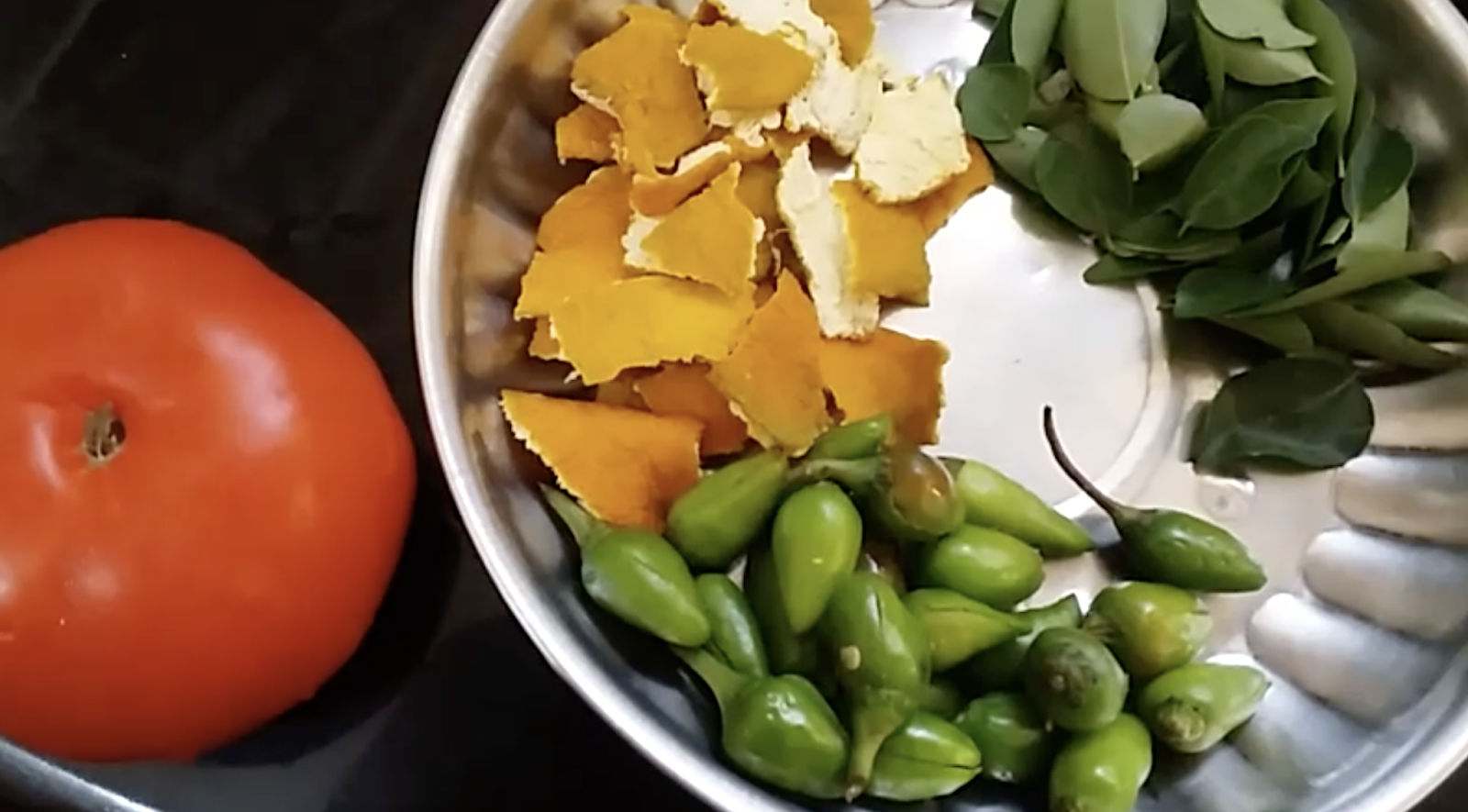
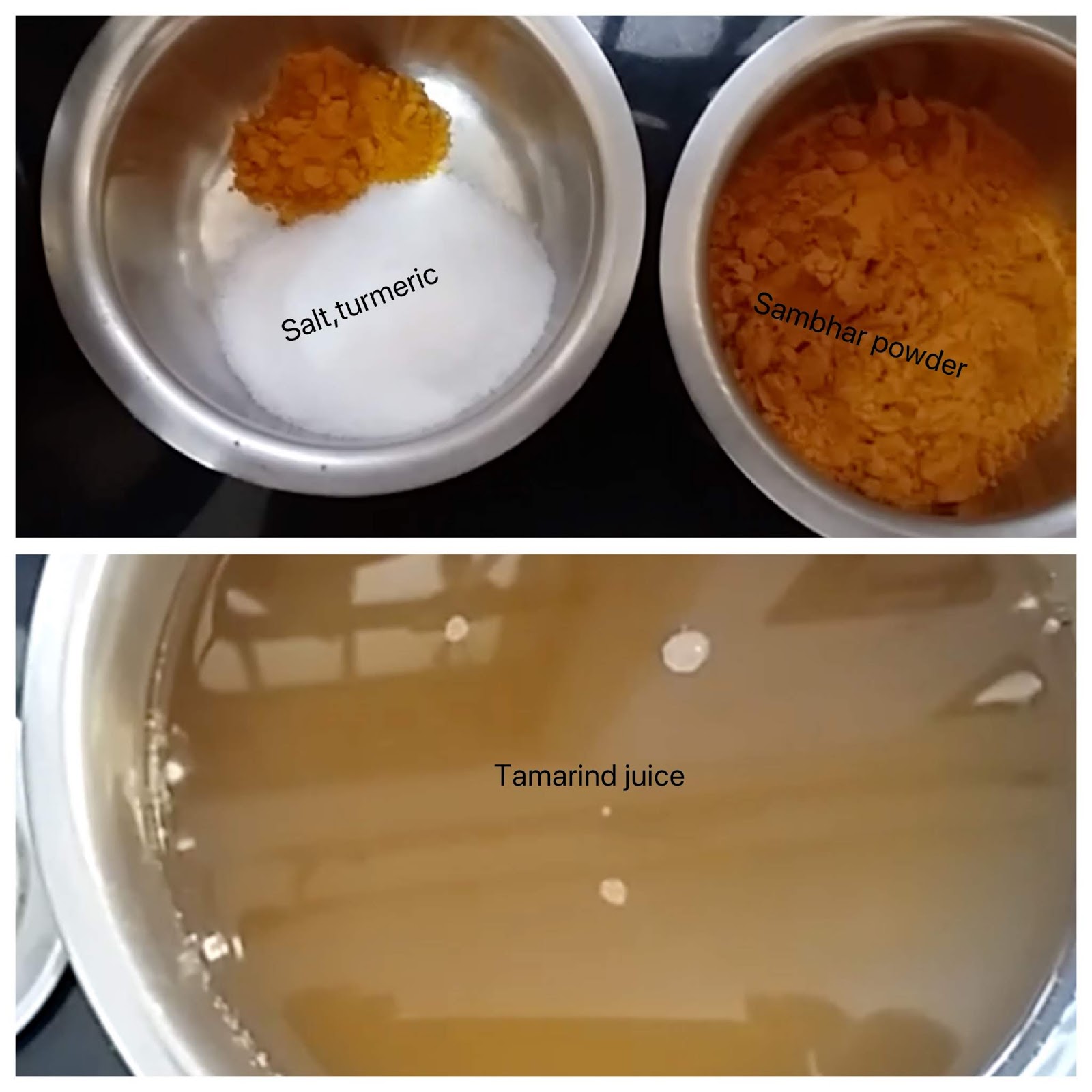
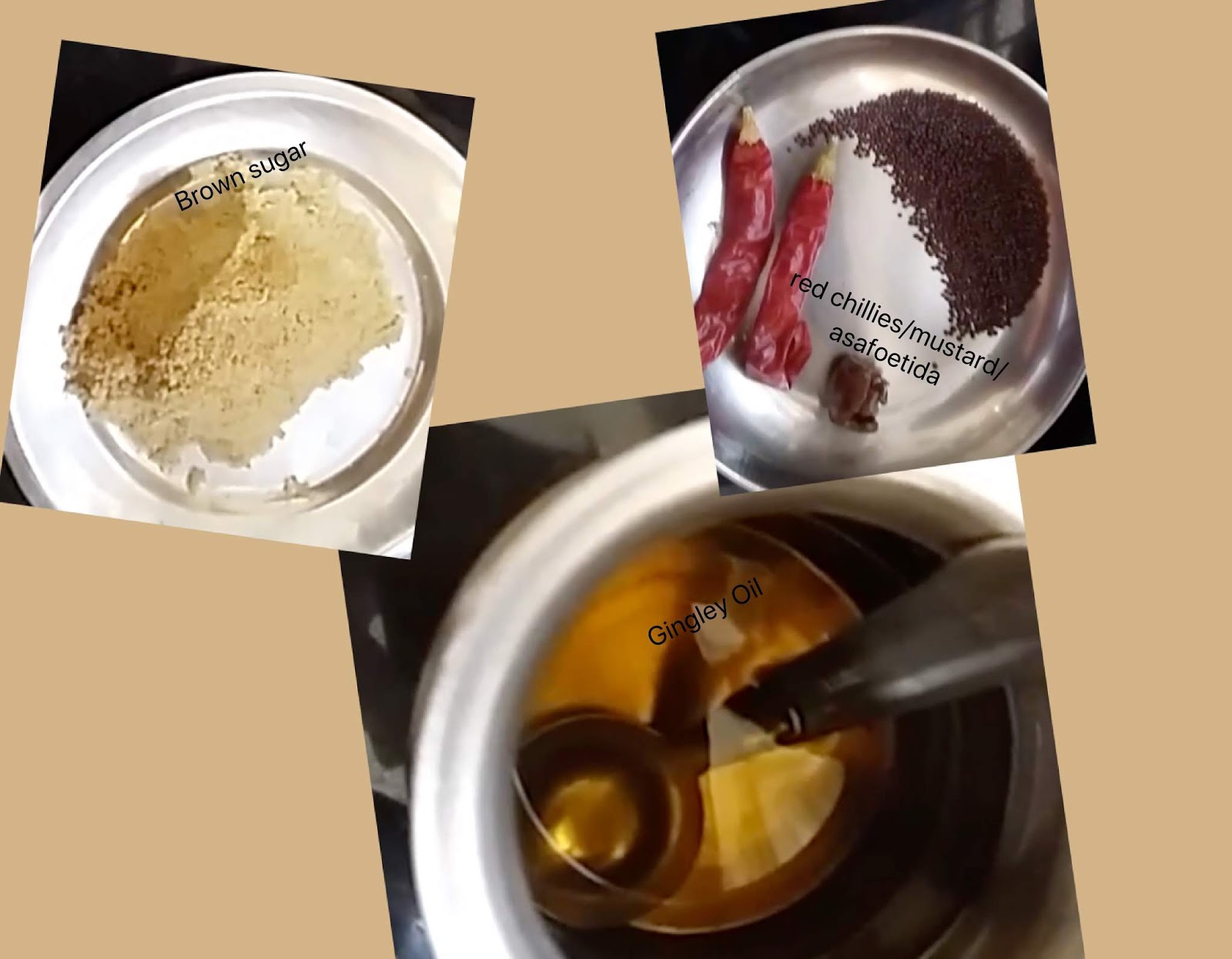
Ingredients (serves 3-4)
Tamarind : Hold some tamarind in hand and roll it between palms. Should be of lemon size
Orange skin : Peel one Kamala Orange, half of the peeled skin quantity should be enough, choose the part which is orange in colour rather than green. And please wash it well.
Red chillies : 2
Green chillies : 5
Mustard/Rai (Kadugu) : 1/2 tsp
Turmeric : 1/4th tsp
Salt : 2 tsp (or) as per taste
Sambhar powder : 2 tsp
Jaggery : one small Indian gooseberry (amla/nellikai) size
Asafoetida solid : Tamarind seed size
(If solid asafoetida is not available, use powdered asafoetida.)
Oil : 5-6 tbsp
Note: Gingley Oil will taste the best for Kuzhambu
Tomato : 1 (optional)
Curry leaves : few
Note1 : Adjust the chillies as per its hotness
Note2: The peeled off orange skin can be used fresh (or) if you are going to prepare the dish later or after few days, then you can store it dry (roll the skin pieces in a paper and keep in refrigerator) and use it later when needed.
Procedure:
1. Prepare 3 tumbler (1 tumbler =~ 200ml) of tamarind juice by adding water to tamarind and squeezing it. (Note that it becomes easier to extract juice after soaking tamarind in hot water for 10 min).
2. Take oil in a vessel (with heavy/thick bottom) and add red chilli halved.
3. Then add mustard/rai, allow it to crackle. Then add few curry leaves.
4. Add the orange skin pieces and saute for 2-3 minutes.
5. Now pour tamarind juice to it.
6. Add chopped tomato (this is optional).
7. Add salt, turmeric, asafoetida and sambhar powder. Mix well.
8. Let it boil till quantity reduces to 3/4th of the initial quantity. Add crushed/powdered jaggery, mix well, let it boil for 1 to 2 min, then switch off the flame.
(if you feel that the gravy is of thin consistency and needs to be more thick, take a small cup, add 2 tsp of rice flour, mix it with little cold water and add it to the boiling mixture, boil for 2 min and switch off.) Garnish with few curry leaves.
Dal
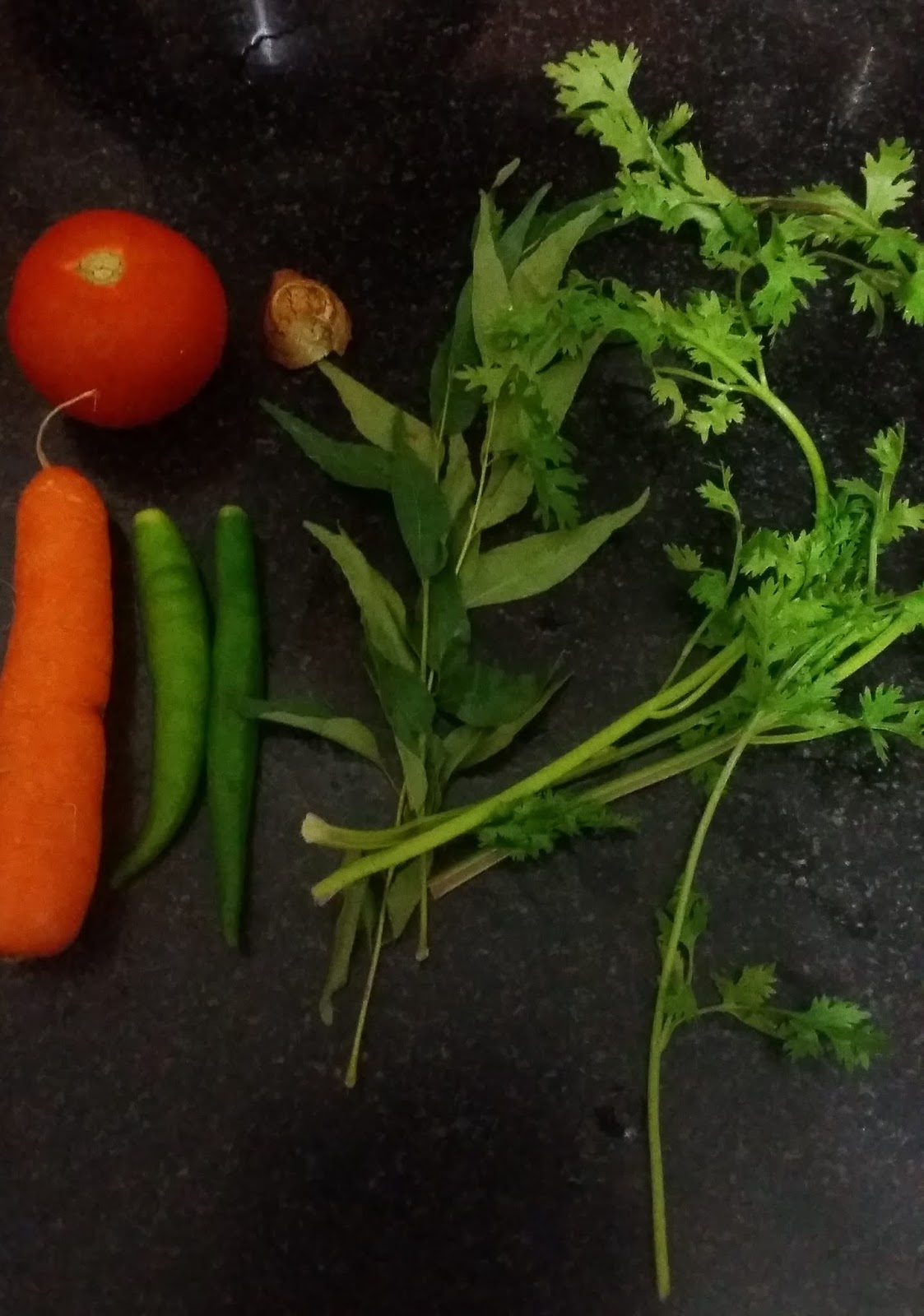
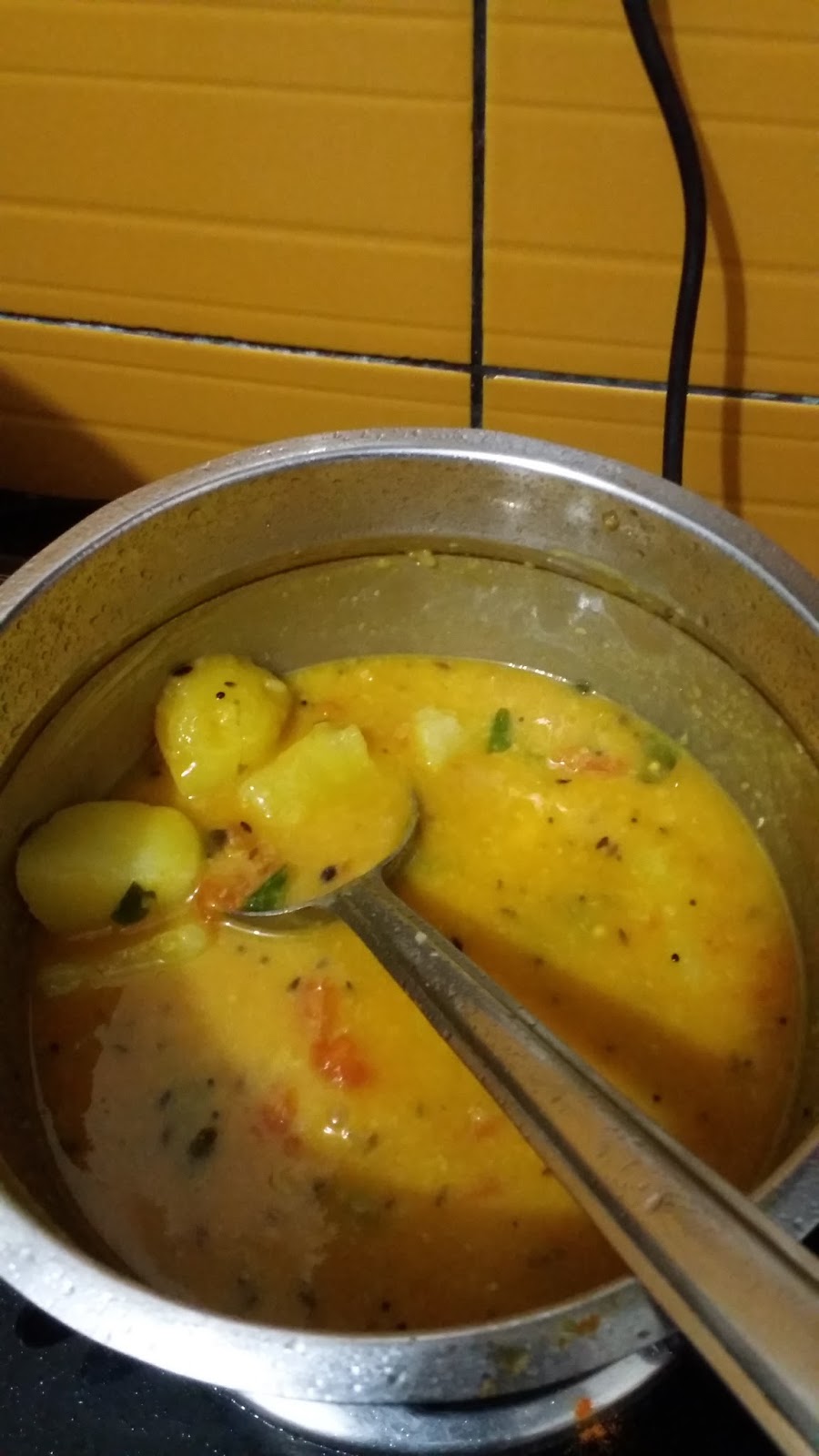
This is a quick and tasty one.You can prepare it plain without any vegetables or with vegetables. But instead of making plain dal, better add some carrot to it. You can savour this with rice or idli/dosa.
Ingredients:
Vegetable : 1 medium potato (or) 1 medium carrot (or) 1 capsicum
mustard seeds: 1/2 tsp
Jeera : 1/2 tsp
asafoetida : 1/4 tsp
green chillies : 2 chopped
ginger : 1/2 inch chopped
Tomatoes: 1 medium
Moog dal : 1/2 cup & Tuwar dal : 1/2 cup (both pressure cooked)
sambhar powder : 1 tsp
Turmeric powder : 1/8 to 1/4 tsp
Fresh coriander leaves: 1/4 cup chopped
Salt to taste
Method:
1. Take oil in a pan/vessel and add mustard seeds. Once it crackles, add jeera, asafoetida, green chillies, ginger.
2. Saute for half a minute and add chopped tomatoes. Saute for 1-2 min. (If you are using carrot/capsicum/potato, add them first before adding the tomatoes, saute for 1-2 min, then add tomatoes and again saute for 1-2 min.) (note: if you are using uncooked potatoes, you can follow step2, otherwise for boiled potatoes, you can add them during step 3)
3. Once tomatoes are half cooked, add 1 cup water, turmeric, sambhar powder, salt and stir well. Bring the mixture to boil. Let it boil for 5-7 min (to allow the carrot/capsicum/potato to get cooked).
4. Add mashed dal (pressure cooked), if required add some water to bring to right consistency. Stir well and bring it to boil for 3-4 min.
5. Garnish with dhaniya leaves.
Note : If you are going to have it for idli/dosa, let the consistency be little thinner.
Usli Curry
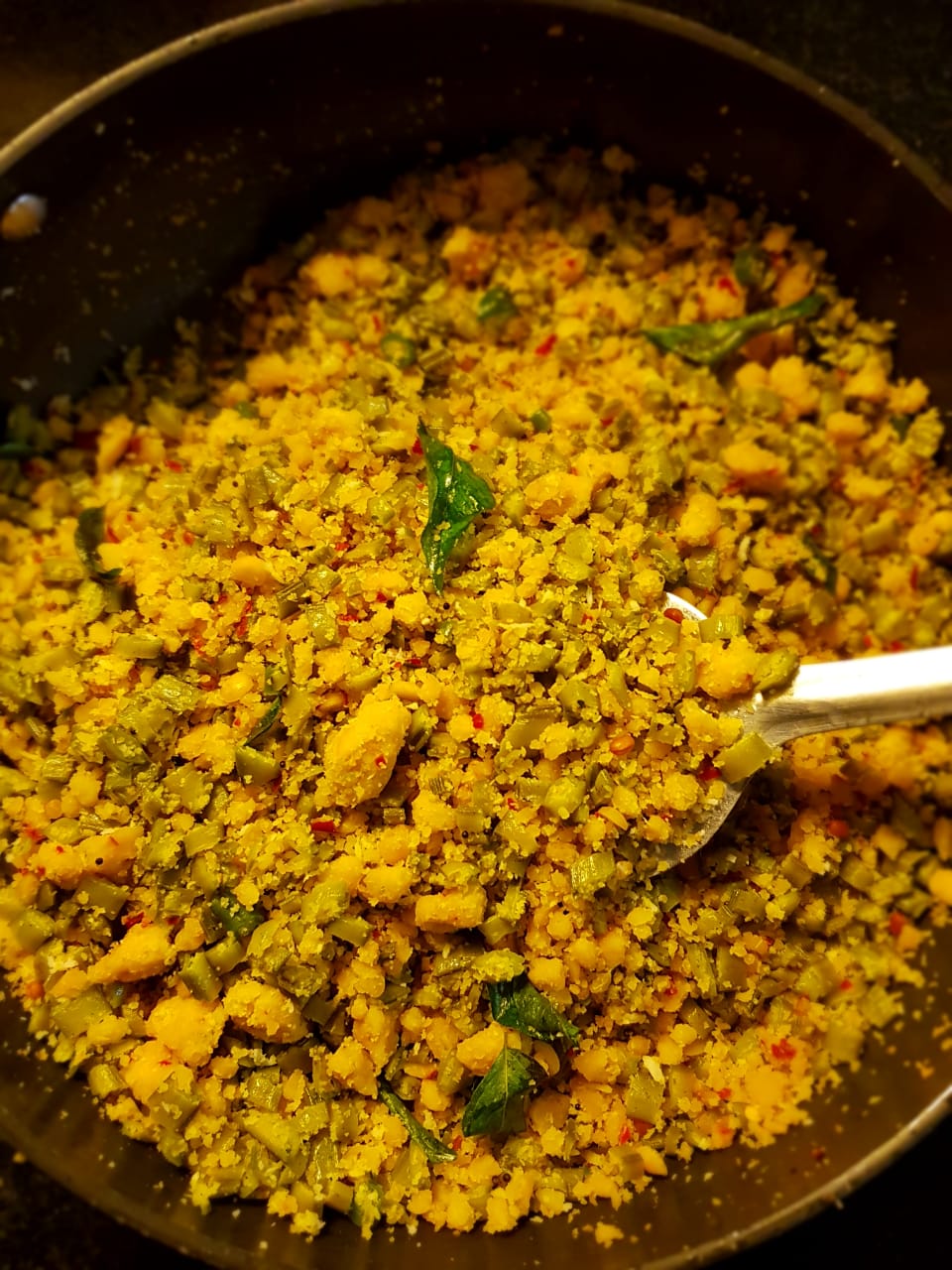
(Usli Curry)
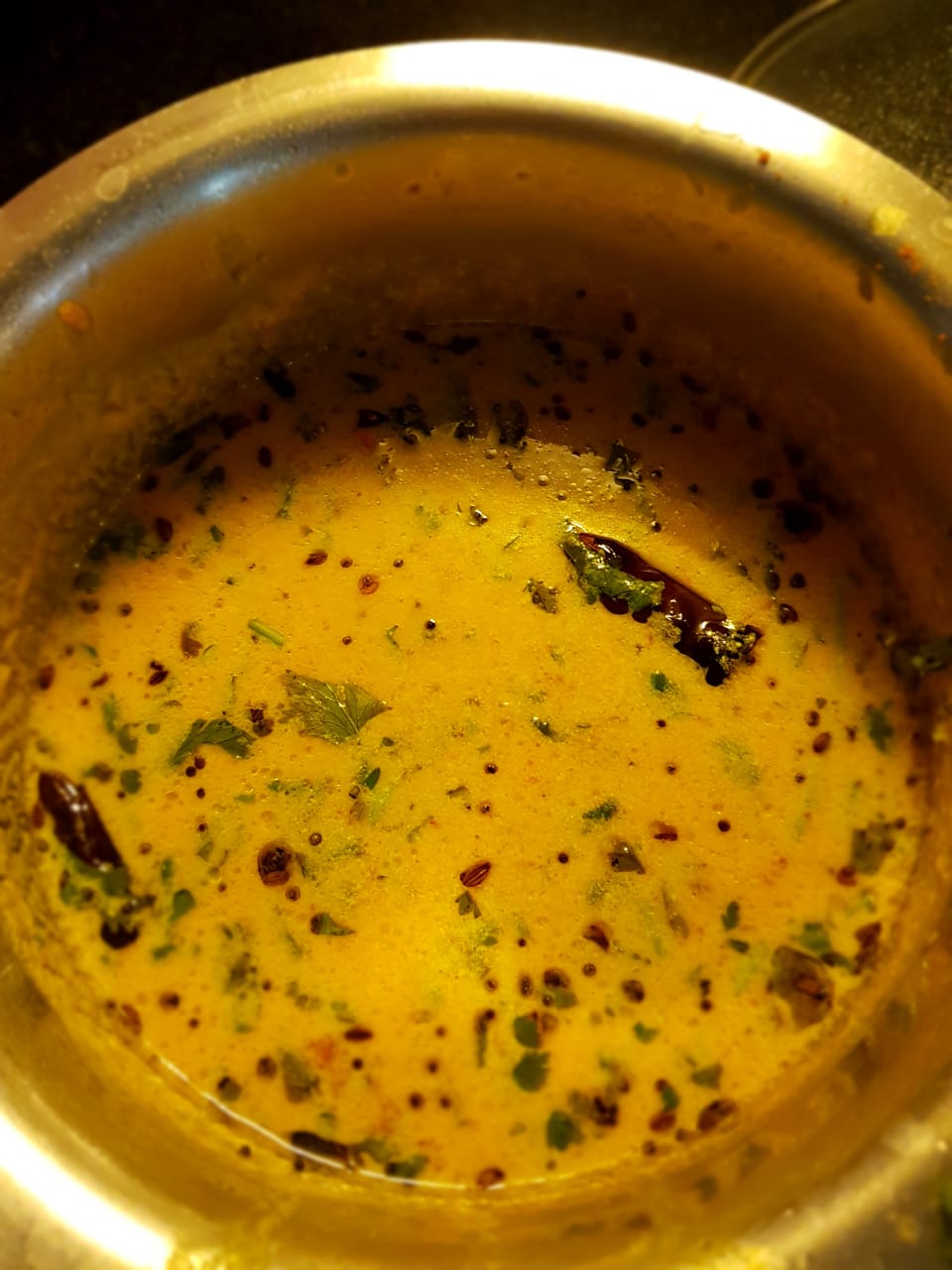
(More Kuzhambu - a good combo for Usli curry)
Ingredients:
Vegetables (kottarangai/cluster beans or beans) : 250g (or) Banana Flower : 1
[Note: If you are choosing banana flower, please remove the black stigma from the flowers. Chop the flowers and put them in water mixed with little butter milk which helps in stopping them from turning black]
Salt : 1 tsp or as per taste
Turmeric : 1/4 tsp
Dal : 200g (40% tuwar dal=80g, 60% Chana dal=120g)
Red chillies : 2
Green chillies : 2
Asafoetida : 1/4 tsp
Oil : 3-4 tbsp
Rai : 1/4 tsp
Urad dal : 1 tsp
Freshly grated coconut : 1 tbsp
Fresh Curry leaves
Fresh Coriander leaves
Method:
1. Clean and chop the vegetables, add salt (1/4th tsp or as per your taste) and pinch turmeric to it and cook it in a pressure cooker for 1 whistle.
2. Soak the dal (both tuwar and chana dal) in water for 1 to 1.5 hrs. Then drain the water, add red chillies, green chillies (you can adjust the chillies as per your taste), salt(3/4 tsp or as per your taste), asafoetida, pinch turmeric (turmeric here is optional) and then grind it coarsely. Then add chopped curry leaves(say 6-7) and few chopped coriander leaves. Mix well.
3. Divide the ground dal mixture into small portions and steam them (just like you steam idlis, place them on a idli plate greased with little oil), steam them for 7- 10 min.
4. Then let it cool down and crumble them down.
5. Drain water from the vegetables by squeezing them gently.
6. Now heat oil in a pan on medium flame, once hot add mustard seeds and let it crackle. Then add urad dal, few curry leaves (say 6-7) sauté for few seconds and then add the crumbled dal mixture. Saute it well for 4-5 min. (dont over sauté , else it will become dry).
7. Then add the vegetables, mix and saute again for 4-5 min, adjust salt if required.
8. Add few chopped curry leaves and coriander leaves. Add freshly grated coconut, saute for 1 min on low flame and then switch off the flame.
Banana Stem Curry/Sabji
Every part of a banana plant is useful. It gives us bananas, its leaves are used for serving food in south India, banana flower, fruit and stem are used for cooking, the plant fibres are used as natural craft materials, used in making flower garlands, etc. In the olden days, every house used to have banana plants and coconut trees in their backyards and once in a month banana flower curry or banana stem curry would a part of the lunch menu, but now in the modern times we don't have them but get it from the markets.
Banana stem has lot of fibre content and hence it aids digestion, good for stomach and prevents constipation. You can also consume it in the form of juice, after cleaning and chopping the stem, grind it in a mixer and strain it, add some salt and buttermilk to the juice and gulp it. It doesn't taste great but it's so very beneficial for health, people who suffer from stones in kidney should have this juice once in a week. The benefits are many, not all can be listed here. Now let's see how to make Banana Stem Curry. Cleaning & chopping the stem is the difficult part, whereas making the curry is easy. Please refer video for details on how to chop the stem.
It will be great if you can get the bottom part of the banana stem. As you move up the banana plant, the stem becomes less fibrous, smaller in diameter and also taste varies by little. So try to get the bottom part of the plant for better taste & benefits.
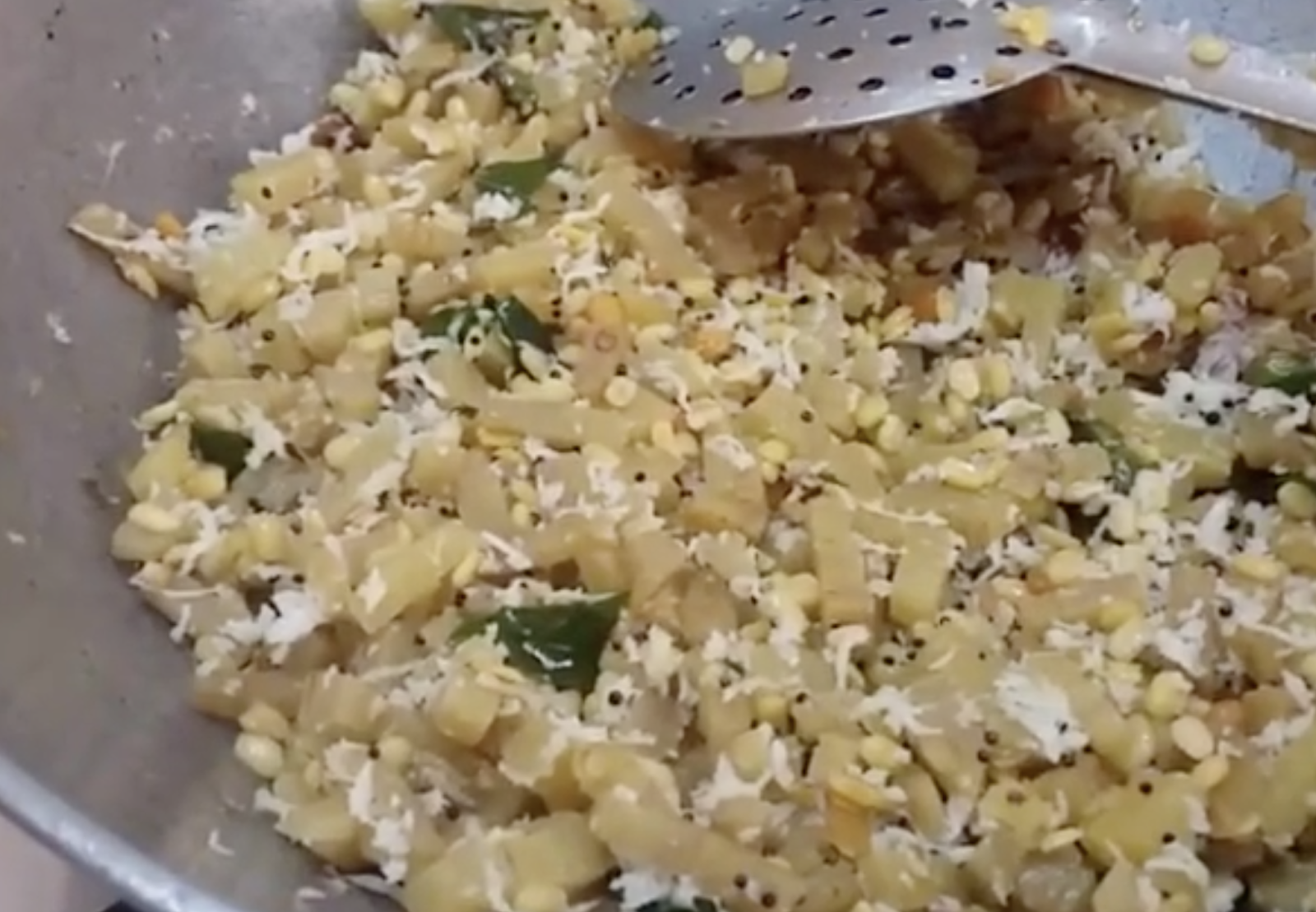
Ingredients : (Serves 4)
Banana stem : 1 piece
Mustard seeds/Rai/Kadugu : 0.5 tsp
Red chilly : 1
Green chilly : 1
Fresh grated coconut : 3 to 4 tbsp
Fresh Curry leaves : few
Oil : 3-4 tsp
Salt : as per taste
Turmeric : 1/4th tsp
Asafoetida/Hing : 1/4th tsp
Urad dal : 1 tbsp
Chana dal : 1 tbsp
Moog dal : 50g soaked in water for 10 to 15 minutes
Note : You can adjust chillies as per taste or its hotness.
Procedure:
1. Slit and remove the outer layers of the stem, then peel off the waxy smooth surface till you reach the fibrous non-smooth centre portion.
Chop the stem and put it in curd+water mixture, otherwise the chopped stem will turn blackish. For this curd+water mixture you would need 3-4 tbsp curd. Also while chopping, you need to remove the extra fibres coming out from the chopped portions. Refer the video for better details of this step.
2. Boil some water in a pressure pan, strain the chopped stem from the curd+water mixture and add it into the boiling water. Add some salt, turmeric and 2 tbsp curd. Pressure cook it for 2-3 whistles. Wait for few minutes and once you can open the cooker, strain excess water, also try to squeeze the chopped stem and remove excess water. Keep it aside.
3. Heat oil in a pan/kadhai, add mustard and let it crackle, add red chillies, Urad and chana dal, curry leaves and chopped green chillies. Saute for a min till dal turns golden brown.
4. Add the strained banana stem pieces into the pan, mix well, close the pan with a lid and allow it to cook for a minute.
5. Open the lid, add little salt, again close pan with lid and let it cook for 1-2 min.
Note: We have already added salt in step2, so add salt accordingly.
6. Open lid, add the soaked Moog dal(after straining and removing excess water from dal), mix well again close with lid and let it cook for 2-3 min.
Note: The dal need not cook completely. Hence 2-3 min is enough.
7. Open the lid, add freshly grated coconut, mix well, saute for a 1-2 min and switch off the flame.
Note : If you want, you can add 1/2 tsp sugar in this step.
Doodhi ki Sabji (Bottle guard sabji)
It's a very simple and easy recipe... Tastes best with rotis..Can also have it with rice.

Ingredients :
Oil - 2 tbsp
Moog dal (paasi paruppu) - 50 g (1 small cup)
Mustard/Rai - 1/4 to 1/2 tsp
Jeera - 1/4 th tsp
Green chilli - 1 or 2
Garlic - 5 to 7
Bottle guard - 500 g
Tomato - 2
Salt
Turmeric - pinch
Dhaniya powder - 1 tsp
Sambhar powder - 1 tsp
Red Chilli powder - 1/2 tsp
Dhaniya leaves for garnish
(note : If family members are more or if bottle guard is small, you can adjust quantity by adding potatoes. You can also add some yellow pumpkin, it enhances the taste.)
Method :
1. Take oil in a pressure pan. Add Mustard/Rai and allow it to crackle.
2. Add jeera, chopped green chillies and garlic. Add chopped tomato and saute for 2-3 min.
3. Now add chopped bottle guard. Add turmeric, salt to it and mix well. Saute for 3-4 min.
4. Add 1.5 cup of water. (adjust water if required)
6. Add dhaniya powder, sambhar powder, Red chilli powder. Stir well.
7. Add moog dal and mix well.
8. Now close the pressure pan and wait for 3 whistles.
9. Garnish with dhaniya leaves.
Delicious Doodhi Sabji Ready!!!!!!!!!
Palak Paneer
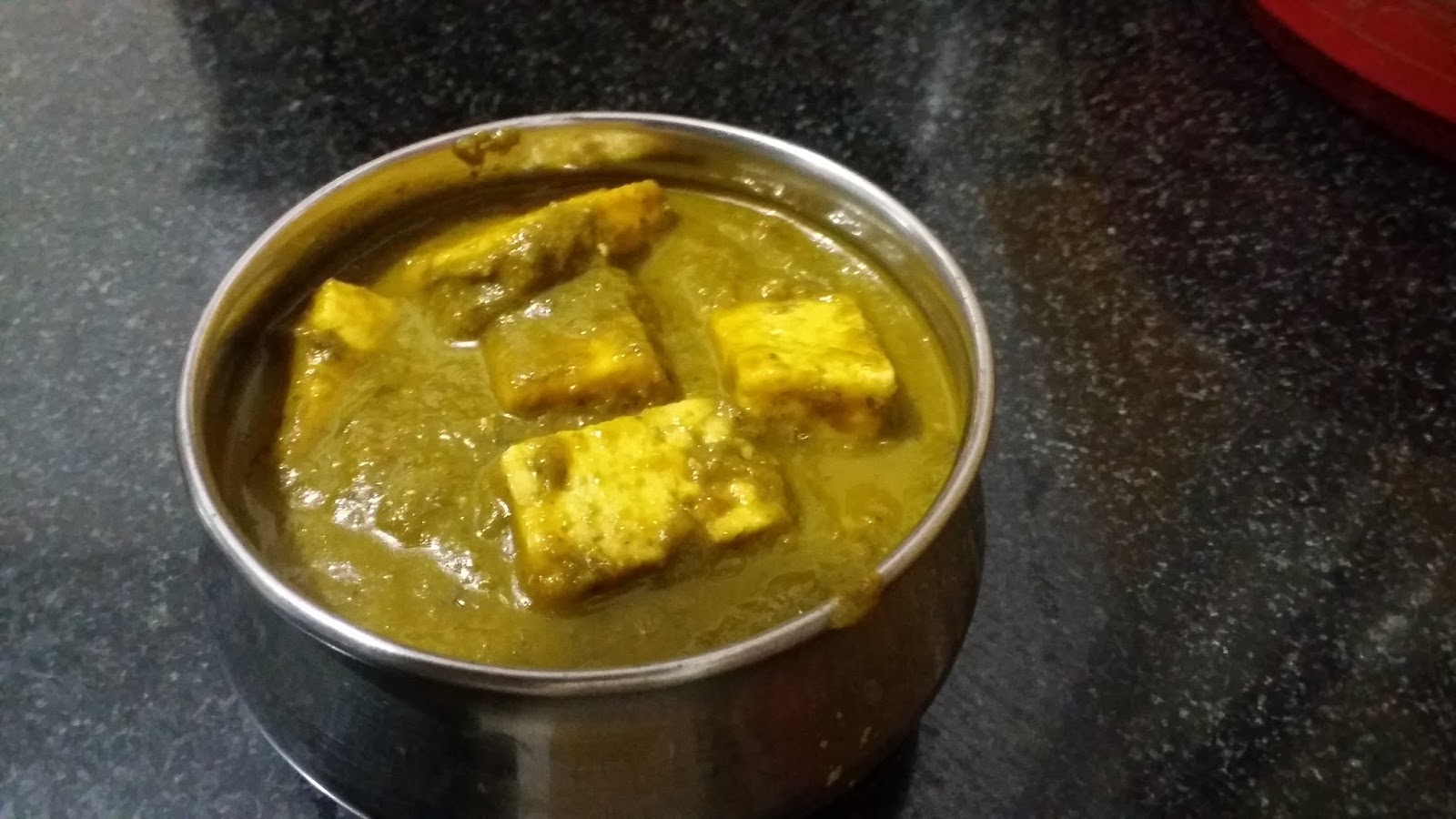
Ingredients:
Palak : 1 bundle (big)
Paneer : 200g
Cooking Butter : 2-3 tbsp
Refined oil : 2 tbsp
Ginger : 1/2 inch
Onion : 2 or 1cup
Garlic : 4-5 big pulps
green chilly : 1-2 (according to taste)
Tomato : 1 big or 3/4 cup (make puree)
Tomato ketchup : 1.5 tsp
Dhaniya powder: 1.5 tsp
Garam masala : 1 to 1.5 tsp
Turmeric powder : 1/4 tsp
Red chilli powder : 3/4 tsp
Sugar : 1/2 tsp
Fresh cream : 2-3 tbsp
Kaju : 3-4
Milk : 2 tbsp
Salt : 1-2 tsp
Method:
1. Clean spinach properly (add stem only if its very tender, else pluck only the leaves) and add it in boiling water..immediately switch off flame and close the vessel with lid for 5-7 min. Drain excess water and grind the spinach into smooth paste.
2. Heat butter & oil in a pan. Add finely chopped ginger and onion and fry till golden brown.
3. Add chopped garlic. Now add tomato puree.
4. Add dhaniya powder, turmeric powder and red chilli powder. Also add the sugar.
5. Fry well till oil leaves the mixture and oozes out into sides of the pan.
6. Add palak to the pan. Add salt, garam masala. Mix well.
7. Grind kaju with milk. Add this paste to the pan. Mix well. (Soak kaju for 10min in milk before grinding)
8. Cut paneer into cubes and add it. Mix well and let it boil for 3 min with closed lid on low flame.
Note: You can also fry paneer cubes in 1 tbsp ghee till it becomes golden in colour and then add to the gravy. It will give an enhanced taste.
9. Add fresh cream. (Note : If cream is not available, take boiled milk, take the malai from it and add it to the pan. Add 2-3 tbsp milk also in addition. Else, boil creamy milk, let it cool down, keep it in fridge for 2 to 3 hours. Creamy layer will be formed on the top, you can take the creamy layer out with a ladle and use it instead of cream.)
10. Let it boil for 30sec min. Switch off the flame. Add one more tbsp of cream and close with lid.
Palak Mushroom
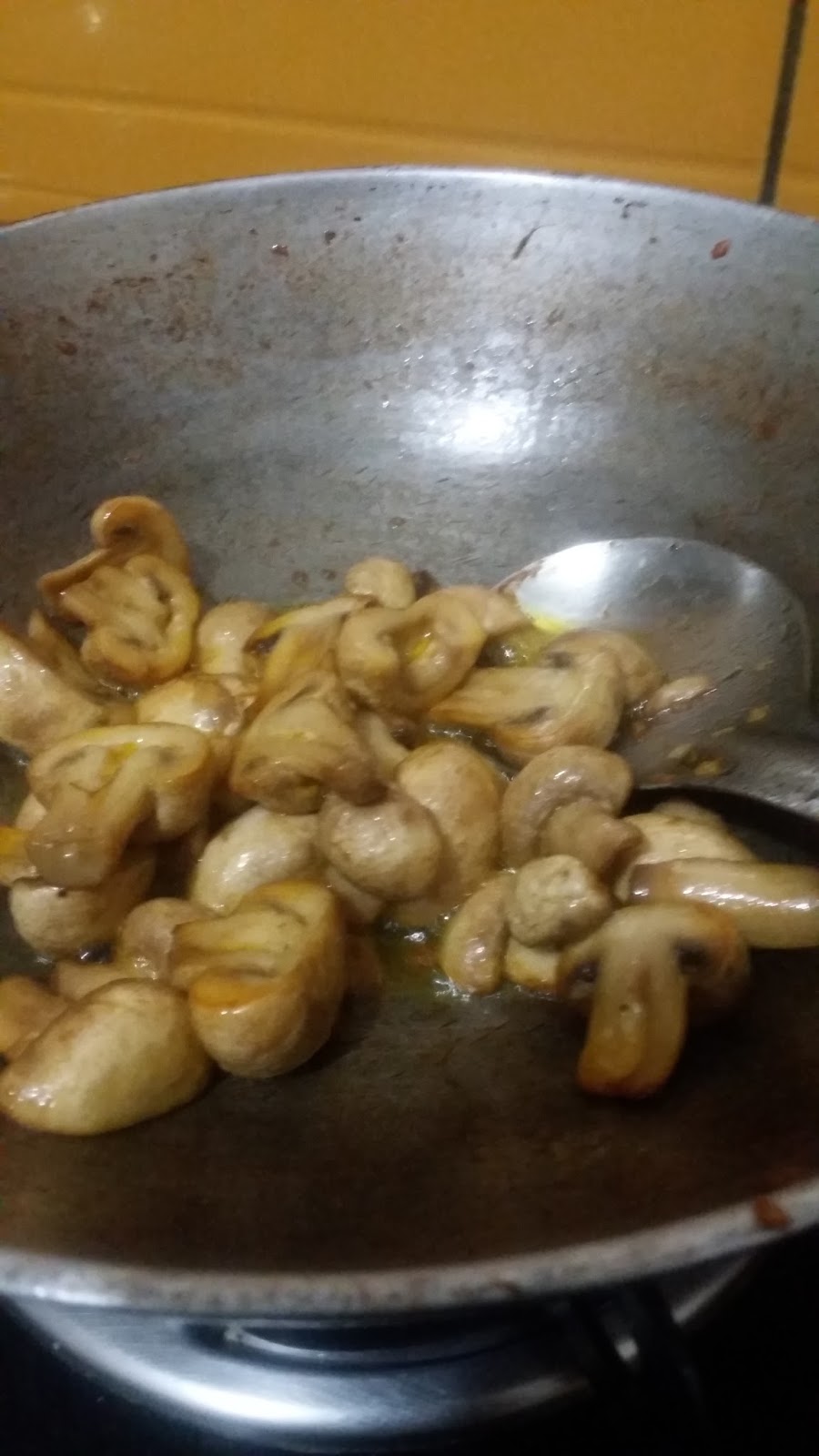
Ingredients:
Palak : 1 bundle (big)
Mushroom : 200g
Cooking Butter : 2-3 tbsp
Refined oil : 2 tbsp
Ginger : 1/2 inch
Onion : 2 or 1cup
Garlic : 4-5 big pulps
Tomato : 1 big or 3/4 cup
Tomato ketchup: 1.5 tsp
Dhaniya powder: 1.5 tsp
Garam masala : 1 to 1.5 tsp
Turmeric powder : 1/4 tsp
Red chilli powder : 3/4 tsp
green chillies : 1-2 (optional)
Black Pepper: 8-9 crushed (or) 1/2 tsp pepper powder
Jeera powder : 0.5 tsp
Sugar : 1/2 tsp
Fresh cream/milk : 2-3 tbsp
Kaju : 3-4
Milk : 2 tbsp
Salt : 1-2 tsp
Mostly for Mushroom recipes, you need to take care of the below steps so that mushrooms dont become soggy:
1. Wash mushrooms in cold running water. Dont soak in water and clean them.
2. After cleaning , put the mushrooms over a dry cloth so that excess water is absorbed or put them in a strainer.
3. Fry the mushrooms with little oil for 3-5 min (or till quantity reduces by half) in high flame before starting the recipe and keep it aside on a tissue paper.
Method:
1. Cut each of the button mushrooms into four.
2. Heat 1-2 tsp oil in a pan/kadhai, and when its really hot, add these mushrooms and fry them for 3-5 min(or till quantity reduces by half). You need to saute them in high flame, but if u feel mushrooms are getting burnt keep adjusting the flame from high to medium and medium to high. You will see that in 2 min..mushrooms leave out lot of water. That is why high flame is necessary to evaporate that water, else mushrooms will start steaming in their own water and hence become soggy and mushrooms will taste bad. Once done, keep mushrooms aside on tissue paper.
3. Clean spinach properly (add stem only if its very tender, else pluck only the leaves) and add it in boiling water..immediately switch off flame and close the vessel with lid for 5 min. Drain excess water and grind the spinach into smooth paste.
2. Heat butter & remaining oil in a pan. Add finely chopped ginger and onion and fry till golden brown.
3. Add chopped garlic. Grind tomato & green chillies to make puree and add it to kadhai. (green chillies are optional)
4. Add dhaniya powder, turmeric powder and red chilli powder. Also add the sugar.
5. Fry well till oil leaves the mixture and oozes out into sides of the pan.
6. Add palak puree & mushrooms to the pan. Add salt, garam masala, jeera powder and pepper powder (or crushed pepper). Mix well.
7. Grind kaju with milk. Add this paste to the pan. Mix well. (Soak kaju for 10min in milk before grinding)
8. Let the gravy simmer with closed lid for 4-5 min.
9. Add fresh cream. (Note : If cream is not available, take boiled milk, take the malai from it and add it to the pan. Add 2-3 tbsp milk also in addition. Else, boil creamy milk, let it cool down, keep it in fridge for 2 to 3 hours. Creamy layer will be formed on the top, you can take the creamy layer out with a ladle and use it instead of cream.)
10. Let it boil for 30sec min. Switch off the flame.
Aloo Mutter
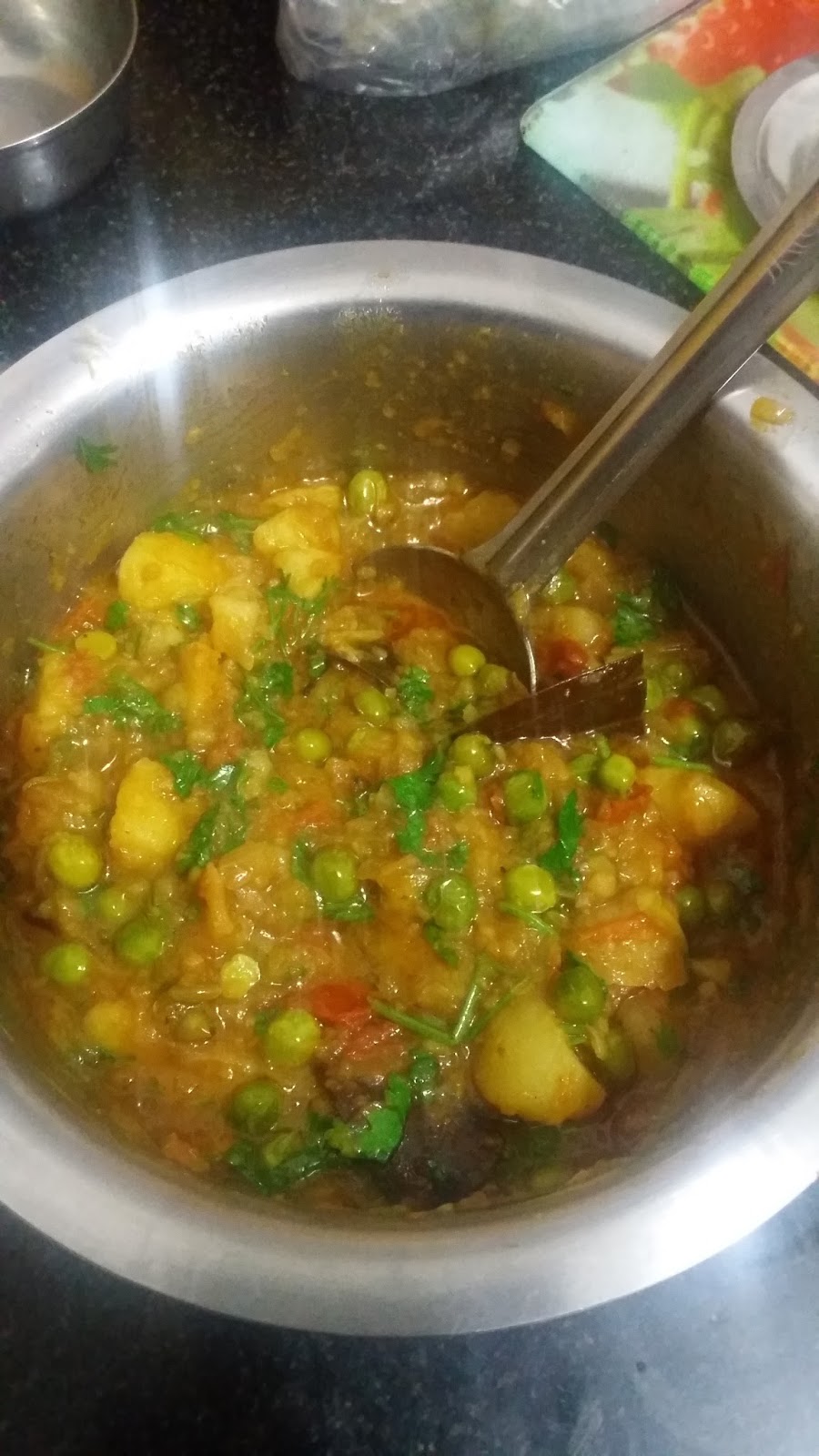
Ingredients:
Boiled Potato : 3 medium sized
Peas/mutter: 1 cup
Onion: 2
Tomato: 2
Ginger garlic paste : 1.5 tbsp
Green Chillies : 2
Turmeric : 1/4 tsp
Garam Masala : 1.5 tsp
Dhaniya powder : 1.5 tsp
Red Chilli powder : 1 tsp
Roasted Jeera powder : 1/2 tsp
Bay leaf -1
Cinnamon - 1 inch
Cardamom - 2 small
Salt to taste
Oil : 3 tbsp
Ghee - 1 tbsp
Fresh coriander leaves
Method:
1. Heat oil+gheein the kadhai. Add cardamom, bay leaf and cinnamon.
2. Add finely chopped onions. Saute for 2 min.
3. Add green chillies, ginger garlic paste and saute till onions start turning golden brown..
4. Now add finely chopped tomatoes to it. Saute for 5-8 min or till oil oozes out from the masala into the sides of the kadhai.
5. Add turmeric, garam masala, dhaniya powder, red chilli powder, jeera powder and saute them for a min.
6. Add green peas and little chopped coriander leaves (say 1 tbsp), saute for 2-3 min.
7. Now add 1 cup water and cook for 2 min with closed lid.
8. Now add mashed potatoes and salt, Mix them well and saute for 2-3 min.
9. Transfer it to another vessel and place it in pressure cooker and wait for one whistle.
10. Garnish with fresh coriander leaves.
Soya Bhurji
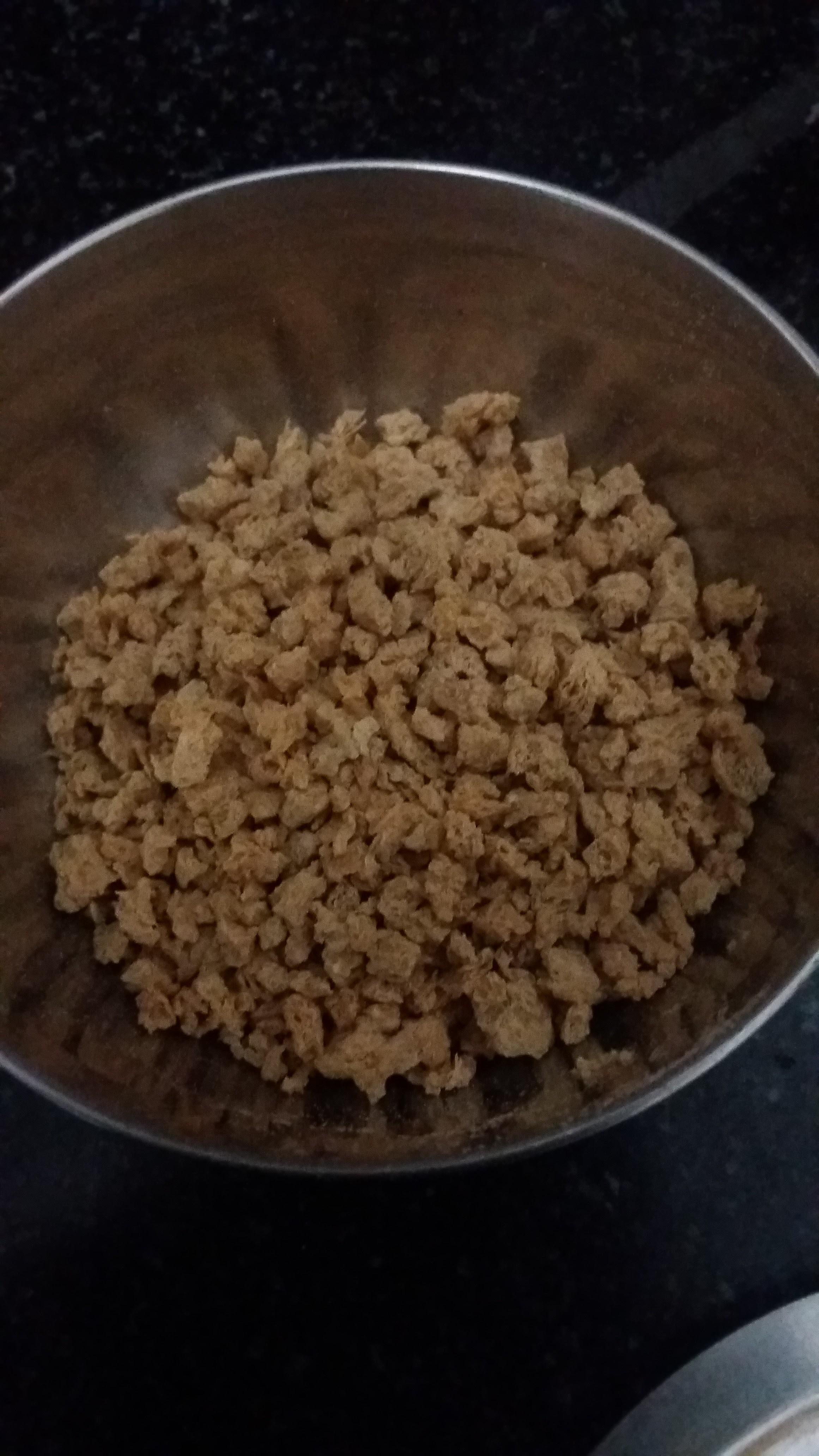
(soya granules)
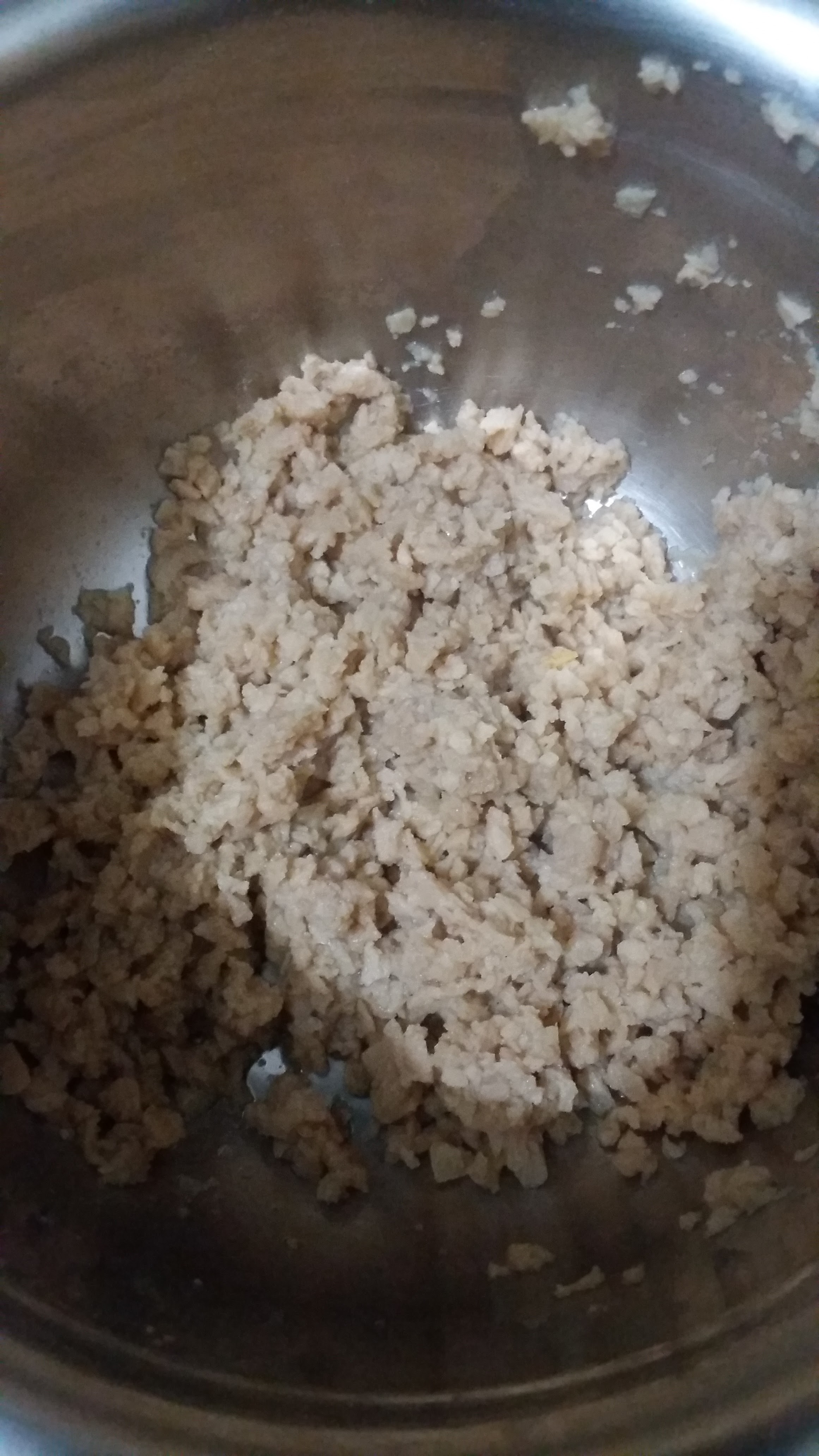
(boiled soya)
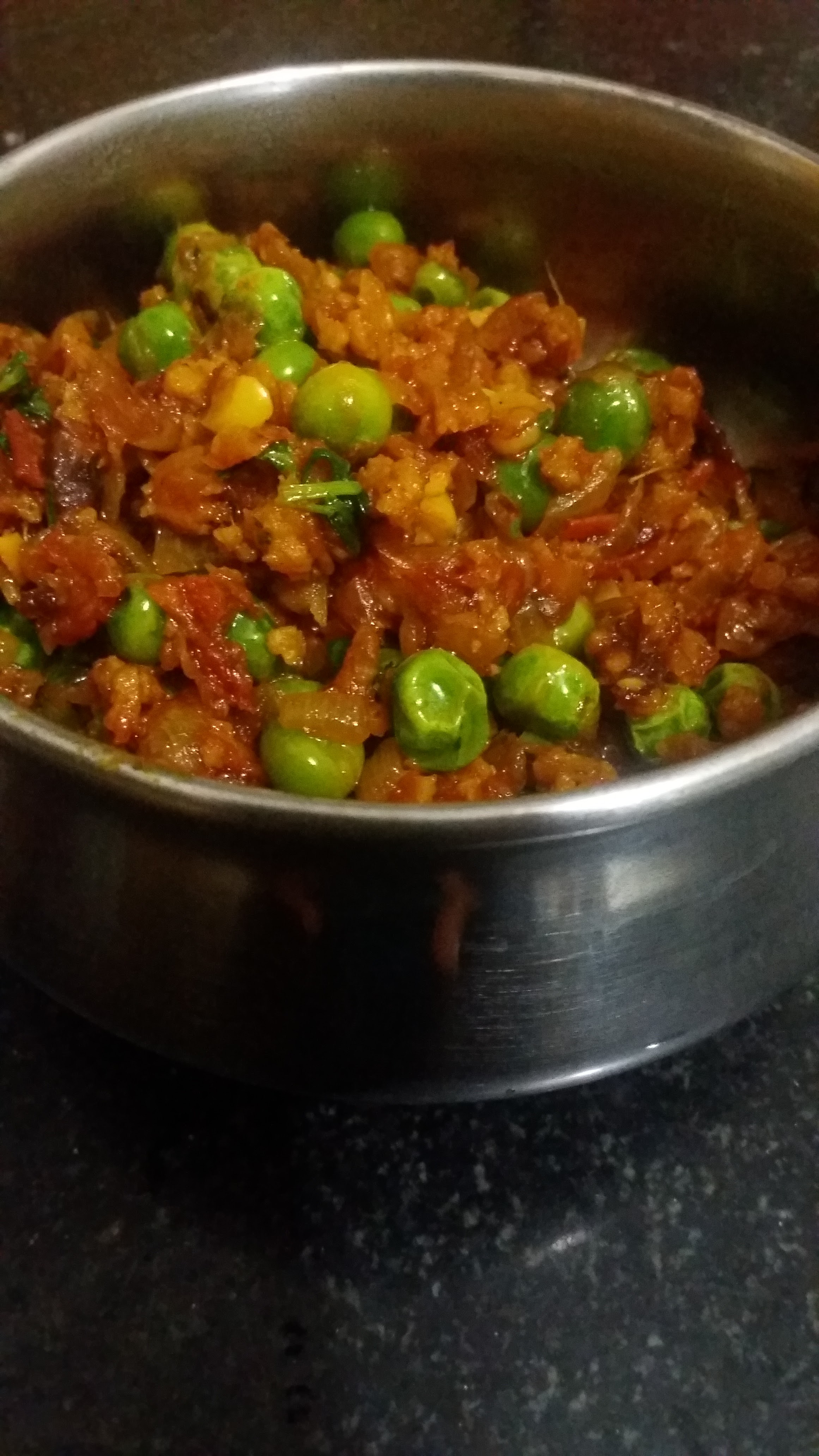
Ingredients: (serves 2)
nutrella soya granules : 1/3 rd cup
mutter : 1/3rd to 1/2 cup
onion : 1 medium
tomato : 2 medium
ginger garlic paste : 1 tsp
green chilli : 1
garam masala : 1/2 tsp
red chilli powder : 1/2 tsp
Turmeric : 1/4 tsp
Dhaniya leaves to garnish
Oil : 2-3 tbsp
Salt to taste
Method:
1. Boil water in a pan. Add soya granules to it, let it boil for 2-3 min. Switch off flame and close pan with a lid. After 5 to 10 min squeeze water from the soya and keep soya aside.
2. Boil water in a pan (take pan used for soya) with little salt and then add the mutter. Let it boil for 5 to 7 min. Switch off flame and close it with lid.
3. Take oil in another pan. Add chopped green chilly, chopped onions, ginger garlic paste and fry for 5 min.
4. Add chopped tomato, turmeric, garam masala, red chilli powder and fry it well for 10-15 min. Stir often. Sprinkle water if needed to avoid over roasting of masala.
(Note: To save time, you can cook the soya and mutter while performing steps 3 & 4.)
5. Now add soya to the onion-tomato masala, stir well for 2 min. Add the boiled mutter . Add salt, cook for 5 min. Add little water (1/3 cup), add chopped dhaniya leaves and close pan with a lid and let it simmer for 2-3 min.
Delicious & Healthy Soya bhurji is ready!!!!!
Paneer Tikka Masala
Ingredients: (serves 3-4)
Paneer: 150g
Onion : 3
Tomato: 3
Capsicum : 1/2
Thick & Fresh Curd : 1/2 cup
Ginger : 1/2 inch
Green chilli : 2
Oil : 4 tbsp
Red chilli powder : 2 tsp
Turmeric : 1/4 tsp
Garam masala : 1.5 tsp
Dhaniya powder: 1 tbsp
Lemon juice : 1.5 tbsp
Kasoori Methi (dried fenugreek leaves) : 1 tsp
Ginger garlic paste: 2 tsp
Jeera : 1 tsp
cashewnut/kaju :6-8
Milk : 50ml
Milk : 50ml
coriander leaves for garnish
Method:
1. Take curd in a big bowl.Add 1 tsp red chilli powder, 1/4 tsp kasoori methi, 1 tsp ginger garlic paste, 1 tbsp lemon juice, 1/2 tsp garam masala, 1 tbsp oil and salt. Mix well.
2. Cut paneer into cubes. Dice 1 onion, 1 tomato and half capsicum into big pieces. Add them into the bowl, mix well and allow it to marinate for minimum 30 minutes. Also soak the cashewnuts in milk.
3. Heat 2 tbsp oil in a pan and add the paneer, onion, tomato, capsicum pieces into them, slowly picking them by hand. Dont pour the excess curd gravy if any, we will use it later.
4. Keep tossing the pieces in the pan till all sides start browning out evenly. Take care that they don't get burnt. Switch off.
3. Heat 2-3 tbsp oil in a pan. Add jeera and let it crackle. Add finely chopped ginger, finely chopped onions and fry till golden brown.
4. Add 1 tsp ginger garlic paste and saute for a min. Then add finely chopped tomatoes.
5. Add 1 tsp red chilli powder, 1 tbsp dhaniya powder, 1/4 tsp turmeric powder. Mix well. Fry till oil oozes out.
6. Add slit green chillies and salt. Mix well.
7. Grind kaju and milk in the mixi jar. Add it to the pan. Add 1 tsp garam masala. Add 1/2 cup water and mix well. Let it simmer with closed lid for 2 min.
7. Grind kaju and milk in the mixi jar. Add it to the pan. Add 1 tsp garam masala. Add 1/2 cup water and mix well. Let it simmer with closed lid for 2 min.
8. Add the tossed paneer,onion,tomato and capsicum pieces into the pan. Also add the excess curd gravy if leftover in the bowl into the pan.Mix well. Let it simmer until you get the right consistency.
9. Add 1/4 tsp kasoori methi and remaining lemon juice. Mix well. Immediately switch off flame.
10. Garnish with coriander leaves.
Baingan ka Bharta


Ingredients: (serves 2)
Eggplant/Baingan : 1 medium
Onion : 1
Tomato : 2
Garlic: 3-4
Jeera : 1/2 tsp
Ginger : 1/2 inch
Green chilli : 2
Salt : 1 tsp
Red Chilli powder : 1 tsp
Turmeric powder : 1/4 tsp
Oil: 2-3 tbsp
Method:
1. Roast eggplant on direct flame. Keep turning it so that it gets roasted evenly at all sides. When done, switch off flame, let it cool. Then peel off the skin and mash it well and keep aside.
2. Heat oil in a pan. Add jeera, chopped green chilli, garlic and finely chopped ginger. Stir for few seconds.
3. Now add finely chopped onion. Saute for 5 min till it becomes golden brown.
4. Add mashed eggplant, mix well and saute for 5 min.
5. Now add finely chopped tomatoes, add turmeric powder, red chilli powder, salt. Mix well and cook with closed lid for 5-7 min with occasional stirring to avoid burning. Sprinkle water if needed in between.
6. Remove lid. Stir and fry the gravy till oil oozes out. Switch off.
7. Garnish with coriander leaves.
Note:
* You can try this too : Before roasting eggplant, with help of knife, make few cuts in the eggplant and pierce garlic into it. Then roast it. This gives a blended aroma of garlic and eggplant.
* Also, if you like the smoky aroma, you can roast tomatoes on flame, peel off the skin, mash it and add to gravy while cooking.
Chole
Eggplant/Baingan : 1 medium
Onion : 1
Tomato : 2
Garlic: 3-4
Jeera : 1/2 tsp
Ginger : 1/2 inch
Green chilli : 2
Salt : 1 tsp
Red Chilli powder : 1 tsp
Turmeric powder : 1/4 tsp
Oil: 2-3 tbsp
Method:
1. Roast eggplant on direct flame. Keep turning it so that it gets roasted evenly at all sides. When done, switch off flame, let it cool. Then peel off the skin and mash it well and keep aside.
2. Heat oil in a pan. Add jeera, chopped green chilli, garlic and finely chopped ginger. Stir for few seconds.
3. Now add finely chopped onion. Saute for 5 min till it becomes golden brown.
4. Add mashed eggplant, mix well and saute for 5 min.
5. Now add finely chopped tomatoes, add turmeric powder, red chilli powder, salt. Mix well and cook with closed lid for 5-7 min with occasional stirring to avoid burning. Sprinkle water if needed in between.
6. Remove lid. Stir and fry the gravy till oil oozes out. Switch off.
7. Garnish with coriander leaves.
Note:
* You can try this too : Before roasting eggplant, with help of knife, make few cuts in the eggplant and pierce garlic into it. Then roast it. This gives a blended aroma of garlic and eggplant.
* Also, if you like the smoky aroma, you can roast tomatoes on flame, peel off the skin, mash it and add to gravy while cooking.
Chole
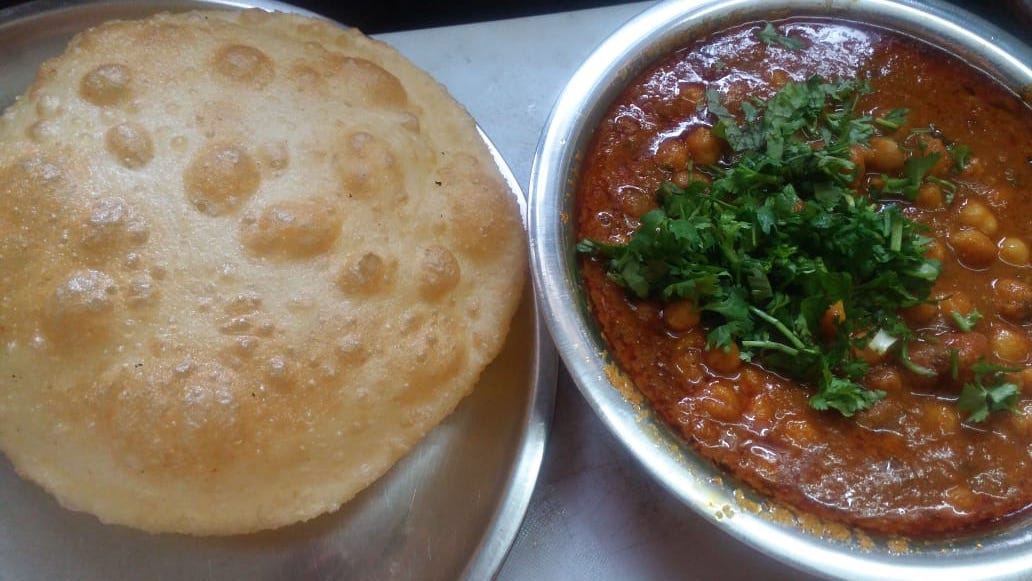
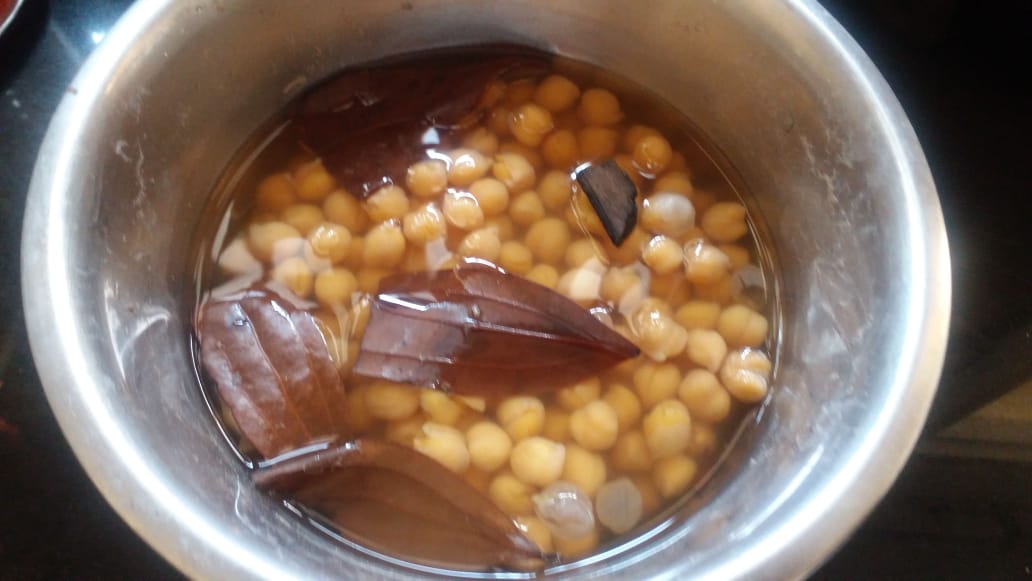
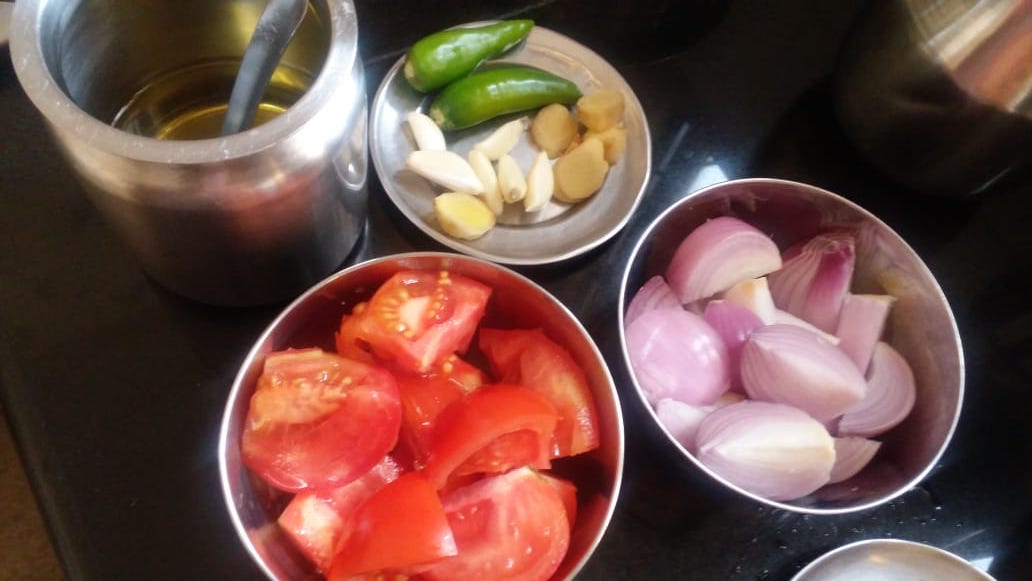
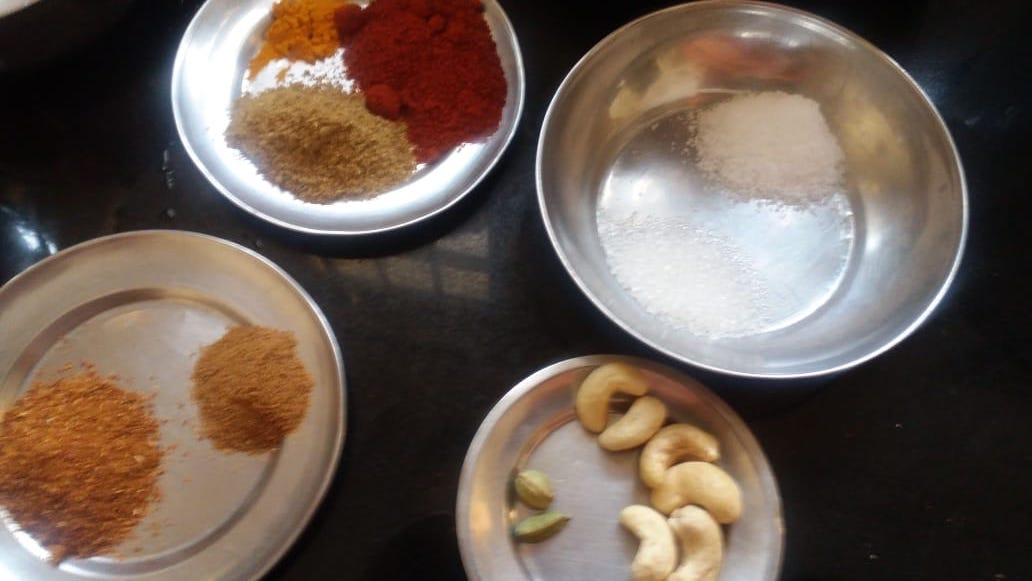
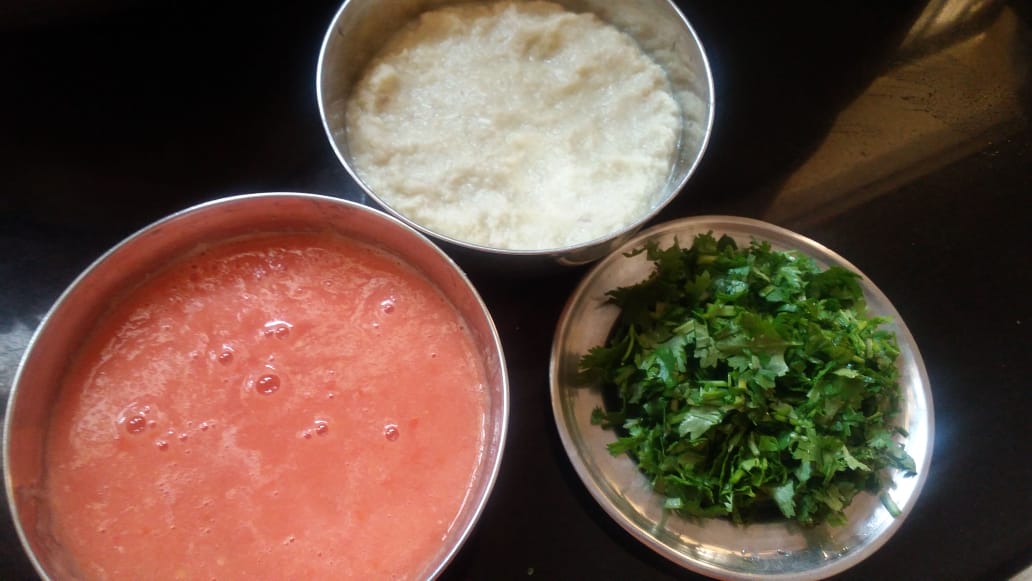
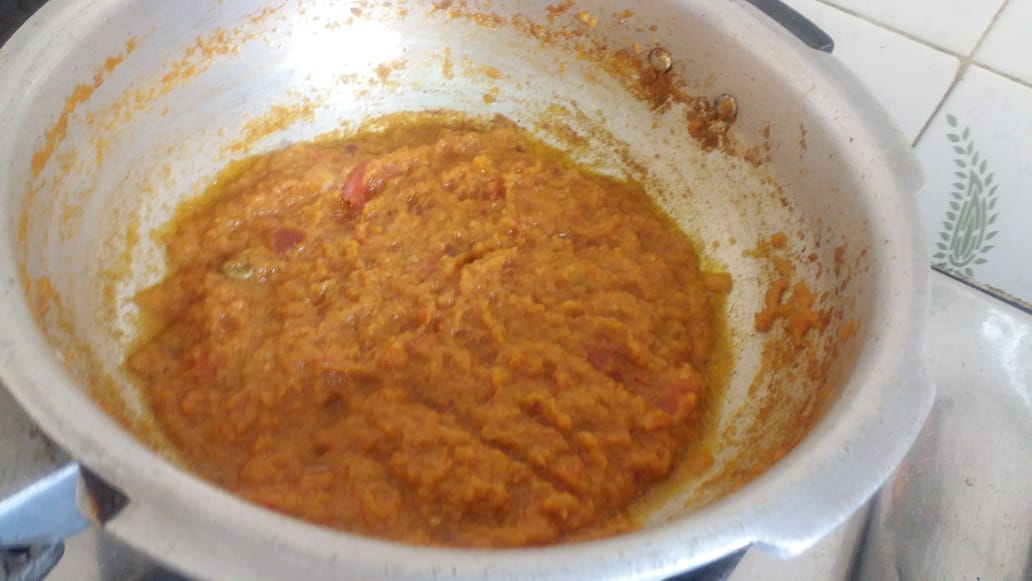
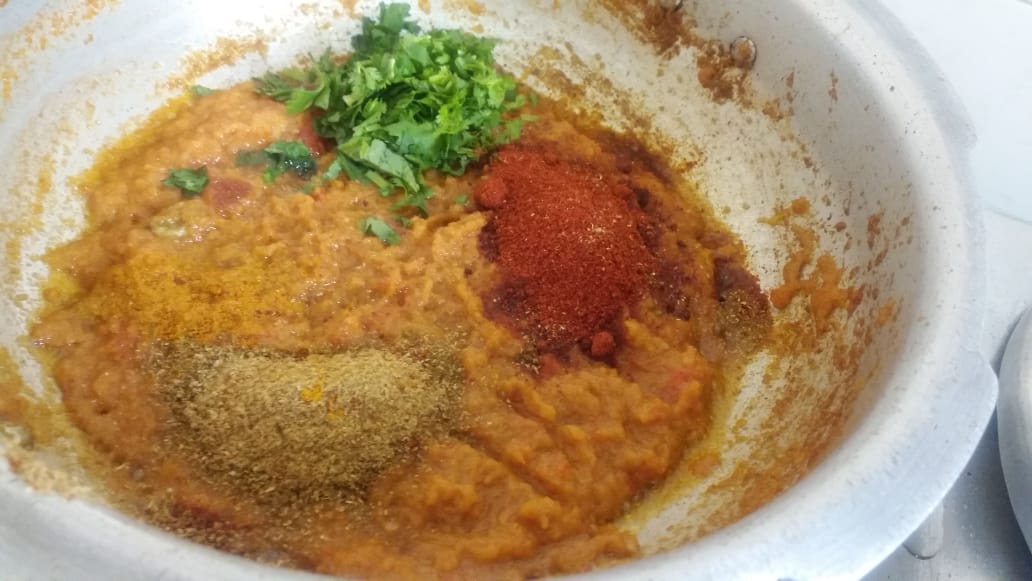
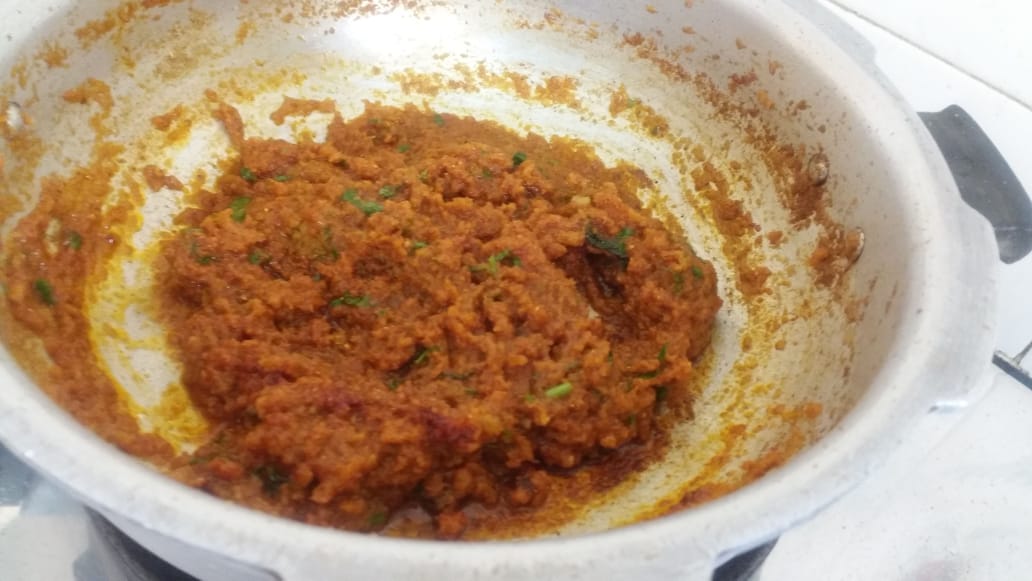
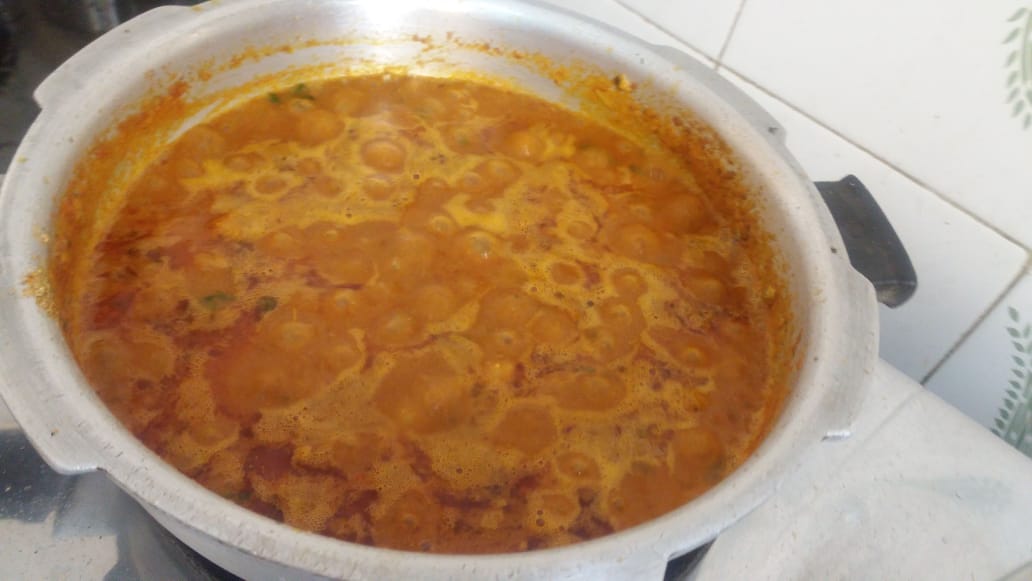
Ingredients:
Kabuli chana (chickpeas) : 1 cup
Bay leaf : 1 to 2
Cinnamon stick : half inch
cardamom :2
clove : 2
Ginger garlic paste : 1.5 tsp
Onions : 1 cup finely chopped
Tomatoes : 1 cup finely chopped
Turmeric powder : 1/4 tsp
Red chilli powder : 1 to 1.5 tsp
Garam masala : 1 tsp
Dhaniya powder : 1.5 tsp
Kasoori methi : 1/2 tsp
saunf powder : 1/4th tsp
Jeera powder (roasted & ground) : 1/2 tsp
Sugar : 1/2 tsp
Green chilly : 1
Oil : 3-4 tbsp
Fresh coriander leaves : 1/2 cup
Method:
Kabuli chana (chickpeas) : 1 cup
Bay leaf : 1 to 2
Cinnamon stick : half inch
cardamom :2
clove : 2
Ginger garlic paste : 1.5 tsp
Onions : 1 cup finely chopped
Tomatoes : 1 cup finely chopped
Turmeric powder : 1/4 tsp
Red chilli powder : 1 to 1.5 tsp
Garam masala : 1 tsp
Dhaniya powder : 1.5 tsp
Kasoori methi : 1/2 tsp
saunf powder : 1/4th tsp
Jeera powder (roasted & ground) : 1/2 tsp
Sugar : 1/2 tsp
Green chilly : 1
Oil : 3-4 tbsp
Fresh coriander leaves : 1/2 cup
Method:
1. Soak the kabuli chana (chickpeas)overnight (7-8 hours). Pressure cook it (6-7 whistles) (with 1:2 chole:water ratio). Also add 1 bay leaf, cinnamon stick 1/2 inch, 1 cardamom, 2 clove for pressure cooking.
(Note: While pressue cooking, you can add a plain flavour tea bag into the water. It adds taste to the chana.). After the pressure is released, open the cooker and remove the spices.
2. Take pressure pan. Add oil , add one small bay leaf, 1 cardomom and then add ginger garlic paste, add one cup finely chopped onions, add 1 slit green chlly. Saute till onions turns brown.
3. Add 1 cup finely chopped tomatoes. After 5 min add turmeric powder, 1 to 1.5 tsp red chilli powder (as required), dhaniya powder and mix well. Add 1/4 cup chopped fresh coriander leaves. Saute till the mixture oozes out oil.
4. Now add the cooked chole (dont throw the water). Add kasoori methi, saunf powder, jeera powder, sugar and saute them for 5 min.
5. Add garam masala, add the chole water, add salt and pressure cook for two whistle. Garnish with chopped coriander leaves.
(Note : you can add 1 tsp of lemon juice if you like it little sour)
3. Add 1 cup finely chopped tomatoes. After 5 min add turmeric powder, 1 to 1.5 tsp red chilli powder (as required), dhaniya powder and mix well. Add 1/4 cup chopped fresh coriander leaves. Saute till the mixture oozes out oil.
4. Now add the cooked chole (dont throw the water). Add kasoori methi, saunf powder, jeera powder, sugar and saute them for 5 min.
5. Add garam masala, add the chole water, add salt and pressure cook for two whistle. Garnish with chopped coriander leaves.
(Note : you can add 1 tsp of lemon juice if you like it little sour)
Aloo Parval Sabji
This is a simple yet splendid curry/sabji. Like the ivy guard (tindora/gilada), Parval belongs to the cucumber family. Parval (pointed guard) is more seen in the cuisines from eastern states of India. Parval has numerous health benefits. It is also said that the seeds present in this guard are good for controlling blood sugar and cholesterol. So even the seeds are used while cooking this vegetable. (Since this is a dry sabji, the seeds are not included in this recipe. When making gravies it will be good to include, but it is finally your choice, you can add them if you like). Also you can make this curry without potato, but with potato you get an enhanced taste. Let's see the recipe details.
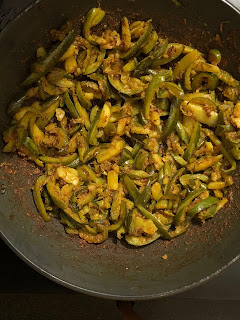
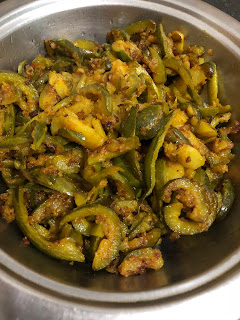
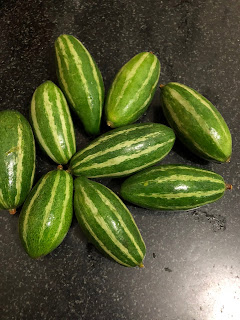
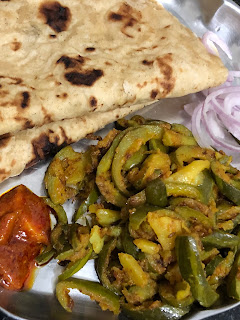
Paneer Bhurji:
This is a simple yet splendid curry/sabji. Like the ivy guard (tindora/gilada), Parval belongs to the cucumber family. Parval (pointed guard) is more seen in the cuisines from eastern states of India. Parval has numerous health benefits. It is also said that the seeds present in this guard are good for controlling blood sugar and cholesterol. So even the seeds are used while cooking this vegetable. (Since this is a dry sabji, the seeds are not included in this recipe. When making gravies it will be good to include, but it is finally your choice, you can add them if you like). Also you can make this curry without potato, but with potato you get an enhanced taste. Let's see the recipe details.
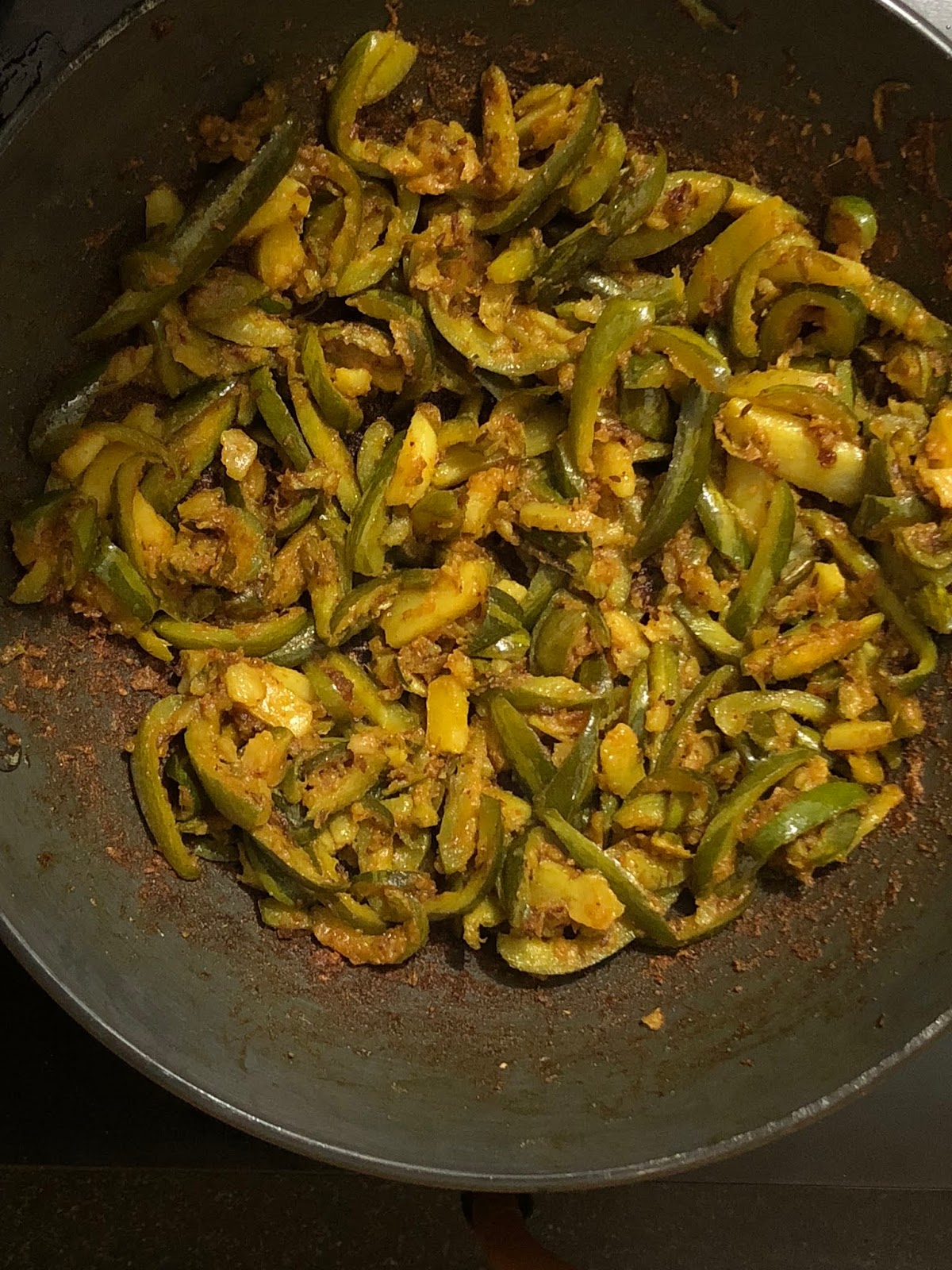
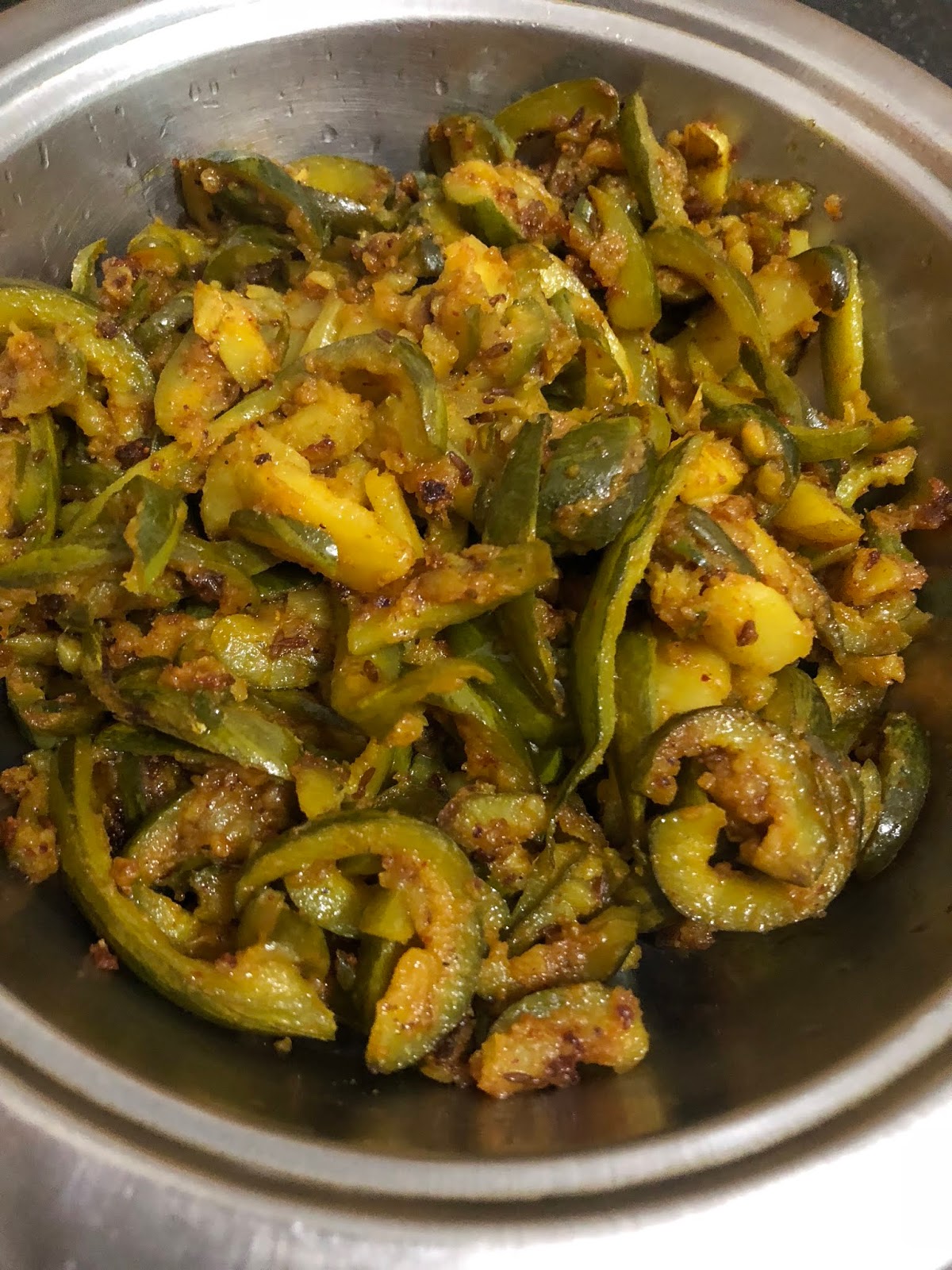
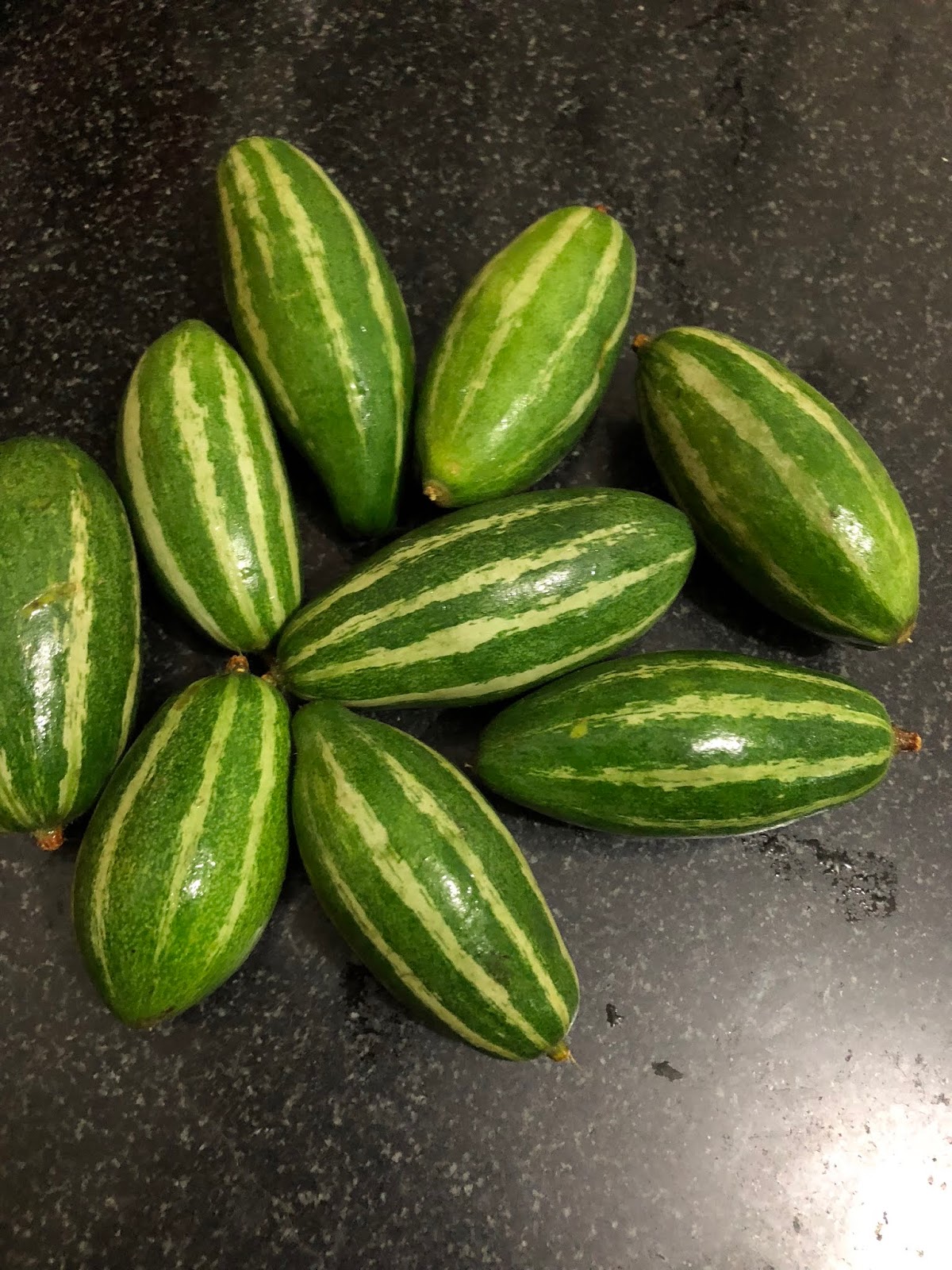
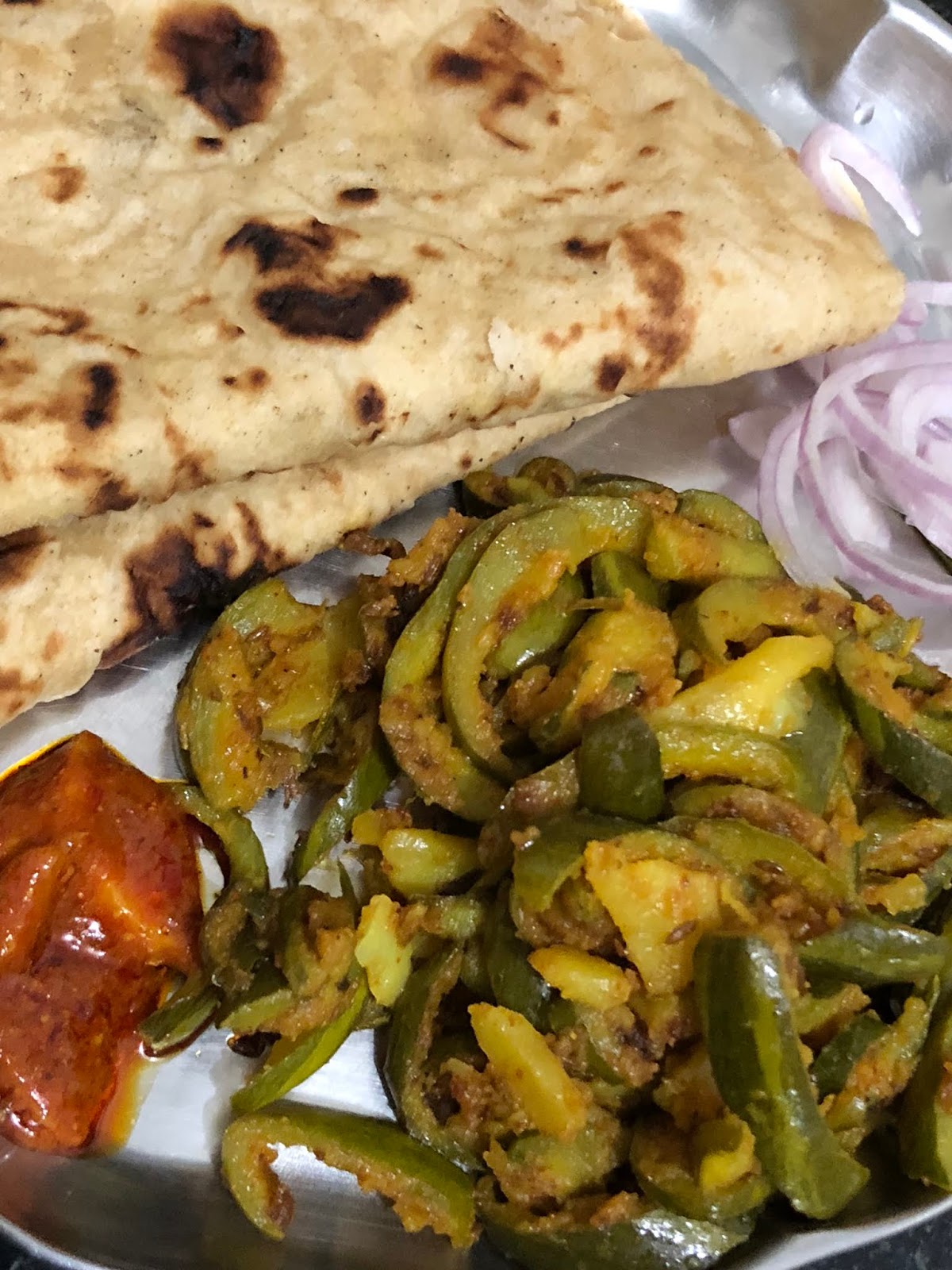
(Video - Making of Aloo Parval Sabji)
Ingredients
Parval 200g
Potato 1 big
Garam masala 1/2 TSP
Sambhar powder 1/2 TSP
Red chilli powder 1 TSP
Sugar 3/4 TSP
Besan 1.5 tbsp
Rice flour 1 TSP
Asafoetida 1/4 TSP
Turmeric 1/4 TSP
Jeera 1/2 TSP
Oil : 4-5 tbsp
Ghee : 1/2 TSP (optional)
Parval 200g
Potato 1 big
Garam masala 1/2 TSP
Sambhar powder 1/2 TSP
Red chilli powder 1 TSP
Sugar 3/4 TSP
Besan 1.5 tbsp
Rice flour 1 TSP
Asafoetida 1/4 TSP
Turmeric 1/4 TSP
Jeera 1/2 TSP
Oil : 4-5 tbsp
Ghee : 1/2 TSP (optional)
Method
1. Chop parval thin and longitudinally. (Remove the seeds. Since this is a dry sabji, the seeds are not included in this recipe.
When making gravies it will be good to include, but it is finally your
choice, you can add them if you like)
2. Chop potato similar to parval
3. Take 2 tbsp oil in pan, add jeera, then add parval, mix well.
4. Add potato, mix well. Add turmeric, salt, asafoetida and saute with closed lid on low to medium flame till vegetables are 80% cooked. (open lid and stir often to avoid burning of food)
5. Open lid, add red chilli powder, garam masala, sambhar powder, 3/4 sugar, besan and rice flour.
Add 2-3 tbsp oil and saute with open lid on medium flame for 3-4 min.Stir often to avoid burning of food. (Adjust oil, salt and sugar as required.)
6. Add half tsp ghee , mix once and switch off flame. (adding ghee is optional)
2. Chop potato similar to parval
3. Take 2 tbsp oil in pan, add jeera, then add parval, mix well.
4. Add potato, mix well. Add turmeric, salt, asafoetida and saute with closed lid on low to medium flame till vegetables are 80% cooked. (open lid and stir often to avoid burning of food)
5. Open lid, add red chilli powder, garam masala, sambhar powder, 3/4 sugar, besan and rice flour.
Add 2-3 tbsp oil and saute with open lid on medium flame for 3-4 min.Stir often to avoid burning of food. (Adjust oil, salt and sugar as required.)
6. Add half tsp ghee , mix once and switch off flame. (adding ghee is optional)
Delicious aloo parval sabji is ready.
Paneer Bhurji:
Ingredients
Paneer 150g
Onion 1
Paneer 150g
Onion 1
Tomato 1
Green chillies 3
Kasoori methi
Ginger garlic paste 1 tbsp
Garam masala 1/2 TSP
Red chilli powder 1/2 TSP
Salt to taste
Turmeric
Oil: 2-3 tbsp
Kasoori methi
Ginger garlic paste 1 tbsp
Garam masala 1/2 TSP
Red chilli powder 1/2 TSP
Salt to taste
Turmeric
Oil: 2-3 tbsp
Method
1. Turn paneer into granules.
1. Turn paneer into granules.
2. Take oil in a pan ,add green chillies, ginger garlic paste, saute for 30 sec. add finely chopped onion,saute for 5 min. Then add chopped tomato, turmeric, red chilli powder and garam masala and saute for 7 to 10 min.
3. Add paneer granules and kasoori methi and saute for 2 to 3 min.
4. Add salt and sprinkle little water to avoid over roasting and saute for 2 to 3 min.
5. Garnish with coriander leaves.
Turai Sabji
Ingredients:
Turai (Ridge guard): 1 medium sized
Boiled Potato : 1 small
Onion : 2
Tomato: 1
Ginger garlic paste : 1 tsp
Green chillies : 1
Jeera : 1/2 tsp
Turmeric : 1/4 tsp
Garam masala : 1 tsp
Dhaniya powder : 1 tsp
Red Chilli powder : 1/2 tsp
Salt to taste
Oil : 2-3 tbsp
Fresh Coriander leaves for garnish
Method:
1. Heat oil in a kadhai/pan. Add jeera, chopped green chilly, ginger garlic paste and saute.
2. Add finely chopped onions and fry till golden brown.
3. Add finely tomato, turmeric, red chilli powder, garam masala & dhaniya powder. Fry till oil oozes out from the masala into the sides of the pan.
4. Now add finely chopped turai. Mix well and saute for a min. Fry for 5 min.
5. Add 1 cup water. Add salt. And close the pan with a lid and let it simmer for 5 min.
6. Now open the lid. Add mashed potato and mix well. Take a masher and keep mashing the bhurji for a min or two.
7. Garnish with coriander leaves.
Paneer Butter Mutter Masala
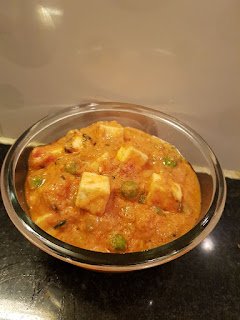
Ingredients:
Cooking butter : 2-3 tbsp
Bay leaf : 2
cardamom : 1
saunf : 1/2 tsp
Green chillies : 2 to 3
Onions : 3
Ginger garlic paste : 1.5 tsp
Tomatoes : 2
Green peas : 3/4 cup
Paneer : 150g
Turmeric : 1/4th tsp
Dhaniya powder : 1 tsp
Jeera powder (dry roasted and ground) : 1/2 tsp
Red chilli powder : 1 tsp
Garam masala : 1 tsp
Kasoori Methi : 1/2 tsp
Fresh cream : 1/2 to 3/4 cup (as you like it)
Kaju : 5 to 6
Kishmish (dry grapes) : 3 to 4
Fresh coriander leaves for garnishing
Method:
1. Heat 2-3 tbsp cooking butter in a pan. Add 2 bay leaf, 1 cardamom and 1/2 tsp saunf.
2. Add 2-3 green chillies, then add ground onion paste(3 onions). Saute well. When it starts to change colour , add 1.5 tsp ginger garlic paste.
3. When light brown, add tomato puree(2 tomatoes). Add 1/4tsp turmeric, 1 tsp dhaniya powder, 1/2 tsp jeera powder, 1tsp red chilli powder.
4. Let it cook till oil oozes out into sides of pan. Add green peas ( 3/4 cup), saute for 2 min. Then add salt and 1tsp garam masala, 1/2 tsp kasoori methi and some chopped coriander leaves. Saute for 1 min. Add some water. Allow to boil with closed lid.
5. Now add 3/4 cup to 1 cup thick milk (or) 1/2 cup to 3/4 cup fresh cream.
6. Grind some 5-6 kaju and 3-4 kishmish and add it to mixture.
7. Add cubed paneer (150g). Again add little water if needed. Allow it to simmer with closed lid for 1-2 min.
8. Garnish with coriander leaves.
Karele ki sabji:
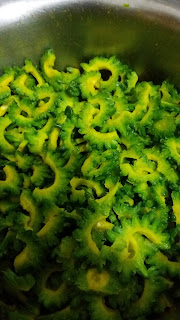
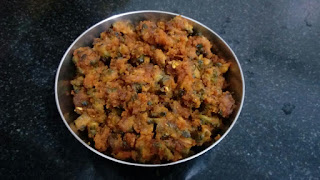
Ingredients:
Karela : 2 big
Oil: 3-4 tbsp
Jeera: 1 tsp
Mustard : 1/2 tsp
Urad dal : 1 tsp
Asafoetida: 1/4 to 1/2 tsp
Turmeric powder : 1/4 tsp
Salt to taste
Red chilli powder : 1/2 tsp
Red chillies : 2
Sugar: 4-5 tsp
Besan: 1.5 - 2 tbsp (or) Freshly grated Coconut : 2 tbsp (or) Roasted & coarsely ground Peanut powder : 2 tbsp
Tamarind paste : 1 tsp
Ghee : 1-2 tsp
Method:
Finely chop the bitter guards, add 1/4tsp turmeric powder, salt and allow it to marinate for 1/2 hr. Then squeeze it hard and remove the water oozing out. Wash it in cold running water and squeeze it again. This removes some bitterness from the veggie.
1. Heat Oil in a pan. Add broken red chillies, mustard and urad dal. Saute for 10sec. Add jeera and asafoetida then immediately add chopped bitter guard.
2. Add little salt, tamarind paste and mix well. Sprinkle little water. Add 1 tsp sugar. Mix well. Cook it with closed vessel for 10 min (or till bitter guard is cooked). Check often in between and sprinkle water if needed to avoid burning of the veggie.
With coconut:
3. Remove the lid, add remaining sugar, red chilli powder, 1-2 tsp ghee. Mix well and saute for 2-3 min.
4. Add grated coconut and saute for a min. Switch off the flame.
With Besan:
3. Remove the lid, add remaining sugar, red chilli powder, besan and 1-2 tsp ghee. Mix well and saute for 2-3 min.
With Peanut powder:
3. Remove the lid, add remaining sugar, red chilli powder, peanut powder and 1-2 tsp ghee. Mix well and saute for 2-3 min.
Aloo Karela Curry:
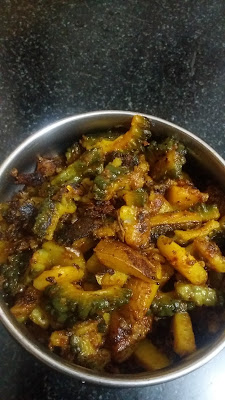
Ingredients:
Karela : 2 medium
Potato: 2 medium
Oil: 3-4 tbsp
Jeera: 1/2 tsp
Saunf : 3/4 tsp
Sugar: 3-4 tsp
Turmeric : 1/4 tsp
Asafoetida: 1/4 tsp
Red chilli powder : 1 tsp
Dhaniya powder : 1 tsp
Garam masala : 1/2 tsp
Ghee : 1/2tsp
Method:
If you cant take the bitterness as it is, then after chopping the bitter guard, add little turmeric powder, salt and allow it to marinate for 1/2 hr. Then squeeze it hard and remove the water oozing out. Wash it in cold running water and squeeze it again. This removes some bitterness from the veggie.
1. Heat oil in a pan. Add jeera & saunf.
2. Add diced potato and little salt and fry for 2-3 min.
3. Add chopped bitter guard, turmeric, salt and mix well. Cook with closed vessel with 5-8 min.
Check often in between and sprinkle water if needed to avoid burning.
4. Remove the lid, add 2 tsp oil. Add garam masala, red chilli powder, dhaniya powder and saute for 5-8 min.
5. Add sugar and saute for 2 min.
6. Add ghee, mix well and switch off the flame.
Parval Curry (Oriya style):
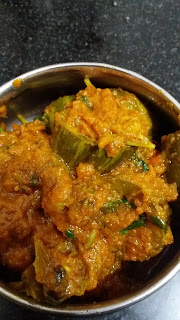
3. Add paneer granules and kasoori methi and saute for 2 to 3 min.
4. Add salt and sprinkle little water to avoid over roasting and saute for 2 to 3 min.
5. Garnish with coriander leaves.
Turai Sabji
Ingredients:
Turai (Ridge guard): 1 medium sized
Boiled Potato : 1 small
Onion : 2
Tomato: 1
Ginger garlic paste : 1 tsp
Green chillies : 1
Jeera : 1/2 tsp
Turmeric : 1/4 tsp
Garam masala : 1 tsp
Dhaniya powder : 1 tsp
Red Chilli powder : 1/2 tsp
Salt to taste
Oil : 2-3 tbsp
Fresh Coriander leaves for garnish
Method:
1. Heat oil in a kadhai/pan. Add jeera, chopped green chilly, ginger garlic paste and saute.
2. Add finely chopped onions and fry till golden brown.
3. Add finely tomato, turmeric, red chilli powder, garam masala & dhaniya powder. Fry till oil oozes out from the masala into the sides of the pan.
4. Now add finely chopped turai. Mix well and saute for a min. Fry for 5 min.
5. Add 1 cup water. Add salt. And close the pan with a lid and let it simmer for 5 min.
6. Now open the lid. Add mashed potato and mix well. Take a masher and keep mashing the bhurji for a min or two.
7. Garnish with coriander leaves.
Paneer Butter Mutter Masala
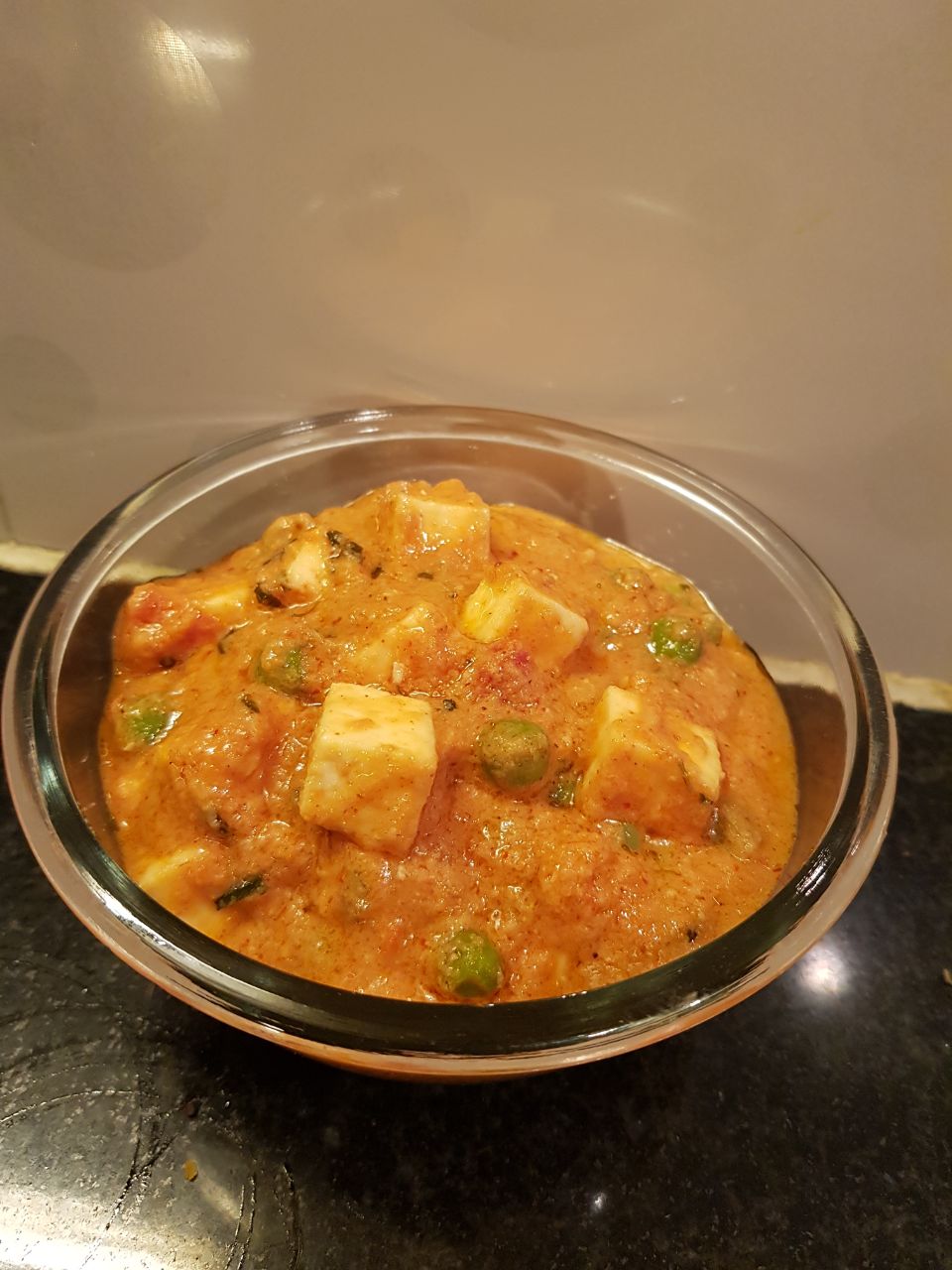
Ingredients:
Cooking butter : 2-3 tbsp
Bay leaf : 2
cardamom : 1
saunf : 1/2 tsp
Green chillies : 2 to 3
Onions : 3
Ginger garlic paste : 1.5 tsp
Tomatoes : 2
Green peas : 3/4 cup
Paneer : 150g
Turmeric : 1/4th tsp
Dhaniya powder : 1 tsp
Jeera powder (dry roasted and ground) : 1/2 tsp
Red chilli powder : 1 tsp
Garam masala : 1 tsp
Kasoori Methi : 1/2 tsp
Fresh cream : 1/2 to 3/4 cup (as you like it)
Kaju : 5 to 6
Kishmish (dry grapes) : 3 to 4
Fresh coriander leaves for garnishing
Method:
1. Heat 2-3 tbsp cooking butter in a pan. Add 2 bay leaf, 1 cardamom and 1/2 tsp saunf.
2. Add 2-3 green chillies, then add ground onion paste(3 onions). Saute well. When it starts to change colour , add 1.5 tsp ginger garlic paste.
3. When light brown, add tomato puree(2 tomatoes). Add 1/4tsp turmeric, 1 tsp dhaniya powder, 1/2 tsp jeera powder, 1tsp red chilli powder.
4. Let it cook till oil oozes out into sides of pan. Add green peas ( 3/4 cup), saute for 2 min. Then add salt and 1tsp garam masala, 1/2 tsp kasoori methi and some chopped coriander leaves. Saute for 1 min. Add some water. Allow to boil with closed lid.
5. Now add 3/4 cup to 1 cup thick milk (or) 1/2 cup to 3/4 cup fresh cream.
6. Grind some 5-6 kaju and 3-4 kishmish and add it to mixture.
7. Add cubed paneer (150g). Again add little water if needed. Allow it to simmer with closed lid for 1-2 min.
8. Garnish with coriander leaves.
Karele ki sabji:
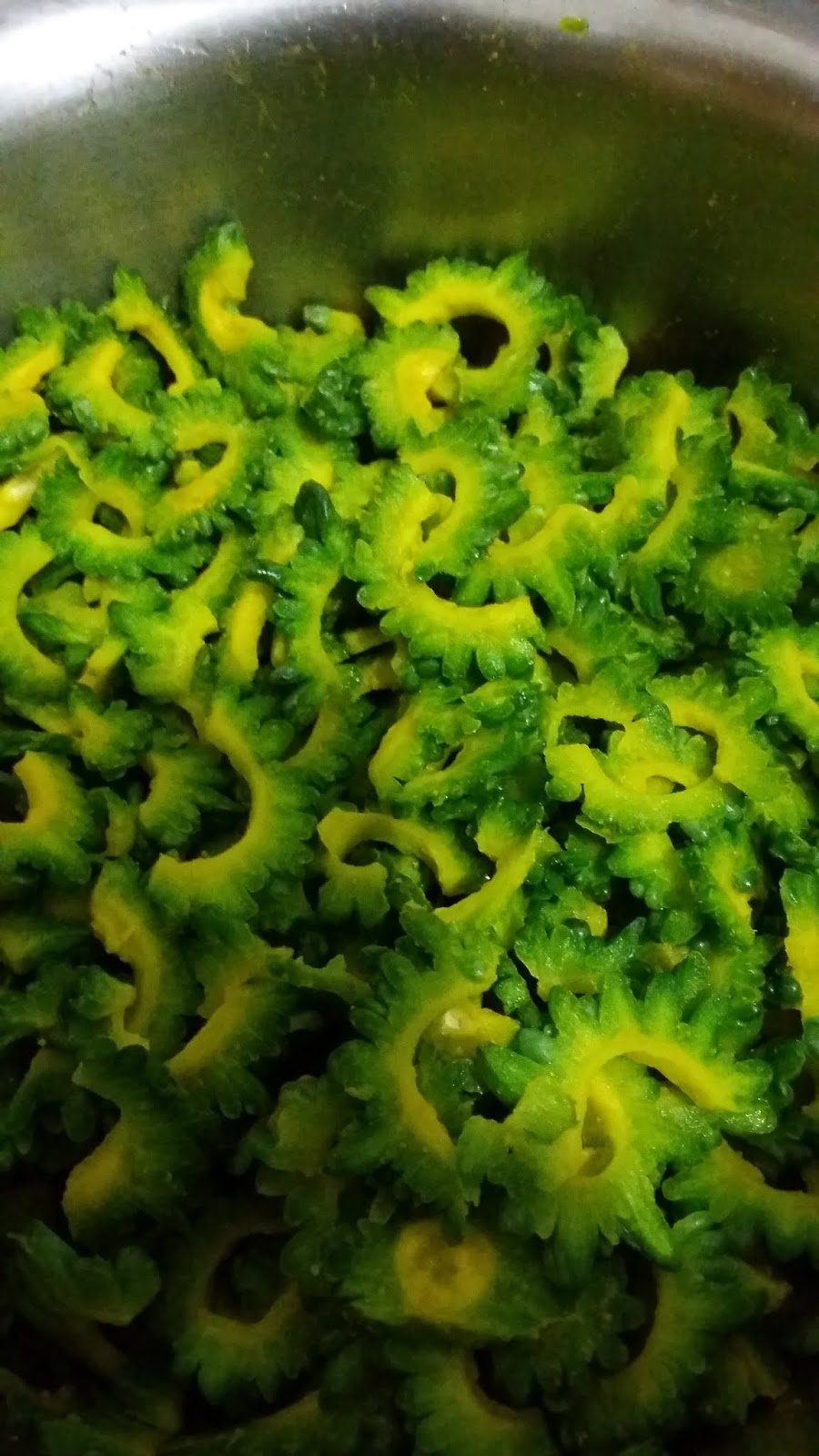
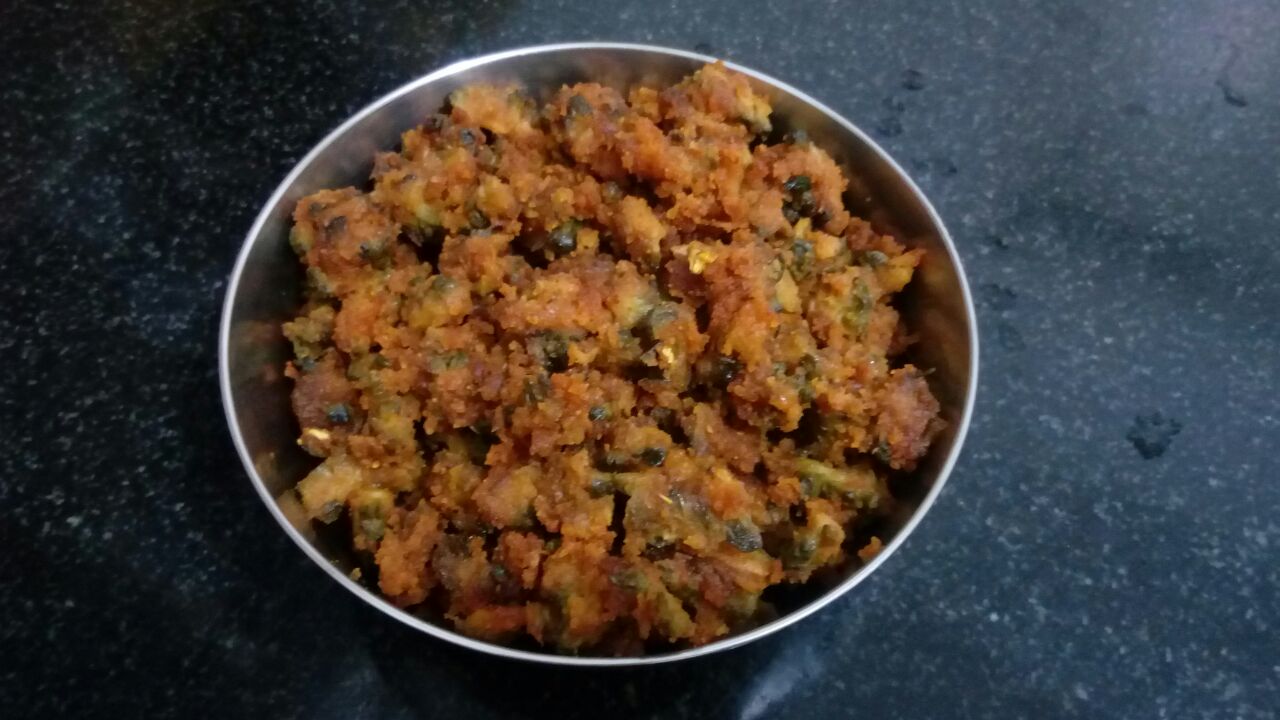
Ingredients:
Karela : 2 big
Oil: 3-4 tbsp
Jeera: 1 tsp
Mustard : 1/2 tsp
Urad dal : 1 tsp
Asafoetida: 1/4 to 1/2 tsp
Turmeric powder : 1/4 tsp
Salt to taste
Red chilli powder : 1/2 tsp
Red chillies : 2
Sugar: 4-5 tsp
Besan: 1.5 - 2 tbsp (or) Freshly grated Coconut : 2 tbsp (or) Roasted & coarsely ground Peanut powder : 2 tbsp
Tamarind paste : 1 tsp
Ghee : 1-2 tsp
Method:
Finely chop the bitter guards, add 1/4tsp turmeric powder, salt and allow it to marinate for 1/2 hr. Then squeeze it hard and remove the water oozing out. Wash it in cold running water and squeeze it again. This removes some bitterness from the veggie.
1. Heat Oil in a pan. Add broken red chillies, mustard and urad dal. Saute for 10sec. Add jeera and asafoetida then immediately add chopped bitter guard.
2. Add little salt, tamarind paste and mix well. Sprinkle little water. Add 1 tsp sugar. Mix well. Cook it with closed vessel for 10 min (or till bitter guard is cooked). Check often in between and sprinkle water if needed to avoid burning of the veggie.
With coconut:
3. Remove the lid, add remaining sugar, red chilli powder, 1-2 tsp ghee. Mix well and saute for 2-3 min.
4. Add grated coconut and saute for a min. Switch off the flame.
With Besan:
3. Remove the lid, add remaining sugar, red chilli powder, besan and 1-2 tsp ghee. Mix well and saute for 2-3 min.
With Peanut powder:
3. Remove the lid, add remaining sugar, red chilli powder, peanut powder and 1-2 tsp ghee. Mix well and saute for 2-3 min.
Aloo Karela Curry:
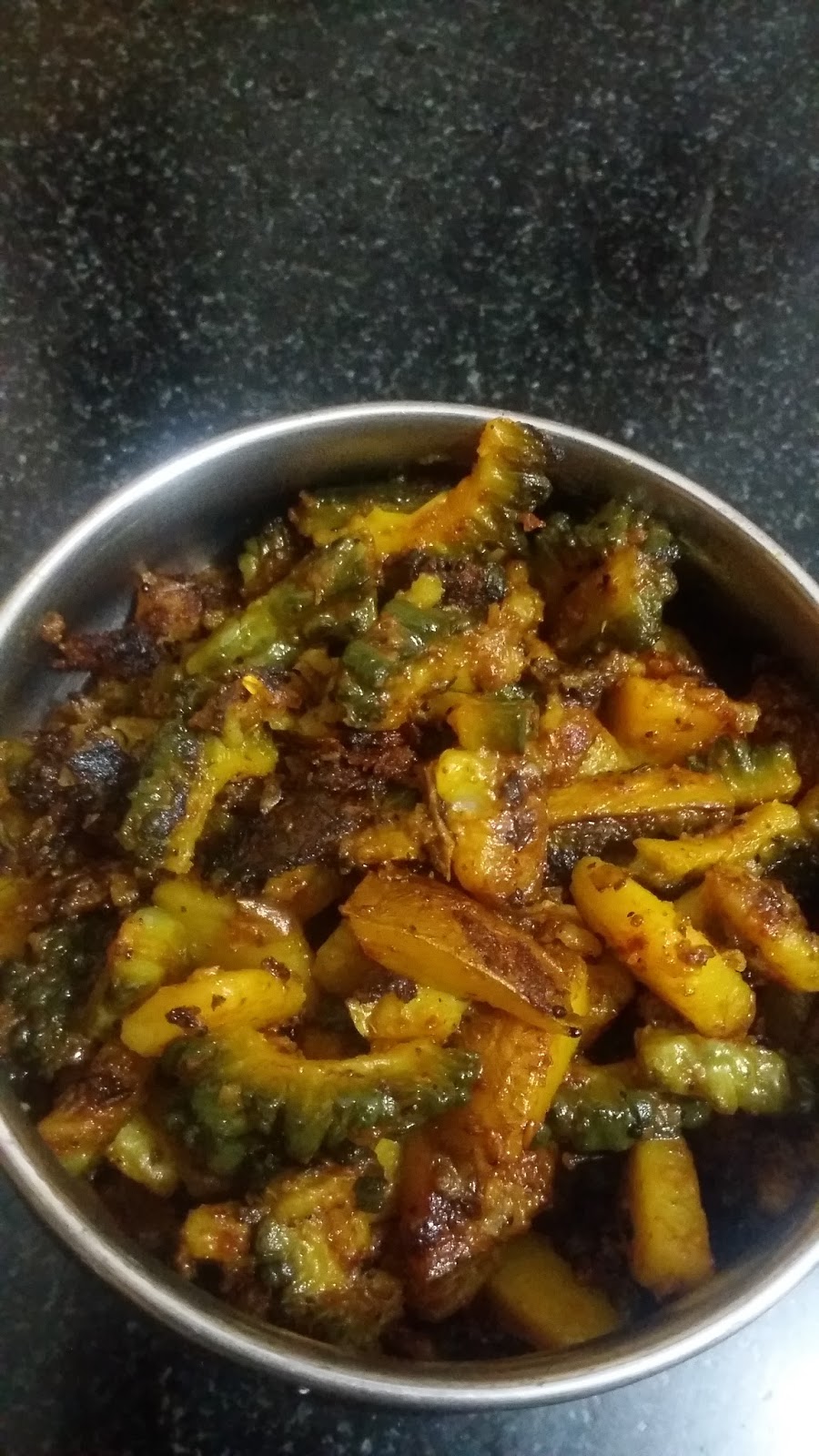
Karela : 2 medium
Potato: 2 medium
Oil: 3-4 tbsp
Jeera: 1/2 tsp
Saunf : 3/4 tsp
Sugar: 3-4 tsp
Turmeric : 1/4 tsp
Asafoetida: 1/4 tsp
Red chilli powder : 1 tsp
Dhaniya powder : 1 tsp
Garam masala : 1/2 tsp
Ghee : 1/2tsp
Method:
If you cant take the bitterness as it is, then after chopping the bitter guard, add little turmeric powder, salt and allow it to marinate for 1/2 hr. Then squeeze it hard and remove the water oozing out. Wash it in cold running water and squeeze it again. This removes some bitterness from the veggie.
1. Heat oil in a pan. Add jeera & saunf.
2. Add diced potato and little salt and fry for 2-3 min.
3. Add chopped bitter guard, turmeric, salt and mix well. Cook with closed vessel with 5-8 min.
Check often in between and sprinkle water if needed to avoid burning.
4. Remove the lid, add 2 tsp oil. Add garam masala, red chilli powder, dhaniya powder and saute for 5-8 min.
5. Add sugar and saute for 2 min.
6. Add ghee, mix well and switch off the flame.
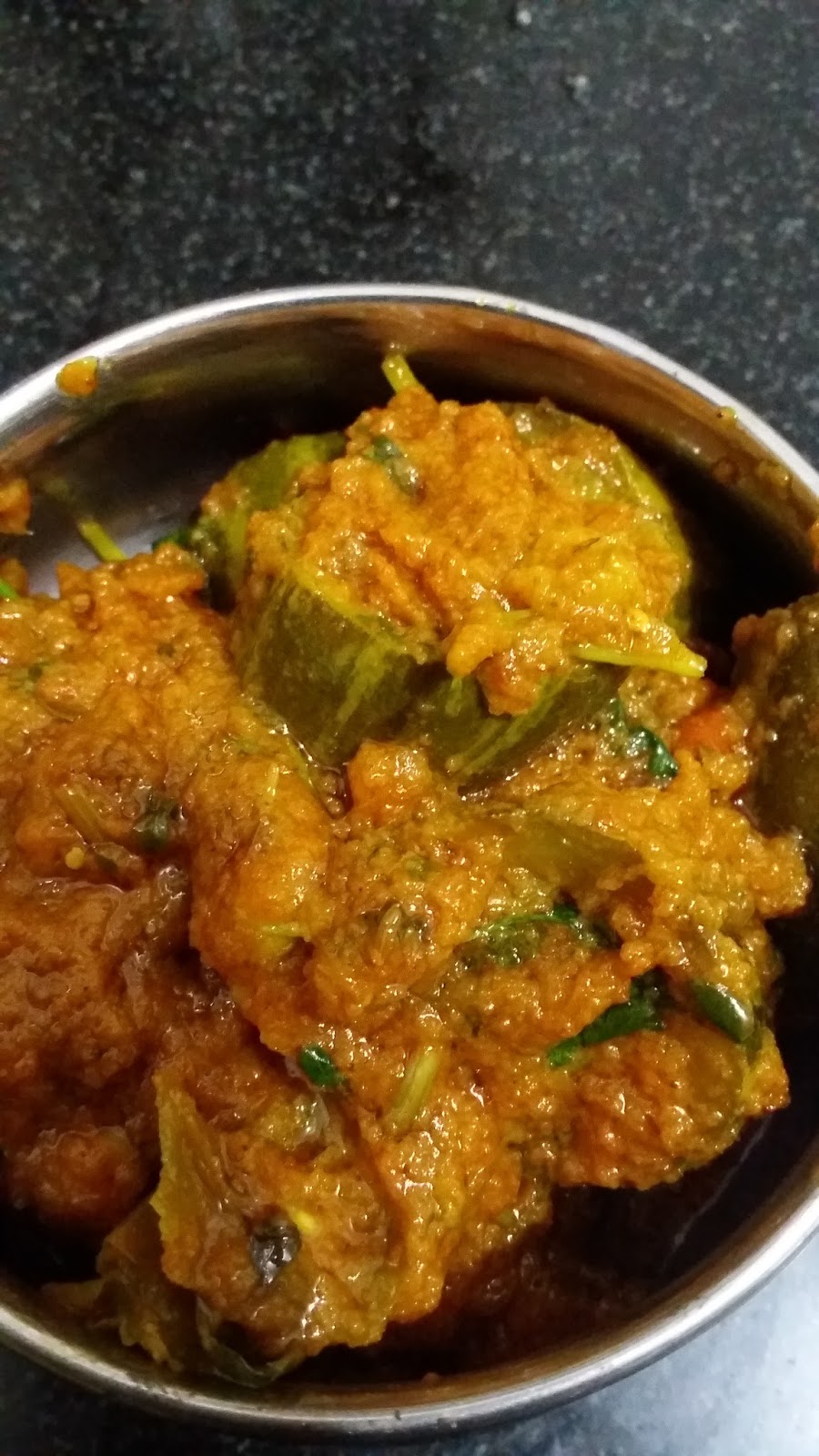
Ingredients:
Onion: 1 large or 1 cup chopped
Tomato: 2 medium or 1.5 cup chopped
Parval: 5
Patato: 1 medium
Oil: 3-4 tbsp
Dalchini - 1/2 inch
Clove: 3-4
Elaichi: 1
Turmeric : 1/4 tsp
Red Chilli Powder : 1 tsp
Mustard - 1 tsp (optional)
Ginger : 1/2 inch
garlic: 2-3
Khaskhas : 1 tsp
Sugar: 1 tsp
Curd : 2-3 tsp
Coriander leaves
green chillies : 3-4 medium
Method:
Chop Parval and potato into big pieces.
Heat oil in a kadhai/pan and add parval and potato. Add little salt and little turmeric and fry it for 3-4 min with open lid..and fry it with closed lid for 5 min.
Take out the potato and parval pieces and transfer it into a plate.
Now in the remaining oil in kadhai..add dalchini,cloves and elaichi. Add chopped onions and fry for 5 min.
Heat a small tadka pan and once hot switch it off. Add khaskhas and dry saute for 30 sec.Take a dry mixi jar, grind the khaskhas first, then add chopped tomatoes,ginger,garlic,green chillies and grind it into smooth paste (without adding water) and pour into the kadhai. Add turmeric, red chilli powder. Now saute till oil oozes out into sides of the pan.
Dry roast the mustard in a tadka pan, then grind it and add it, fry for a min. This is optional. If you dont like the mustard smell, u can avoid it.
Add the shallow fried aloo parval pieces into the kadhai, saute for 2 min.
Now add 2 cups of water, salt. Mix well and leave it with closed lid for 5 min or till gravy reaches the desired consistency.
Add little sugar, curd. Mix well. Add chopped coriander. Yummy parval is ready.
Sliced Baingan Fry
This one is so simple...But so tasty too..Try this out..
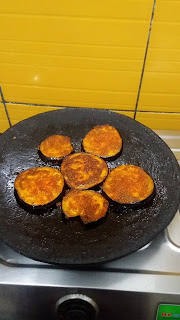
Ingredients:
Baigan/Eggplant : 1medium
Turmeric: 1/4 tsp
Salt
Red chilli powder : 1/2 to 3/4 tsp
asafoetida : 1/4 tsp
Dhaniya powder : 1/4 tsp
tamarind paste : 1/4 tsp
Oil : 3-4 tbsp
Method:
1. In a small bowl, take 2 tsp oil, add turmeric, red chilli powder, asafoetida, dhaniya powder, tamarind paste, salt and mix well.
2. Slice the eggplant in round shapes, each half inch thick. (slightly prick the round pieces with a toothpick. Don't prick too much, else it will break). Apply the mixture on both sides and allow it to marinate for 15-30 min.
3. Take a pan and shallow fry the marinated slices.Make sure both sides are evenly cooked.
Paneer Methi
Ingredients:
Fresh methi(fenugreek) leaves chopped : 1 cup
Onion: 3
Tomato: 2
Paneer: 150g
turmeric : 1/4 tsp
garam masala : 1tsp
dhaniya powder: 1tsp
salt : as per taste
red chilli powder : 1.5 tsp
jeera : 1/2 tsp
Roasted jeera powder : 1/4 tsp
ginger-garlic paste : 1.5 tsp
milk: 1/2 cup
sugar : 1/2 tsp
Method:
1. Saute the chopped methi in 1 tbsp ghee till they leave water and the water evaporates.
2. Heat oil in a pan. add jeera.
2. Add ginger garlic paste and finely chopped onions. Saute for a min.
3. Add turmeric, dhaniya powder and saute for 2-3 min.
4. Add tomato puree and red chilli powder. Saute till oil oozes out into the sides of the pan.
5. Add chopped methi/fenugreek leaves, diced paneer, salt, garam masala, roasted jeera powder and saute for 1-2 min with closed lid.
6. Add milk and sugar and let it simmer for 1 min.
(Note : If fresh cream is available, then u can add 1/2 cup cream instead of milk. But with milk also this dish tastes good.)
Cauliflower Curry
Yummy...This one is all time favourite...Goes well with rice/rotis..
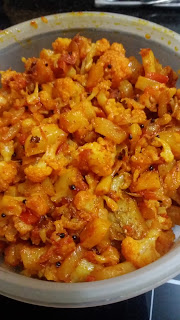
Ingredients:
Cauliflower - 1 medium
Jeera - 1/2 tsp
garlic : 3-4 (optional)
ginger : 1 inch
green chilli - 1
Onion : 1
Tomato: 1
turmeric : 1/4 tsp
sambhar powder: 1 tsp
Red chilli powder : 1 tsp
Dhaniya powder : 1/2 tsp
Salt to taste
Oil : 2-3 tbsp
Method:
1. Heat oil in a pan. Add jeera. Add finely chopped ginger & green chillies. You can add finely chopped onions and fry till onions become translucent.
2. Add chopped cauliflower and finely chopped tomato. Add turmeric and salt and mix well.
3. Add little water and let it cook with closed lid for 8-10 min(or till cauliflower is 80% cooked). Stir occasionally or sprinkle water to avoid over roasting of cauliflower. (if you are adding garlic, then add finely chopped garlic in this step. i.e. after you close with lid, wait for 4 min, then add chopped garlic, and again close the lid and continue with this step.)
4. Add sambhar powder, dhaniya powder and red chilli powder. Mix well. Fry the curry for 10-15 min on low flame. Stir occasionally till the cauliflower is well cooked. (I choose sambhar powder for this step)
Note: You can also add some green peas or chopped potato with cauliflower for enhanced taste.
Vegetable Kurma
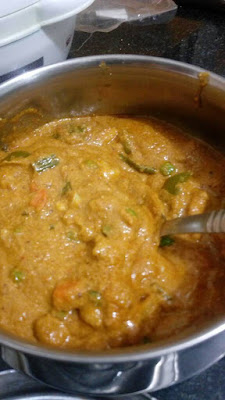
Ingredients:
Mixed vegetables : 200 to 250 g chopped (cauliflower, carrot, beans, potato, green peas)
cinamon stick : 1/2 inch
Clove : 2
Elaichi : 1
Saunf (sombu): 1 tsp
green chillies : 2
ginger : 1/2 inch
onion : 1 large
tomatoes : 2 medium
garlic : 4 - 5
khaskhas: 3/4 tbsp (soaked in water for 1 hour)
garam masala : 1 tsp
dhaniya powder : 1 1/4 tsp
red chilli powder : 1/2 tsp
Turmeric powder : pinch
coriander leaves :for garnish
fresh grated coconut : 1/2 cup
oil : 2-3 tbsp
Ghee : 1tsp
Onion: 1 large or 1 cup chopped
Tomato: 2 medium or 1.5 cup chopped
Parval: 5
Patato: 1 medium
Oil: 3-4 tbsp
Dalchini - 1/2 inch
Clove: 3-4
Elaichi: 1
Turmeric : 1/4 tsp
Red Chilli Powder : 1 tsp
Mustard - 1 tsp (optional)
Ginger : 1/2 inch
garlic: 2-3
Khaskhas : 1 tsp
Sugar: 1 tsp
Curd : 2-3 tsp
Coriander leaves
green chillies : 3-4 medium
Method:
Chop Parval and potato into big pieces.
Heat oil in a kadhai/pan and add parval and potato. Add little salt and little turmeric and fry it for 3-4 min with open lid..and fry it with closed lid for 5 min.
Take out the potato and parval pieces and transfer it into a plate.
Now in the remaining oil in kadhai..add dalchini,cloves and elaichi. Add chopped onions and fry for 5 min.
Heat a small tadka pan and once hot switch it off. Add khaskhas and dry saute for 30 sec.Take a dry mixi jar, grind the khaskhas first, then add chopped tomatoes,ginger,garlic,green chillies and grind it into smooth paste (without adding water) and pour into the kadhai. Add turmeric, red chilli powder. Now saute till oil oozes out into sides of the pan.
Dry roast the mustard in a tadka pan, then grind it and add it, fry for a min. This is optional. If you dont like the mustard smell, u can avoid it.
Add the shallow fried aloo parval pieces into the kadhai, saute for 2 min.
Now add 2 cups of water, salt. Mix well and leave it with closed lid for 5 min or till gravy reaches the desired consistency.
Add little sugar, curd. Mix well. Add chopped coriander. Yummy parval is ready.
Sliced Baingan Fry
This one is so simple...But so tasty too..Try this out..
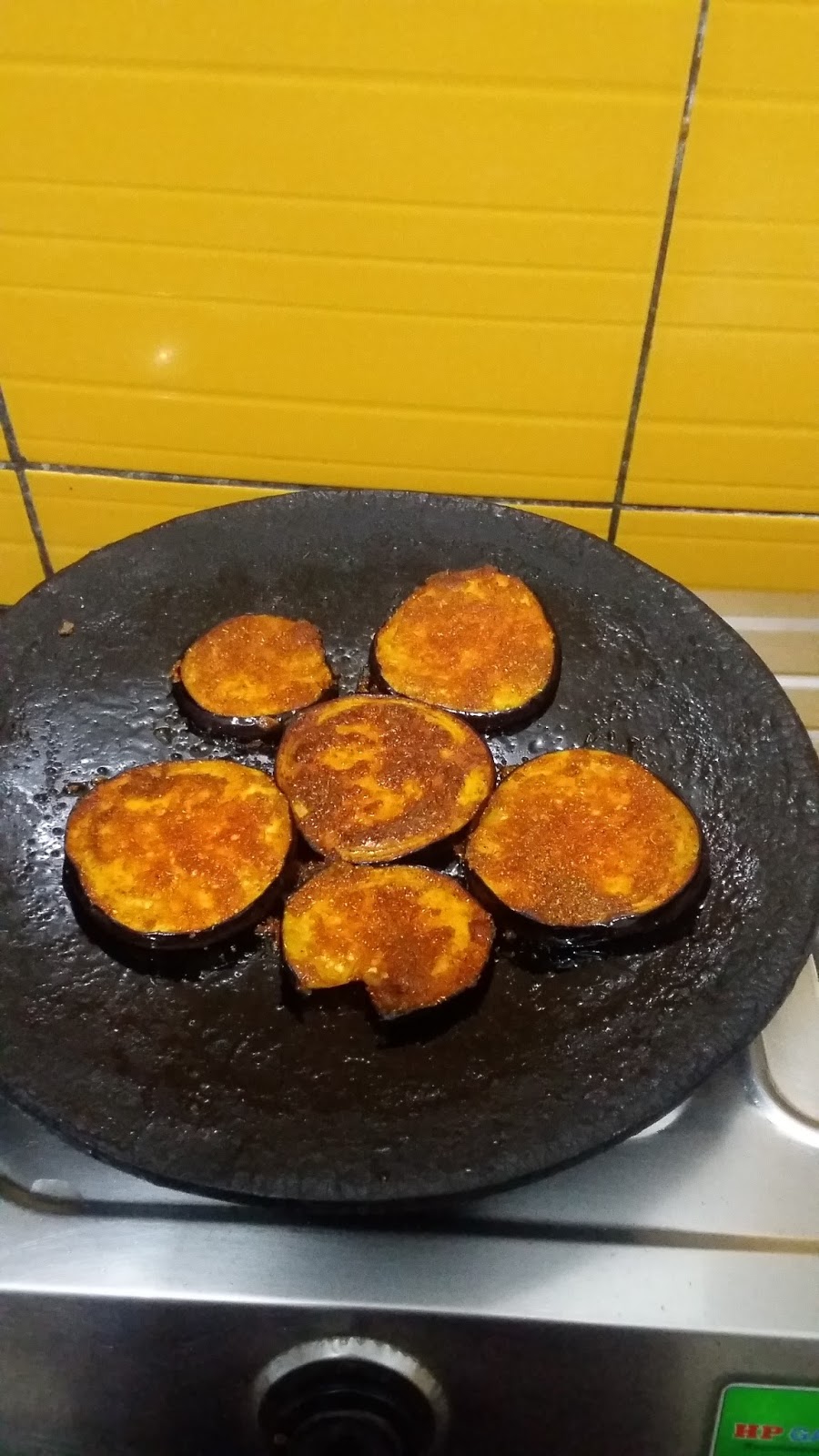
Ingredients:
Baigan/Eggplant : 1medium
Turmeric: 1/4 tsp
Salt
Red chilli powder : 1/2 to 3/4 tsp
asafoetida : 1/4 tsp
Dhaniya powder : 1/4 tsp
tamarind paste : 1/4 tsp
Oil : 3-4 tbsp
Method:
1. In a small bowl, take 2 tsp oil, add turmeric, red chilli powder, asafoetida, dhaniya powder, tamarind paste, salt and mix well.
2. Slice the eggplant in round shapes, each half inch thick. (slightly prick the round pieces with a toothpick. Don't prick too much, else it will break). Apply the mixture on both sides and allow it to marinate for 15-30 min.
3. Take a pan and shallow fry the marinated slices.Make sure both sides are evenly cooked.
Paneer Methi
Ingredients:
Fresh methi(fenugreek) leaves chopped : 1 cup
Onion: 3
Tomato: 2
Paneer: 150g
turmeric : 1/4 tsp
garam masala : 1tsp
dhaniya powder: 1tsp
salt : as per taste
red chilli powder : 1.5 tsp
jeera : 1/2 tsp
Roasted jeera powder : 1/4 tsp
ginger-garlic paste : 1.5 tsp
milk: 1/2 cup
sugar : 1/2 tsp
Method:
1. Saute the chopped methi in 1 tbsp ghee till they leave water and the water evaporates.
2. Heat oil in a pan. add jeera.
2. Add ginger garlic paste and finely chopped onions. Saute for a min.
3. Add turmeric, dhaniya powder and saute for 2-3 min.
4. Add tomato puree and red chilli powder. Saute till oil oozes out into the sides of the pan.
5. Add chopped methi/fenugreek leaves, diced paneer, salt, garam masala, roasted jeera powder and saute for 1-2 min with closed lid.
6. Add milk and sugar and let it simmer for 1 min.
(Note : If fresh cream is available, then u can add 1/2 cup cream instead of milk. But with milk also this dish tastes good.)
Cauliflower Curry
Yummy...This one is all time favourite...Goes well with rice/rotis..
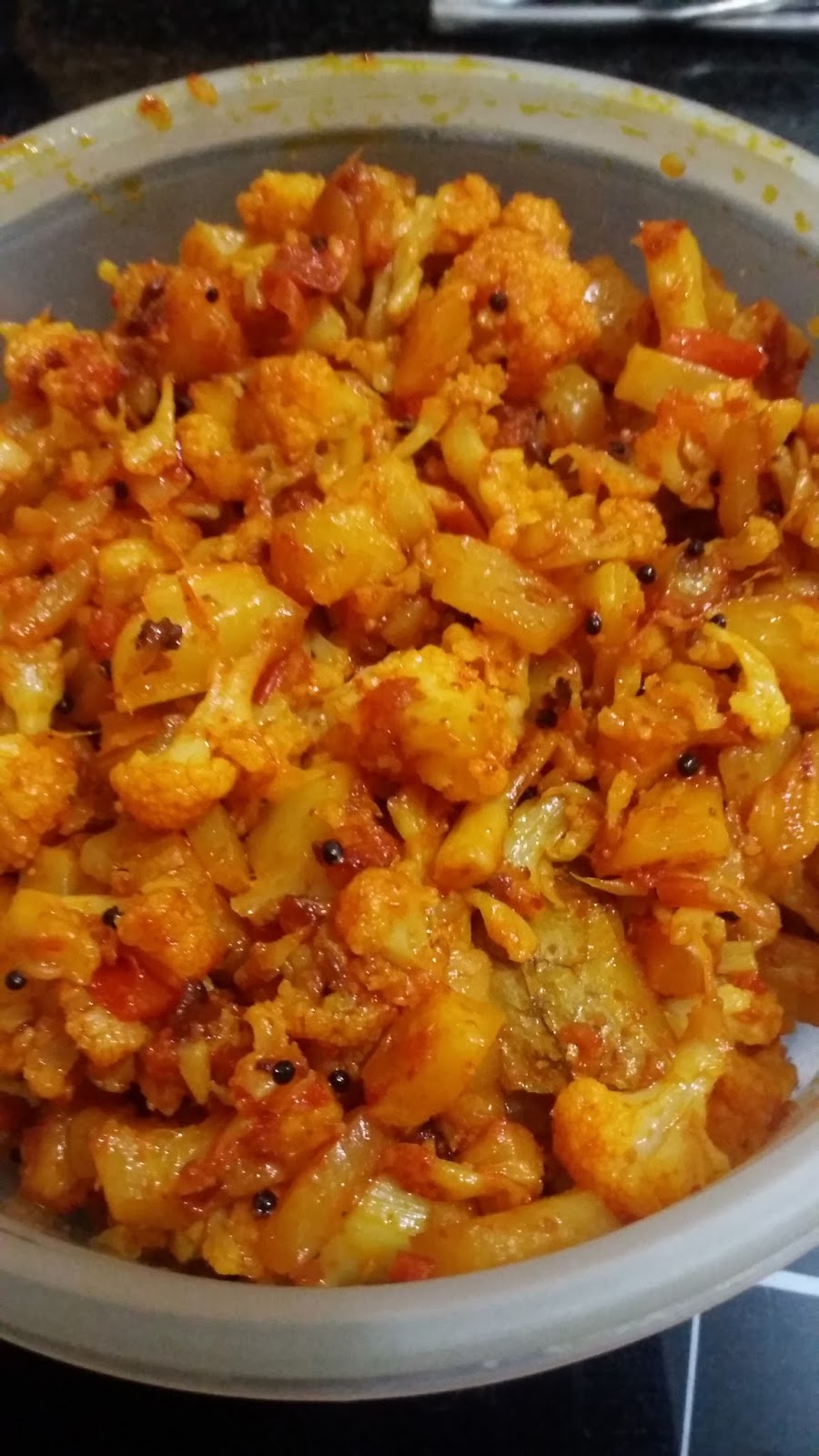
Ingredients:
Cauliflower - 1 medium
Jeera - 1/2 tsp
garlic : 3-4 (optional)
ginger : 1 inch
green chilli - 1
Onion : 1
Tomato: 1
turmeric : 1/4 tsp
sambhar powder: 1 tsp
Red chilli powder : 1 tsp
Dhaniya powder : 1/2 tsp
Salt to taste
Oil : 2-3 tbsp
Method:
1. Heat oil in a pan. Add jeera. Add finely chopped ginger & green chillies. You can add finely chopped onions and fry till onions become translucent.
2. Add chopped cauliflower and finely chopped tomato. Add turmeric and salt and mix well.
3. Add little water and let it cook with closed lid for 8-10 min(or till cauliflower is 80% cooked). Stir occasionally or sprinkle water to avoid over roasting of cauliflower. (if you are adding garlic, then add finely chopped garlic in this step. i.e. after you close with lid, wait for 4 min, then add chopped garlic, and again close the lid and continue with this step.)
4. Add sambhar powder, dhaniya powder and red chilli powder. Mix well. Fry the curry for 10-15 min on low flame. Stir occasionally till the cauliflower is well cooked. (I choose sambhar powder for this step)
Note: You can also add some green peas or chopped potato with cauliflower for enhanced taste.
Vegetable Kurma
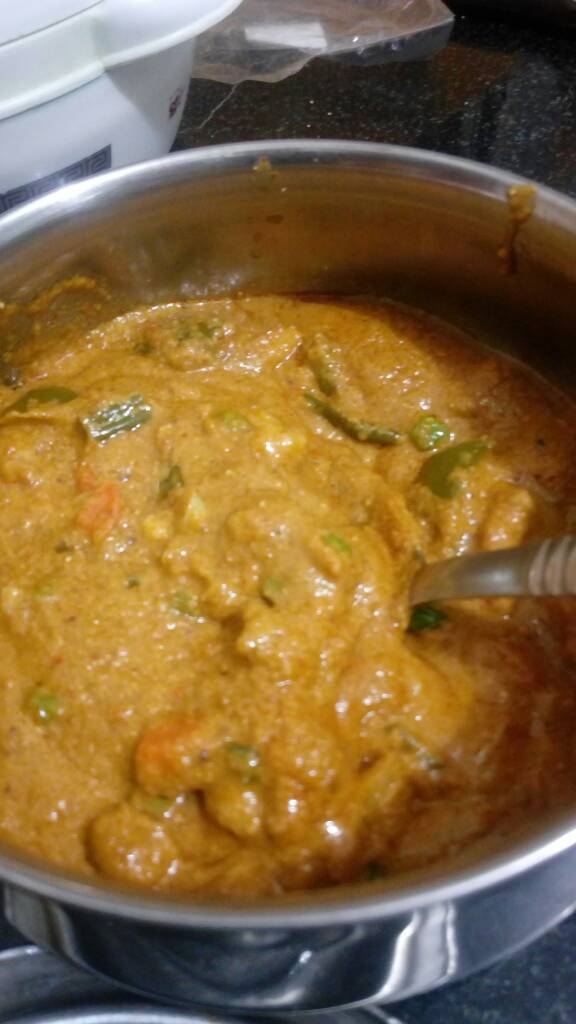
Ingredients:
Mixed vegetables : 200 to 250 g chopped (cauliflower, carrot, beans, potato, green peas)
cinamon stick : 1/2 inch
Clove : 2
Elaichi : 1
Saunf (sombu): 1 tsp
green chillies : 2
ginger : 1/2 inch
onion : 1 large
tomatoes : 2 medium
garlic : 4 - 5
khaskhas: 3/4 tbsp (soaked in water for 1 hour)
garam masala : 1 tsp
dhaniya powder : 1 1/4 tsp
red chilli powder : 1/2 tsp
Turmeric powder : pinch
coriander leaves :for garnish
fresh grated coconut : 1/2 cup
oil : 2-3 tbsp
Ghee : 1tsp
Method
1. Heat oil and ghee in a kadhai, add lavang & cinnamon, fry for few seconds and keep it aside.
2. Add garlic in remaining oil and fry for 30 to 45 seconds and keep it aside too.
3. Turn off the gas. Take a mixi jar, add fried lavang, cinnamon, garlic, khaskhas, elaichi and coconut and grind into smooth paste.
4. Add pinch turmeric powder, garam masala, dhaniya powder, red chilli powder to the ground paste and mix well and keep it aside.
5. In remaining oil and ghee, add saunf, finely chopped onions and saute for 4-5 min. Then add finely chopped tomatoes and again saute for 5-7 min.
6. Add the chopped vegetables, pinch turmeric and salt and again saute for 5-7 min. Then add 1 cup water and close the kadhai with a lid and allow it to boil on low to medium flame till vegetables get cooked. (keep checking often by opening the lid and add little water if required)
NOTE: to save some time, you can also add boiled vegetables in this step.
7. Add the ground coconut-masala paste and mix well. Adjust consistency by adding water if required. Let it boil for 4-5 min with closed flame and switch off the flame. (Note: if you feel the raw flavour of masala is still there, you can boil it for 2-3 min more with open lid.)
8. Garnish with chopped coriander leaves.
Stuffed Capsicum
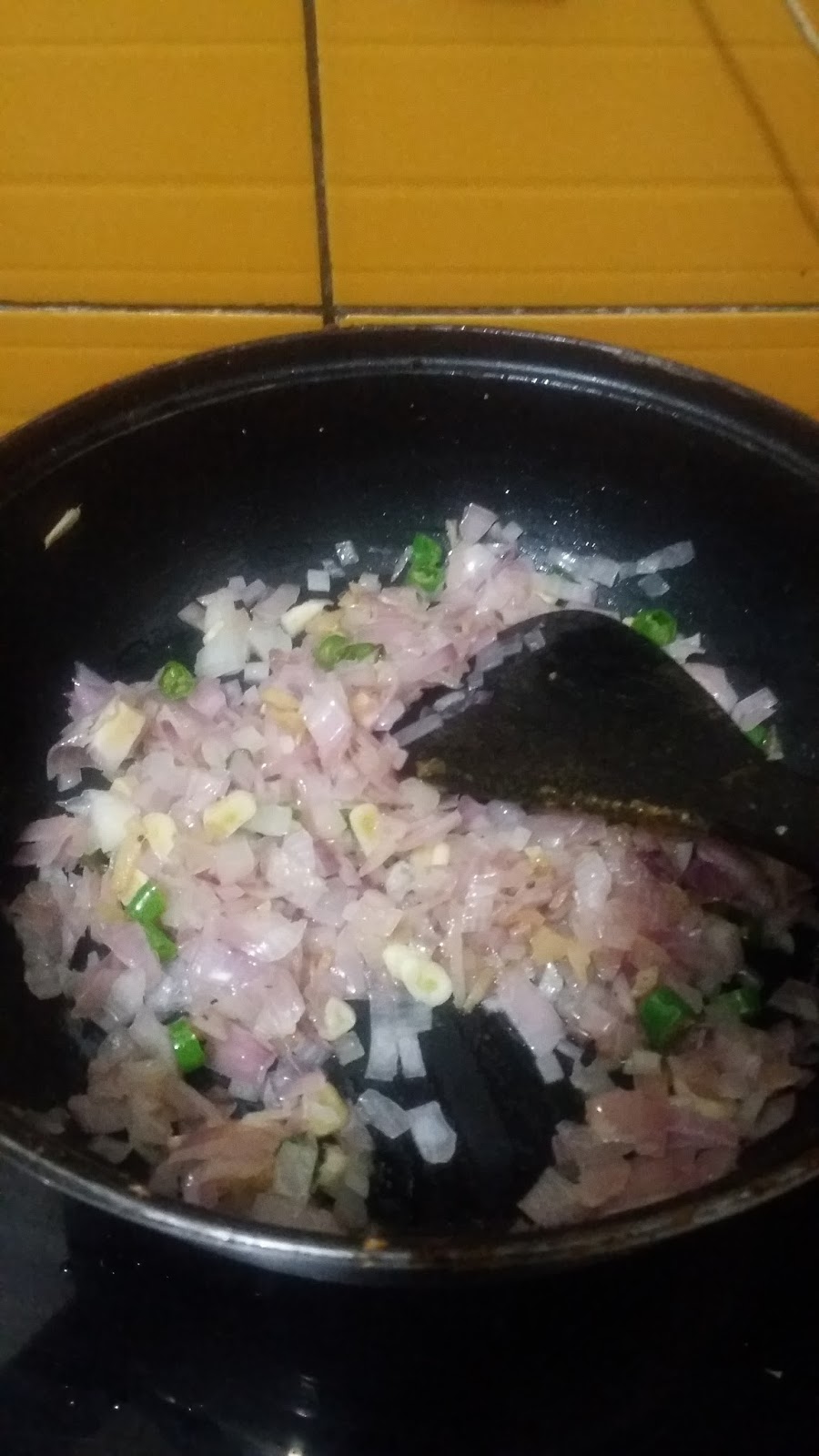
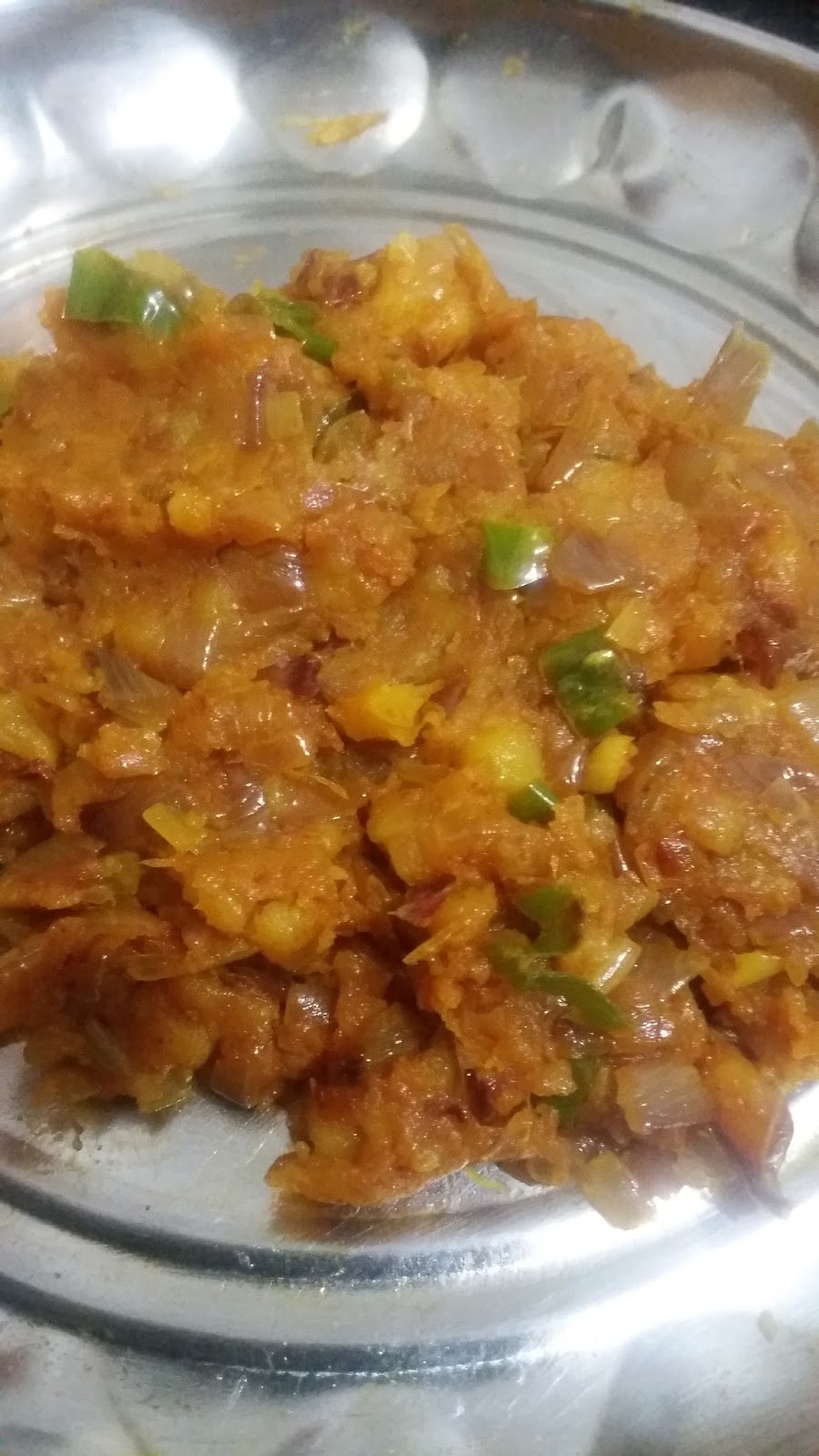
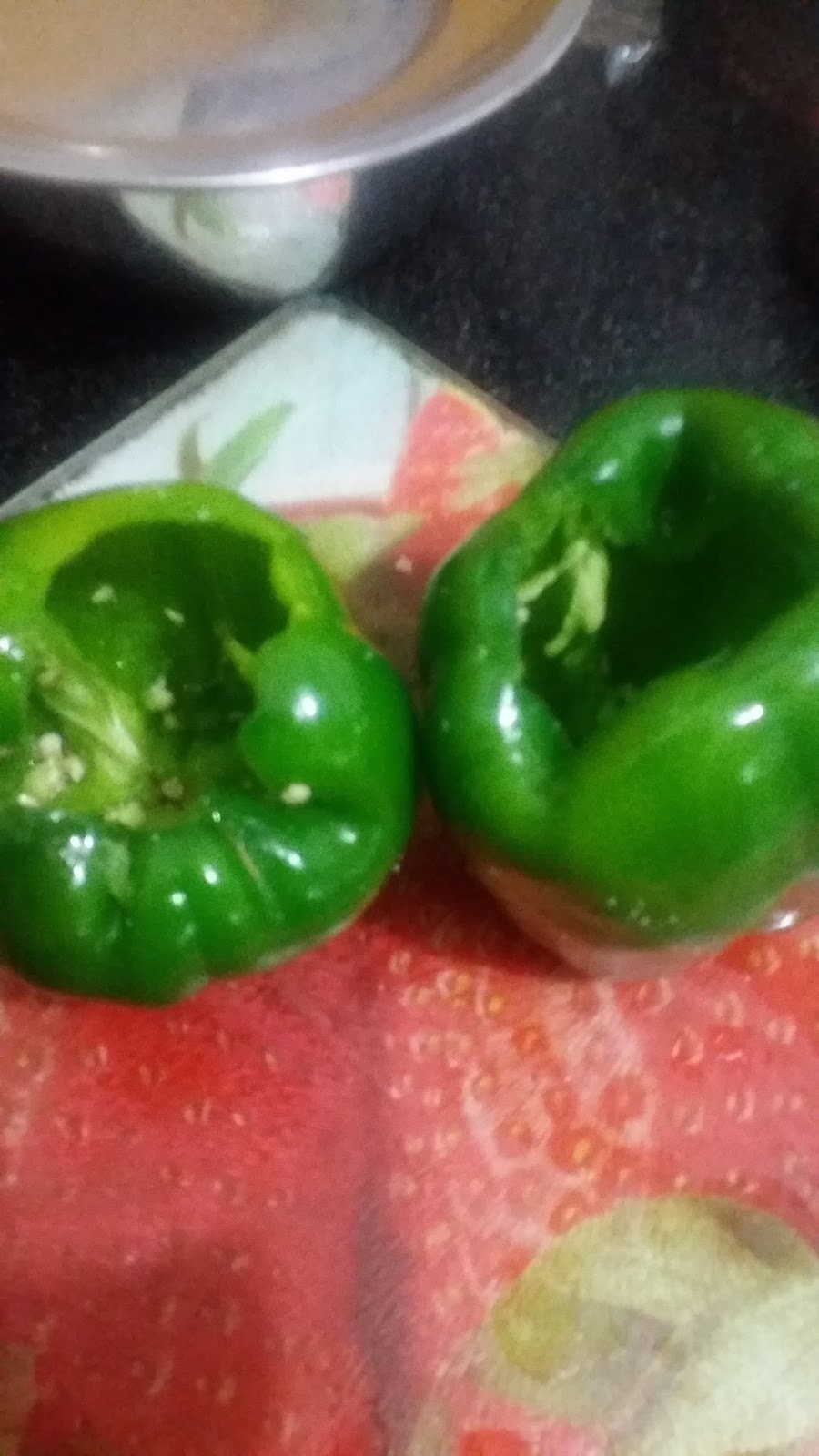
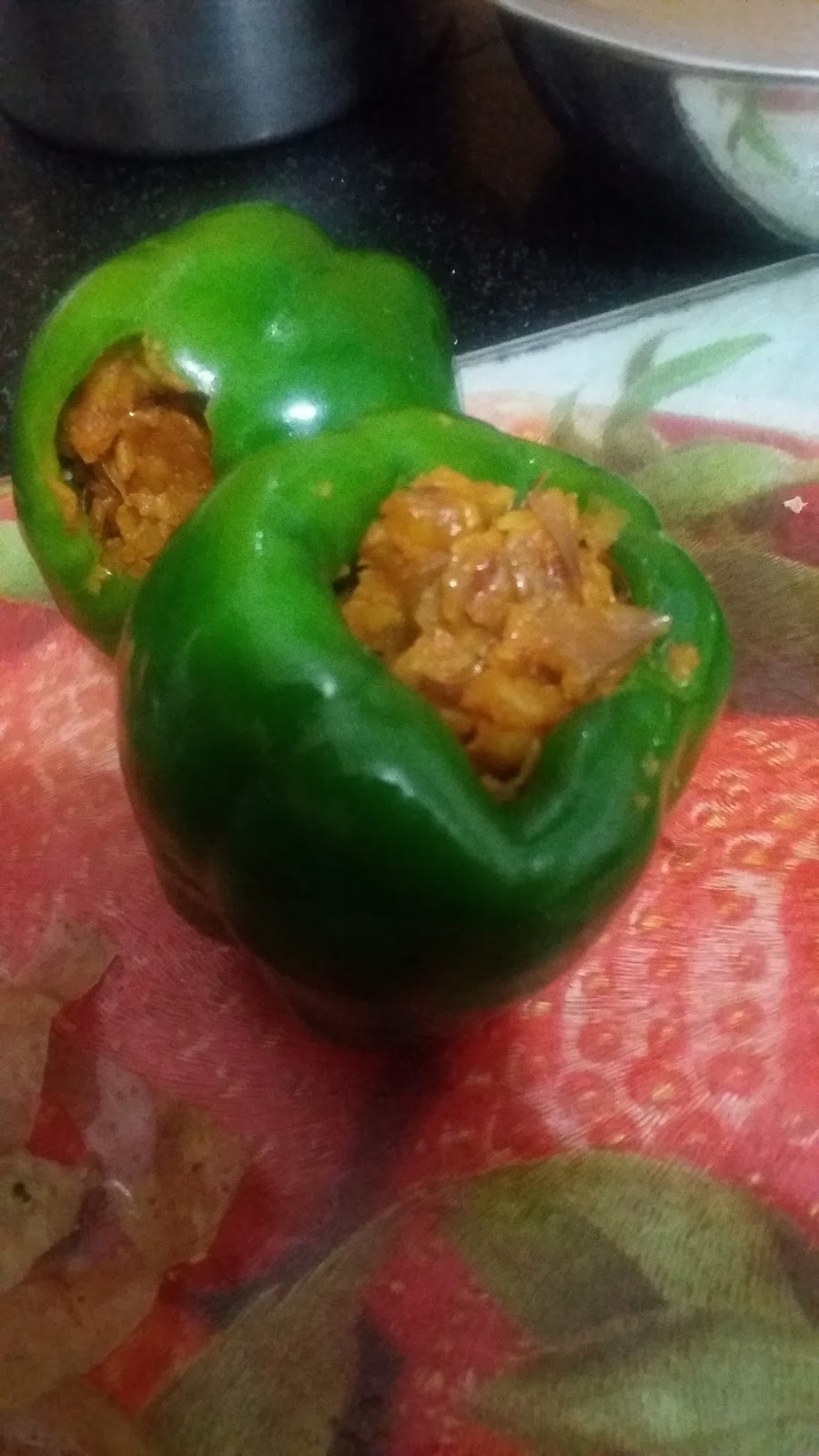
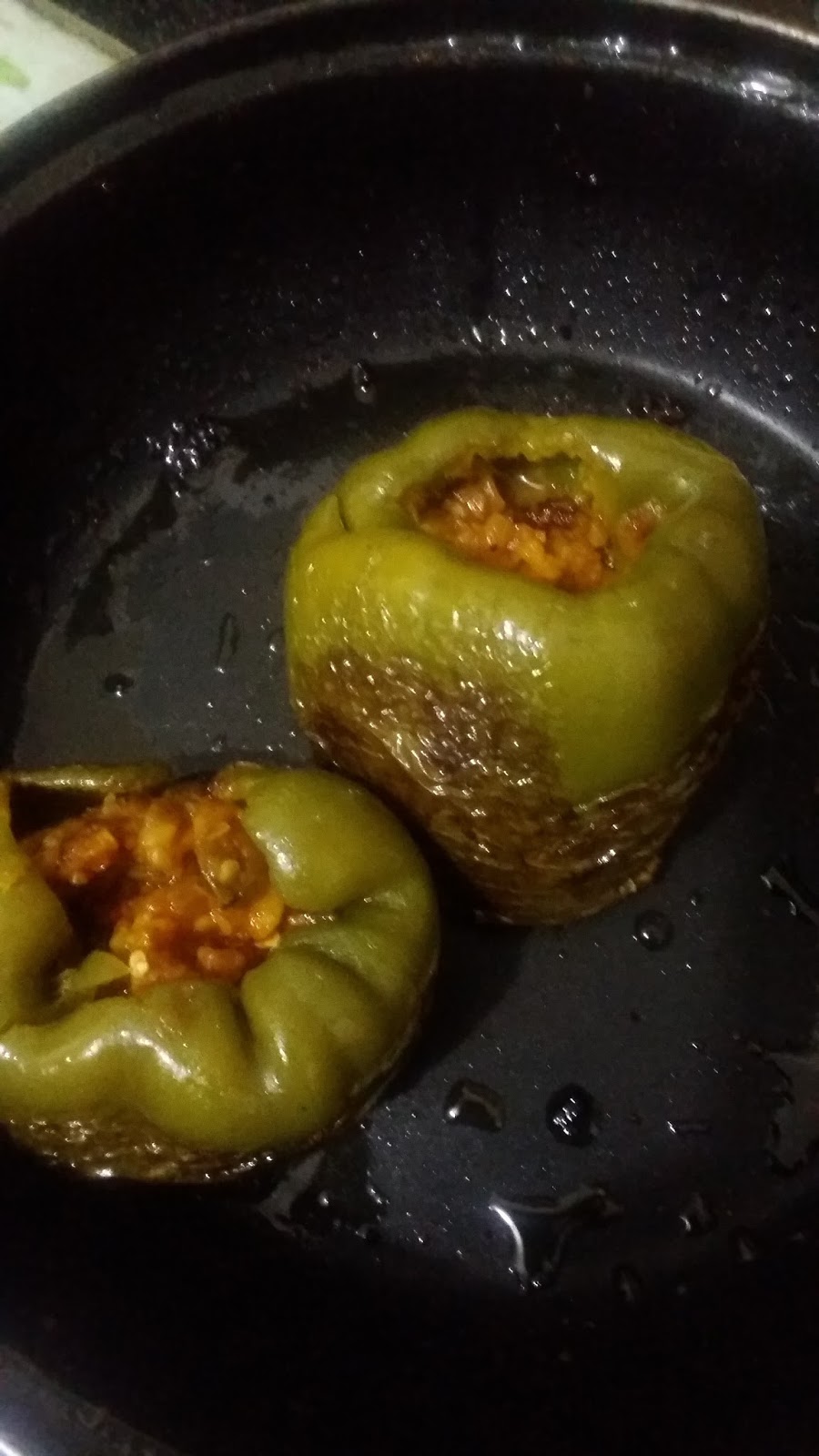
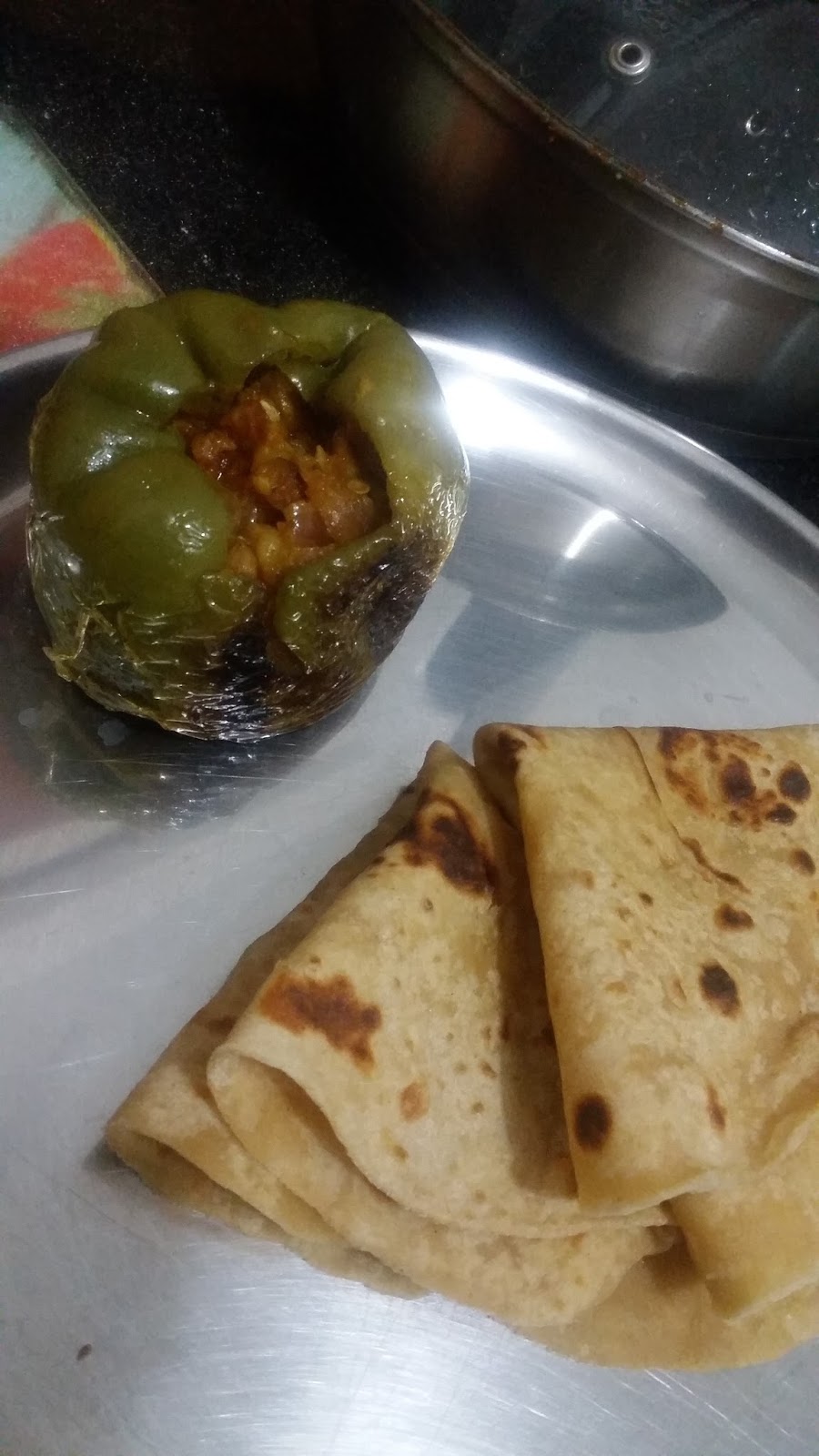
Ingredients:
Capsicum : 2-3 small
Boiled potatoes : 2
Onion : 1 big
green chillies : 2
Ginger garlic paste : 1 tsp
Turmeric : 1/4 tsp
red chilli powder : 1 tsp
Jeera powder : 1/2 tsp
garam masala : 1/2 tsp
Salt to taste
Oil : 3-4 tbsp
Method:
1. 2-3 tsp oil in pan, add ginger garlic paste, finely chopped onions, chopped green chillies.
2. When onions turn translucent, add the boiled and mashed potatoes, turmeric, red chilli powder, jeera powder, garam masala, salt and mix well and saute for 4-5 min.
3. Cut the top stem-like portion of capsicum, remove the seeds, apply little oil and salt inside and then stuff it with the potato mixture.
4. Shallow fry the stuffed capsicums in a pan with 2-3 tbsp oil till the capsicum skin wrinkles and changes the colour. (adjust oil quantity if required)
Brinjal Tuwar Sabji
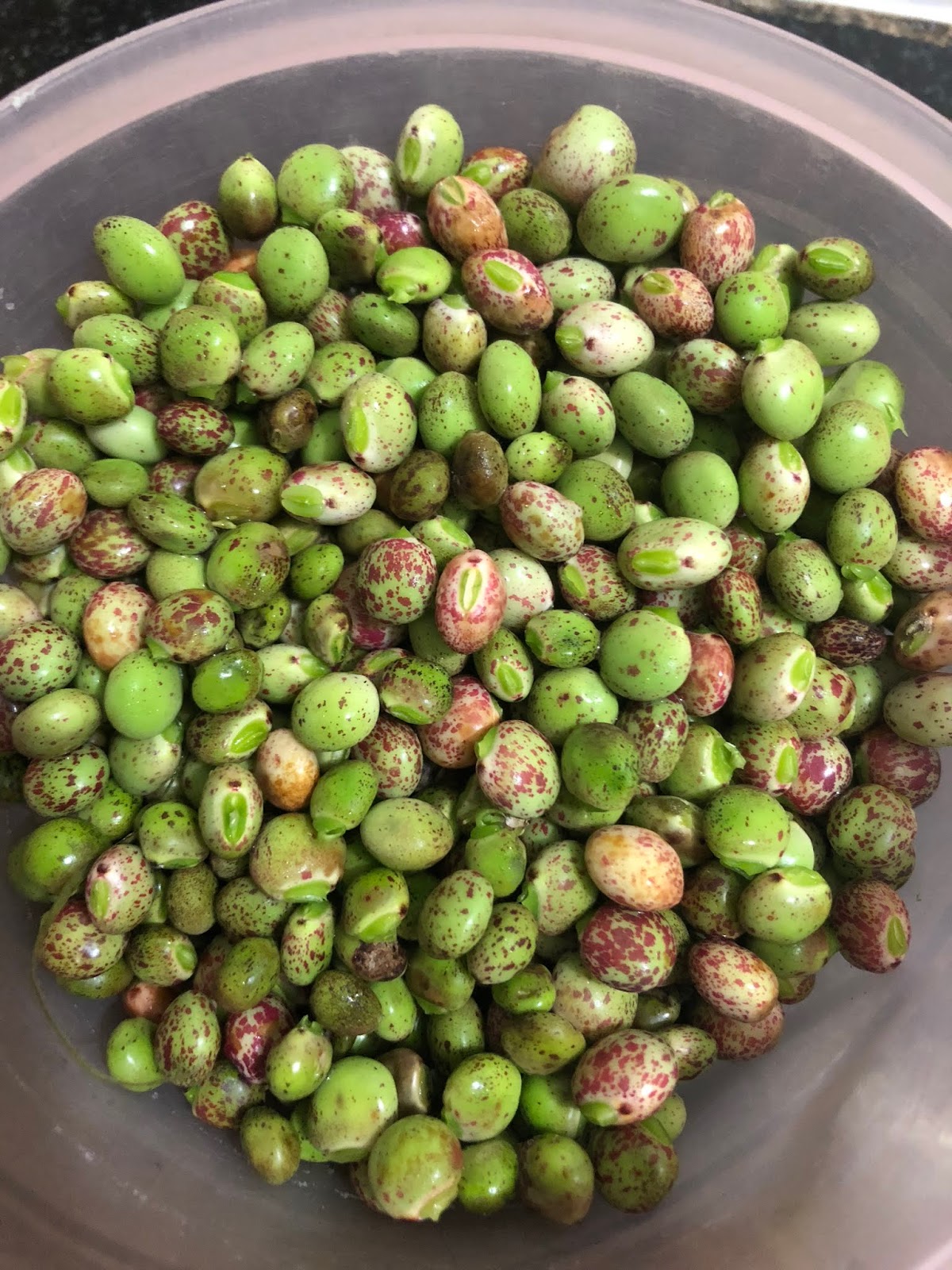
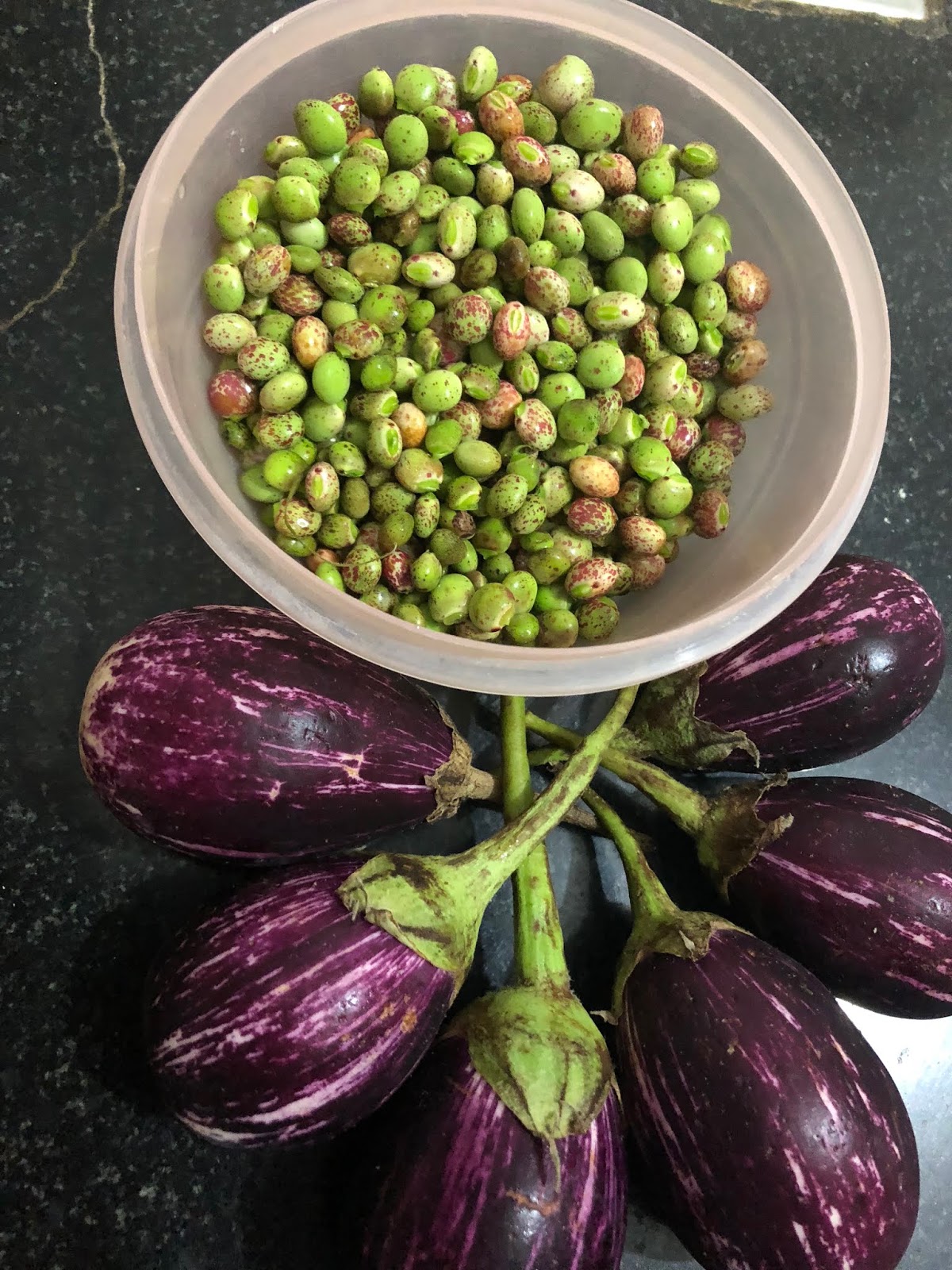
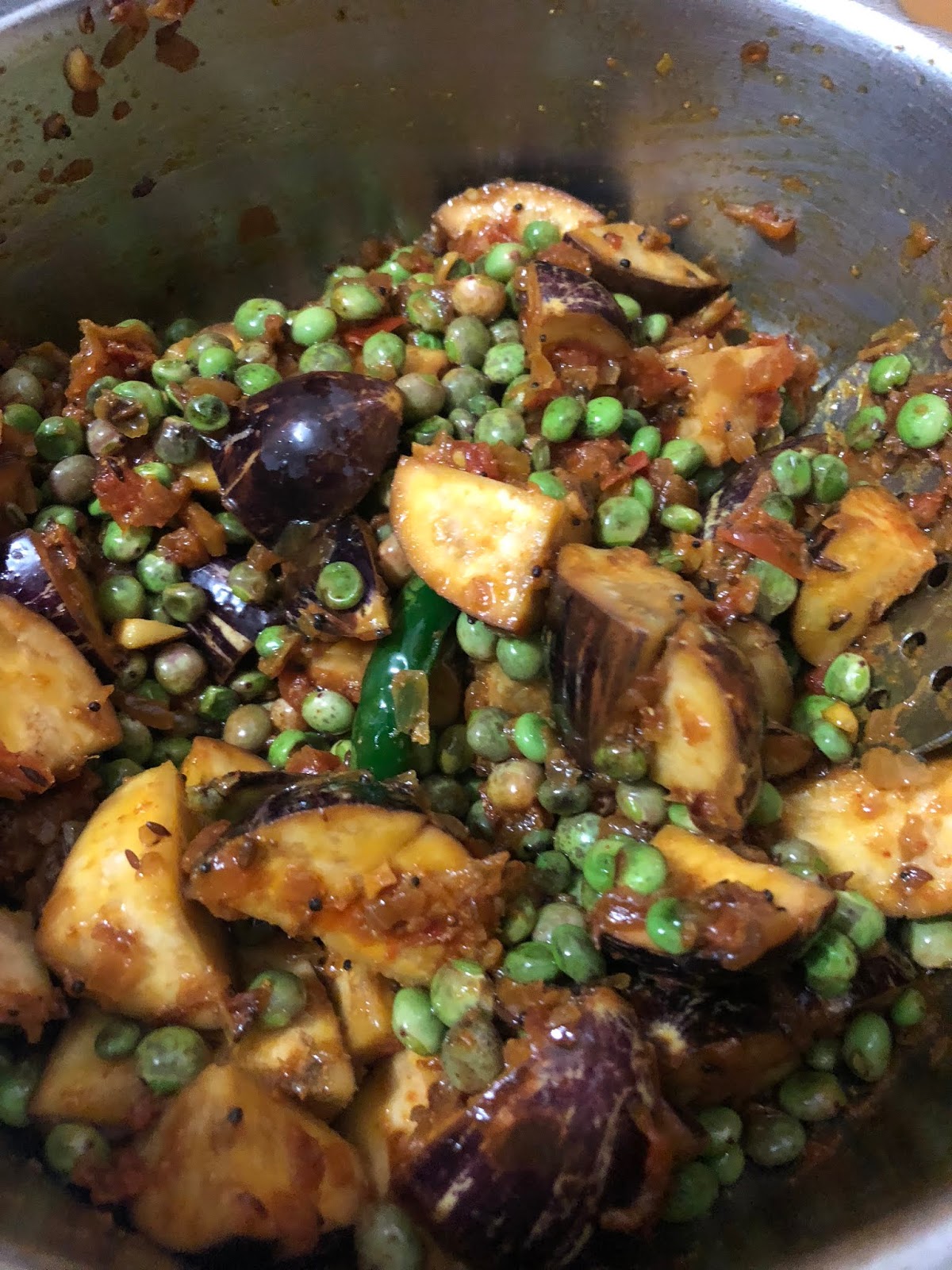
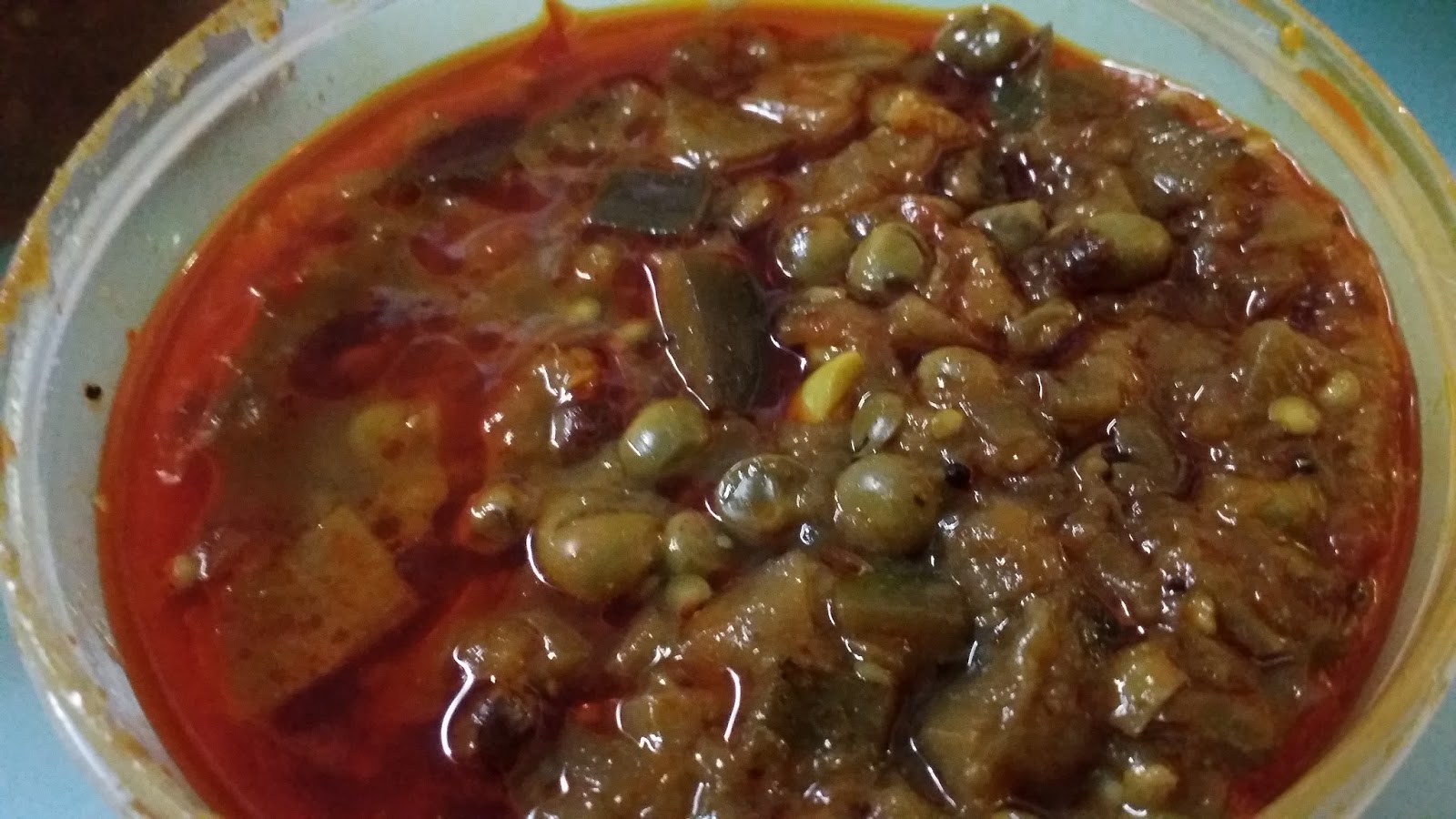
Ingredients:
Eggplant : 1 medium (or) brinjals : 5 to 6
Fresh green tuwar : 1 cup
Onion : 1
Tomato : 2
Ginger : 1 inch
Garlic : 4 to 5
Green chillies : 2
Mustard : 1/2 tsp
Jeera : 1/2 tsp
Turmeric : 1/4 tsp
Dhaniya powder : 1 tsp
Red chilli powder : 1 tsp
Garam masala : 1 tsp
Jeera powder : 1/2 tsp
Salt to taste
Oil : 4-5 tbsp
Method:
1. Take the eggplant or the little brinjals and cube them.
2. Take oil in a cooker pan . Add mustard and jeera. Add chopped ginger, garlic & greenchillies. Saute for few seconds.
3. Add chopped onions. Saute well till light brown. Add chopped tomatoes. Add turmeric, dhaniya powder, red chilli powder and saute till oil separates and oozes out into the sides of the pan.
4. Now add chopped brinjal and fresh green tuwar and saute well till they are almost half cooked.
5. Add 1.5 to 2 cup water (till the mixture just starts to immerse in water). Add salt, jeera powder and garam masala.
6. Close the cooker pan and cook for 3-4 whistles. Serve hot with roti/phulka.
Katol (green Moong dal)
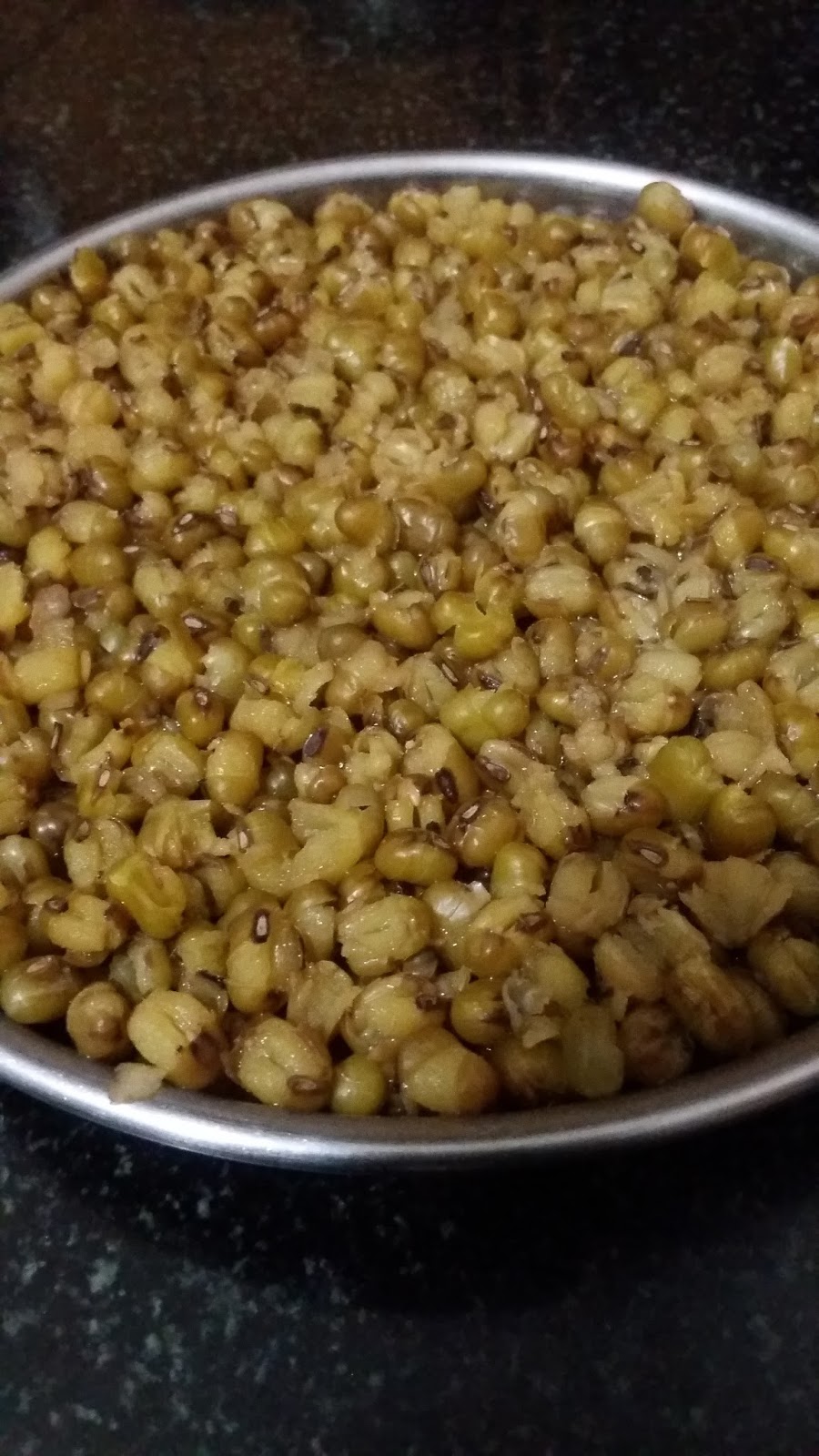
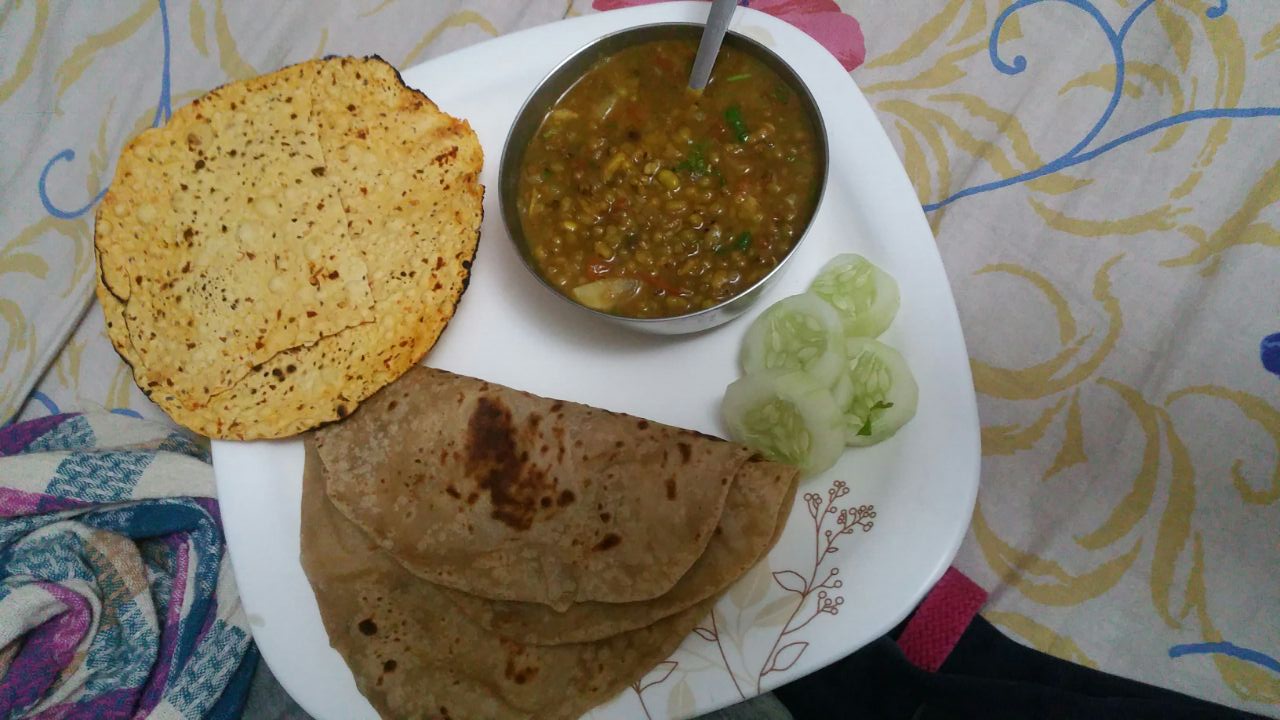
Ingredients :
Green moog dal : 1/2 cup
Boiled Potato : 1
Onion : 1 medium
Tomato : 1
Ginger : 1/2 inch
Garlic : 2
Green chillies : 2
Turmeric : 1/4 tsp
Red chilli powder : 1/2 tsp
Dhaniya powder : 1/2 tsp
Jeera powder : 1 tsp
Garam masala : 1 tsp
sugar : 1/2 tsp
Oil : 2-3 tbsp
Method:
1. Soak 1/2 cup green moog dal overnight. And pressure cook it for 3 whistles.(if you dont get time to soak or if you have forgetten to soak, saute the dal on dry pan till the dal gets heated up well. Then pressure cook it for 4 whistles.)
2. Heat oil in a pressure pan, add chopped ginger, chopped garlic, chopped green chillies. Saute for few seconds and then add chopped onion. Mix well and saute.
3. When the onion turns translucent, add chopped tomato, add turmeric, dhaniya powder & red chilli powder and saute for 5 min.
4. Add the cooked green moog dal and the boiled & mashed potato. Mix well.
5. Add jeera powder, garam masala and sugar. Add 1 cup water and pressure cook for 1 or 2 whistles. Serve hot with roti/phulka.
(Note : By chance,if u feel the consistency has become loose or watery and should be thicker, you can add 0.5 to 1 tsp cornflour , bring to boil and switch off the flame.)
Aloo Gobi Masala
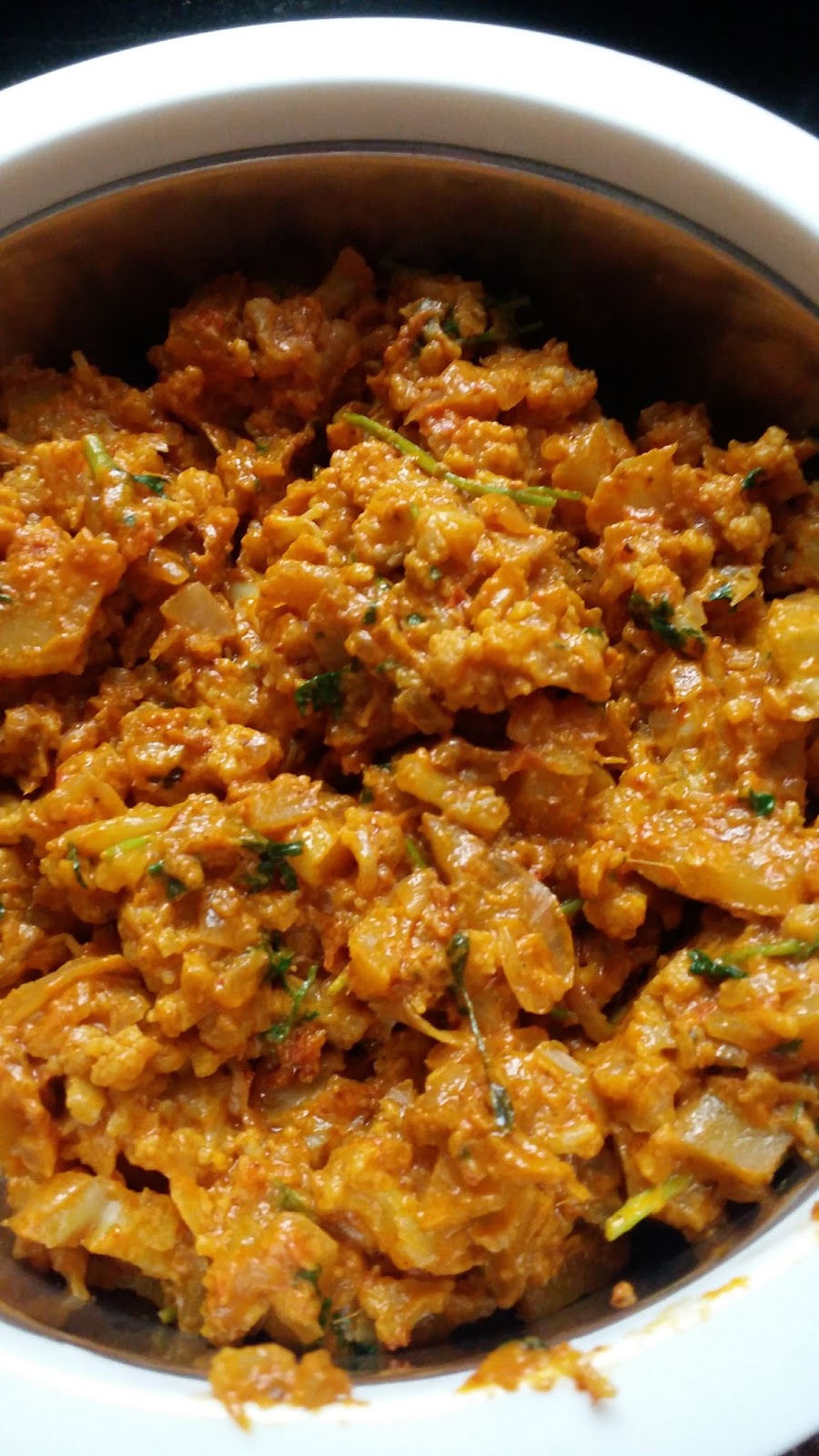
Ingredients :
Cauliflower: 1 small
Potato : 1 big
Onion : 2 medium
Tomato : 2 medium
Ginger : 1/2 inch
Green chillies : 2
Jeera : 1/2 tsp
Turmeric : 1/4 tsp
Red chilli powder : 1 tsp
Dhaniya powder : 1 tsp
Garam masala : 1 tsp
Kasoori methi : 1/2 tsp
Fresh Coriander leaves
Oil : 3-4 tbsp
Fresh cream : 4 tbsp
Method:
1. Boil the cubed potatoes and cauliflower florets in water till they are half cooked.
2. Heat oil in a pan, add jeera, slit green chillies, chopped ginger. Saute for few seconds and add chopped onions. Saute till onions start turning brown.
3. Now add chopped tomato, turmeric,red chilli powder and dhaniya powder and saute till the mixture starts leaving oil into sides of the pan.
4. Add the cauliflower florets & potato pieces into the pan, add salt and cook with closed lid for 5-8 min and stir often in between to avoid burning.
5. Add garam masala and 1 tbsp chopped coriander leaves and saute with open lid for 4-5 min.
6. Add kasoori methi and mix well. Saute for a minute.
7. Add fresh cream. Mix well and saute for a minute. Serve hot with roti/phulka.
Methi Corn Gravy/ Methi Malai Mutter
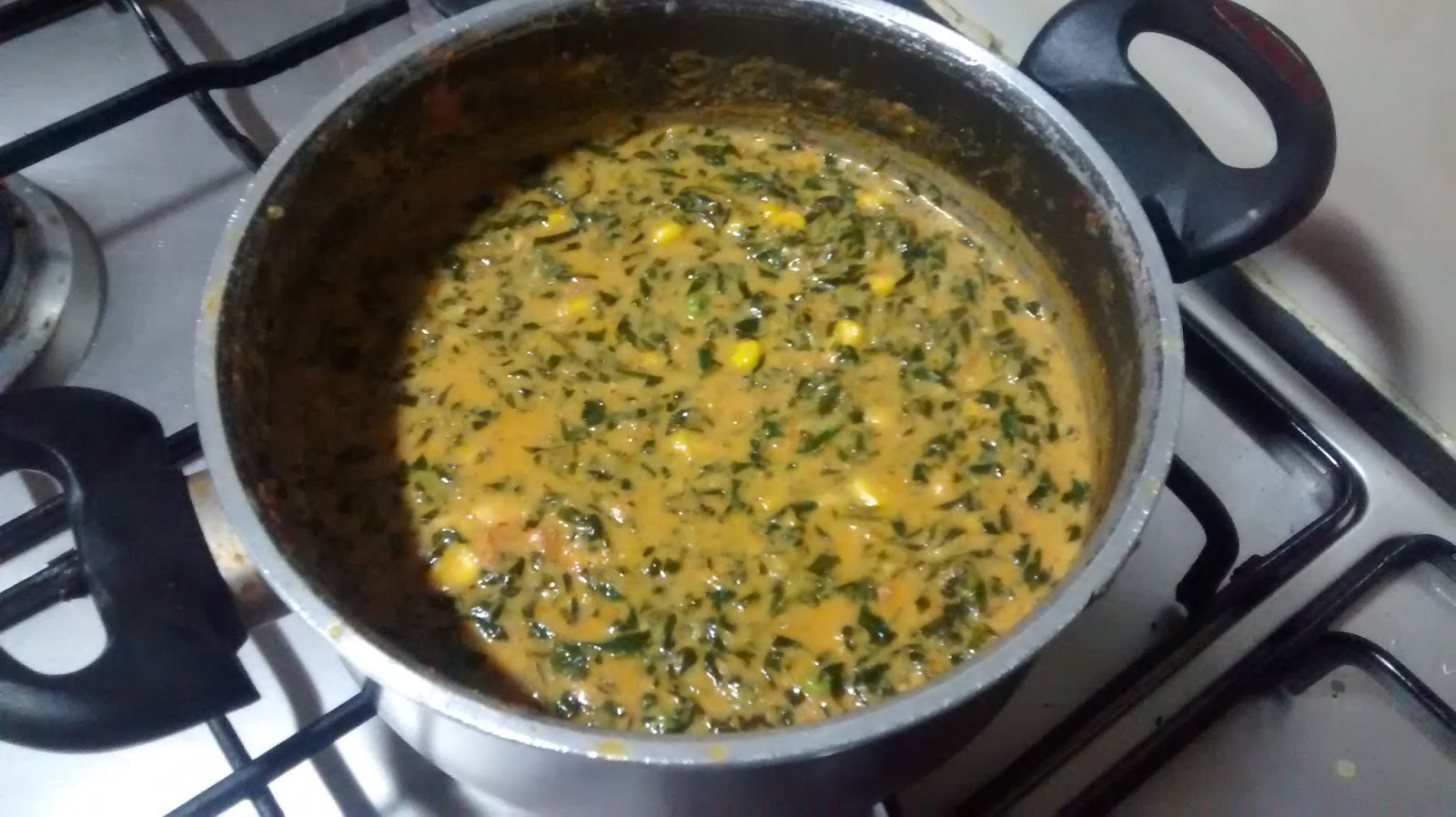
Ingredients
Methi : 1 medium bundle
Onion : 2 medium
Tomato : 2 small (make puree)
Ginger : 1 inch
Garlic : 5 to 6 cloves
Kaju : 5 to 6
Oil/Cooking butter : 3-4 tbsp
Jeera powder : 1 tspMethi : 1 medium bundle
Onion : 2 medium
Tomato : 2 small (make puree)
Ginger : 1 inch
Garlic : 5 to 6 cloves
Kaju : 5 to 6
Oil/Cooking butter : 3-4 tbsp
Dhaniya powder : 1.5 to 2 tsp
Red chilli powder : 1 tsp
Boiled corn or boiled mutter : 3/4th cup
Garam masala : 1.5 tsp
Sugar : 2 tsp
Fresh cream : 4 tbsp
Salt to taste
Method :
Clean and pluck the methi leaves. Chop them. Add little salt to it, mix well and keep it aside
Take onion, ginger, garlic, kaju and grind them into smooth paste
Heat oil/cooking butter in a pan and saute the ground paste for 5 min. Then add jeera powder, dhaniya powder, red chilli powder and mix well. Then add tomato puree, mix and saute well till oil oozes out of the masala into the sides of the pan.
Squeeze water from methi and add methi into the pan. Saute well till methi gets cooked.
Add boiled corn/mutter, garam masala, sugar. Mix well and saute for 1-2 min.
Add fresh cream and saute for a minute. Switch off the flame. Serve with roti/phulka.
Karela Barela
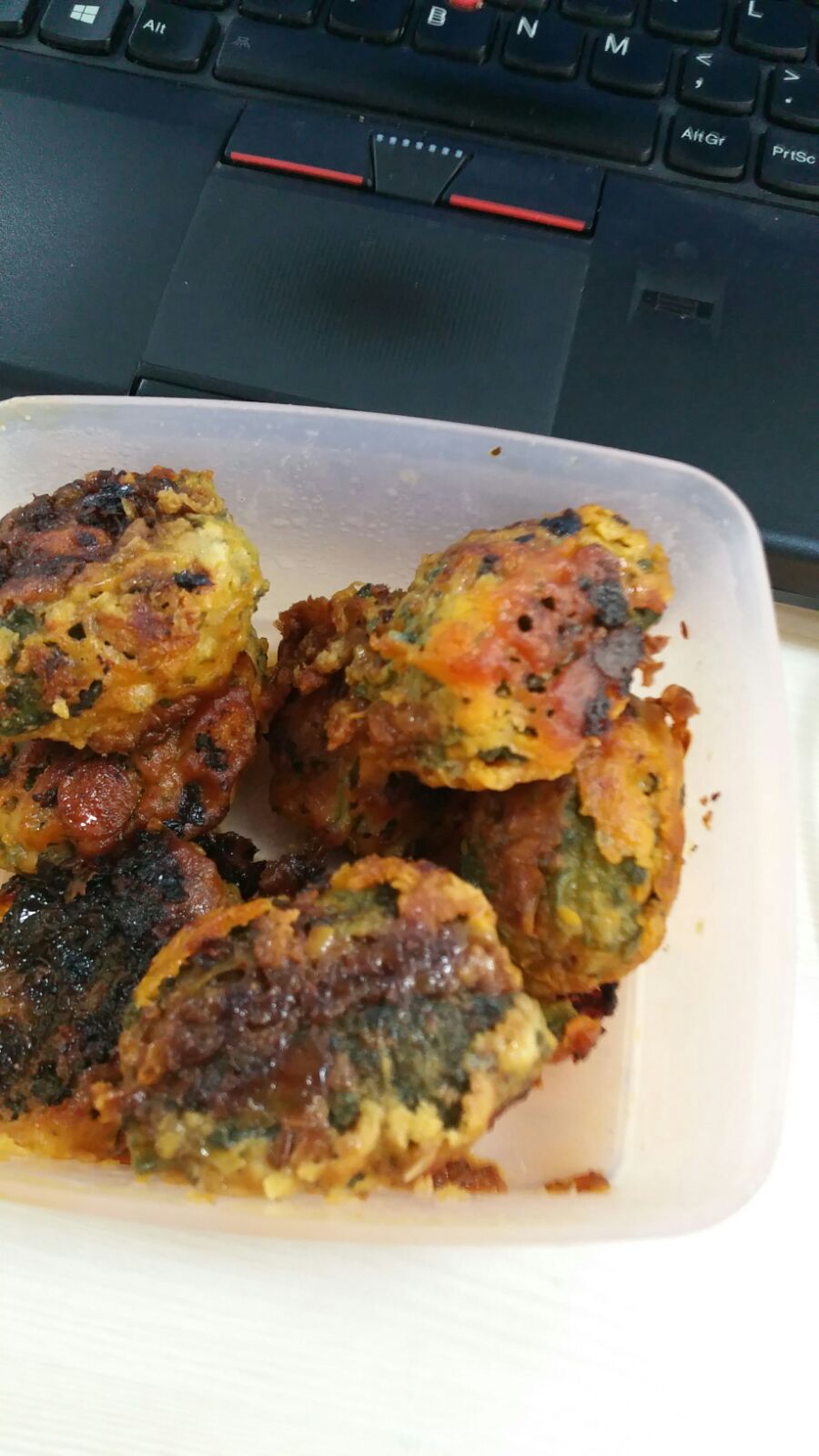
Take baby bitter guards (200g), slit them and take out the inner stuff. Take some water in a vessel add little turmeric and salt and boil these guards till they are half cooked. Drain the water and allow them to cool.
Chop the spring onions(1 bundle). Take 3-4 tsp oil in a pan, add 1 tsp jeera, chopped green chillies 2-3, 1 tsp ginger garlic paste and add the spring onions. Add 1 tsp salt, turmeric, 2-3 tsp sugar (or more if you cannot cherish the bitterness of the guards), 1 tsp garam masala, 1 tsp red chilli powder and saute it till the onions turn soft and they leave all the water and the water evaporates. Add 2 -3 tsp of gram flour and saute for 1-2 min. Squeeze half lemon and switch off the flame.
Stuff the bitter guards with the spring onion mixture. Take 4-5 tbsp oil in a pan, 1/4 tsp jeera (optional) and the stuffed bitter guards. Sprinkle little turmeric , little salt, 1/4 tsp red chilli powder and some sugar and fry them by flipping the guards occasionally till they get cooked on all sides.
Aloo Methi
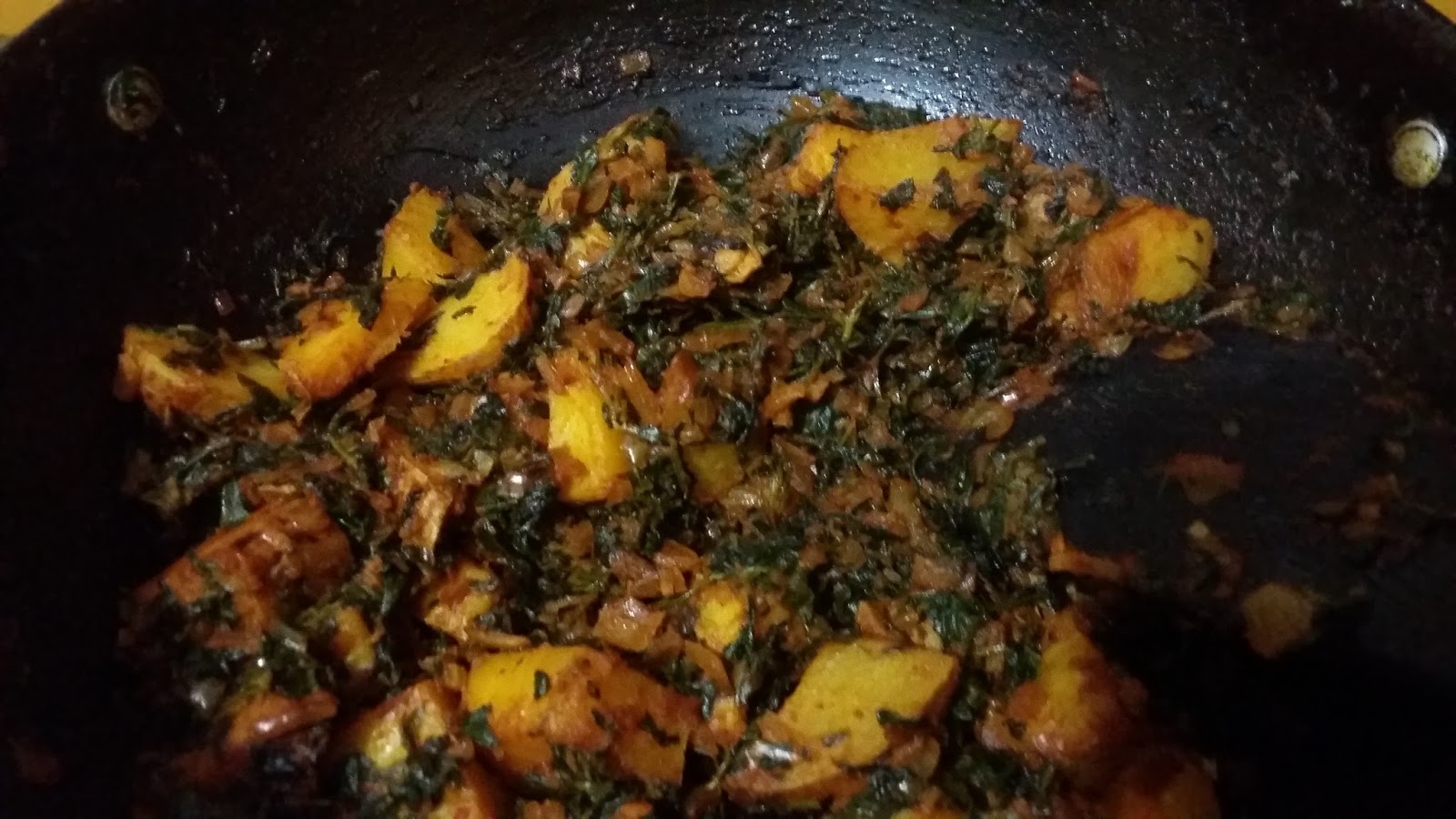
Ingredients:
Methi: 1 medium bunch
Aloo : 2 medium
Ginger : 1/2inch
green chillies : 2
Jeera: 1/2 tsp
Turmeric powder : 1/4 tsp
Red chilli powder : 1 tsp
jeera powder : 1/2 tsp
Salt to taste
Oil : 4 tbsp
ghee : 1 tsp
sugar : 2 tsp
Method:
1. Dice the potatoes and shallow fry them with 4 tbsp oil. ( can adjust oil if required)
2. In the remaining oil jeera, chopped ginger (1/2 inch), green chillies.saute for a min.
3. add chpped methi and turmeric and red chilli powder, salt and suga, jeera powder.
4. cook with closed lid for 3-4 min. then cook with open lid for 2-3 min.5. Add the potatoes, mix well and cook with closed lid for 2 min. then witth open lid saute for 2-3 min.
6. then add ghee, saute for a min an switch off flame.
Snake guard Sabji
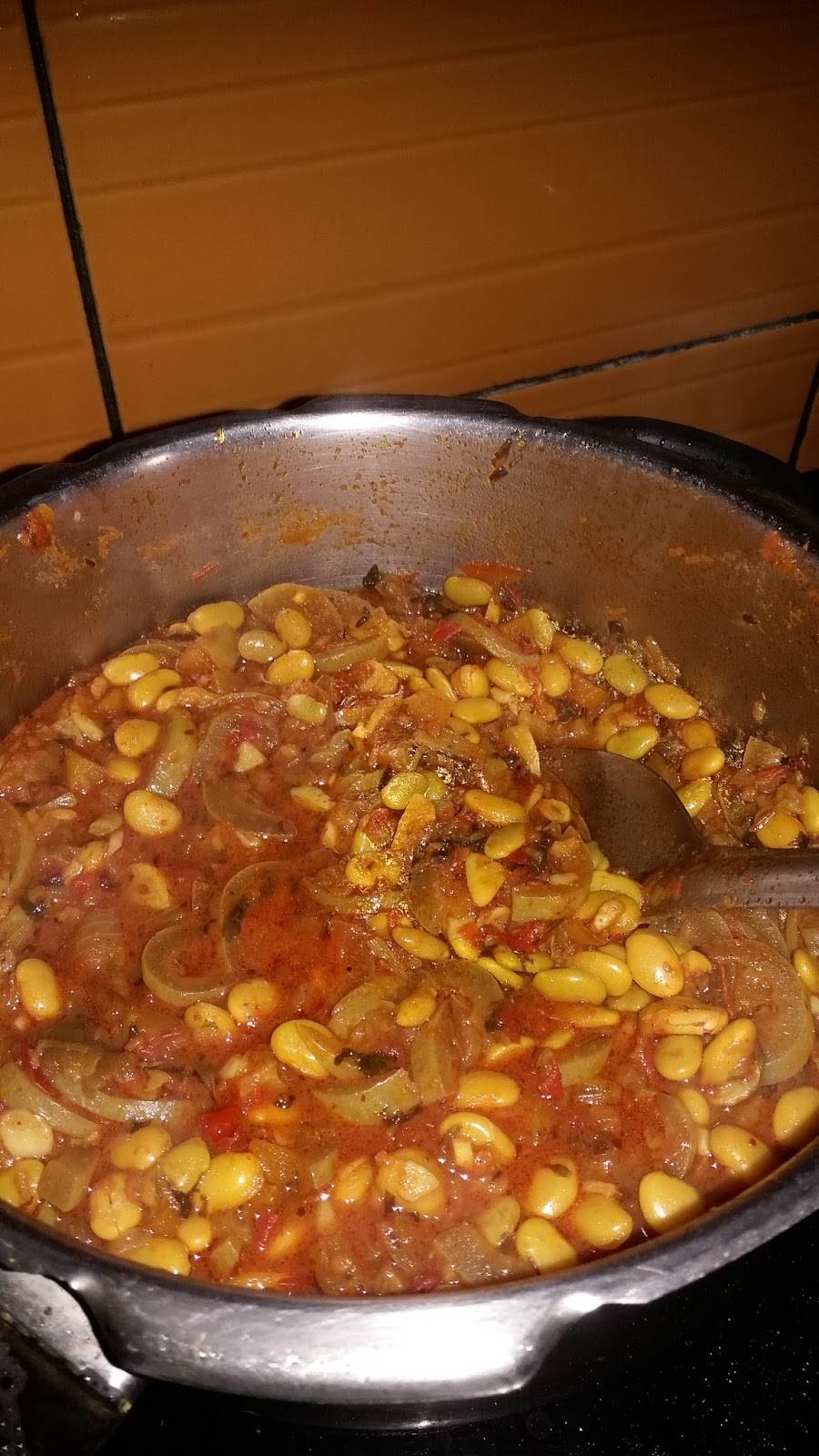
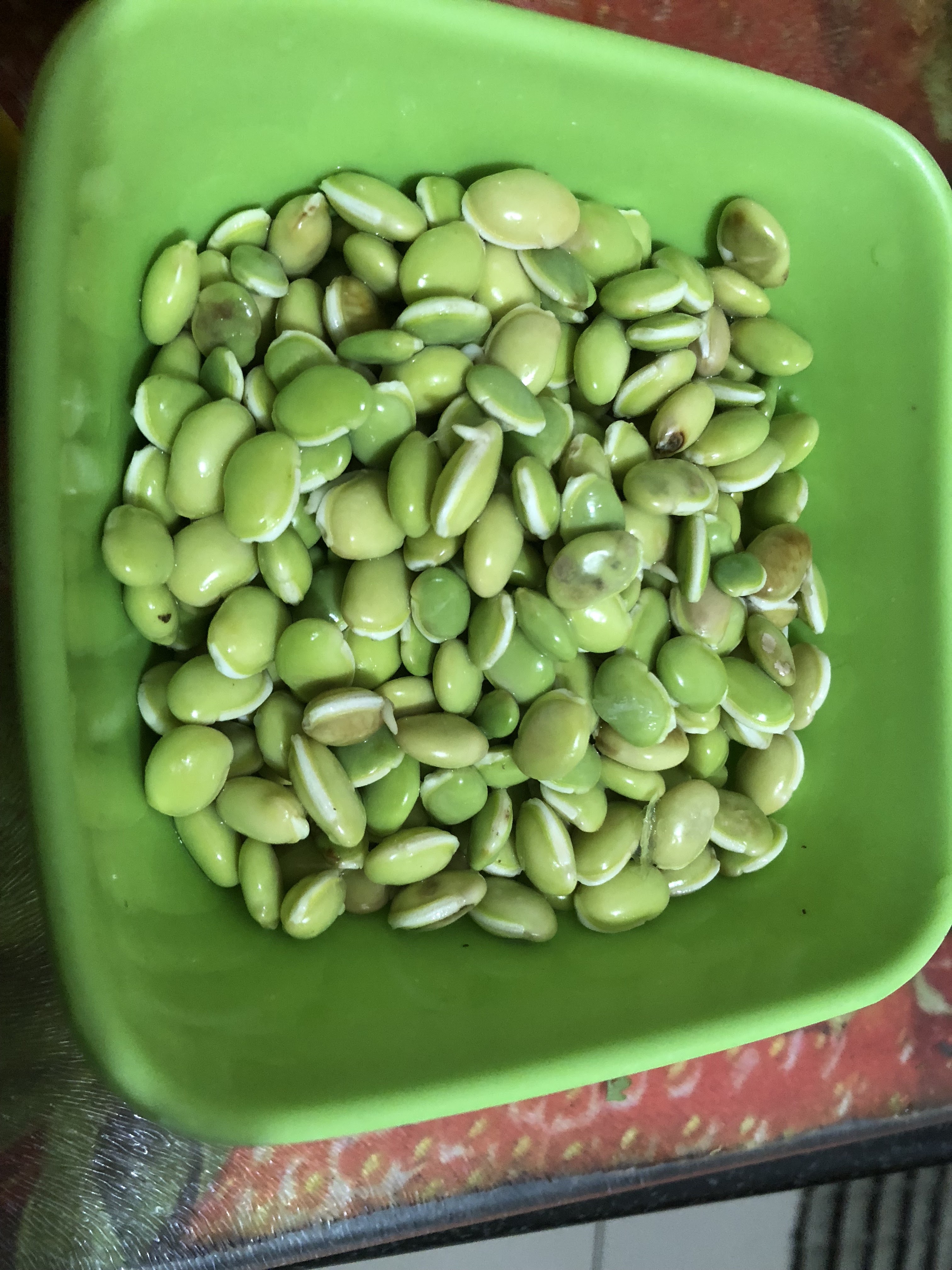
(mochakottai)
Method:
Add 2-3 tbsp oil to a cooker pan.
Add Jeera 1/2 tsp. 1 green chilli and chopped ginger (1 inch) and chopped garlic(4-5).
Add 1 finely chopped onion and saute till it starts turning brown.
Add 2 finely chopped tomatoes (the sour ones) , add 1/2 tsp turmeric and 1 tsp dhaniya powder, 1 tsp chilli powder. Saute till it oozes oil into the sides of the pan.
Now add 2 tbsp chopped fresh coriander leaves, saute for 2 min.
Add 3/4 cup fresh lima beans (mochai/papdi), mix well and saute for 5 min.
Then add chopped snake guard, salt. Saute for 5 min.
Add 1 to 1.5 cup water, 1tsp garam masala and cook for 2-3 whistles.
Garnish with coriander leaves. Serve hot with rotis.
Doodhi Curry
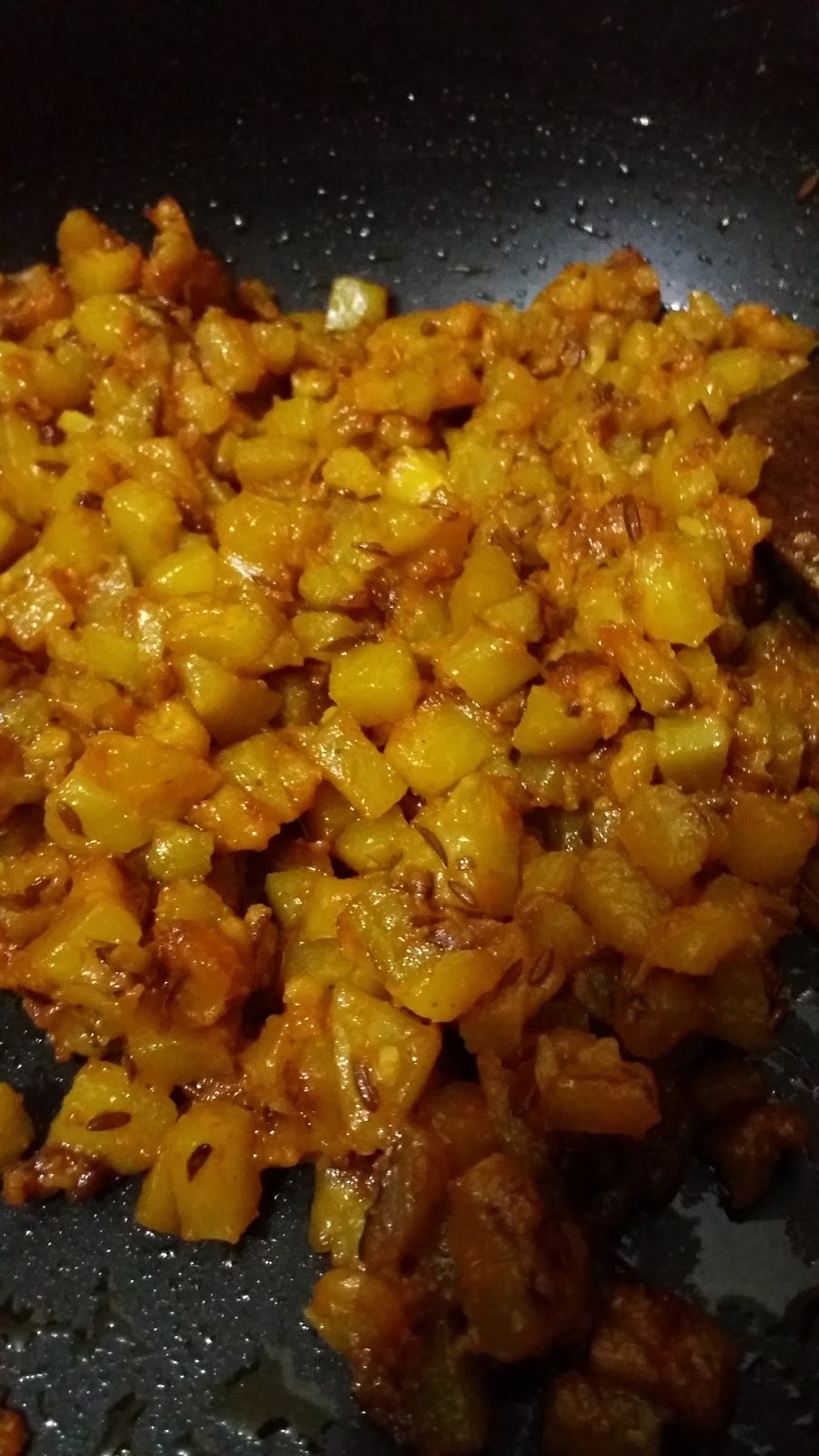
Ingredients
Doodhi/Lauki/Bottle guard : 1 medium size
Oil : 2-3 tbsp
Jeera : 1 tsp
turmeric : 1/4 tsp
asafoetida : 1/8 tsp
salt : 1 tsp (or) as per taste
red chilli powder : 1/2 tsp
dhaniya powder : 1/2 tsp
Besan/ bengal gram flour : 1 tbsp (or) 2 tbsp dry roasted & coarsely ground Peanut powder
Sugar : 1/4 tsp
Method :
Chop the bottle guard into small pieces.
Heat 2 tbsp oil in a pan, add jeera, then the chopped bottle guard.
Add turmeric and salt, mix well and close the pan with a lid and cook on low to medium flame for 8-10 min. The bottle guard will cook in its own oozed out water. Stir occasionally in between to avoid burning of food.
Open the lid and add asafoetida, red chilli powder, dhaniya powder and 1tbsp oil and saute on low flame for 5 min.
Add besan and sugar, mix well and saute for 5 min. (or ) instead of besan, you can add 2 tbsp Dry Roasted & coarsely ground Peanut powder and saute for 2 min.
Dal fry:
Garlic : 5-7
ginger : 1/2 inch
green chilli : 2
Red chilli powder : 1 tsp
dhaniya powder : 1 tsp
turmeric : pinch
Jeera : 1/2 tsp
whole red chillies : 2
oil : 4tbsp
Tuwar dal : 1 cup (pressure cooked and mashed)
Sugar : 1/4 tsp
Method:
Chop garlic, ginger an green chillies.
Heat oil , add jeera, let it crackle. Then add whole red chillies. Then add ginger, garlic and green chillies. Saute for 30-60 sec.
Then add red chilli powder, dhaniya powder, turmeric. Immediately add the mashed dal. Add little water (not more than 1/4 cup), add salt and mix well. Add sugar.
Let it boil for 1-2 min, stir well to avoid burning (since consistency is thick, it might burn). Switch off and garnish with coriander leaves.
Note: You can follow the same above steps for masoor dal.
Sabudana Khichdi
It's one of the favourite dishes of my daughters.Its very yummy and filling.
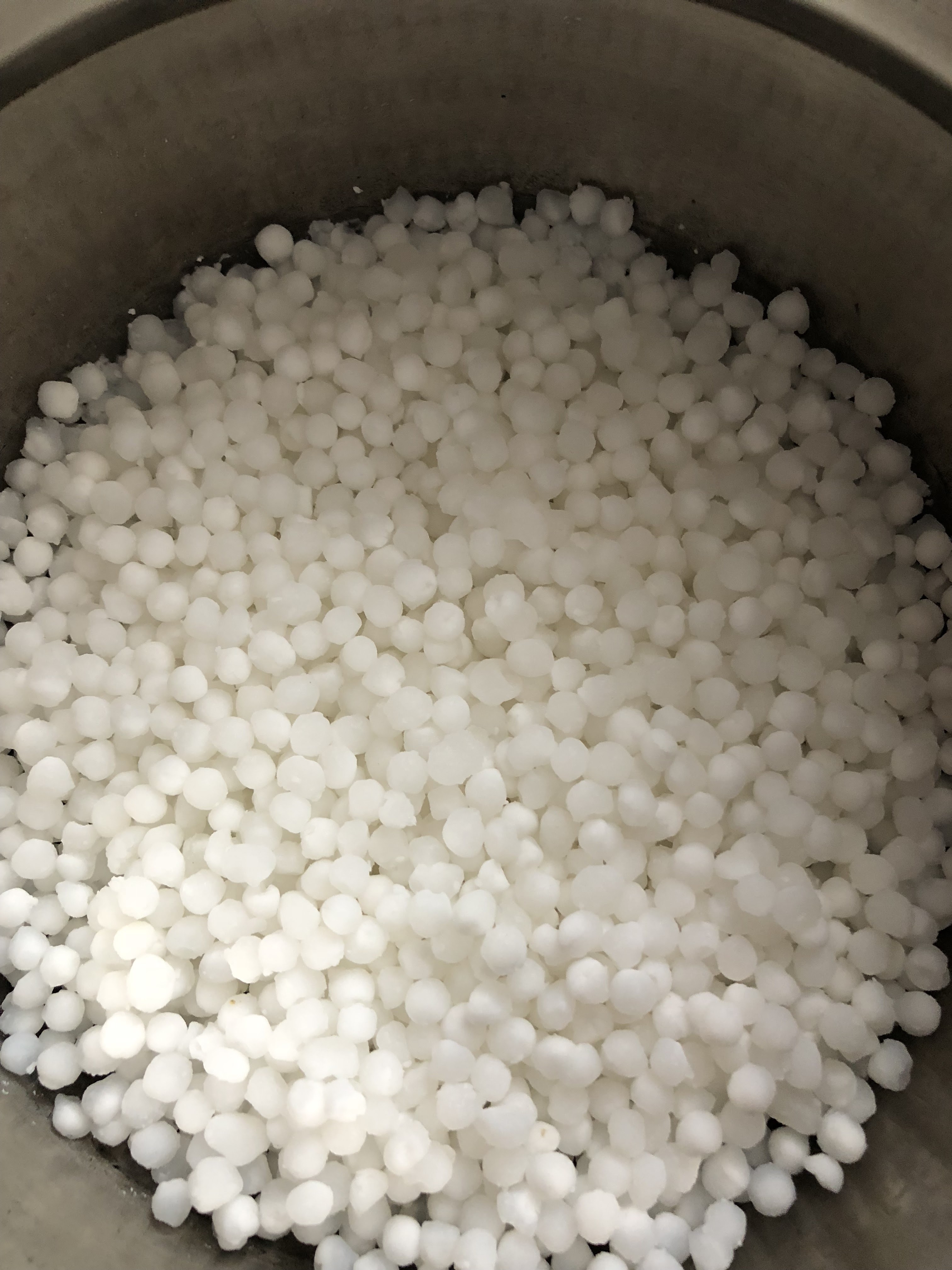
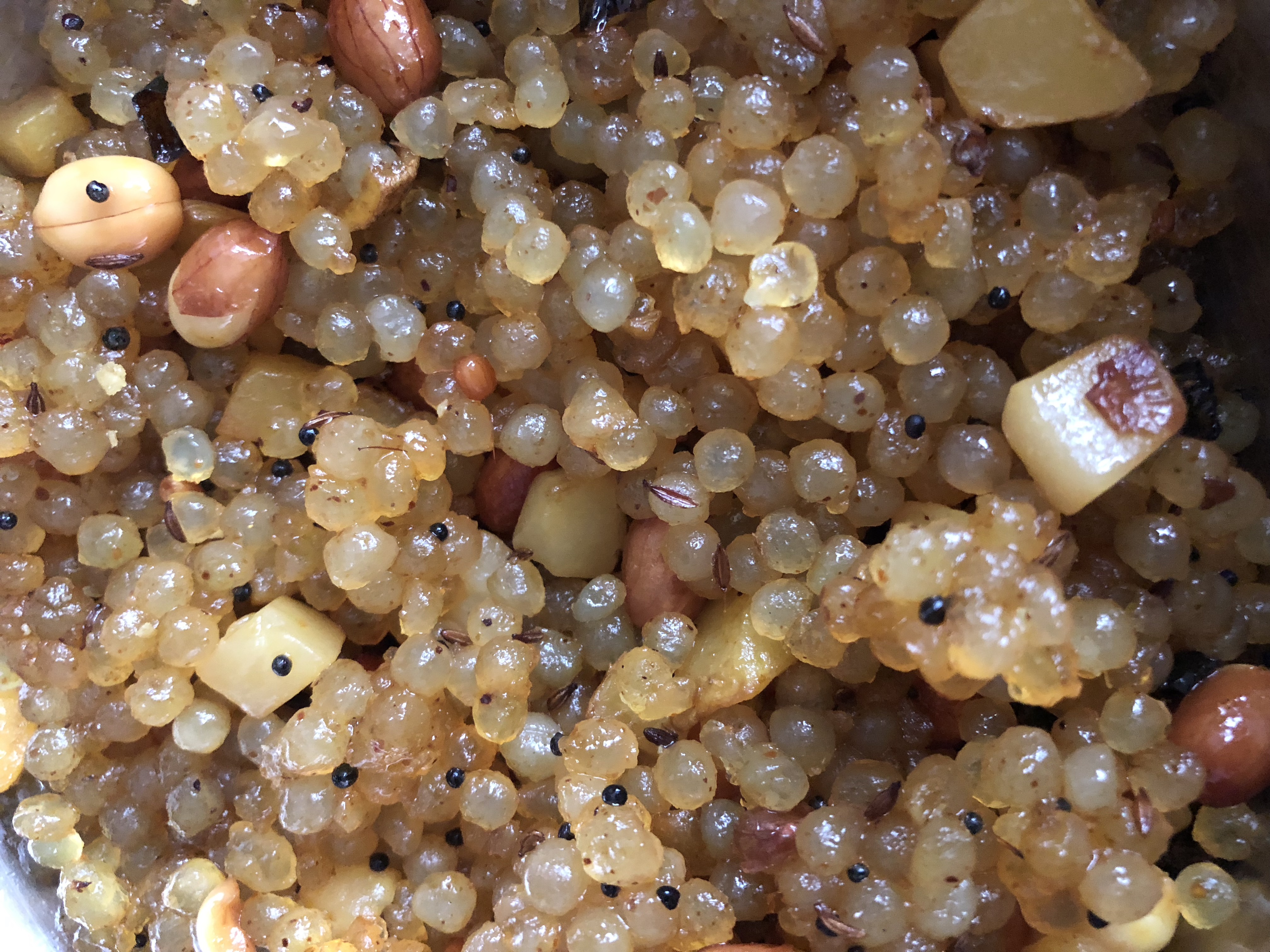
Ingredients :
Sabudana (jevarasi) - 100g
Potato - 2
Green chilli - 5 to 6 (small)
Red chilli : 2 (small)
Oil : 4 tsp
Mustard/Rai : 1 tsp
Urad dal : 1 tsp
Jeera : pinch
Turmeric powder : pinch
Salt : 1 tsp
Chilli powder : pinch
Note : You can also add 1/4 cup groundnuts
Method :
1. Soak sabudana in water till it becomes soft (apprx. 1.5 - 2hrs)
2. TAke oil in a pan. Add mustard, jeera, urad dal, red chilli, green chilli(chopped) and fry. (If you are including groundnuts, add them and fry till the skin starts changing colour and cracks)
3. Then add chopped potatoes and mix well for 5 min.
4. Now add sabudana (drain water) and mix well.
5. Add turmeric and salt.
6. Mix well for 5 min.
7. Add chilli powder and mix well.
TASTY HOT KHICHDI IS READY!!!!!
Vegetable Rava Upma
Everybody loves upma. :) Tasty and instant!
(vegetable rava upma)
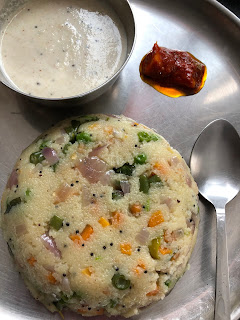
(vegetable rava upma-closer view)
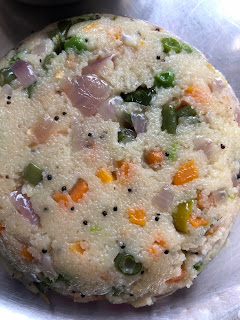
(making rava upma)
(plain rava upma)
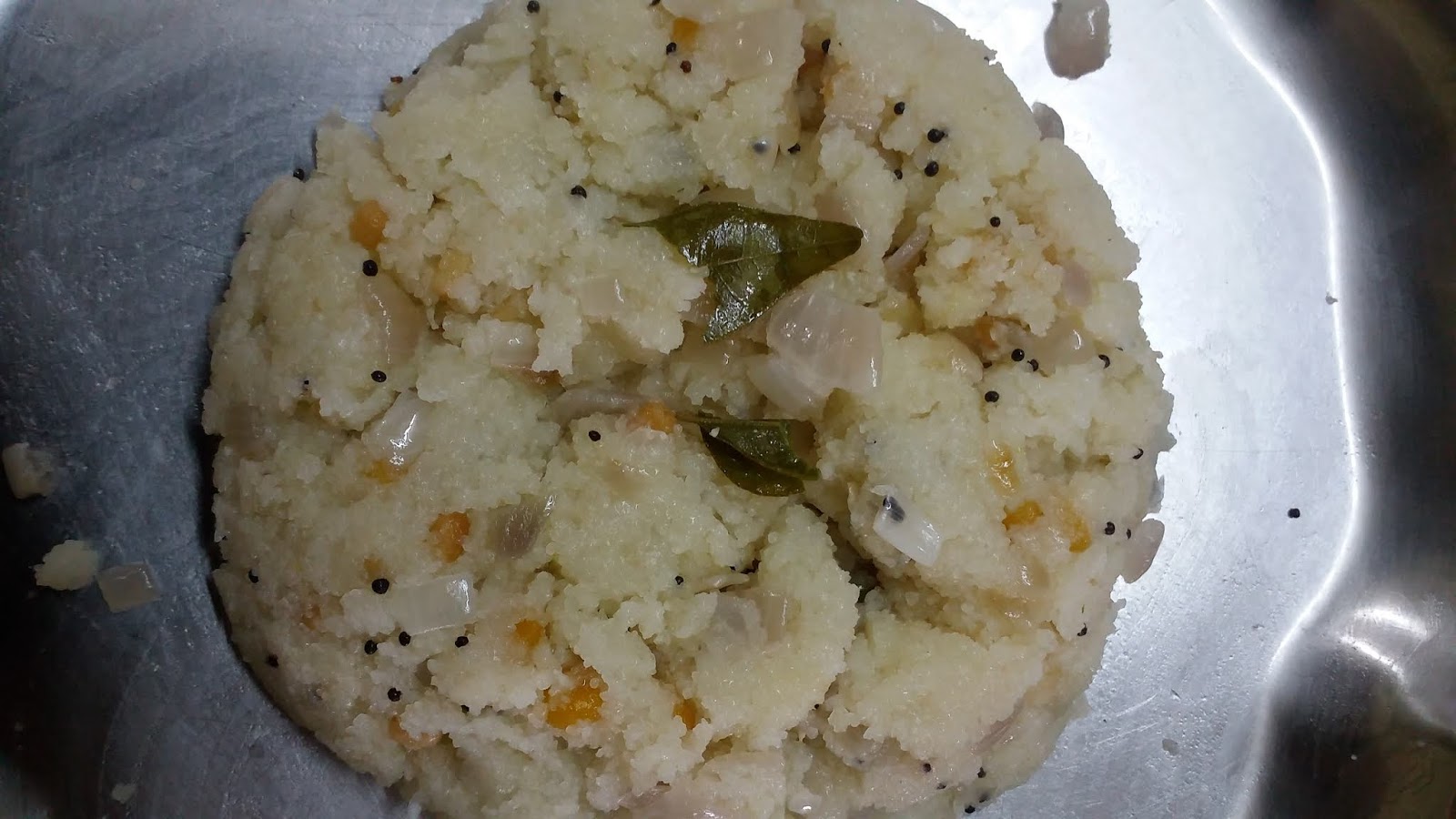
(vegetable rava upma)
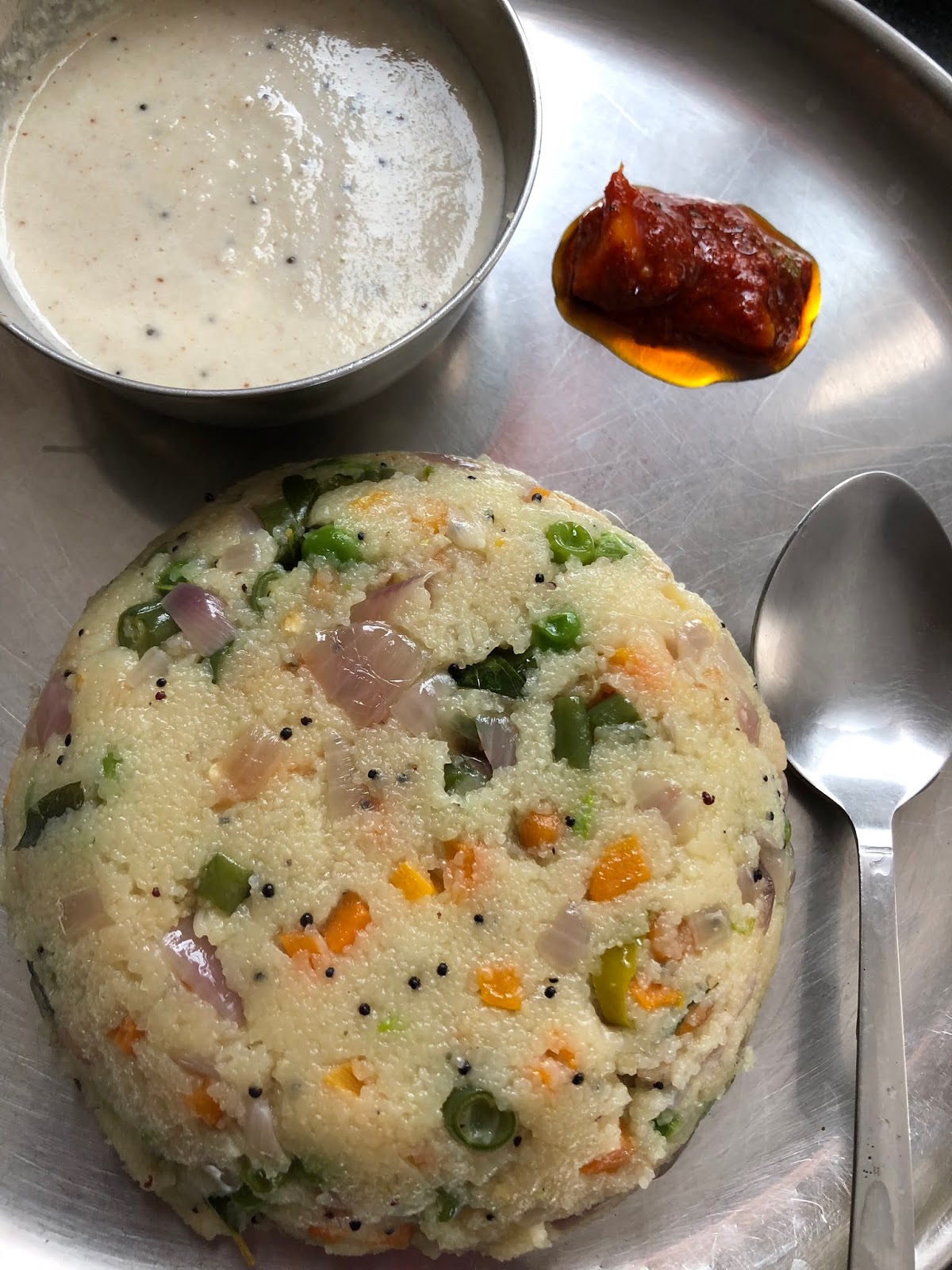
(vegetable rava upma-closer view)
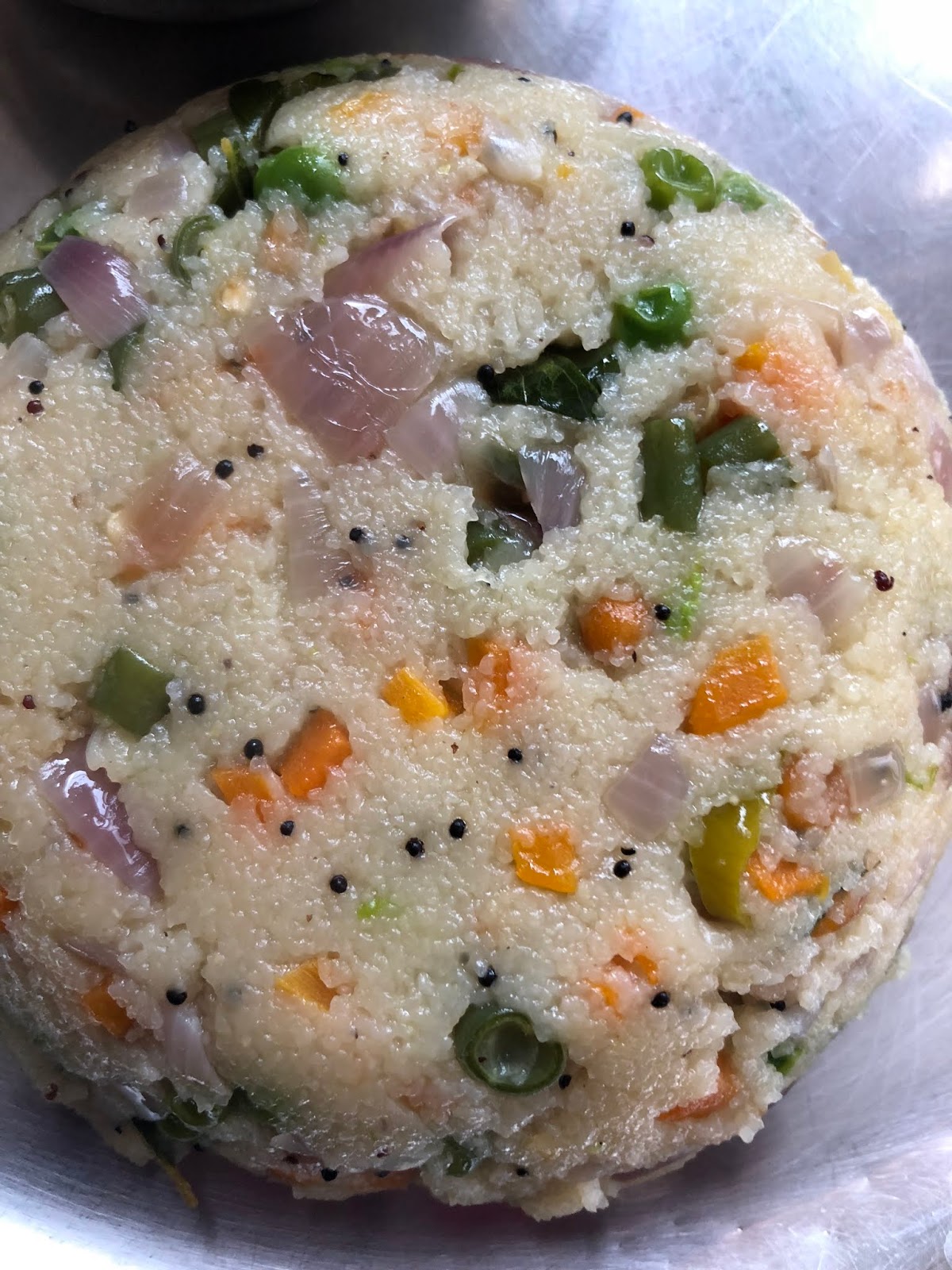
(making rava upma)
Ingredients :
Rai (mustard) : 3/4th tsp
Urad dal : 3/4th tsp
Chana dal : 1/2 tsp
Ginger : 1/2 inch
Green chilli : 2-3 medium
Rava : 250g
Curry leaves : 10 leaves
200g Vegetables chopped like carrot, green peas, cauliflower, beans
Oil : 4 tbsp
Salt : 2 tsp
Onion : 2
coriander leaves : few (optional)
Method :
1. Take Oil in a kadai. When it gets heated up, put mustard and let it crackle.
2. Then add urad dal, chana dal and fry till golden colour.
3. Add chopped ginger and chillies.
4. When fried, add all vegetables.
5. When vegetables are half cooked, add 1:2 (Rava : water) water.
6. Add salt to taste.
7. Add curry leaves.
8. When water starts boiling, add rava slowly and keep stirring simultaneously.
9. Then cover kadai with lid for 5 min. (have an eye on it so that it doesnt burn)
10. Check if rava has absorbed all the water and has got cooked well. Add few coriander leaves if you like.
SERVE HOT WITH COCONUT CHUTNEY!!
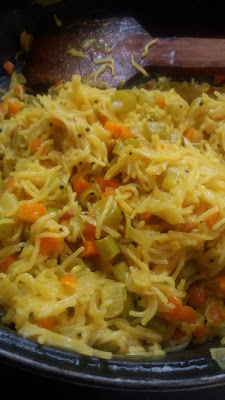
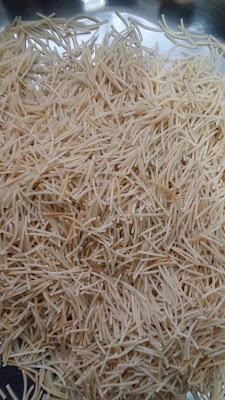
Semiya Upma
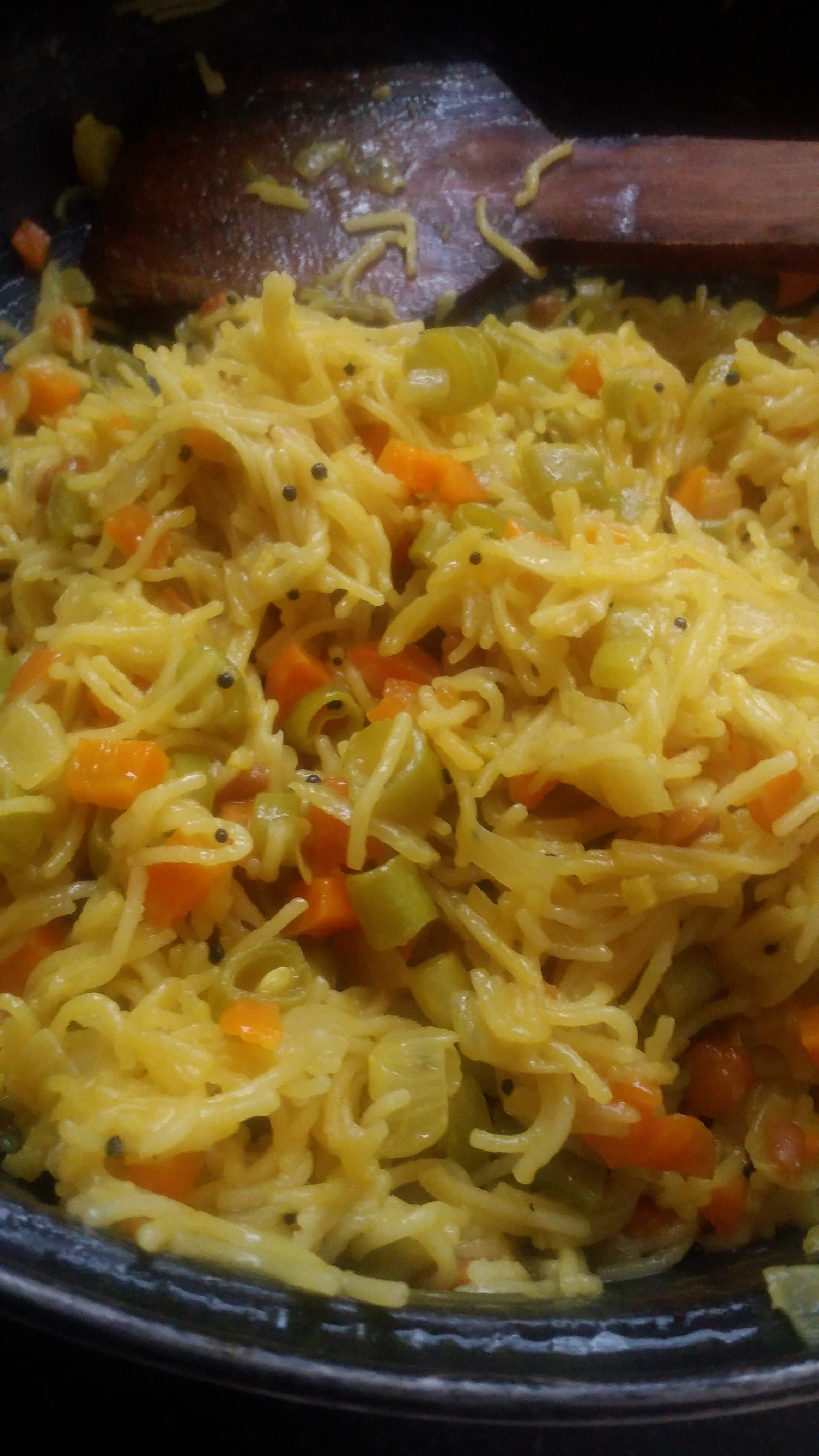
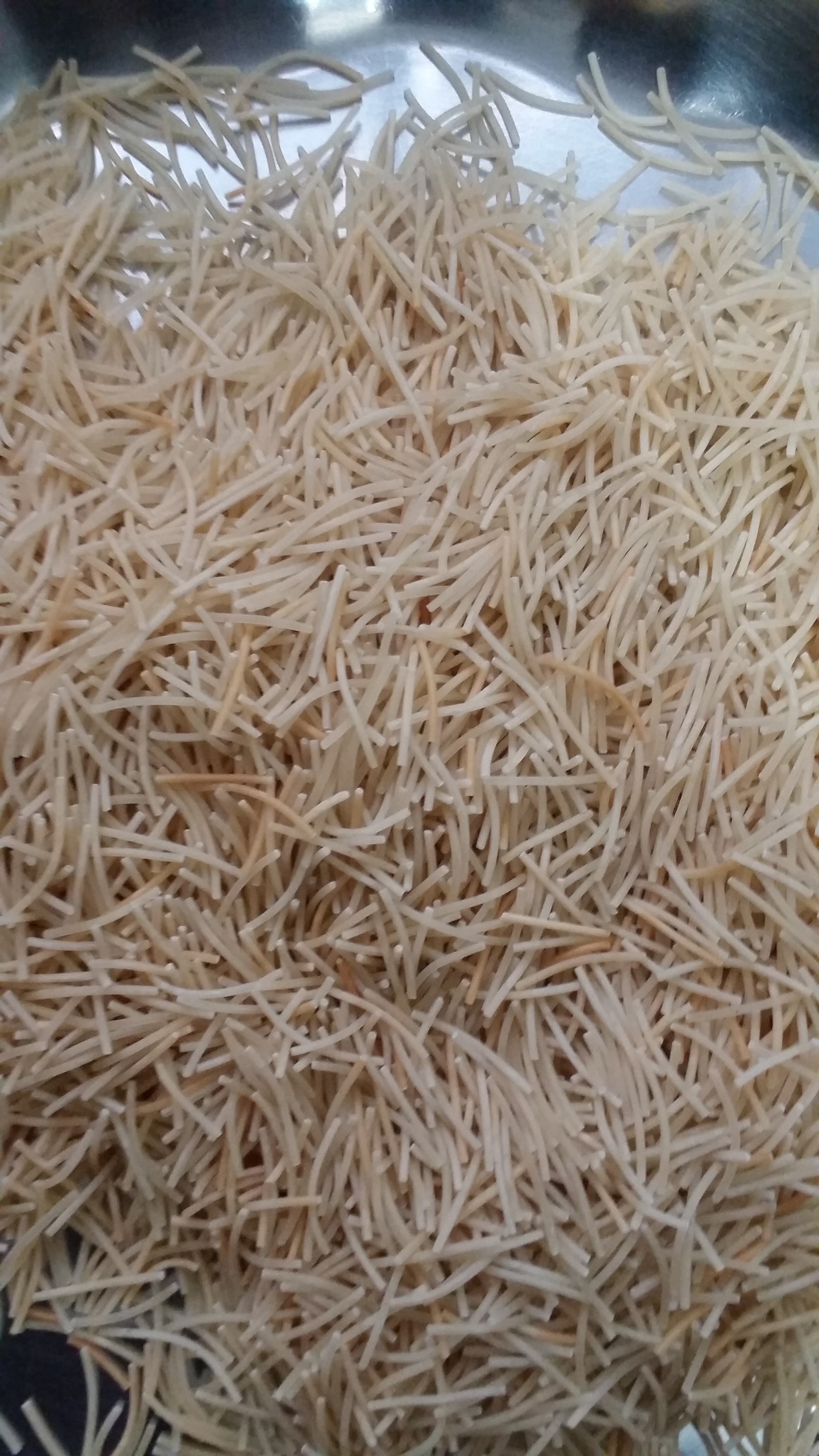
1. Take 4tbsp oil in a kadai. When it gets heated up, put mustard and let it crackle.
2. Then add 3/4 tsp urad dal, 1/2 tsp chana dal and fry till golden colour.
3. Add chopped ginger(1/2 inch) and 2-3 green chillies and some curry leaves. Saute for 1 min.
4. Add chopped onions and saute for 2-3 min. Then add the chopped vegetables.
5. When vegetables are half cooked, add 1:1.5 ratio (Semiya : water) water. i.e. for 1 cup semiya, add 1.5 cup water.
6. Add salt to taste.
7. When water starts boiling, add 1 cup semiya and mix well.
8. Then cover kadai with lid for 5 min.
9. Check if the semiya is cooked. If not close the lid again and repeat this step till semiya is cooked and the extra water is no more seen.
9. Check if the semiya is cooked. If not close the lid again and repeat this step till semiya is cooked and the extra water is no more seen.
Arisi Upma (Rice Upma)
All will be aware of Rava upma. But there are few varities in upma. Try rice upma or arisi upma for a change. Tastes best with katrika gothsu (a sidedish made of brinjals).

Ingredients :
Broken rice : 2 tumbler
Mustard seeds (Rai) : 3/4 tsp
Chana dal (kadala paruppu) : 1 tsp
Urad dal : 1 tsp
Red chilli : 2
Green chilli : 2
Asafoetida solid : small piece (smaller than tamarind seed)
Refined oil : 4 tbsp
curry leaves : few (2 strands)
coconut : 1 cup (small)
salt : 2 tsp
Ghee : 1 tbsp
Method :
Note : Better to prepare this upma in rice cooker.
1. Take oil, add mustard and let it crackle. Add red chillies.
2. Add chana and urad dal. Add green chilli chopped and curry leaves.
3. Add solid asafoetida.
4. Add 1:2 (broken rice : water) water. Add salt.
5. When water boils, add coconut. Then add broken rice.
6. Pressure cook for 3 whistles.
7. When cooker is ready to be opened, open lid and add ghee.
YUMMY ARISI UPMA IS READY!!!!
Gothsu:
Heat oil in a pan, add 1/2 tsp mustrad seeds,2 red chillies, 1/2 inch ginger and 2-3 green chillies, some curry leaves, add 2 medium chopped tomatoes (the sour ones) and saute till its skin wrinkles. Then add chopped brinjals (5-6)and saute till it gets half cooked. Then add 1.5 tumbler tamarind juice (less concentrated), add 1/4 tsp asafoetida, 1/4tsp turmeric, salt and 1/2 tsp sambhar powder and let it boil for 5-7 minutes.
Poha (Rice flakes)
Poha is a very delicious breakfast. It's tasty and healthy too. And the most important ..its simple to prepare ;)
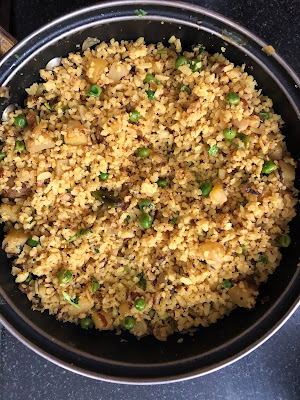
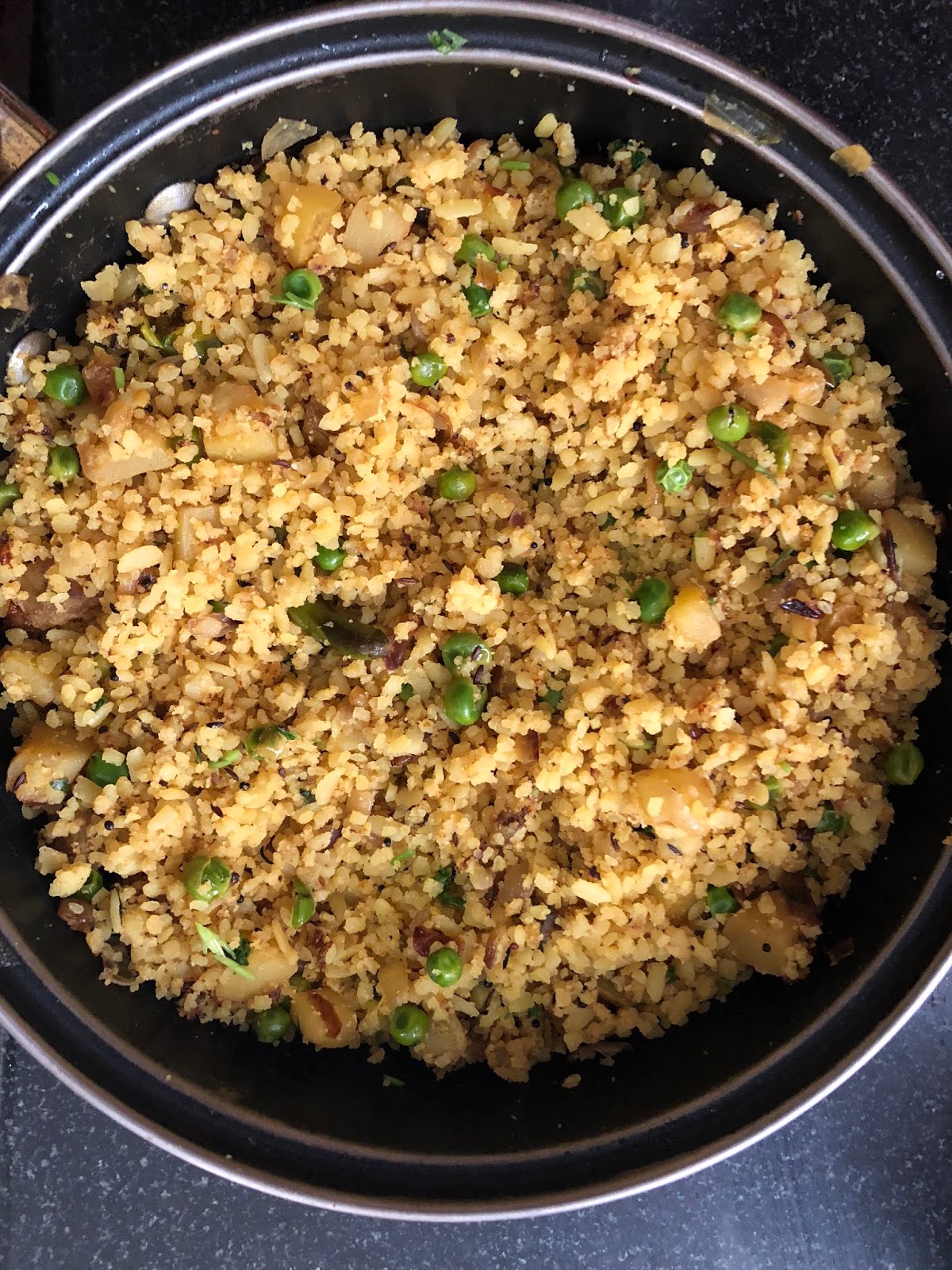
Ingredients :
Rice flakes - 1 tumbler
Potato - 100g
Oil - upto 1tbsp
Chana dal - 1/2 tsp
Urad dal - 1/2 tsp
Red chilli - 1
Green chilli - 2
Turmeric - pinch
Salt - 3/4 tsp
Asafoetida - pinch
Rai (mustard) - 1/4 tsp
Fresh coriander leaves
Method :
1. Wash the flakes in running tap water and drain it.
2. Allow it to soften for 5-10 min. But to cook the potatoes and other ingredients will take 5 min. Hence you can keep the flakes aside and start preparing the dish.
3. Take oil, add mustard and let it crackle.
4. Add red chilli, chana dal, urad dal, green chillies and asafoetida. (you can add chopped onions if you like).
5. Add turmeric and salt.
6. When potatoes are cooked, add rice flakes and mix well.
Note : if you feel that the poha is too dry, you can add 2 tsp of milk. Also, you can not only add potatoes, but add your own desired vegetables like carrot, green peas. Also you can add litlte sugar or lemon juice to it as per your taste/liking.
7. Garnish with coriander leaves.
TASTY POHA IS READY!!!
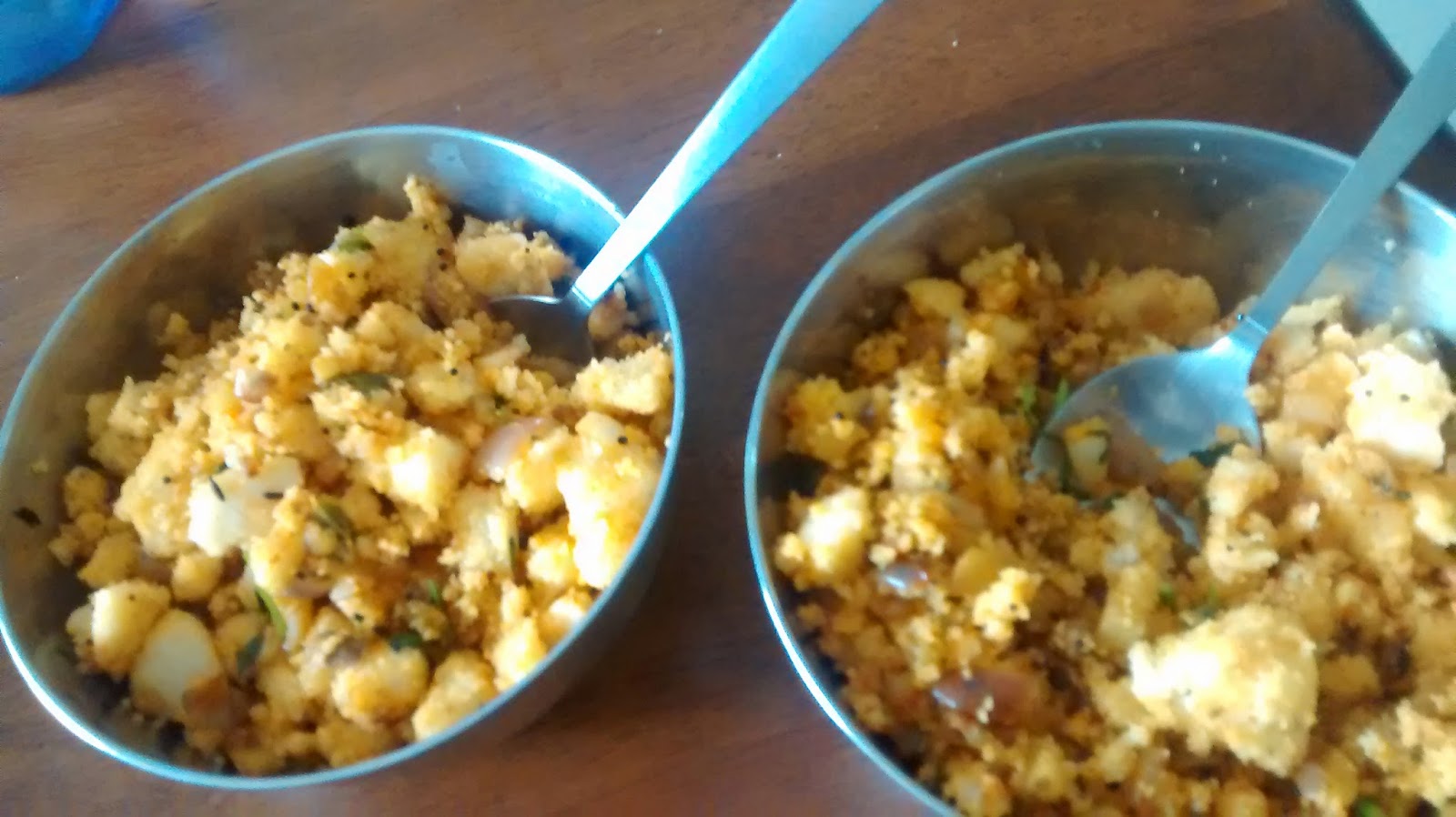
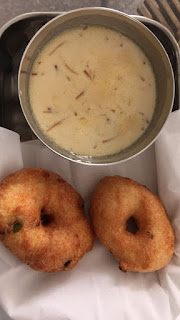
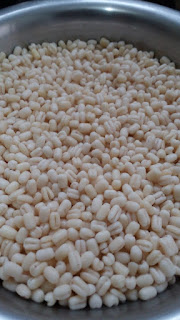
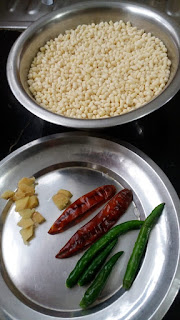
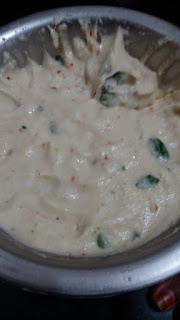
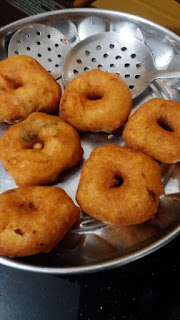
Pongal
Ingredients:
3/4 cup of rice, 1/4 cup moog dal, few curry leaves, ginger (1 inch), 1 pinch hing, salt 1 sp, 1 tsp pepper and 1 tsp cumin seeds. Ghee 2-3 tbsp
Method:
Take rice and moog dal , wash it and pressure cook it with salt for 5-6 whisteles with 1:4 water.
Take ghee in pan, add ginger, pepper, cumin seeds one by one turn off after they splutter.
Add hing and curry leaves and mix it with pressure cooked pongal.
Add ghee on top as desired.
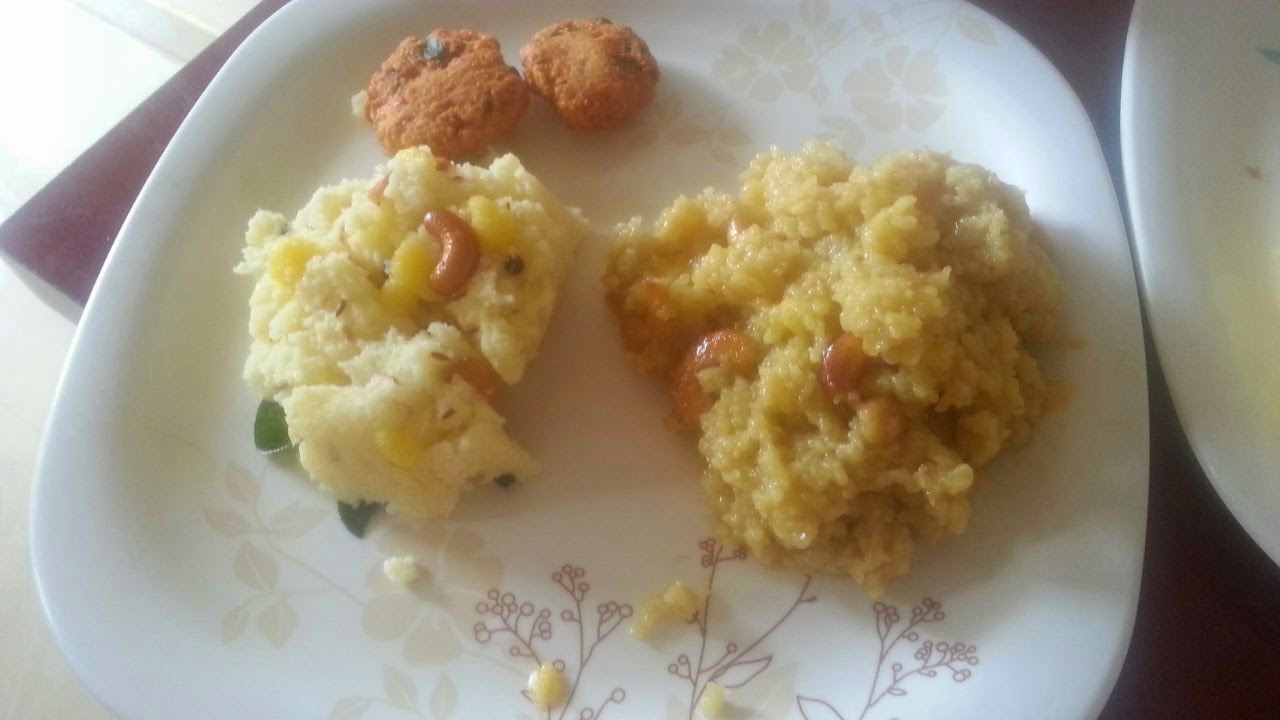
Ingredients:
3/4 cup of rice, 1/4 cup moog dal, few curry leaves, ginger (1 inch), 1 pinch hing, salt 1 sp, 1 tsp pepper and 1 tsp cumin seeds. Ghee 2-3 tbsp
Method:
Take rice and moog dal , wash it and pressure cook it with salt for 5-6 whisteles with 1:4 water.
Take ghee in pan, add ginger, pepper, cumin seeds one by one turn off after they splutter.
Add hing and curry leaves and mix it with pressure cooked pongal.
Add ghee on top as desired.
Idli Upma
What? You have left over idlis? Its a good news. Lets make a tasty upma.
Ingredients :
Idlis : 6
Onion : 2
Potato : 1 small (optional)
Oil : 2 tbsp
Mustard seeds : 1/2 tsp
Urad dal : 1 tsp
Chana dal : 1 tsp
Green chillies : 2
Curry leaves : few
Red chilli powder : 1/2 tsp (it will give colour. If you don't like colour change, then do not add red chilly powder, but add 3-4 green chillies instead of 2)
Turmeric : pinch
Fresh coriander leaves : few
Salt
Method:
1. Take oil in a pan, add mustard seeds, allow it to crackle.
2. Add urad dal, chana dal, green chillies chopped, few curry leaves, chopped onions and saute till onions become translucent.
3. Now add finely chopped potato (finely chopped so that no one can identify that potato has been added in the upma ;) ). Actually I personally do not prefer adding potato. But my husband and daughters love it when potato is added. So you can try adding potato else skip this step.
4. Add pinch turmeric and saute for a min.
5. Add salt and then cook with closed lid till potatoes get cooked. If you are not adding potatoes, you can skip this step.
6. Now open the lid, add crumbled idlis, add salt (in case you have skipped step5 and not added salt), red chilli powder, . Mix well and saute for 2-3 min.
7. Add chopped coriander leaves. Serve hot.
Idlis : 6
Onion : 2
Potato : 1 small (optional)
Oil : 2 tbsp
Mustard seeds : 1/2 tsp
Urad dal : 1 tsp
Chana dal : 1 tsp
Green chillies : 2
Curry leaves : few
Red chilli powder : 1/2 tsp (it will give colour. If you don't like colour change, then do not add red chilly powder, but add 3-4 green chillies instead of 2)
Turmeric : pinch
Fresh coriander leaves : few
Salt
Method:
1. Take oil in a pan, add mustard seeds, allow it to crackle.
2. Add urad dal, chana dal, green chillies chopped, few curry leaves, chopped onions and saute till onions become translucent.
3. Now add finely chopped potato (finely chopped so that no one can identify that potato has been added in the upma ;) ). Actually I personally do not prefer adding potato. But my husband and daughters love it when potato is added. So you can try adding potato else skip this step.
4. Add pinch turmeric and saute for a min.
5. Add salt and then cook with closed lid till potatoes get cooked. If you are not adding potatoes, you can skip this step.
6. Now open the lid, add crumbled idlis, add salt (in case you have skipped step5 and not added salt), red chilli powder, . Mix well and saute for 2-3 min.
7. Add chopped coriander leaves. Serve hot.
Medhu Vada
The crispy tasty medhu vadas. You can have them anytime - breakfast,
lunch, snacks, dinner. Hot hot, dipped into sambhar or coconut
chutney....hmmmmmm...And when soaked into curd with sugar or some
sprinkled spices, that makes it 'curd vada'.
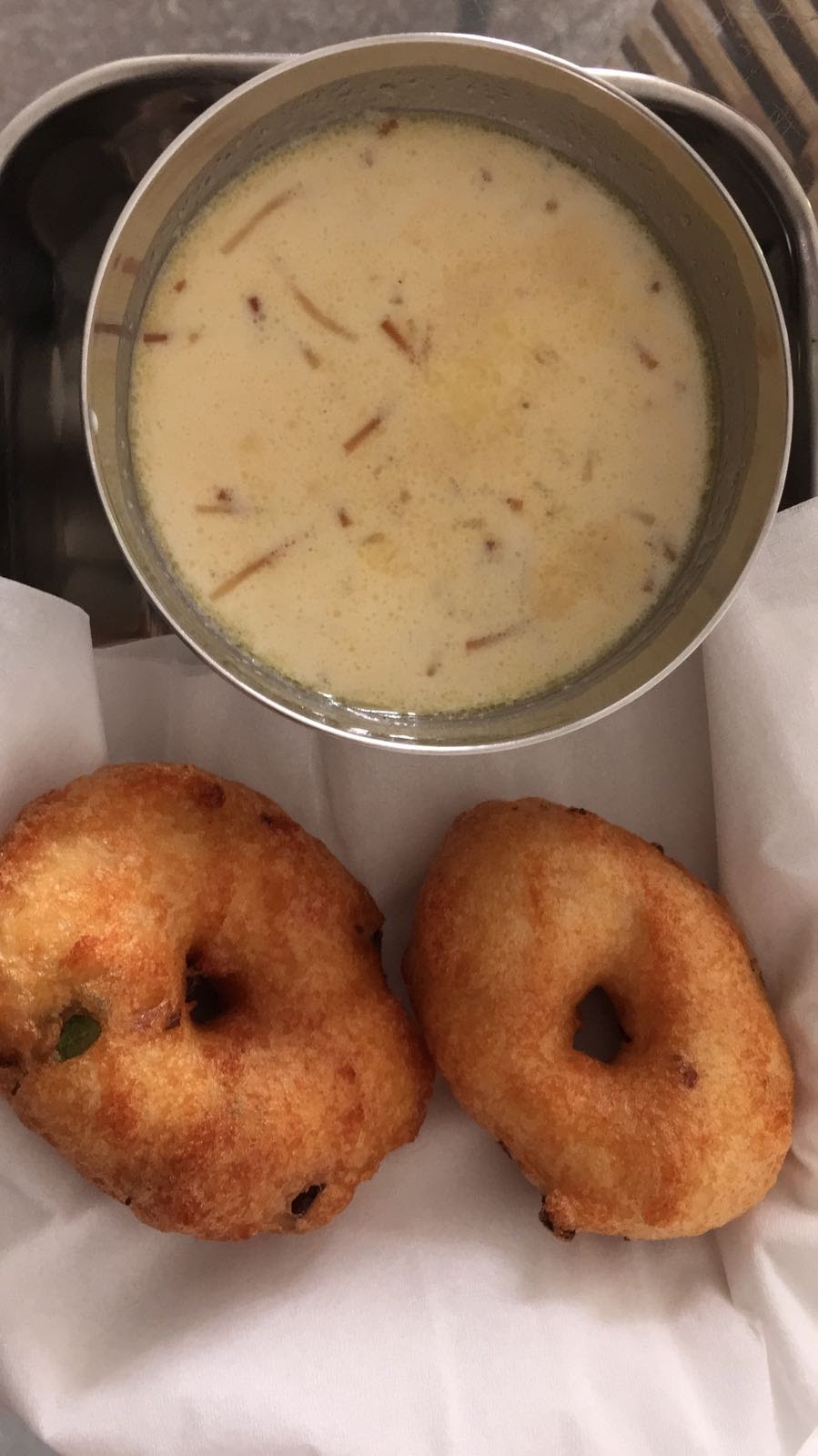
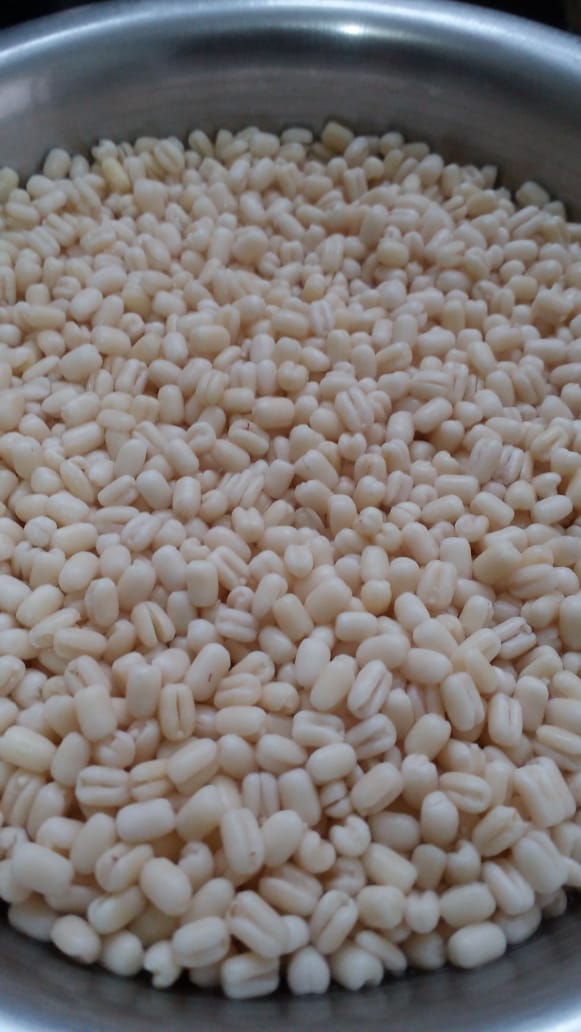
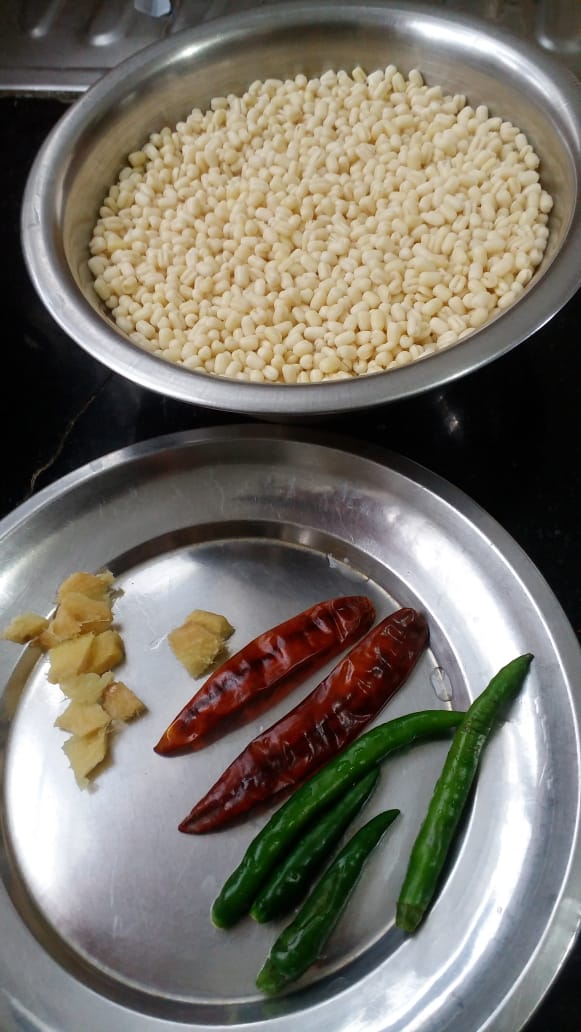
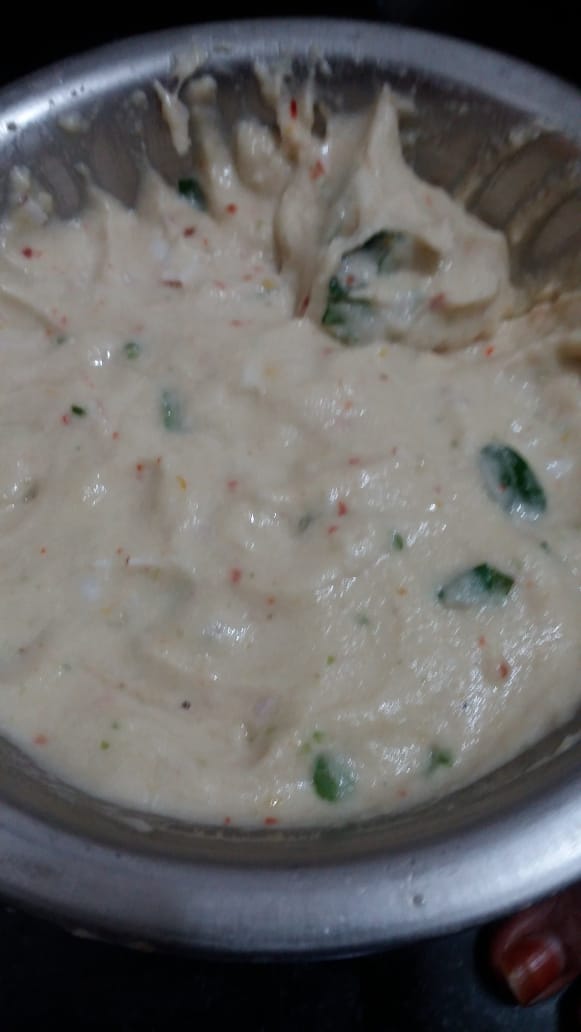
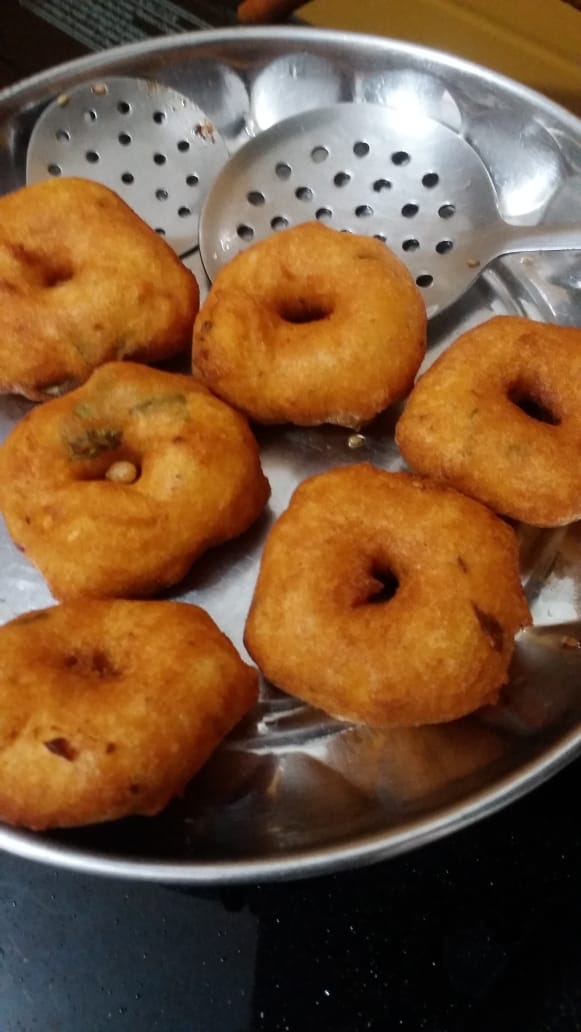
(Video: Making Medhu Vada)
Ingredients:
Urad dal :150g
Green chilli : 2
Red chillies : 2
Ginger : 1/2 inch
Asafoetida/Hing : 1/4th tsp
Salt to taste
Curry leaves : few
Oil : to deep fry
Chopped Coconut : 2-3 tsp (optional) (or u can add chopped onion if you like)
Note: you can adjust chilly quantity as per your taste
Method:
1. Soak the urad dal in water for minimum 1 hour. Then drain the water completely.
2. Grind green chillies, red chillies, ginger. Then add urad dal to it, asafoetida and salt and grind it well into a smooth fluffy batter. (No need to add water while grinding. At the max, sprinkle water if necessary)
3. Transfer it into some container, add chopped coconut (optional) and curry leaves (roughly tear the leaves before adding)
4. Heat oil in a pan/kadhai, when it is medium hot, fry the vadas (making a hole in the center) in oil till golden brown in colour.
[Note: for step4, keep a bowl of water ready by your side, you need to keep wetting your palm/fingers so that the batter doesnt stick to your palm/fingers. So wet your palm & fingers, take a small portion of batter, place it on your palm, flatten it, wet your index finger, make the hole in center of batter, now flip the batter onto your other palm and drop it into the oil carefully. Please refer the video.]
Paruppu Vada
Urad dal :150g
Green chilli : 2
Red chillies : 2
Ginger : 1/2 inch
Asafoetida/Hing : 1/4th tsp
Salt to taste
Curry leaves : few
Oil : to deep fry
Chopped Coconut : 2-3 tsp (optional) (or u can add chopped onion if you like)
Note: you can adjust chilly quantity as per your taste
Method:
1. Soak the urad dal in water for minimum 1 hour. Then drain the water completely.
2. Grind green chillies, red chillies, ginger. Then add urad dal to it, asafoetida and salt and grind it well into a smooth fluffy batter. (No need to add water while grinding. At the max, sprinkle water if necessary)
3. Transfer it into some container, add chopped coconut (optional) and curry leaves (roughly tear the leaves before adding)
4. Heat oil in a pan/kadhai, when it is medium hot, fry the vadas (making a hole in the center) in oil till golden brown in colour.
[Note: for step4, keep a bowl of water ready by your side, you need to keep wetting your palm/fingers so that the batter doesnt stick to your palm/fingers. So wet your palm & fingers, take a small portion of batter, place it on your palm, flatten it, wet your index finger, make the hole in center of batter, now flip the batter onto your other palm and drop it into the oil carefully. Please refer the video.]
Paruppu Vada
Paruppu Vada is easy to make than Medhu Vada. Paruppu Vada is made of chana dal whereas Medhu Vada is made of Urad dal. Medhu Vada is the 'Vada with a hole'. Many feel the process to make that Vada with hole is bit tricky and doesn't turn out well for some. Well it is all practice! Paruppu Vada is easy to make and equally tasty. Let's see its recipe.
(before frying)
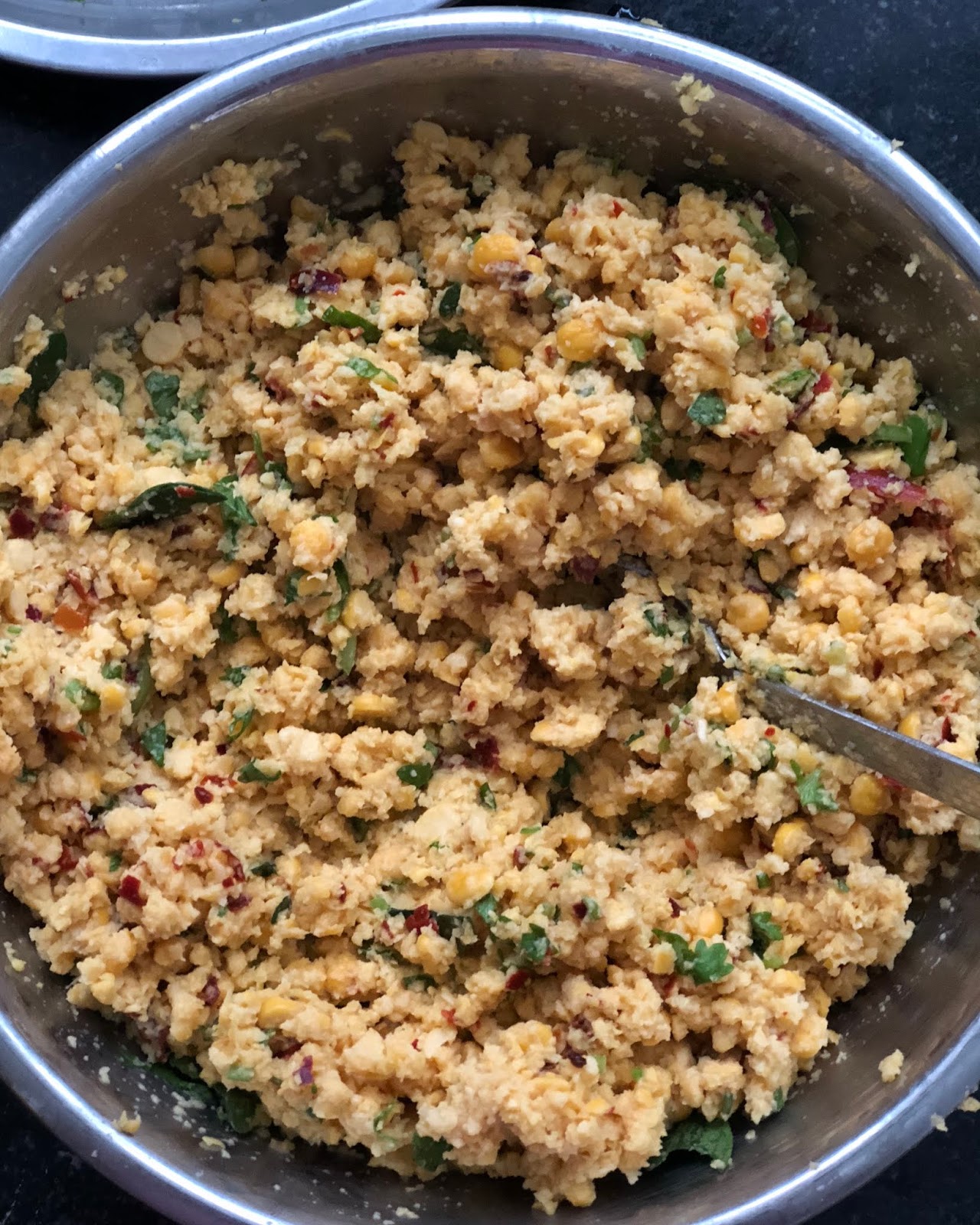
(Paruppu Vada)
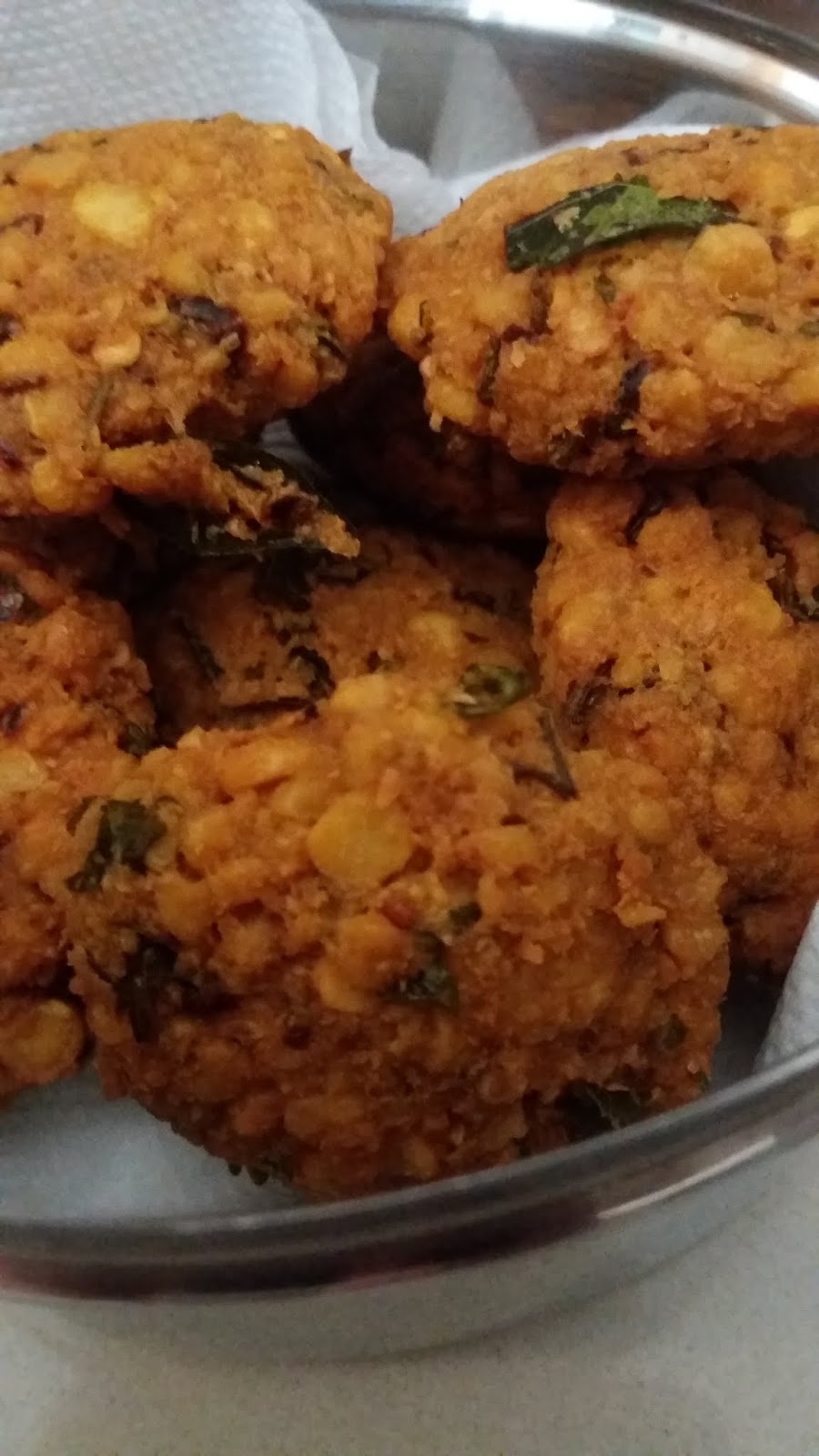
Ingredients:
Chana Dal : 1 cup
Red chillies : 4
Green chillies : 2
(note : pls adjust chillies according to its hotness)
Curry leaves : few (15 leaves)
Fresh chopped coriander : 2 to 3 tbsp apprx
Ginger : 1/4 inch
Salt : 1 tsp or as per taste
Asafoetida : 1/4 tsp
Oil : for deep frying
Method:
Soak the chana dal in water for 30 to 40 min. (Don't oversoak)
Drain the water and transfer the chana dal in a mixi jar, add salt, asafoetida, broken red chillies, broken green chillies and roughly chopped ginger into it. And grind it coarsely.
Transfer the dal mixture into a bowl, add roughly torn curry leaves and fresh chopped coriander leaves and mix well.
Heat oil in a kadhai for deep frying, and when it is medium hot form tikkies/patties of the ground dal mixture and fry them till golden brown.
Note : You can add chopped onions also if you like. In south India, chopped banana flowers are also used in making vadas. All you need to keep in mind is to adjust salt/chillies according to the amount of onion/banana flower added.
Red chillies : 4
Green chillies : 2
(note : pls adjust chillies according to its hotness)
Curry leaves : few (15 leaves)
Fresh chopped coriander : 2 to 3 tbsp apprx
Ginger : 1/4 inch
Salt : 1 tsp or as per taste
Asafoetida : 1/4 tsp
Oil : for deep frying
Method:
Soak the chana dal in water for 30 to 40 min. (Don't oversoak)
Drain the water and transfer the chana dal in a mixi jar, add salt, asafoetida, broken red chillies, broken green chillies and roughly chopped ginger into it. And grind it coarsely.
Transfer the dal mixture into a bowl, add roughly torn curry leaves and fresh chopped coriander leaves and mix well.
Heat oil in a kadhai for deep frying, and when it is medium hot form tikkies/patties of the ground dal mixture and fry them till golden brown.
Note : You can add chopped onions also if you like. In south India, chopped banana flowers are also used in making vadas. All you need to keep in mind is to adjust salt/chillies according to the amount of onion/banana flower added.
Coconut chutney:
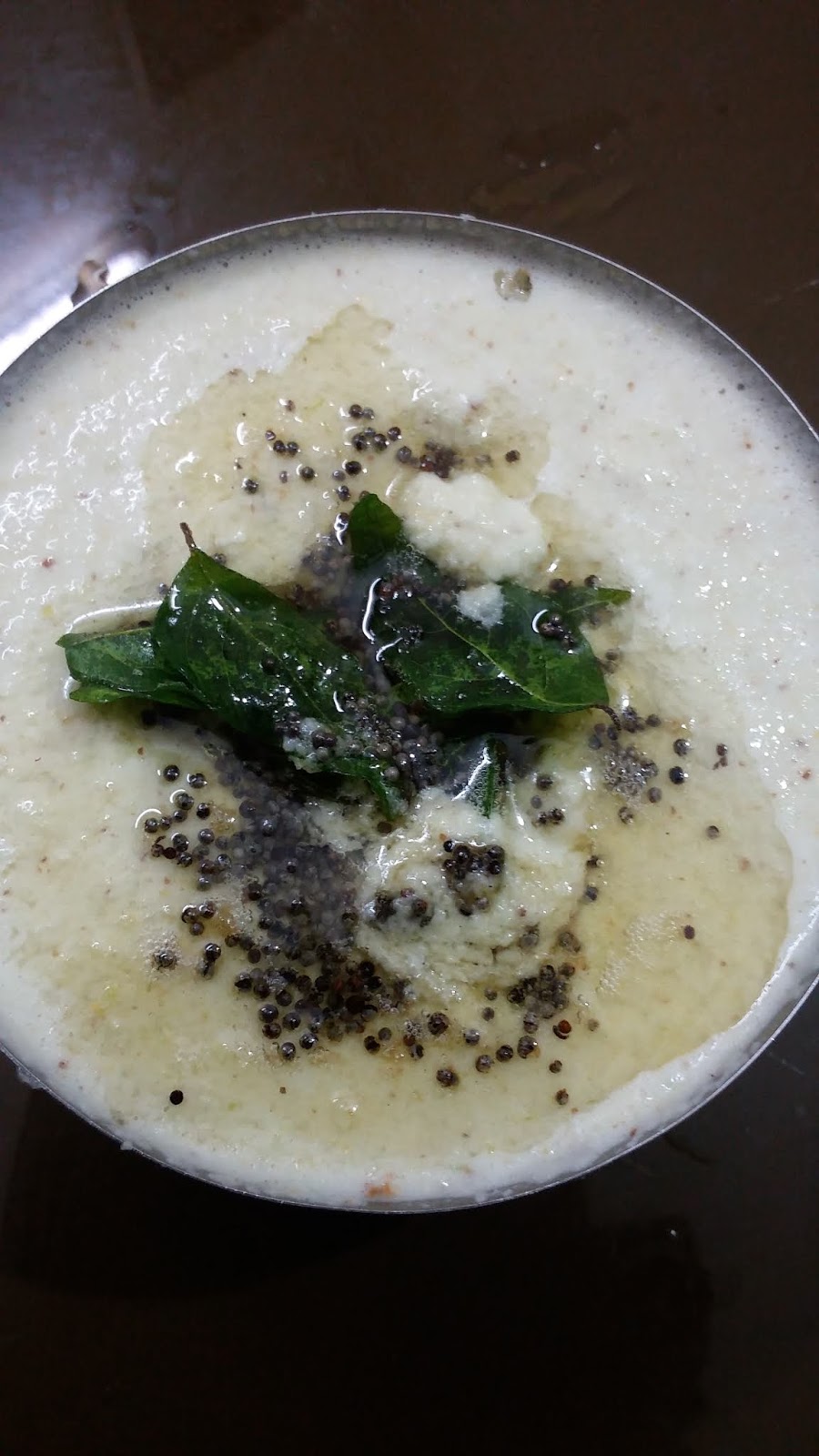
Take 1 cup freshly grated coconut in a mixer jar, add 1/4th cup roasted bengal gram, 2-3 green chillies, salt, 1/4th tsp asafoetida and grind it into a coarse paste. Add little water in between to be able to grind it into a paste.
Transfer it to a bowl. Add little water to bring it to the right consistency if required.
For tadka, take 1 tsp oil in a pan , add 1/4 tsp mustard seeds, once it crackles add it to the chutney. You can also add few curry leaves into the tadka pan.
Transfer it to a bowl. Add little water to bring it to the right consistency if required.
For tadka, take 1 tsp oil in a pan , add 1/4 tsp mustard seeds, once it crackles add it to the chutney. You can also add few curry leaves into the tadka pan.
Coriander chutney:
 Clean and chop 1 small bundle of coriander leaves.
Heat 1-2 tsp oil in a pan, add 2-3 green chillies, 1 tsp urad dal, 2 tsp chana dal, saute till dal becomes golden brown.
Add chopped coriander leaves, 1 inch tamarind (or 1/4 tsp tamarind pulp), salt, 1/8 tsp asafoetida and saute for 3-4 min. Switch off the flame and allow it to cool down.
Add 1-2 tsp of fresh coconut and grind the mixture into a little coarse paste. Add water if required.
For tadka, take 1 tsp oil in a tadka pan, add 1/4 tsp mustard seeds and after it crackles add it to the chutney.
Pudina chutney:
Clean 1 bundle of pudina leaves.
Heat 1-2 tsp oil in a pan, add 2-3 green chillies roughly chopped, 1 tsp urad dal, 2 tsp chana dal, saute till dal becomes golden brown.
Add pudina leaves, 1 inch tamarind (or 1/4 tsp tamarinf pulp), salt, 1/8 tsp asafoetida and saute for 3-4 min. Switch off the flame and allow it to cool down.
Add 1-2 tsp of fresh coconut and grind the mixture into a little coarse paste. Add water if required.
For tadka, take 1 tsp oil in a tadka pan, add 1/4 tsp mustard seeds and after it crackles add it to the chutney.
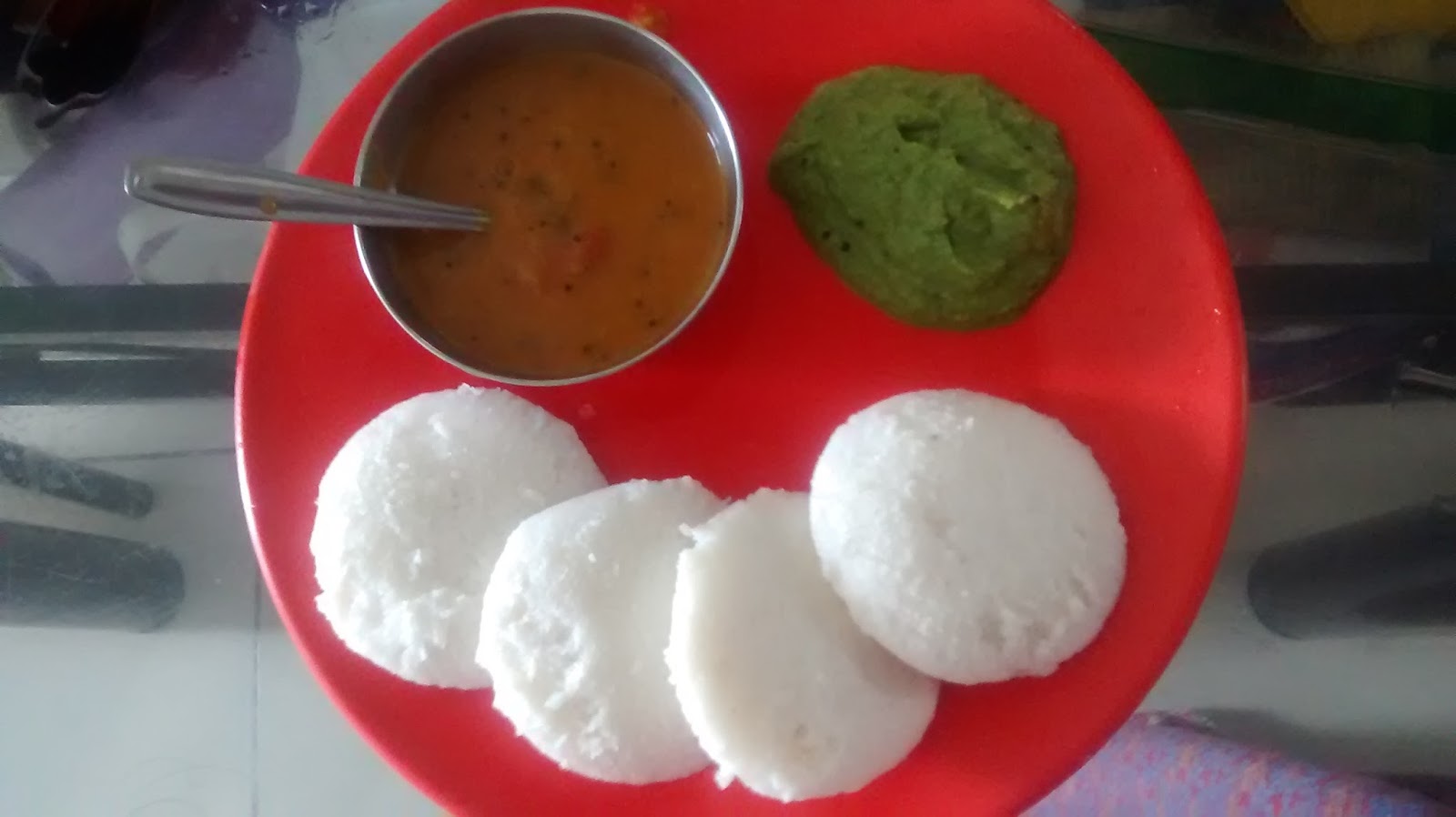
Heat 1-2 tsp oil in a pan, add 2-3 green chillies, 1 tsp urad dal, 2 tsp chana dal, saute till dal becomes golden brown.
Add chopped coriander leaves, 1 inch tamarind (or 1/4 tsp tamarind pulp), salt, 1/8 tsp asafoetida and saute for 3-4 min. Switch off the flame and allow it to cool down.
Add 1-2 tsp of fresh coconut and grind the mixture into a little coarse paste. Add water if required.
For tadka, take 1 tsp oil in a tadka pan, add 1/4 tsp mustard seeds and after it crackles add it to the chutney.
Pudina chutney:
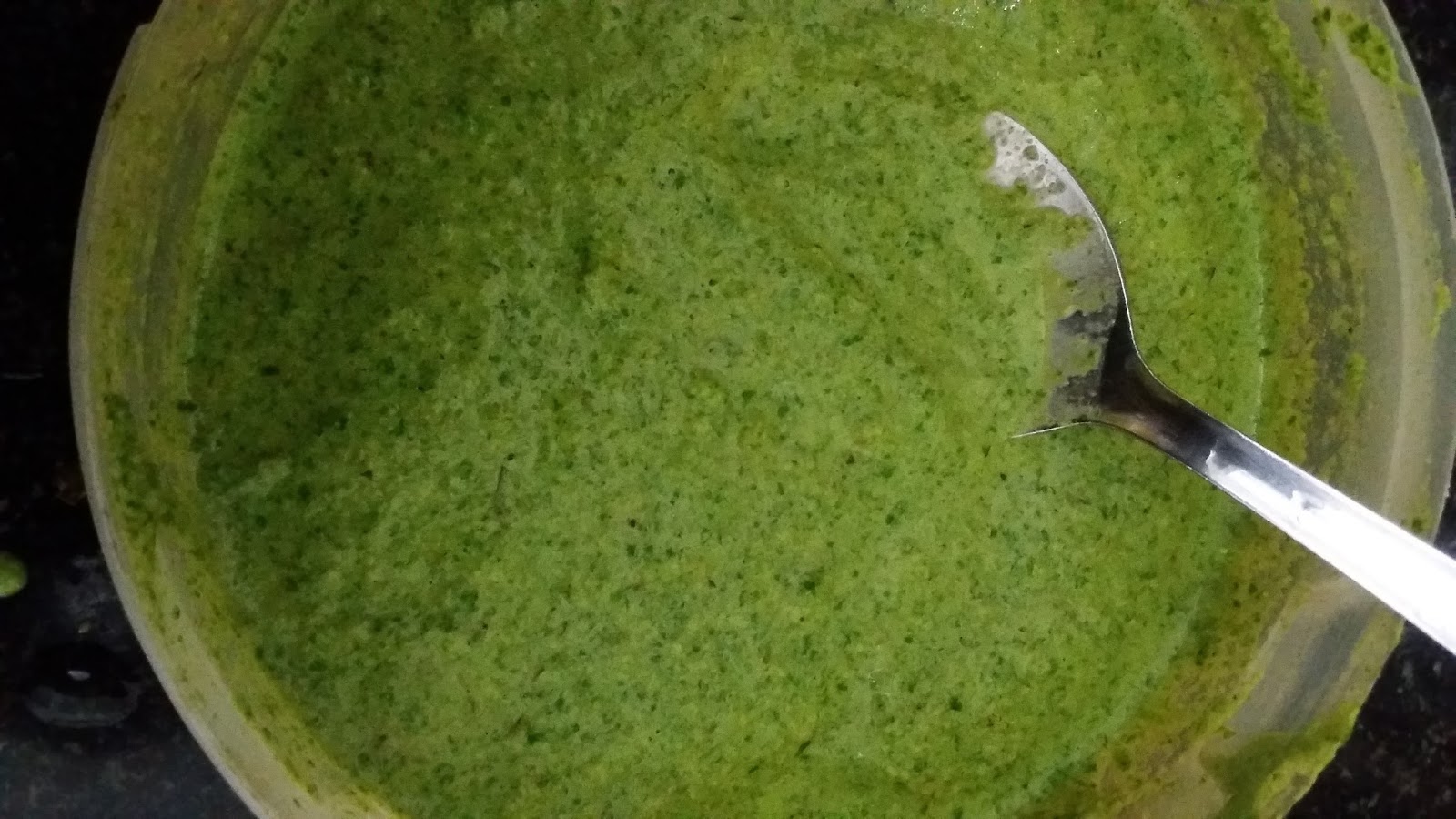
Clean 1 bundle of pudina leaves.
Heat 1-2 tsp oil in a pan, add 2-3 green chillies roughly chopped, 1 tsp urad dal, 2 tsp chana dal, saute till dal becomes golden brown.
Add pudina leaves, 1 inch tamarind (or 1/4 tsp tamarinf pulp), salt, 1/8 tsp asafoetida and saute for 3-4 min. Switch off the flame and allow it to cool down.
Add 1-2 tsp of fresh coconut and grind the mixture into a little coarse paste. Add water if required.
For tadka, take 1 tsp oil in a tadka pan, add 1/4 tsp mustard seeds and after it crackles add it to the chutney.
Onion Tomato Chutney:
Ingredients:
onion: 2 medium
tomato: 1 big
curry leaves : 4-5 (optional)
Coriander leaves chopped: 1 tbsp (optional)
Red chillies: 3-4 (can take more if u like it spicy hot)
Tamarind paste: 1/4tsp (or 1 inch tamarind)
asafoetida : pinch
Turmeric : pinch
urad dal : 1.5 tsp
mustard: 1/4 tsp
Oil: 3 tsp
Fresh grated coconut: 2 tsp
Method:
Take 2 tsp oil in a pan, add the red chillies, urad dal and saute till the dal starts turning golden brown.
Add roughly chopped onions, saute till it turns translucent.
Now add roughly chopped tomato. Add turmeric, salt. Mix well. Saute till the tomatoes seem to be cooked. (its skin will wrinkle).
Now add the curry leaves and coriander leaves and saute for 1 min. (optional)
Turn off the flame and allow the mixture to cool down. Add asafoetida, tamarind paste, coconut and grind it into a coarse paste.
For tadka, heat 1 tsp oil and add 1/4 tsp mustard seeds. After it crackles , add it to the chutney.
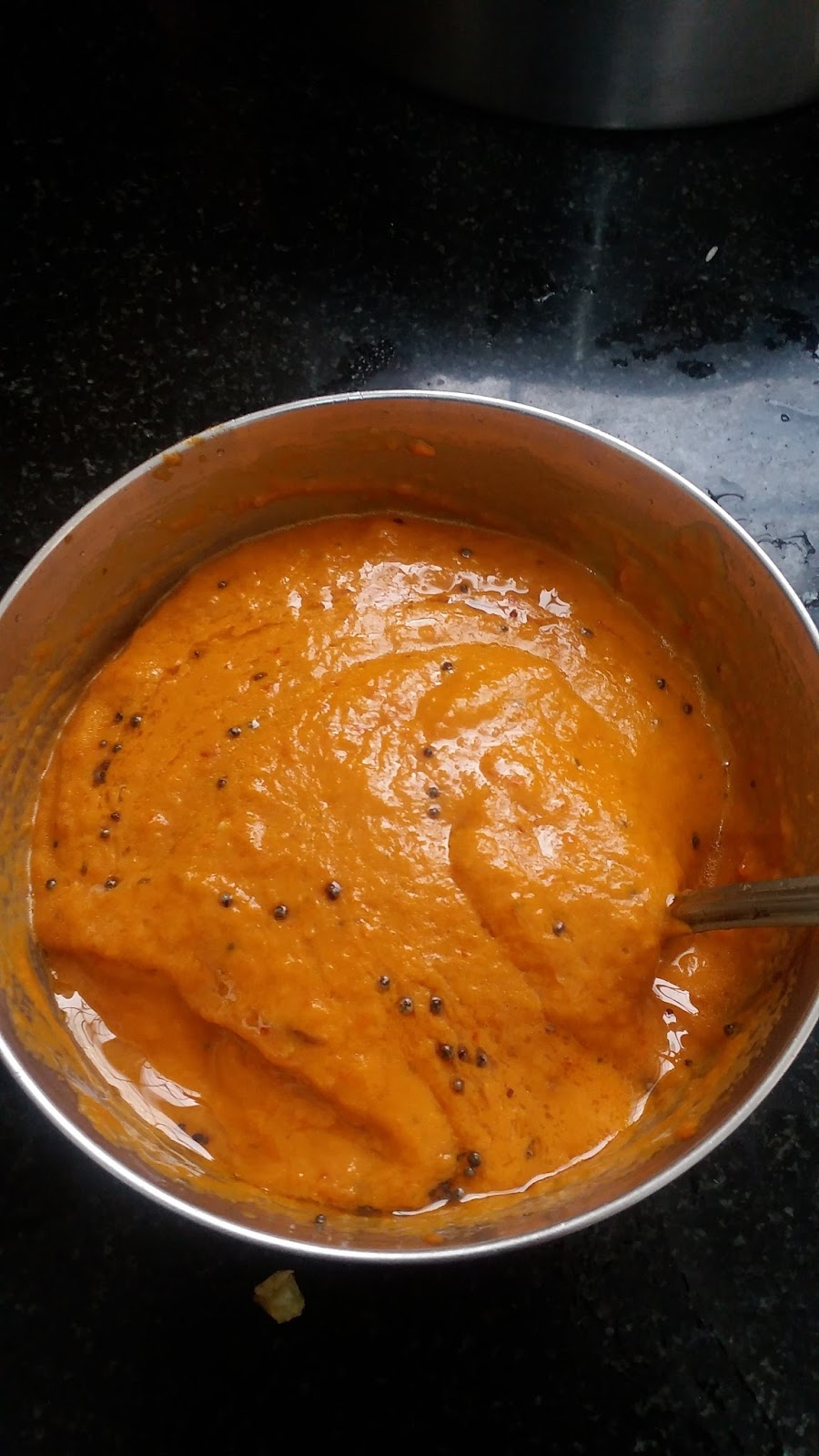
Ingredients:
onion: 2 medium
tomato: 1 big
curry leaves : 4-5 (optional)
Coriander leaves chopped: 1 tbsp (optional)
Red chillies: 3-4 (can take more if u like it spicy hot)
Tamarind paste: 1/4tsp (or 1 inch tamarind)
asafoetida : pinch
Turmeric : pinch
urad dal : 1.5 tsp
mustard: 1/4 tsp
Oil: 3 tsp
Fresh grated coconut: 2 tsp
Method:
Take 2 tsp oil in a pan, add the red chillies, urad dal and saute till the dal starts turning golden brown.
Add roughly chopped onions, saute till it turns translucent.
Now add roughly chopped tomato. Add turmeric, salt. Mix well. Saute till the tomatoes seem to be cooked. (its skin will wrinkle).
Now add the curry leaves and coriander leaves and saute for 1 min. (optional)
Turn off the flame and allow the mixture to cool down. Add asafoetida, tamarind paste, coconut and grind it into a coarse paste.
For tadka, heat 1 tsp oil and add 1/4 tsp mustard seeds. After it crackles , add it to the chutney.
Katrika Gothsu
Add 2 medium chopped tomatoes (the sour ones) and saute for 5 min or till its skin wrinkles.
Then add chopped brinjals (5-6)and saute till it gets half cooked.
Add 1.5 tumbler tamarind juice (less concentrated), add 1/4 tsp asafoetida, 1/4tsp turmeric, salt and 1/2 tsp sambhar powder and let it boil for 5-7 minutes. Serve hot with Rice upma or anything you like it with.
Roti/parantha/dosa varieties:
Aloo Parantha
Step1 (stuff and make dumplings)
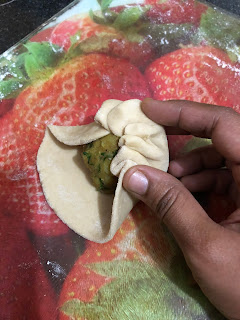
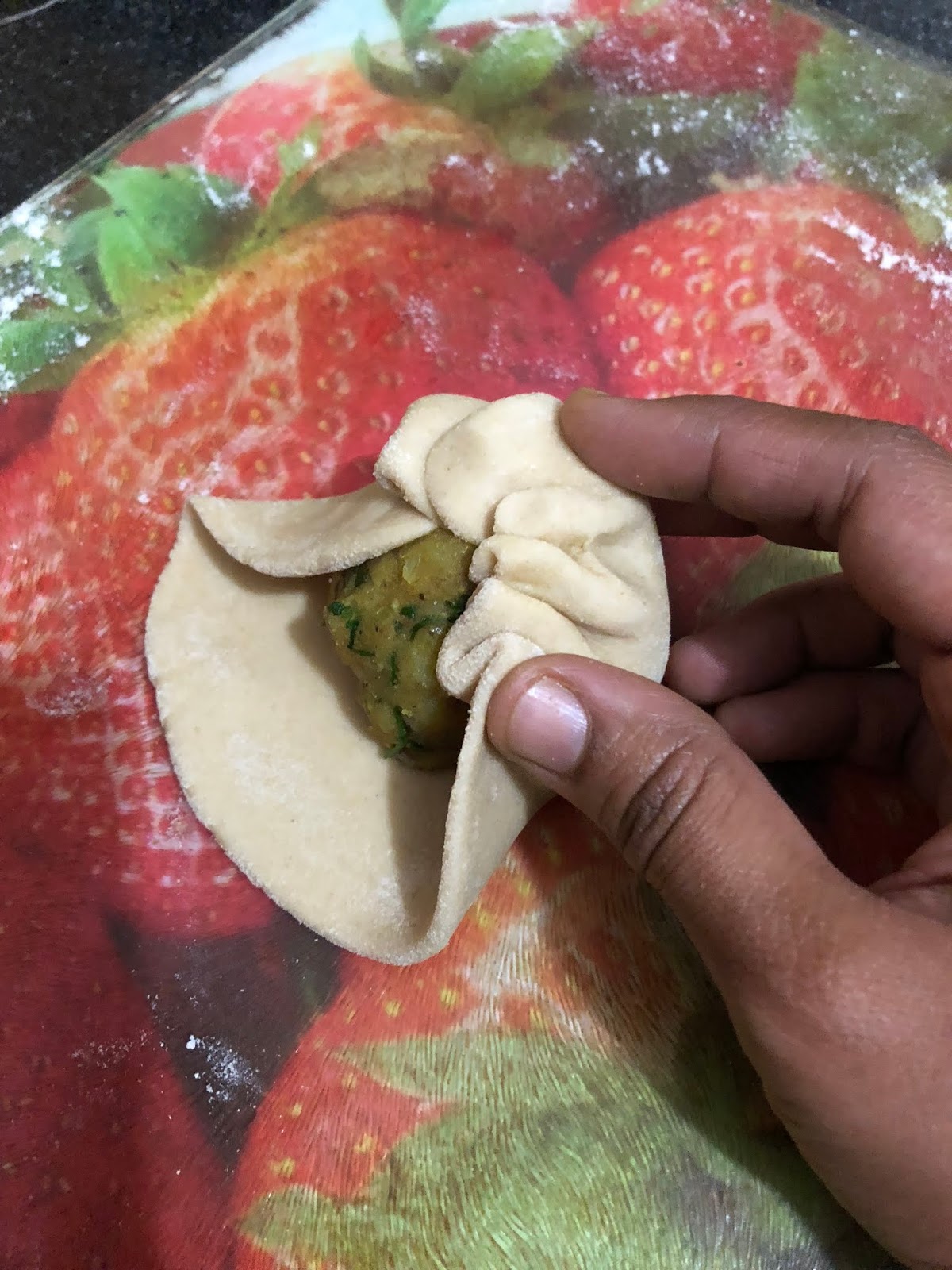
Step 2 (put enough flour on top of a dumpling)
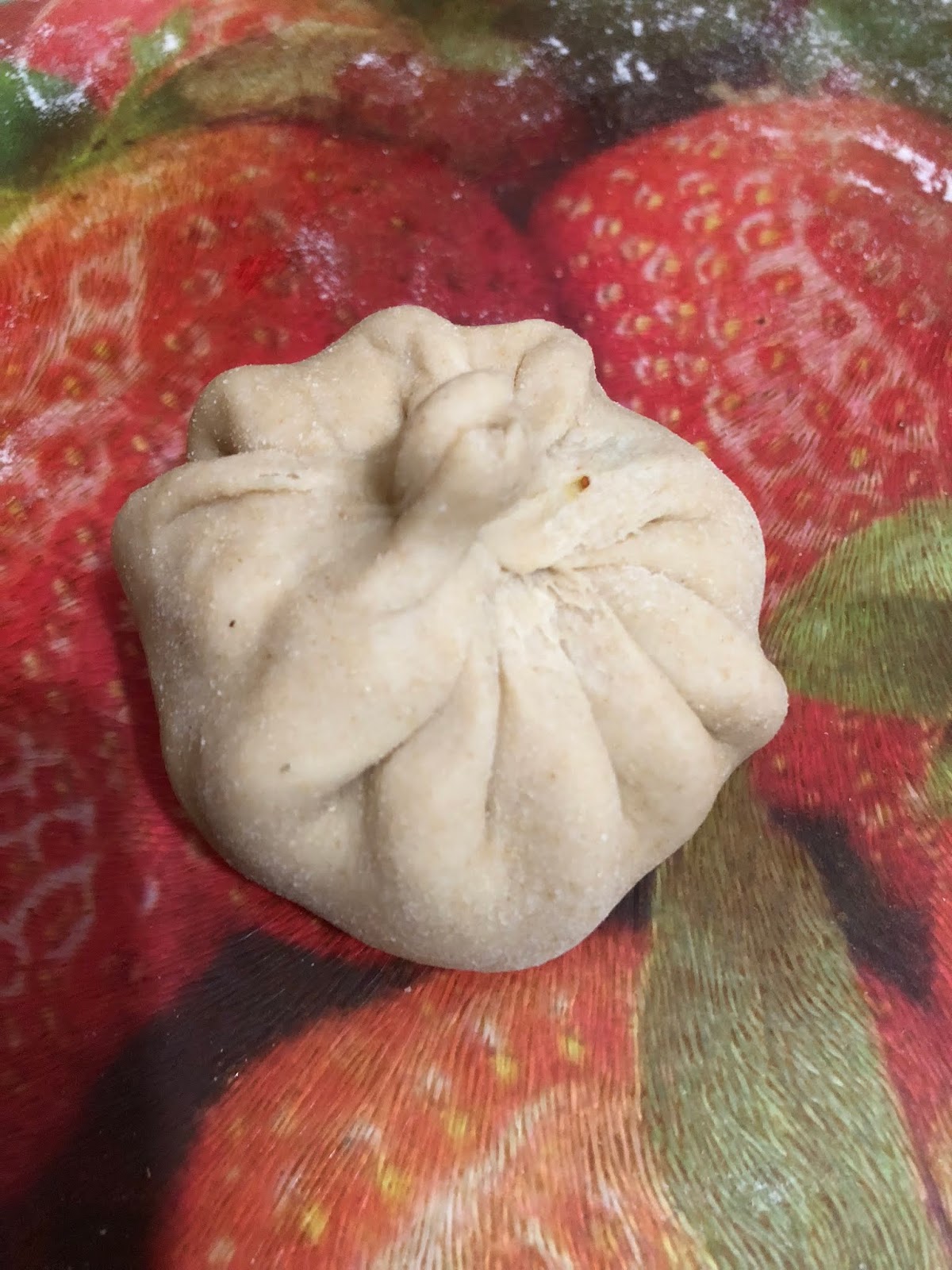
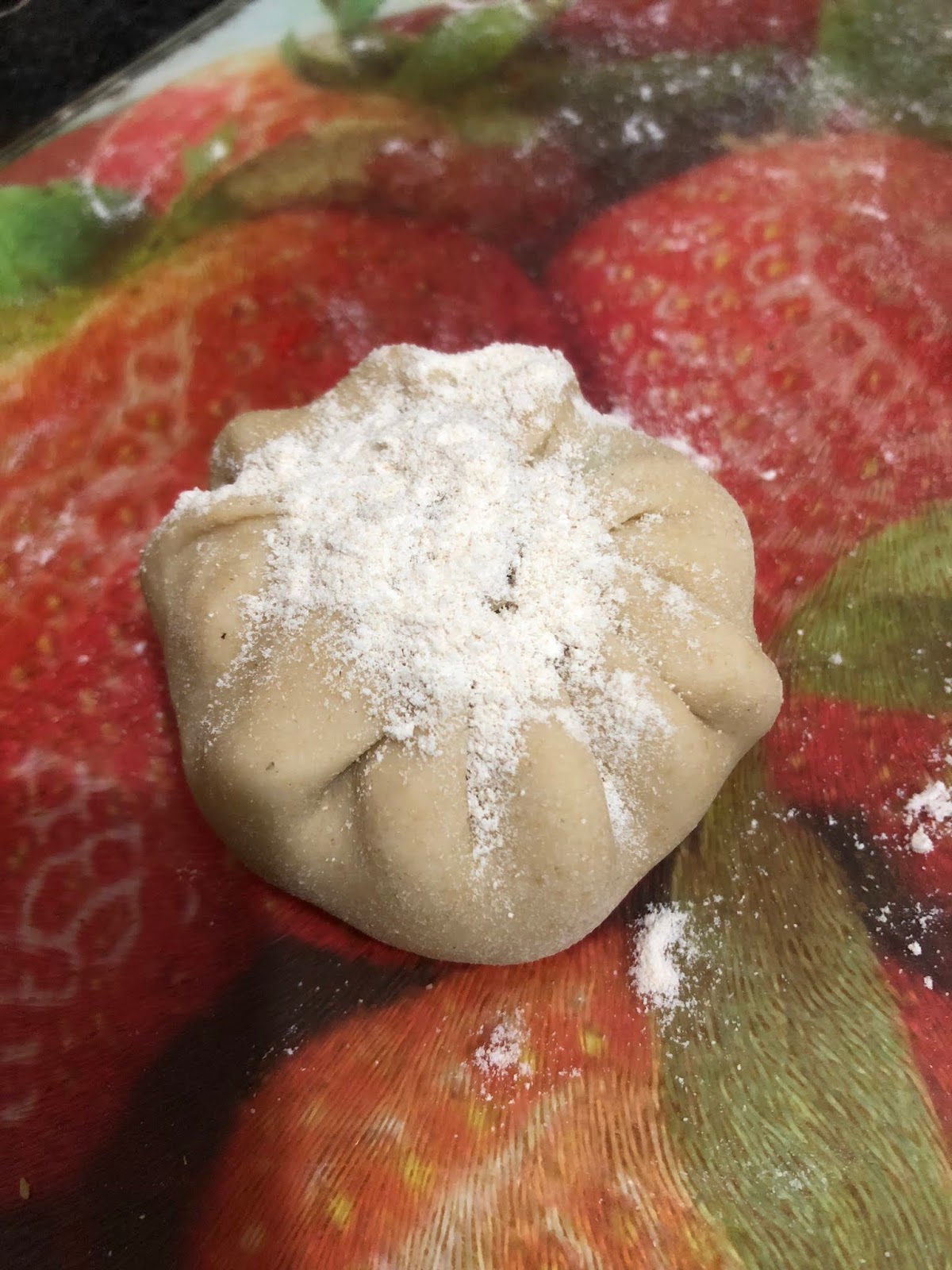
Step 3 (turn it and apply some flour)
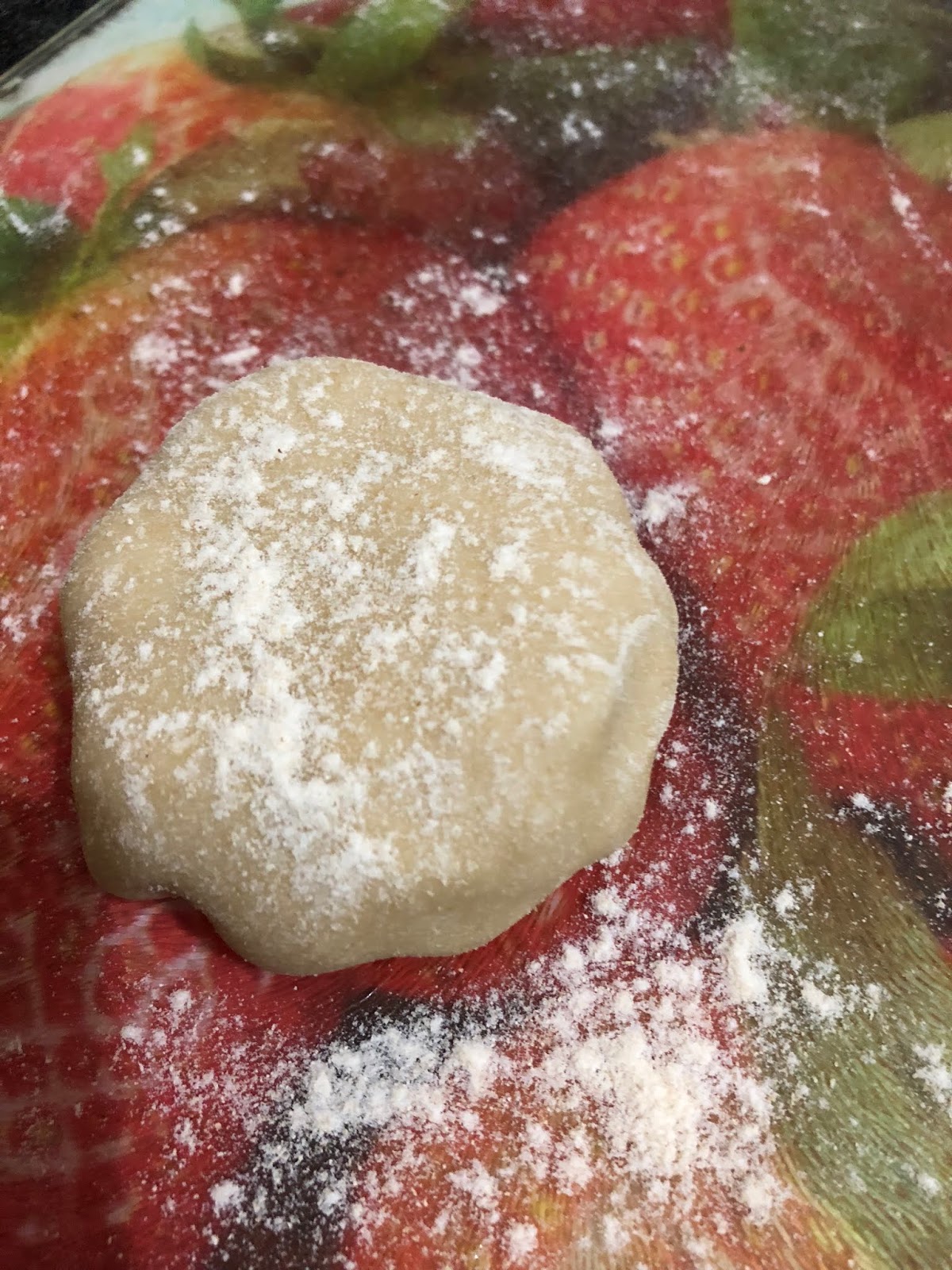
Step 4 (roll it and cook on tawa)
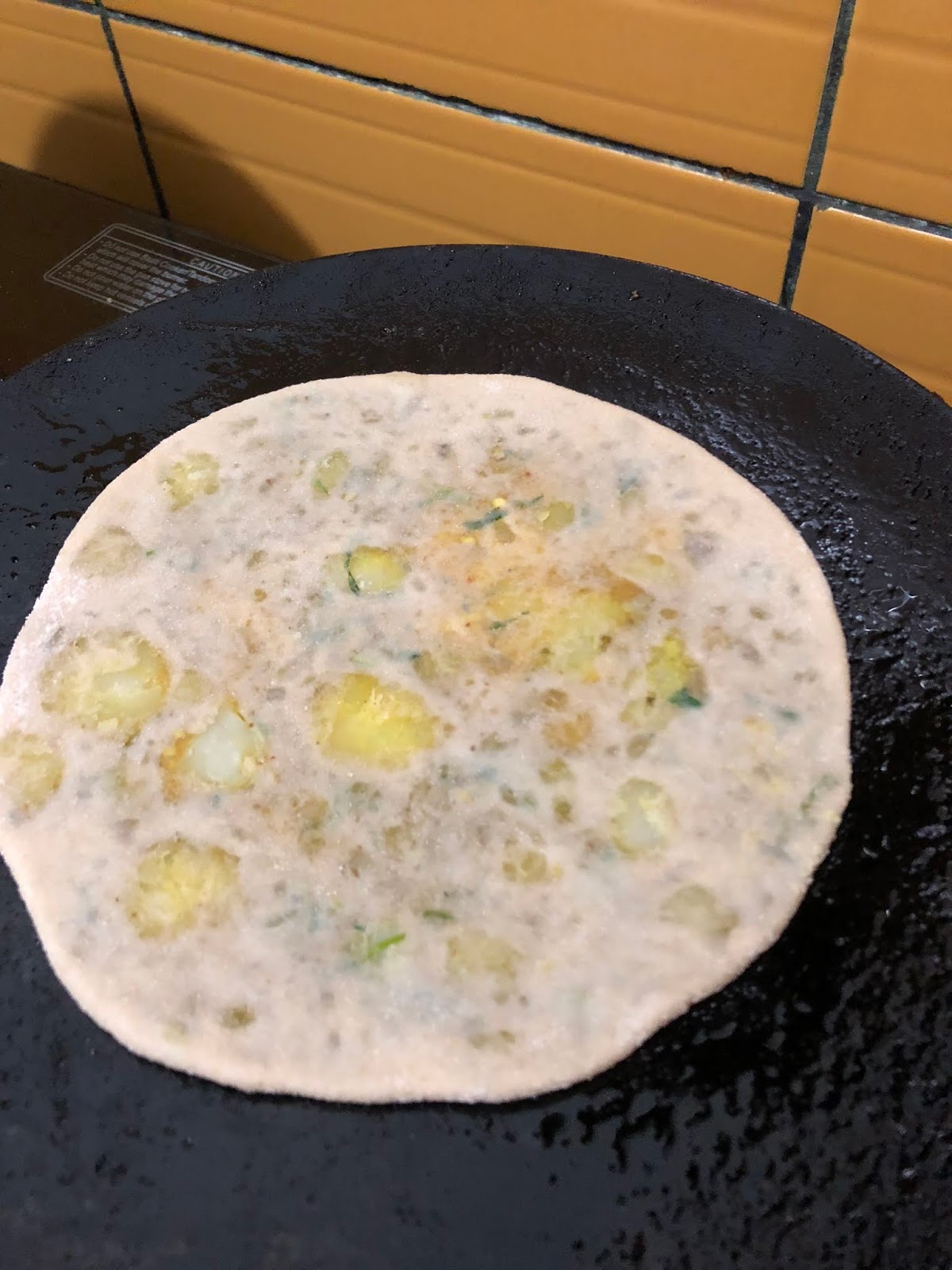
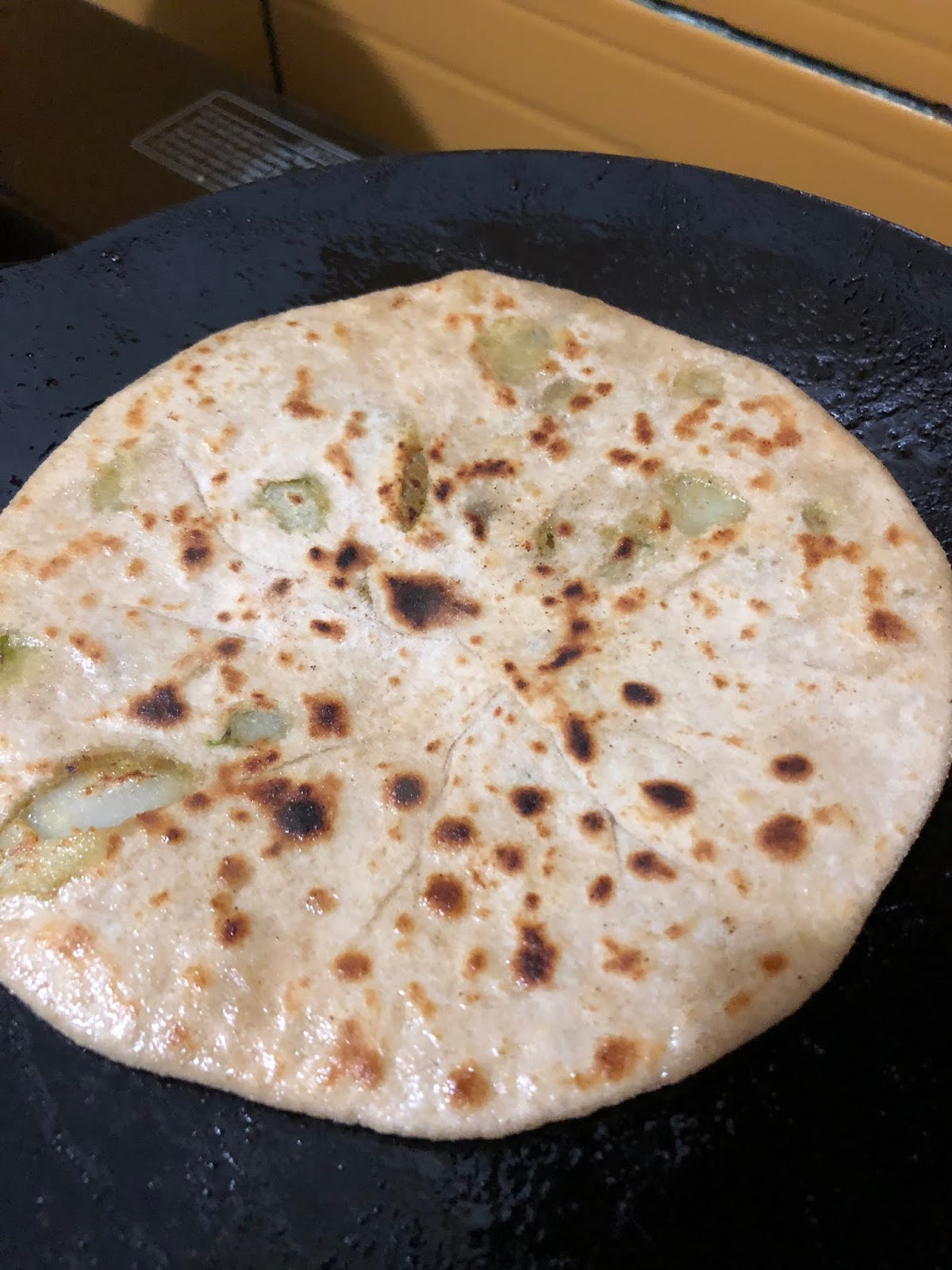
Make sure you have enough fresh coriander before you make your aloo parantha. Without them the paranthas arent that tasty!
Ingredients:
Boiled Potatoes : 3
Ginger Garlic paste : 1 tsp
Green chillies : 1 tsp finely chopped
Onions : half cup finely chopped
Turmeric powder : 1/4th tsp
Dhaniya powder : 0.5 tsp
Garam Masala : 0.5 tsp
Red Chilli powder : 0.5 tsp
Jeera powder : 1/4th tsp
Fresh chopped coriander leaves : 1/4th cup
Oil : 2-3 tbsp for the stuffing and some more for roasting the paranthas
Salt to taste
Method:
1. Heat 2-3 tbsp oil in a pan, add 1 tsp ginger garlic paste, 1 tsp of finely chopped green chillies, add one cup finely chopped onions. Saute till the onion starts turning brown.
2. Add the boiled & mashed potatoes (make sure they are mashed well without lumps so that it is easier to roll), add turmeric powder, dhaniya powder, garam masala, red chilli powder, jeera powder and chopped coriander leaves.Add salt and mix well and saute for 5 min.
3. Allow the mixture to cool. Knead the wheat flour and use the potato mixture for stuffing and make the paranthas as shown in figure.
Serve with pickle and raita.
Note: You can also mix all the ingredients raw and prepare the paranthas(exclude ginger garlic paste for this), this method is apt for having paranthas as breakfast.
Ingredients:
Boiled Potatoes : 3
Ginger Garlic paste : 1 tsp
Green chillies : 1 tsp finely chopped
Onions : half cup finely chopped
Turmeric powder : 1/4th tsp
Dhaniya powder : 0.5 tsp
Garam Masala : 0.5 tsp
Red Chilli powder : 0.5 tsp
Jeera powder : 1/4th tsp
Fresh chopped coriander leaves : 1/4th cup
Oil : 2-3 tbsp for the stuffing and some more for roasting the paranthas
Salt to taste
Method:
1. Heat 2-3 tbsp oil in a pan, add 1 tsp ginger garlic paste, 1 tsp of finely chopped green chillies, add one cup finely chopped onions. Saute till the onion starts turning brown.
2. Add the boiled & mashed potatoes (make sure they are mashed well without lumps so that it is easier to roll), add turmeric powder, dhaniya powder, garam masala, red chilli powder, jeera powder and chopped coriander leaves.Add salt and mix well and saute for 5 min.
3. Allow the mixture to cool. Knead the wheat flour and use the potato mixture for stuffing and make the paranthas as shown in figure.
Serve with pickle and raita.
Note: You can also mix all the ingredients raw and prepare the paranthas(exclude ginger garlic paste for this), this method is apt for having paranthas as breakfast.
Paneer Parantha
Ingredients:
paneer : 200 g
Green chillies : 2
onion : 1 big
Garam masala : 1.5 tsp
Kasoori Methi : 2 tbsp
salt : to taste
Method:
Crumble the paneer, add salt, finely chopped green chillies, finely chopped onion, garam masala, kasoori methi. Mix well.
Use this for stuffing and make the paranthas. (Refer the figures in the recipe for aloo parantha)
Methi Parantha
You need to taste this awesome parantha. Serve with onion raita.
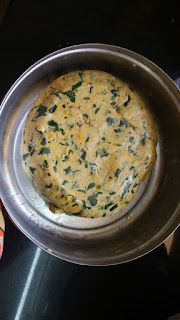
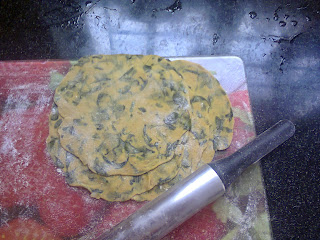
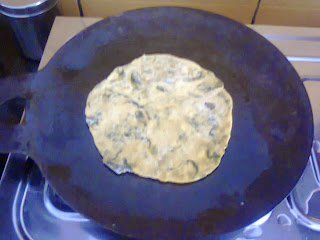
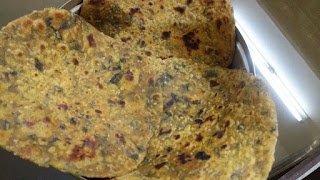
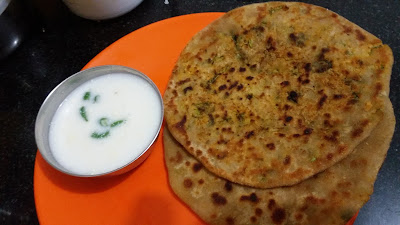
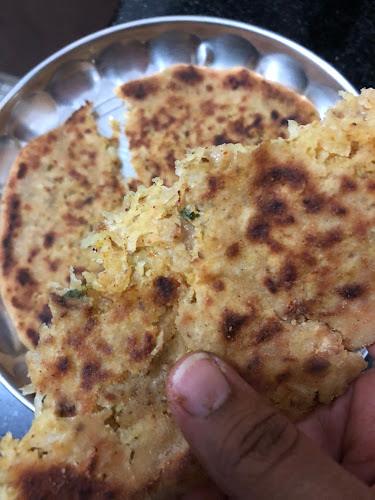
You really should have these paranthas with the Mooli raita.
Method:
Take 3 big Radish and grate them. Add little salt and leave it for 10-15 miniutes minimum.
Squeeze the radish and take the extra water into a separate bowl. Now u can use this water to knead the dough or make awesome raita. (I prefer to use it for the raita).
Add 1/2 tsp crushed dhaniya seeds and 1/2 tsp crushed ajwain.
Add 1/8 tsp turmeric, salt, 1/4 tsp sugar, 1/2 tsp garam masala,1/2 tsp red cilli powder and freshly chopped coriander leaves. Add 1 tsp ghee.
Mix well and use this as stuffing for the paranthas. (Refer to the figures in aloo parantha recipe)
Mooli raita:
For the raita, take fresh curd and add the radish water which we had squeezed out and kept aside. Add some salt. Add green chillies if u want. This raita with the Mooli paranthas will be too good.
Oats Dosa
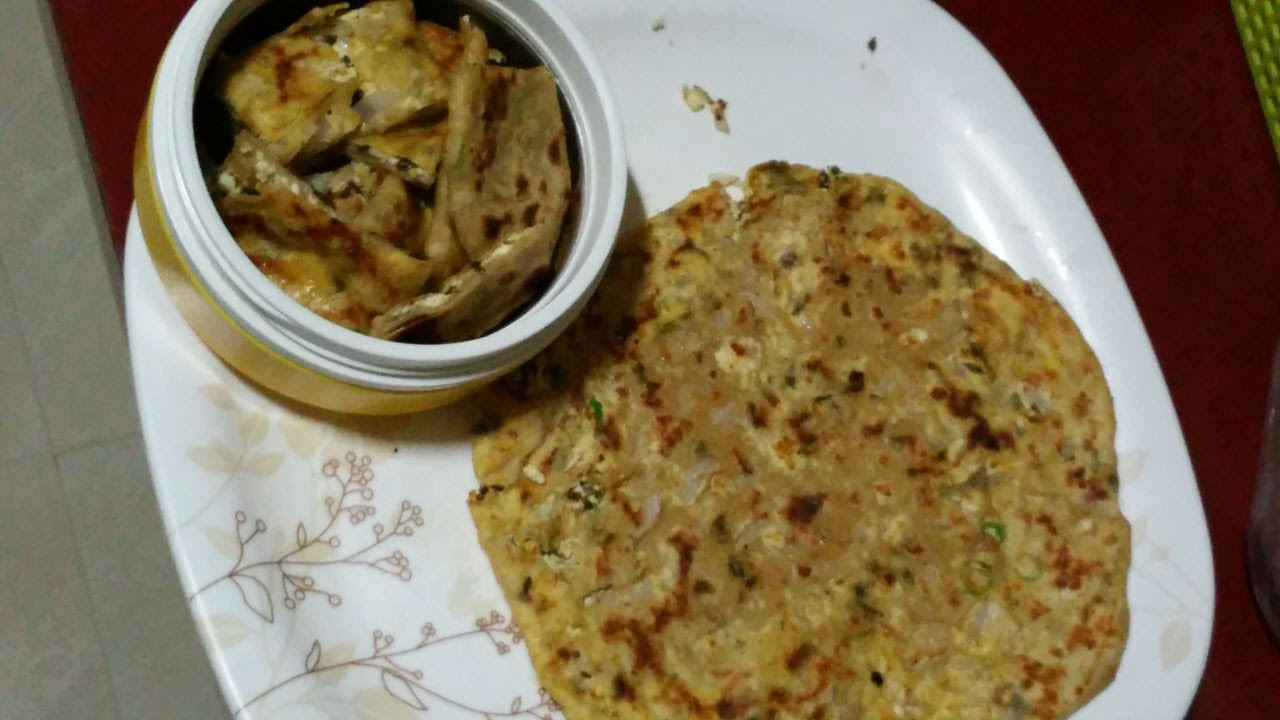
Ingredients:
paneer : 200 g
Green chillies : 2
onion : 1 big
Garam masala : 1.5 tsp
Kasoori Methi : 2 tbsp
salt : to taste
Method:
Crumble the paneer, add salt, finely chopped green chillies, finely chopped onion, garam masala, kasoori methi. Mix well.
Use this for stuffing and make the paranthas. (Refer the figures in the recipe for aloo parantha)
Methi Parantha
You need to taste this awesome parantha. Serve with onion raita.
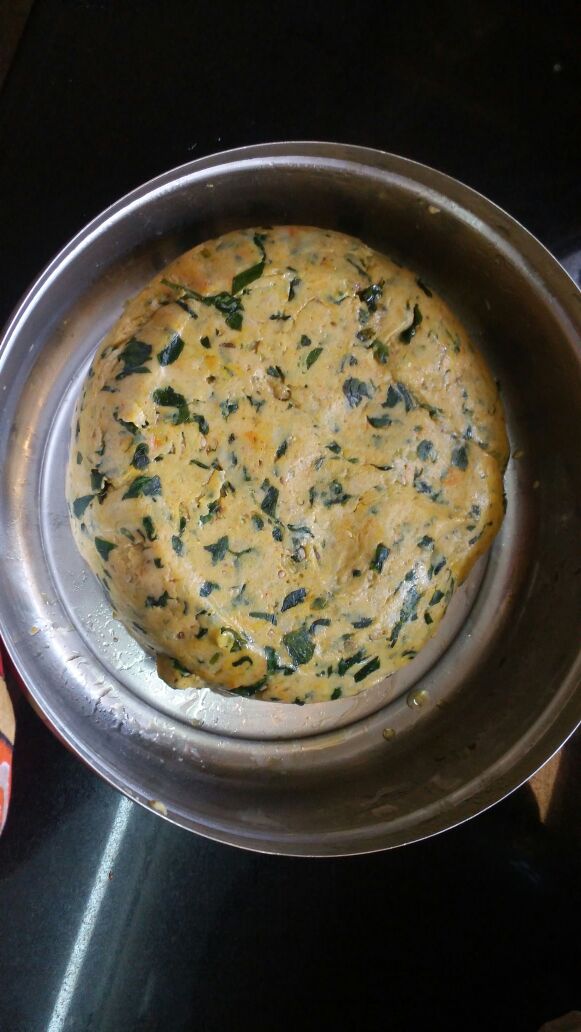


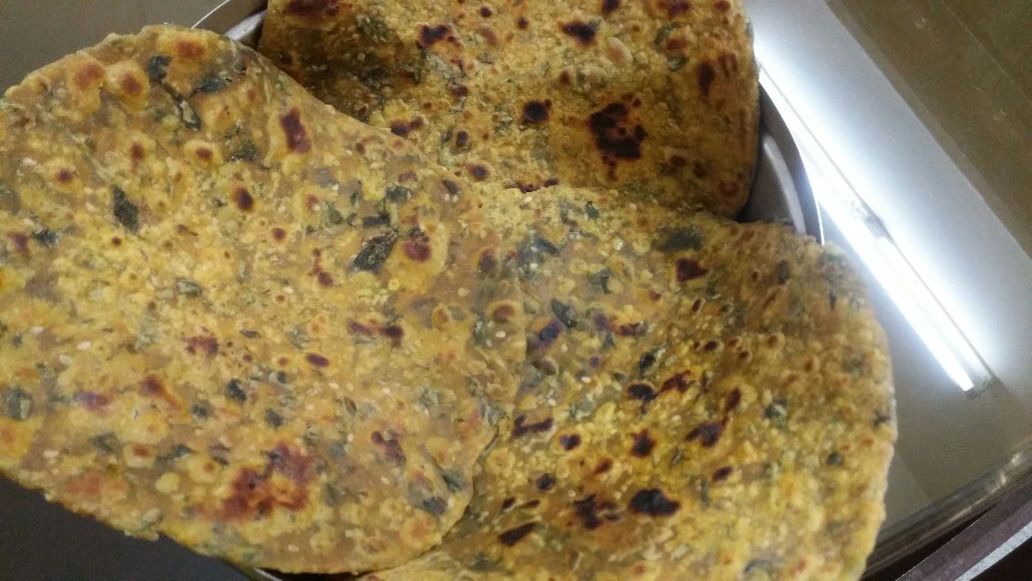
Ingredients:
2 cups fresh methi leaves
1.5 cup wheat flour
¼ tsp turmeric
1 tsp salt
½ tsp red chilli powder
2-3 tsp curd
Green chilli+ginger paste – 1.5 tsp
Jaggery – 1 small amla(Indian gooseberry) size (dissolved in water)
2 tsp oil
Ajwain - 1/4 to 1/2 tsp as you like it (optional)
Ajwain - 1/4 to 1/2 tsp as you like it (optional)
Method:
Take a bowl, mix all the above ingredients (except oil), very well.
Now close the bowl with a lid and let it marinate for some 3-4 hours. (minimum 2 hrs).
You can see that, the methi leaves would have shred all its water and the flour will be wet.
Now mix the contents well with hand and knead the dough. You can add little water if needed. In the end, add oil and again with hand keep moulding the dough till it doesn’t stick to bowl.
Now make small handful balls and roll them into paranthas, cook them on tawa. Keep flipping them and let in oil on both sides.
Waah!! Kya parantha hai!!!
Mooli Parantha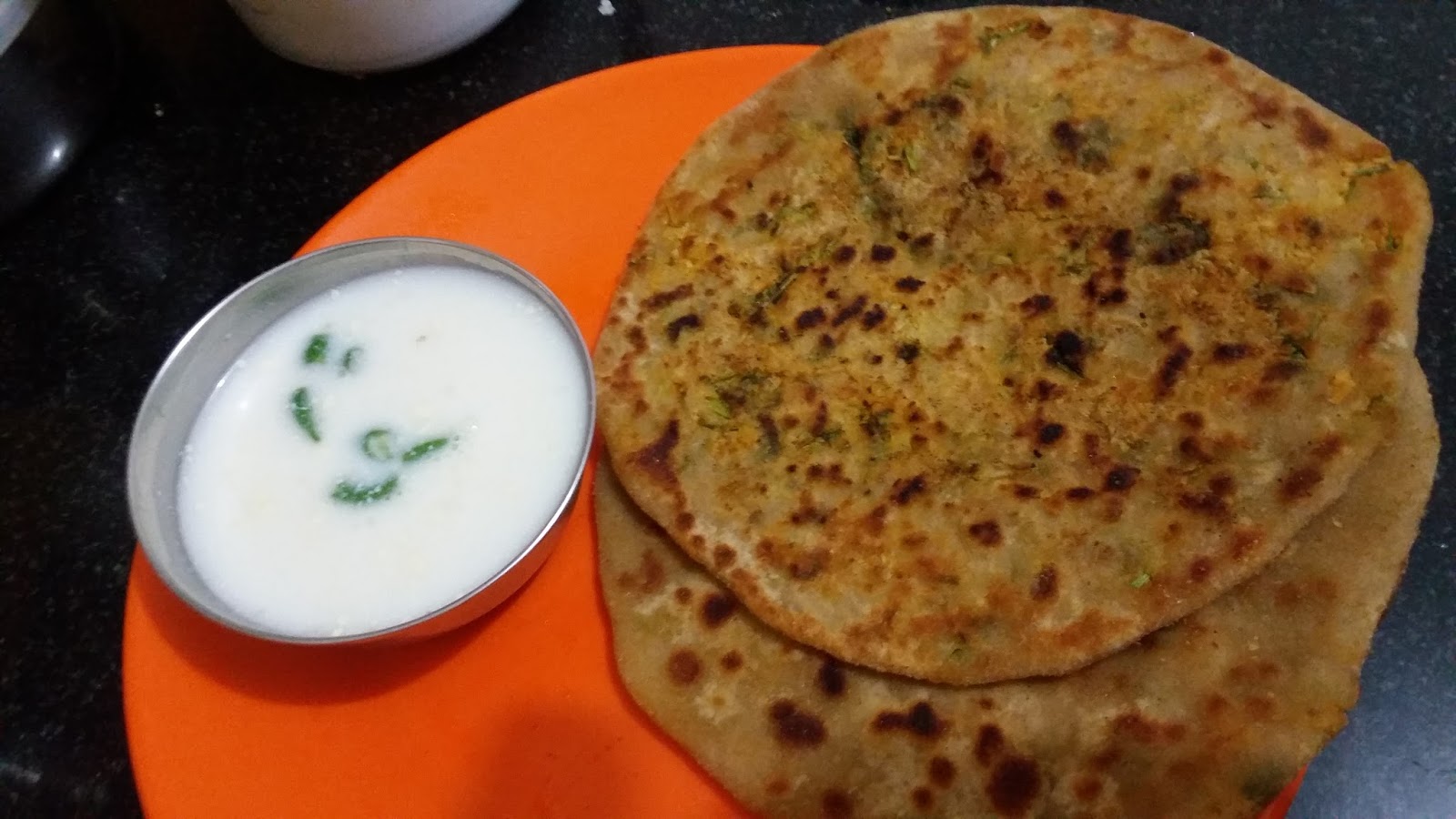
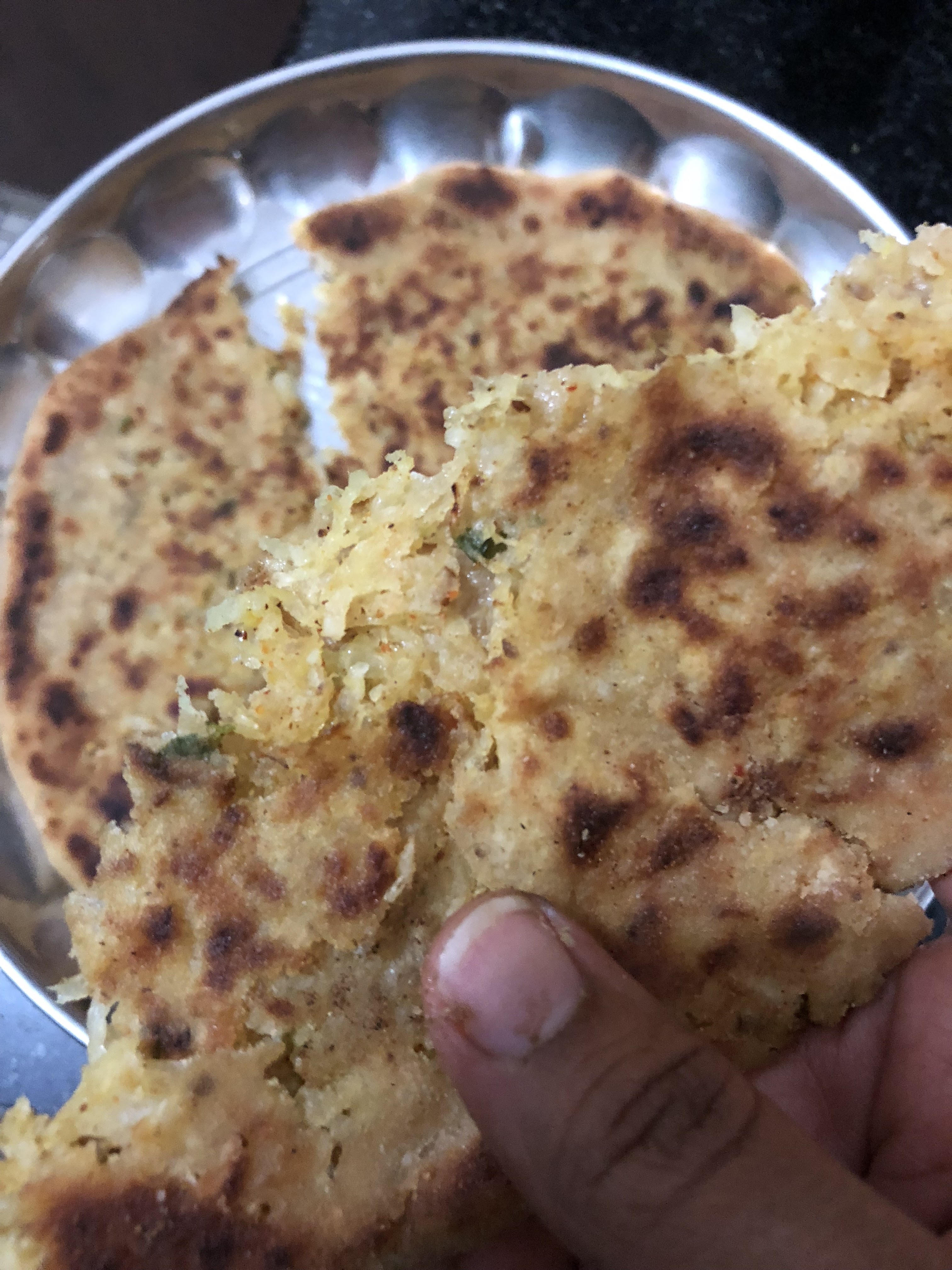
You really should have these paranthas with the Mooli raita.
Method:
Take 3 big Radish and grate them. Add little salt and leave it for 10-15 miniutes minimum.
Squeeze the radish and take the extra water into a separate bowl. Now u can use this water to knead the dough or make awesome raita. (I prefer to use it for the raita).
Add 1/2 tsp crushed dhaniya seeds and 1/2 tsp crushed ajwain.
Add 1/8 tsp turmeric, salt, 1/4 tsp sugar, 1/2 tsp garam masala,1/2 tsp red cilli powder and freshly chopped coriander leaves. Add 1 tsp ghee.
Mix well and use this as stuffing for the paranthas. (Refer to the figures in aloo parantha recipe)
Mooli raita:
For the raita, take fresh curd and add the radish water which we had squeezed out and kept aside. Add some salt. Add green chillies if u want. This raita with the Mooli paranthas will be too good.
Oats Dosa
Method:
Grind 1.5 to 2 cups of oats into fine powder. Add 1 cup water and 2-3 tbsp curd,salt mix well and keep it aside for minimum half an hour.
Add little water to get the dosa batter consistency. Add some chopped curry leaves and onions.
Add little water to get the dosa batter consistency. Add some chopped curry leaves and onions.
Heat the tawa, add little oil. When hot, pour one ladle of batter
and spread it even and round like dosa. Make a hole in the center (else it might not cook properly in the middle portion).
Pur 1/2 tsp oil in and around the batter.
After 1-2 min, with a spatula turn the Dosa to cook the other side and add oil again.
When both sides of dosa turn golden brown, take it out from pan. Serve hot.
Pur 1/2 tsp oil in and around the batter.
After 1-2 min, with a spatula turn the Dosa to cook the other side and add oil again.
When both sides of dosa turn golden brown, take it out from pan. Serve hot.
Adai
Many people know 'Dosa' but not 'Adai'. Soak rice & dal for 2 hours in water, grind and prepare the batter and there you go ...all set for something different and yummilicious. Adai is savoured with a sidedish called 'Avial'. But you can still have it with pickles/chutney/sambhar if not Avial. Also some prefer eating it with some jaggery mixed with ghee.
Click here for Avial's recipe.
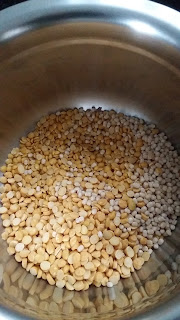
Many people know 'Dosa' but not 'Adai'. Soak rice & dal for 2 hours in water, grind and prepare the batter and there you go ...all set for something different and yummilicious. Adai is savoured with a sidedish called 'Avial'. But you can still have it with pickles/chutney/sambhar if not Avial. Also some prefer eating it with some jaggery mixed with ghee.
Click here for Avial's recipe.
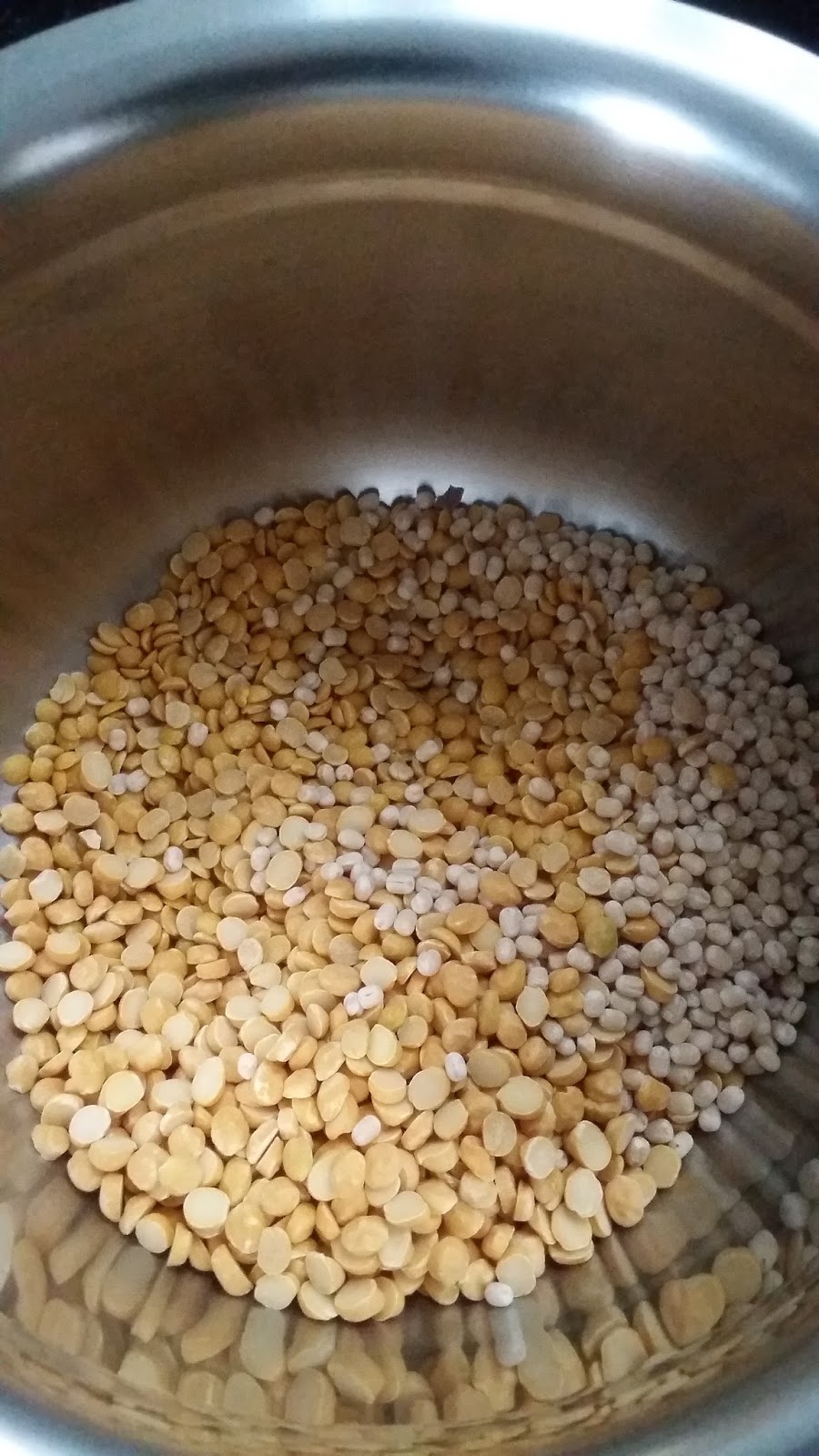
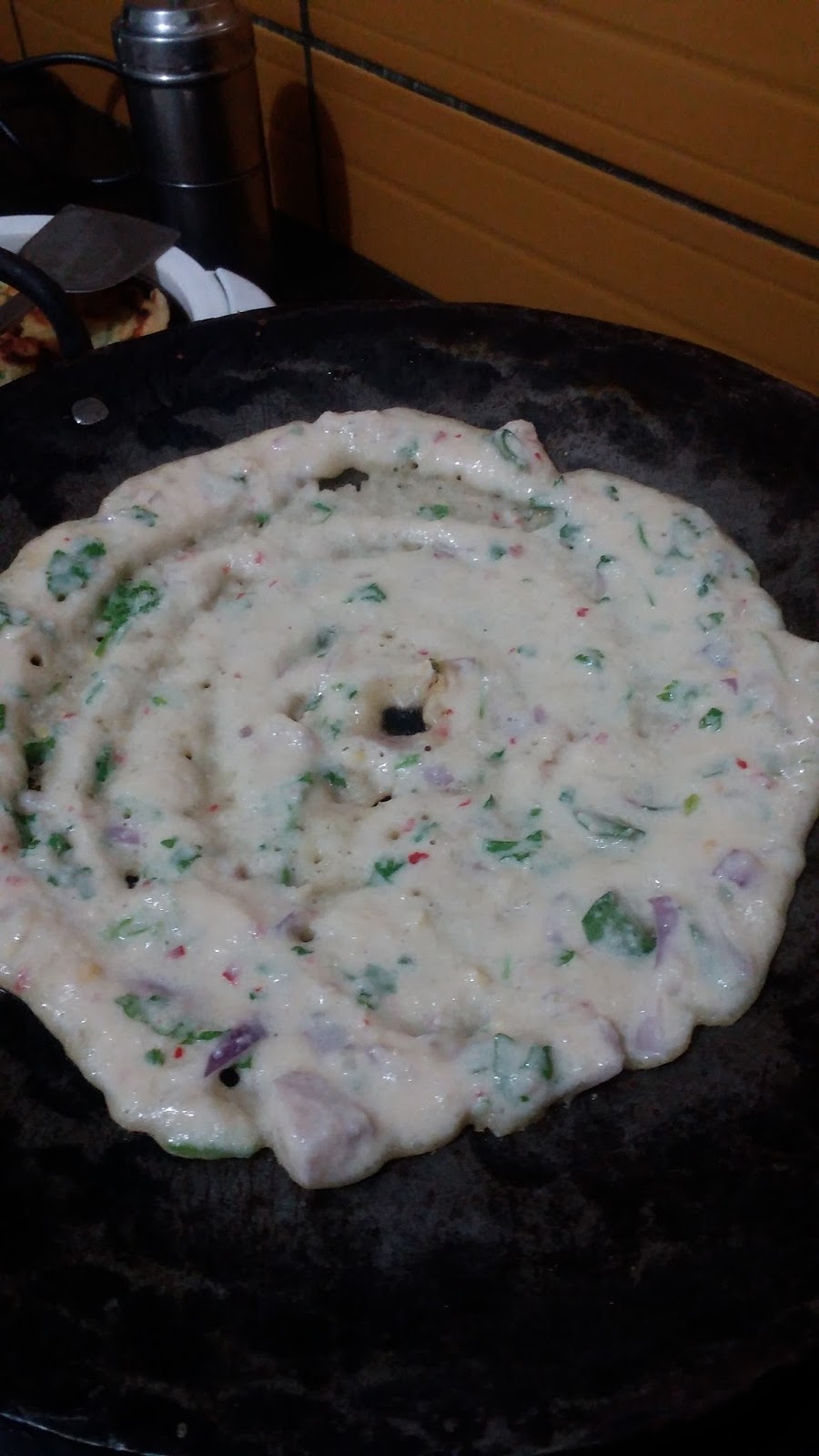
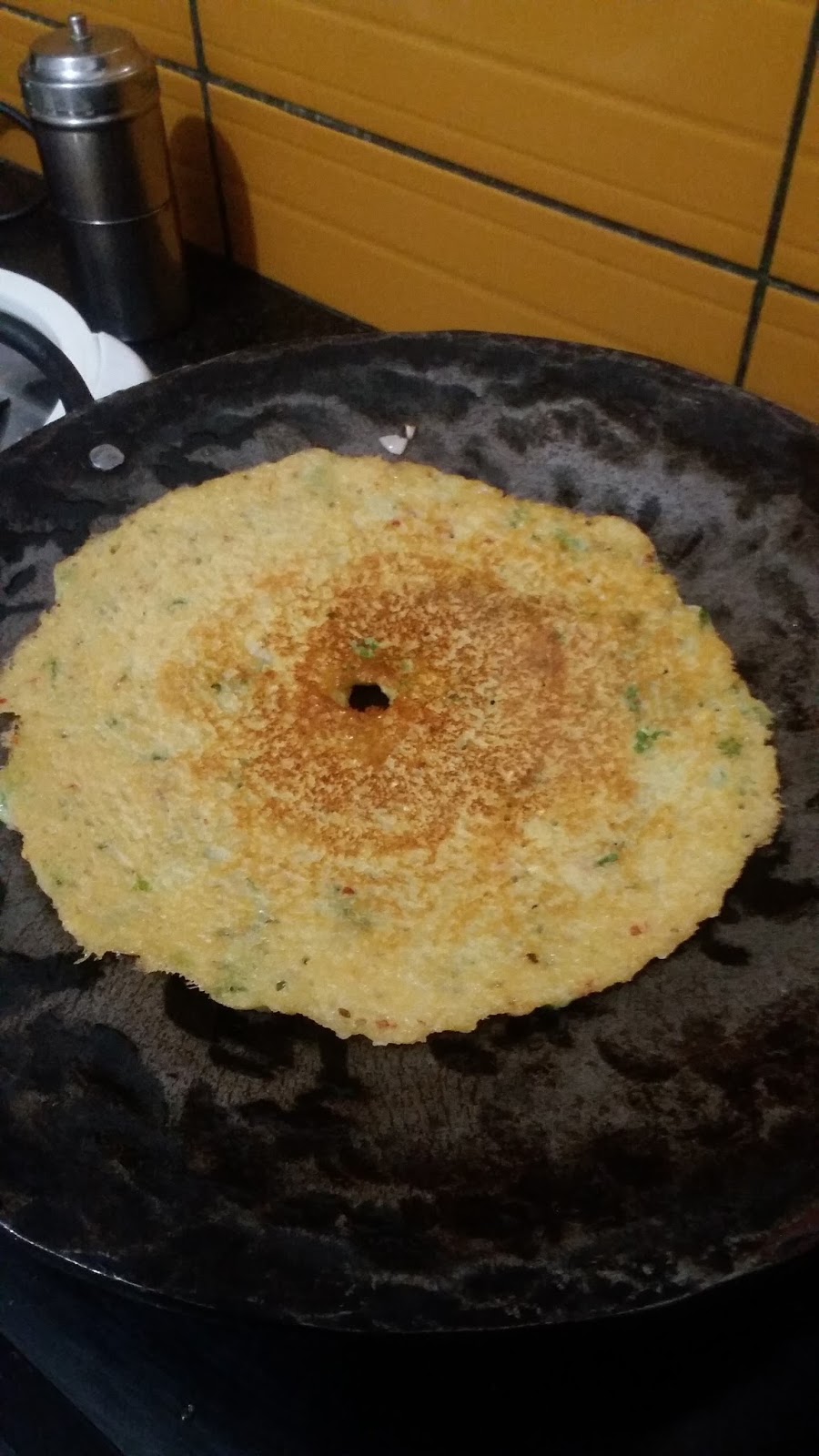
Ingredients :
Rice - 2 cups
tuwar dal : 1/2 cup
Chana dal : 1/4 cup
Urad dal : 1/8 cup
Salt : 1.5 tsp or as per taste
Asafoetida :1/8 tsp
coriander leaves : 1/2 cup chopped
curry leaves : few (7-8)
grated coconut (or) onion : 1/2 cup
Red Chilli : 3 to 4
Method:
Soak rice, tuwar dal, chana dal,urad dal in water for 2 hours. Soak the rice in a separate container.
Drain water. Add above ingredients in a big mixi jar, add salt, asafoetida, red chillies and grind it by adding little water till it turns into a coarse batter. Note that the batter should not be too smooth and too coarse.
Transfer it into a vessel and add chopped curry and coriander leaves.
Add the grated coconut or chopped onions.
Heat the tawa, add little oil. When hot, pour one ladle of batter and spread it even and round like dosa. Make a hole in the center (else it might not cokk properly in the middle portion).
Pour 1/2 tsp oil in and around the batter.
After 1-2 min, with a spatula turn the Adai to cook the other side and add oil again.
When both sides of Adai turn golden brown, take it out from pan. Serve hot.
Karacha Dosa
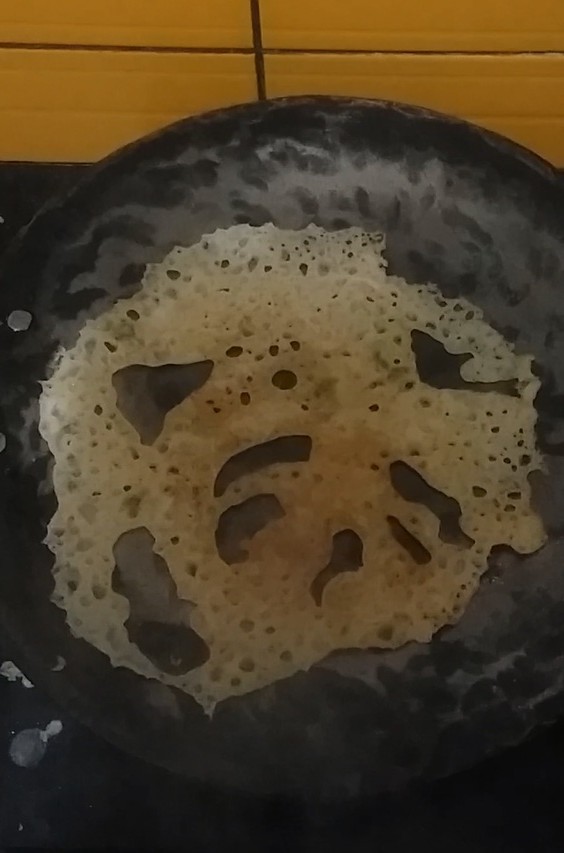
Ingredients
Wheat flour (atta) : 1/2 cup
Maida : 1/2 cup
Rava : 1/2 cup
Rice flour (arisi maavu) : 1/2 cup
Thin & sour buttermilk : 1/2 cup
Salt : 1/2 tsp or according to your taste
Jeera : 1 tsp
Oil : 1-2 tbsp
Mustard : 1/2 tsp
Urad dal : 1 tsp
Ginger : 1/2 inch finely chopped
Green chillies : 2 finely chopped
Curry leaves : 10-15 leaves
Note : you can reduce the quantity/proportion of wheat flour and maida as per your taste. But on the whole, Rava and rice flour should be in equal quantity and both(rava+rice flour) should be more in quantity compared to wheat flour and maida.
Also, you can add chopped onions to the batter if you like.
Method:
1. Mix wheat flour, maida, rava, rice flour, buttermilk into 2-3 cups of water and prepare a dosa batter which has loose consistency. (It should be much more loose than the normal dosa batter. Adjust water accordingly). Add salt and mix well. Keep this batter aside for 10-15 min.
2. Now we need to add tadka to the batter. Heat oil in a tadka pan, once hot, add mustard seeds and llow it to crackle. Then add Urad dal, ginger, green chillies and curry leaves. Once the dal turn golden brown, turn off the flame and add the tadka to the batter. Mix well.
If you like, you can add chopped onions to the batter too.
3. Now you make dosa with this batter. But you have to follow a different method. Normally for dosa, we pour one ladle of batter in the center and we move the ladle spirally to spread it over the hot tawa. But for Karacha Dosa, we need to pour the batter first forming the outward circle and then move the ladle inwards to the center. Also since the batter is very loose, the dosa will have lot of holes. So dont try to fill them. This dosa should be like that only which will help the batter to get cooked properly and evenly. Pour 1/2 tsp oil around the dosa. Let it cook till it can be easily removed with a spatula. Flip it and cook it on the other side also. Pour 1/2 tsp or less oil around the dosa. Remove the dosa from the tawa once it is golden brown on both sides.
Green Moong Dosa
Rice:
Lemon Rice
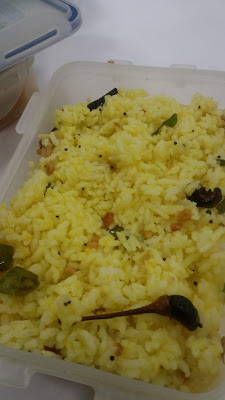
lemon : 2
urad dal : 1 tsp
chana dal (kadala paruppu) : 1 tsp
curry leaves: few
kaju : 4-5 (optional) [or peanut : 2 tbsp (optional)]
Mutstard/rai : 1/2 tsp
salt to taste
asafoetida/hing : pinch
oil : 1.5 tbsp
green chilli : 1
red chilli : 1
Ginger : 1/2 inch
Fenugreek powder (fenugreek dry roasted & powdered) : 1/4 tsp
Method:
Heat oil in a pan, add mustard, urad dal, chana dal. Saute for till it started turning golden. (Now add peanuts/kaju if included and saute till they change colour), add broken red chilli, chopped green chilli, finely chopped ginger. Saute for few seconds. Add hing, curry leaves and switch off the flame. Squeeze the lemons into the sauted spices, add fenugreek powder & salt.
Mix with cooked rice. (For rice quantity : add as per your taste. If you like it sour and hot, add 1 cup cooked rice or more if you like it medium sour or mild.)
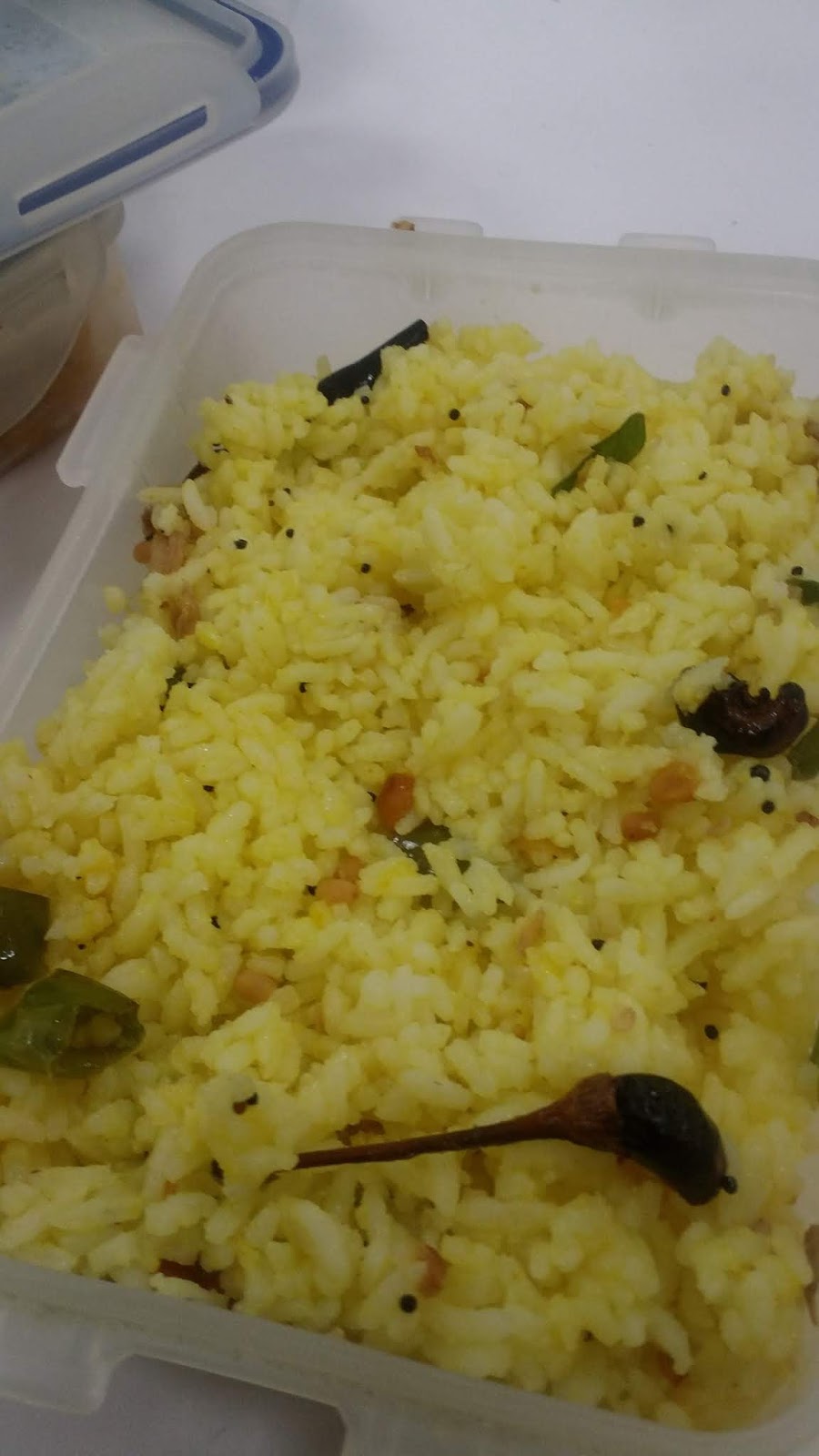
lemon : 2
urad dal : 1 tsp
chana dal (kadala paruppu) : 1 tsp
curry leaves: few
kaju : 4-5 (optional) [or peanut : 2 tbsp (optional)]
Mutstard/rai : 1/2 tsp
salt to taste
asafoetida/hing : pinch
oil : 1.5 tbsp
green chilli : 1
red chilli : 1
Ginger : 1/2 inch
Fenugreek powder (fenugreek dry roasted & powdered) : 1/4 tsp
Method:
Heat oil in a pan, add mustard, urad dal, chana dal. Saute for till it started turning golden. (Now add peanuts/kaju if included and saute till they change colour), add broken red chilli, chopped green chilli, finely chopped ginger. Saute for few seconds. Add hing, curry leaves and switch off the flame. Squeeze the lemons into the sauted spices, add fenugreek powder & salt.
Mix with cooked rice. (For rice quantity : add as per your taste. If you like it sour and hot, add 1 cup cooked rice or more if you like it medium sour or mild.)
Coconut rice
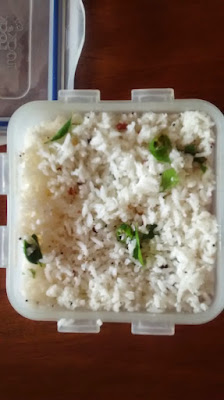
Ingredients :
Fresh grated coconut : 1/2 cup
urad dal : 1 tsp
chana dal (kadala paruppu) : 1 tsp
curry leaves: few
Mutstard/rai : 1/2 tsp
salt to taste
oil : 1.5 tbsp
green chilli : 1
red chilli : 1
Ginger : 1/2 inch
Method:
Heat oil in a pan, add mustard, urad dal, chana dal. Saute for till it started turning golden, add broken red chilli, chopped green chilli, finely chopped ginger, curry leaves. Saute for few seconds. Add coconut, saute for few seconds and switch off the flame.
Add some salt and mix it with 1 cup cooked rice.
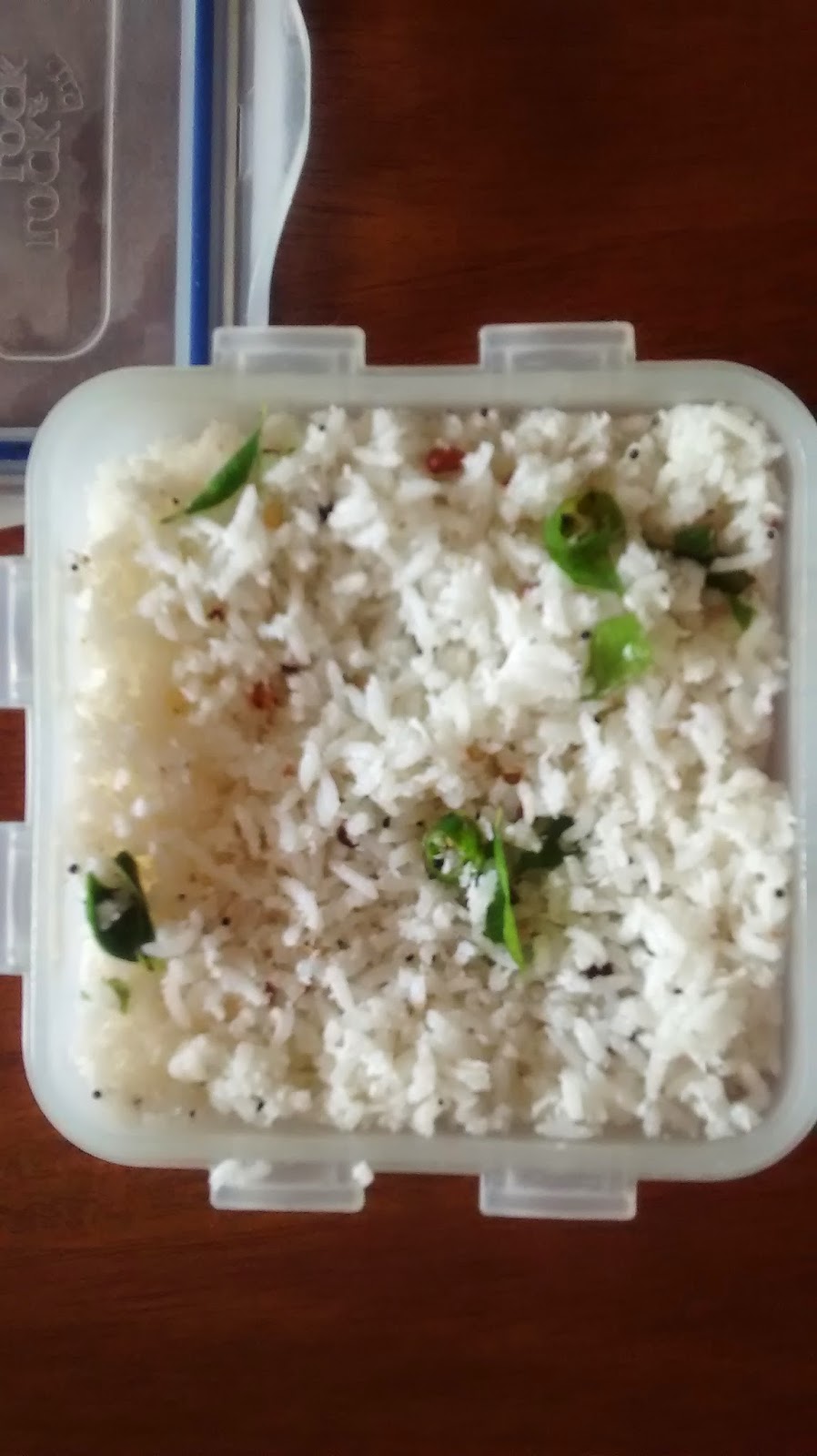
Ingredients :
Fresh grated coconut : 1/2 cup
urad dal : 1 tsp
chana dal (kadala paruppu) : 1 tsp
curry leaves: few
Mutstard/rai : 1/2 tsp
salt to taste
oil : 1.5 tbsp
green chilli : 1
red chilli : 1
Ginger : 1/2 inch
Method:
Heat oil in a pan, add mustard, urad dal, chana dal. Saute for till it started turning golden, add broken red chilli, chopped green chilli, finely chopped ginger, curry leaves. Saute for few seconds. Add coconut, saute for few seconds and switch off the flame.
Add some salt and mix it with 1 cup cooked rice.
For this you need to prepare Pulikaichal (The thick tamarind gravy).
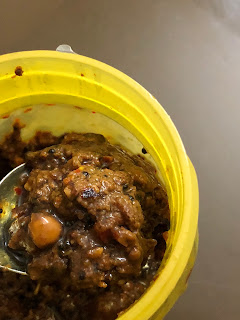
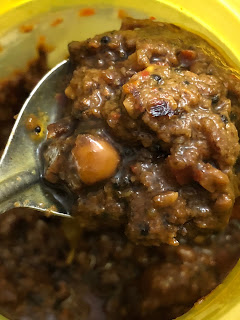
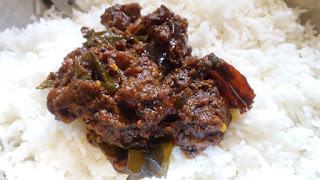
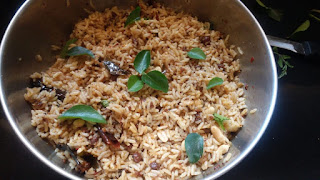
Pulikaichal Ingredients:
Gingley oil : 10 tbsp
Red chillies : 22 to 25
Urad dal : 1.5 tbsp + 1 tsp
Chana dal (kadala paruppu) : 1.5 tbsp + 1 tsp
Dhaniya seeds : 1.5 tbsp
Fenugreek seeds : 1 tsp
Mustard seeds : 1 tsp
Curry leaves : few
groundnutes : 1/2 cup (or dry kabuli chana )
Tamarind juice (concentrated) : 3 tumblers (1 tumbler =~ 200ml)
turmeric : 1 tsp
Asafoetida/hing : 1 big piece (one small indian gooseberry/amla size)
Salt to taste
Pulikaichal Method:
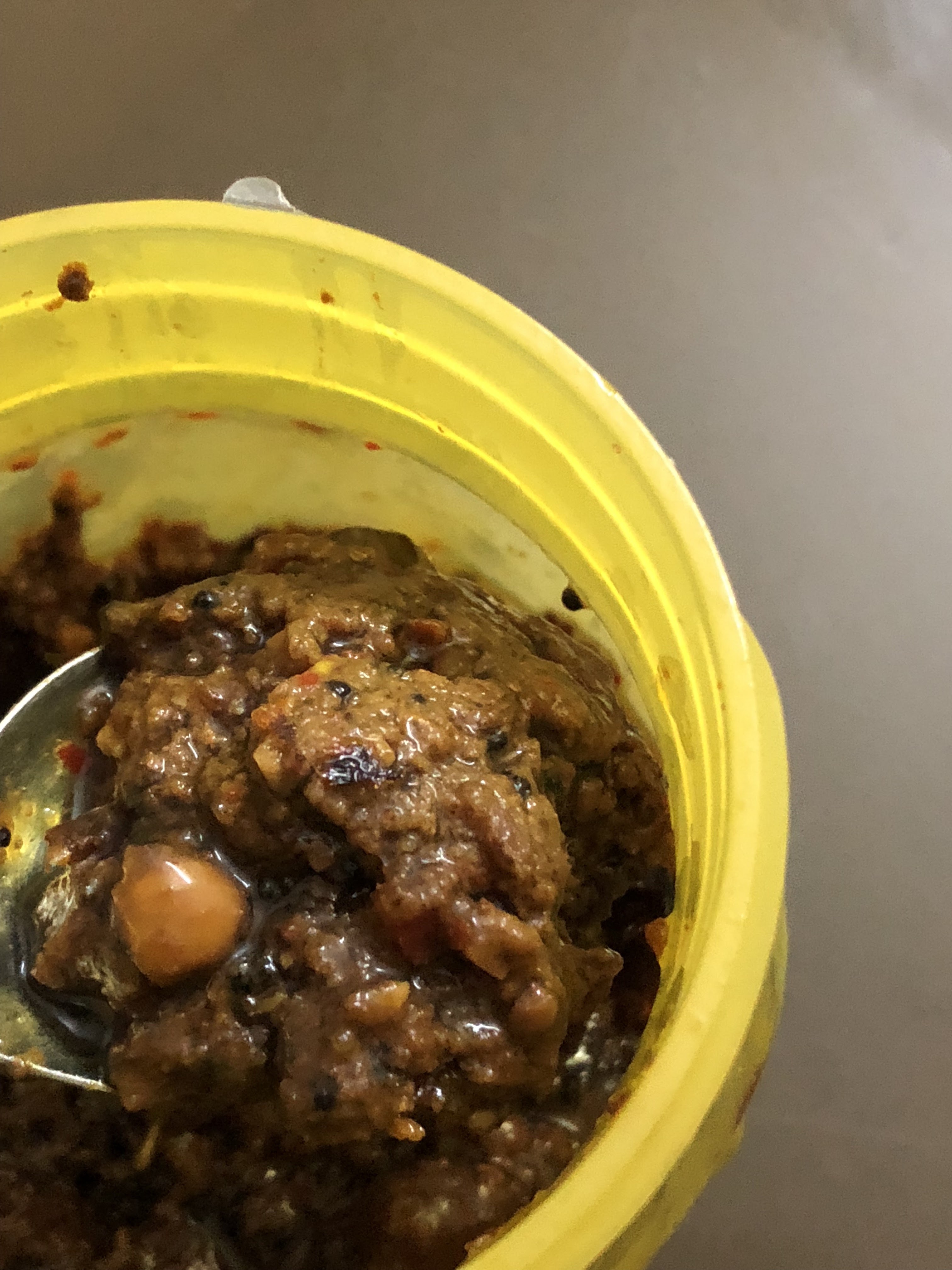
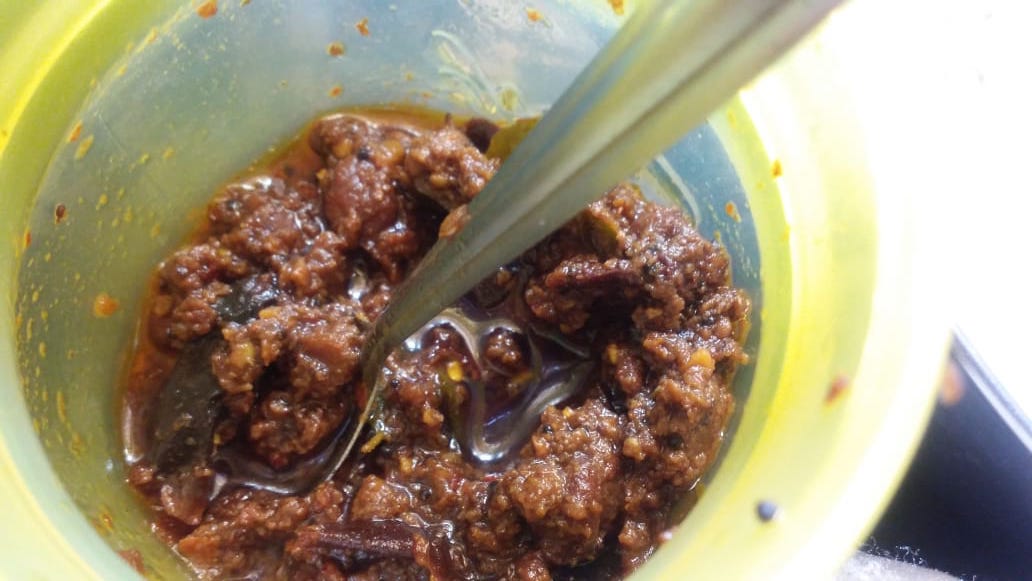
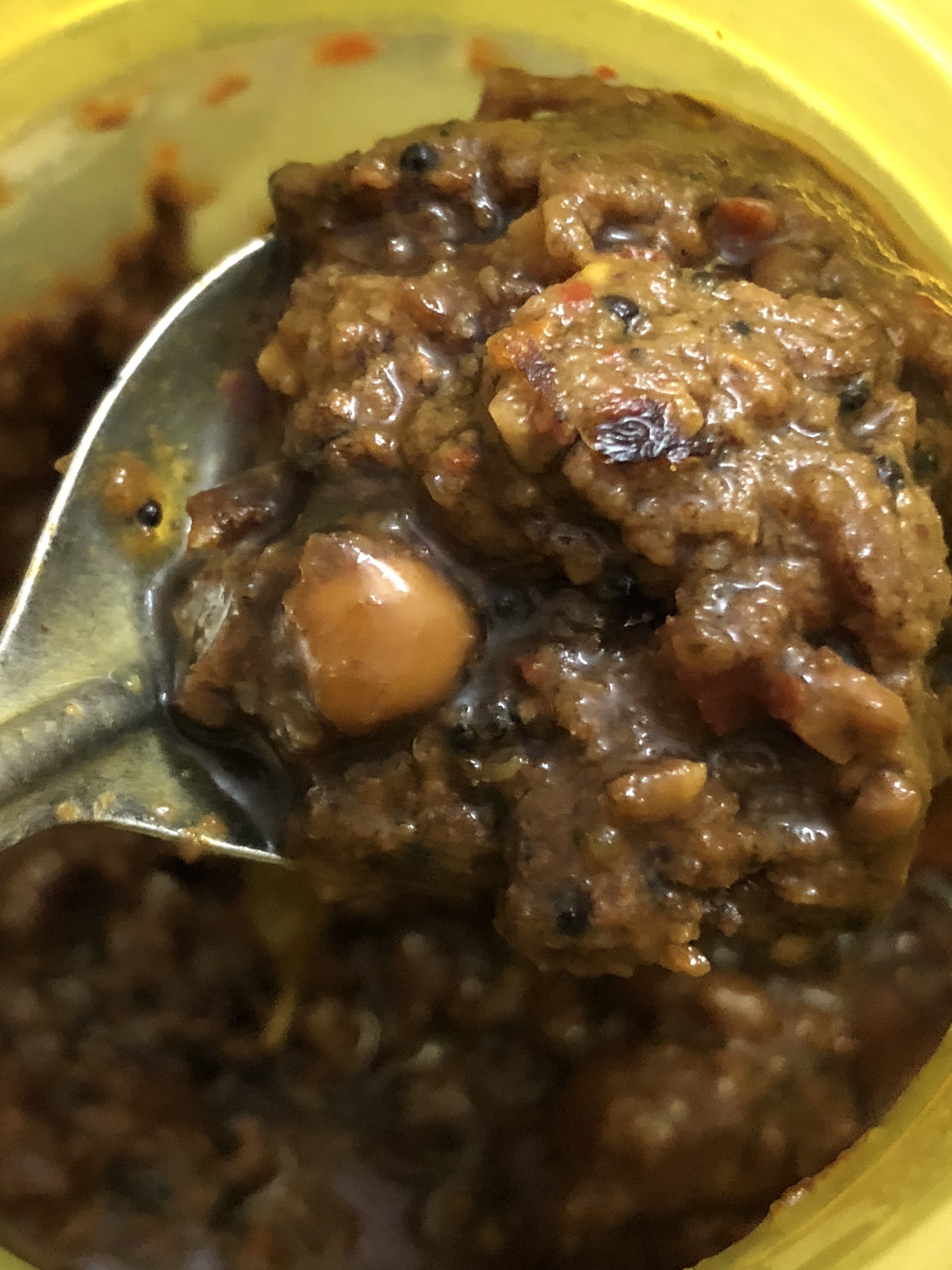
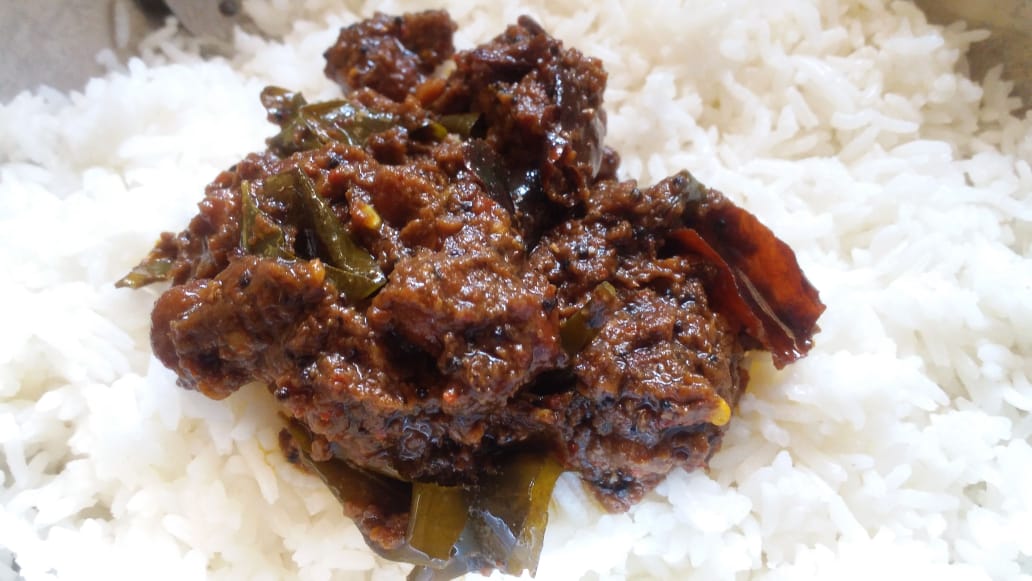
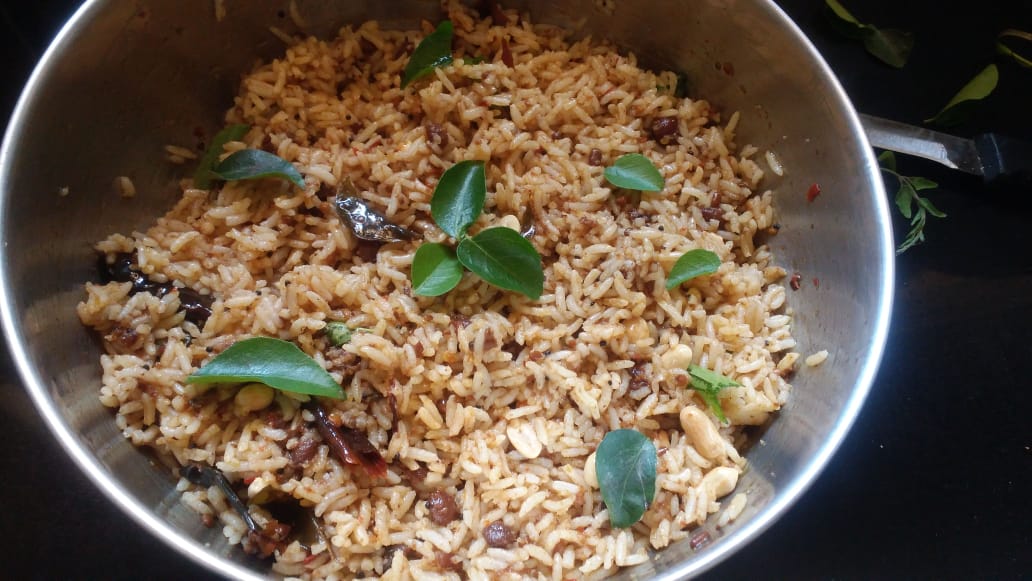
Pulikaichal Ingredients:
Gingley oil : 10 tbsp
Red chillies : 22 to 25
Urad dal : 1.5 tbsp + 1 tsp
Chana dal (kadala paruppu) : 1.5 tbsp + 1 tsp
Dhaniya seeds : 1.5 tbsp
Fenugreek seeds : 1 tsp
Mustard seeds : 1 tsp
Curry leaves : few
groundnutes : 1/2 cup (or dry kabuli chana )
Tamarind juice (concentrated) : 3 tumblers (1 tumbler =~ 200ml)
turmeric : 1 tsp
Asafoetida/hing : 1 big piece (one small indian gooseberry/amla size)
Salt to taste
Pulikaichal Method:
Allow it to cool and then grind it into coarse powder.
Now take 8-9 tbsp of gingley oil in a pan. Add 1 tsp of mustard seeds, chana dal, urad dal, 18-20 red chillies (broken in small pieces) , curry leaves, 1/2 cup groundnuts (or dry kabuli chana) and saute for 1-2 min.
Add 3 tumblers of thick concentrated tamarind juice, add1 tsp turmeric, 1 big piece of asafoetida (one small gooseberry size), salt, let it bol till it reduces to 1/4th of its quantity.
Add the roasted and ground powder, some curry leaves again, mix well for a minute or two and switch off the flame.
When it cools down transfer it into a pickle bottle and you can store it for aout 2 months when stored in refrigerator and that too when it has enough oil floating on the top of the bottle.
To prepare the tamarind rice:
Just mix little amount of the prepared gravy (2-3 tsp) with cooked rice(2 cups or as you like it), taste and adjust salt if required. Done :)
Tomato Rice
Ingredients:
onion - 2 medium
tomato : 2 medium
green chillies : 2-3
red chilly : 1
sambhar powder : 1 tsp
rai : half tsp
urad dal : 1 tsp
chana dal (kadala paruppu) : 1 tsp
curry leaves: few
ginger (finely chopped) : half tsp
salt to taste
oil : 2 tbsp
Ghee : 1 tsp
Method:
1. Chop the onions and tomatoes. Do not chop too finely or too roughly.
2. Heat oil in a pan, add mustard seeds and let it crackle. Then add broken red chilly, urad dal, chana dal, curry leaves, chopped green chillies and ginger. Saute for few seconds or till dal starts turning golden brown.
3. Add the chopped onions and saute for 2 min. Then add the chopped tomatoes, turmeric, salt and mix well.
4. Sprinkle little water and close the pan with lid, keep low to medium flame. Check and open lid every 2-3 min, mix well (sprinkle little water if required to avoid burning) and again close it. Repeat this till the onions and tomatoes seem mashed and soft.
5. Open the lid, add sambhar powder, mix well and saute for 2-3 minutes. (do not close the pan with lid anymore)
6. Switch off. Add little ghee to it and mix 1 cup of cooked rice (adjust rice quantity as per your taste).
Its very simple and easy, but still yummy and healthy. :)
Method:
Clean spinach properly (add stem only if its very tender, else pluck only the leaves) and add it in boiling water..immediately switch off flame and close the vessel with lid for 5-7 min. Drain excess water and grind the spinach into smooth paste. (If you are running short of time, you can simply chop the leaves finely and use it in the remaining steps.)
Heat 2-3 tbsp oil in a pan, 1 bay leaf, add 4-5 chopped garlic, 2-3 green chillies chopped. Then add 3/4th cup chopped onions. Saute till the onions turn translucent.
Add 1/2 cup chopped tomato. Saute for 5 min.
Add palak, 1/2 tsp garam masala, 1/4 tsp jeera powder, salt, 1/4 tsp turmeric. Saute for 5-8 min. (or till palak gets cooked if you are using chopped palak.)
Add cooked rice , mix well. Serve hot.
Veg Biryani
When you get bored of your routine food, you do feel like eating a biryani right? Let's make a delicious biryani. Biryani does need a good amount of ginger garlic, and yes good basmati rice!
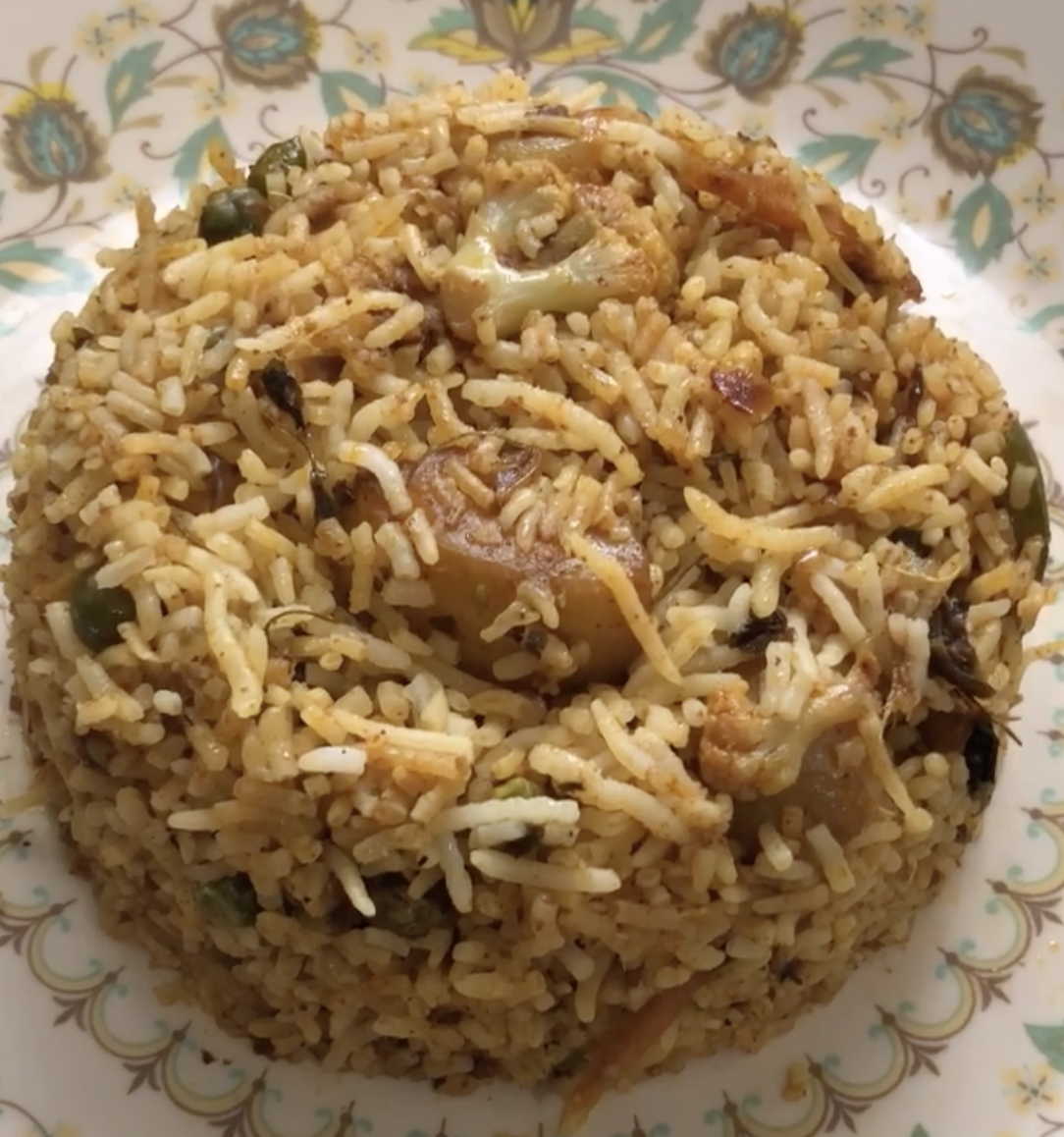
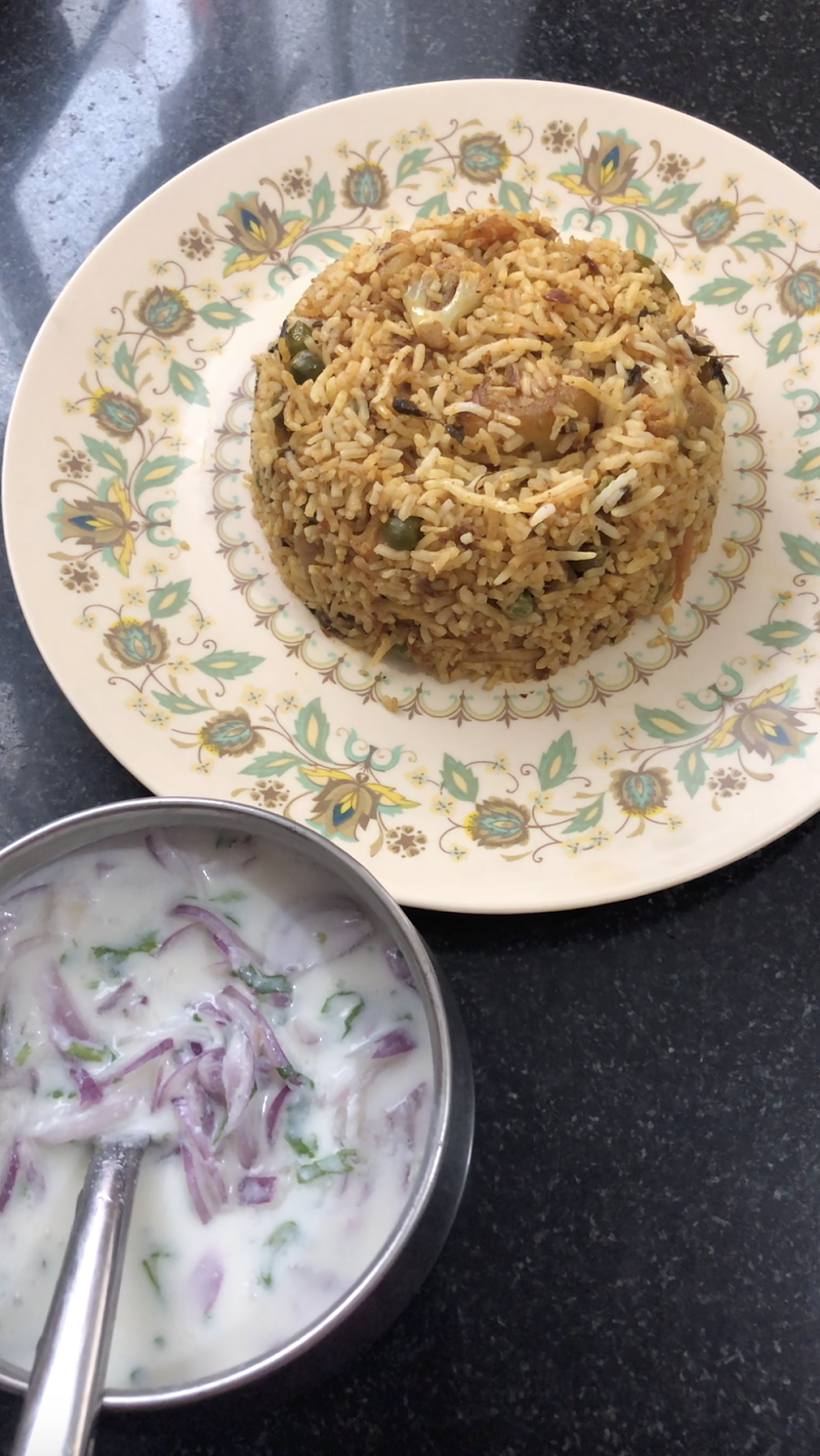
Ingredients : (serves 2-3)
Basmati Rice : 1 cup
Cauliflower : 1 cup
Carrot : 1 big
Beans : 7-8
Green Peas : 1/2 cup
Capsicum : 1 small or half of a big one
Potato : 1 medium
Onion : 1 medium
Ghee : 2 tsp
Bay leaf : 2
Cinnamon : 1 inch
Clove : 3-4
Black Pepper : 5-6
Saunf / Fennel seeds : 1/2 tsp
Oil : 3-4 tbsp
Ginger : 1 inch
Garlic : 9-10
Turmeric : 1/4 tsp
Red chilli powder : 1 to 1.5 tsp
Garam Masala :1 to 1.5 tsp
Dhaniya powder : 1 to 1.5 tsp
Kasoori methi : 1/4 tsp
Sugar : 1/2 tsp
Salt
Pudina leaves : 2-3 (optional)
Fresh Methi leaves : 4-5 (optional)
Milk: 1/4th cup (optional)
Method :
1. Soak the Basmati rice in water for minimum 30 min.
2. Drain the excess water from the soaked rice. Take a pan (thick bottom) , add ghee, add Bay leaf, cinnamon, cloves, black pepper, fennel seeds and saute for 30 to 60 sec. Add the soaked basmati rice and saute for 1 min.
3. Turn of the flame, transfer the rice into a another vessel. Add 1 + 3/4 cup of water, and 1/4 cup milk into the rice. Add 1/4 tsp salt and cook it in an electric cooker. (If you do not have an electric cooker, take a big kadhai, add 2-3 cup water into it, place a small stand in it(or any utensil which can give little height to the rice vessel), keep the rice vessel over it and close the kadhai with a lid.) Cook till the rice is long & well cooked, and if you put any spoon or knife into the rice, it should come out clean.
4. Take 3-4 tbsp oil in pan, add chopped onion, ginger, garlic and saute till onions turn translucent. Add the chopped vegetables, capsicum and green peas. Add turmeric, salt, red chilli powder, dhaniya powder and saute well on medium flame for 5 min. (Before adding salt, do remember that you have already added some salt into the rice and vegetables.)
Note: To reduce cooking time, you can also add chopped carrot, beans, cauliflower, potato in a vessel, add water which is just enough to immerse the vegetables, add pinch of salt and allow it to boil for 10-15 min. (or you can also use microwave oven to cook the vegetables). And then add the cooked vegetables in this step.
5. Add garam masala, kasoori methi, sugar, mix well and saute till all the vegetables including capsicum and peas are cooked 80 percent. (Pls do not overcook, else the vegetables will tend to mash easily and that will not help for a good biryani.) If you like, you can also add pudina and methi leaves by roughly tearing it into small pieces, it gives a fresh distinct flavour to your biryani. (Note: if you are adding fresh methi leaves, make sure you add less or no kasuri methi)
6. Check if the rice is cooked. Most of the whole spices would be on top of the rice. Remove as much as possible with your hand. Keep the flame in sim mode and start mixing rice into the vegetable pan. Cook it for 1-2 min with closed lid so that all the flavours blend together, then turn off the flame.
7. Serve with onion raita.
Note : You can also add mushrooms. But before step4, saute the mushrooms well in ghee/oil in a very hot pan till they stop oozing water and the water evaporates.Keep it aside and add the mushrooms along with other vegetables.
For paneer, before step4, chop the paneer into small cubes, slightly fry them in ghee till golden in colour. Add it in step6, before adding rice.
Coconut Milk Pulao
Vegetable pulao is aromatic basmati rice cooked with few vegetables like carrot,beans and few spices. But when made with coconut milk, it really adds to the flavour and it tastes very rich. It is easy to make and kids will like it.
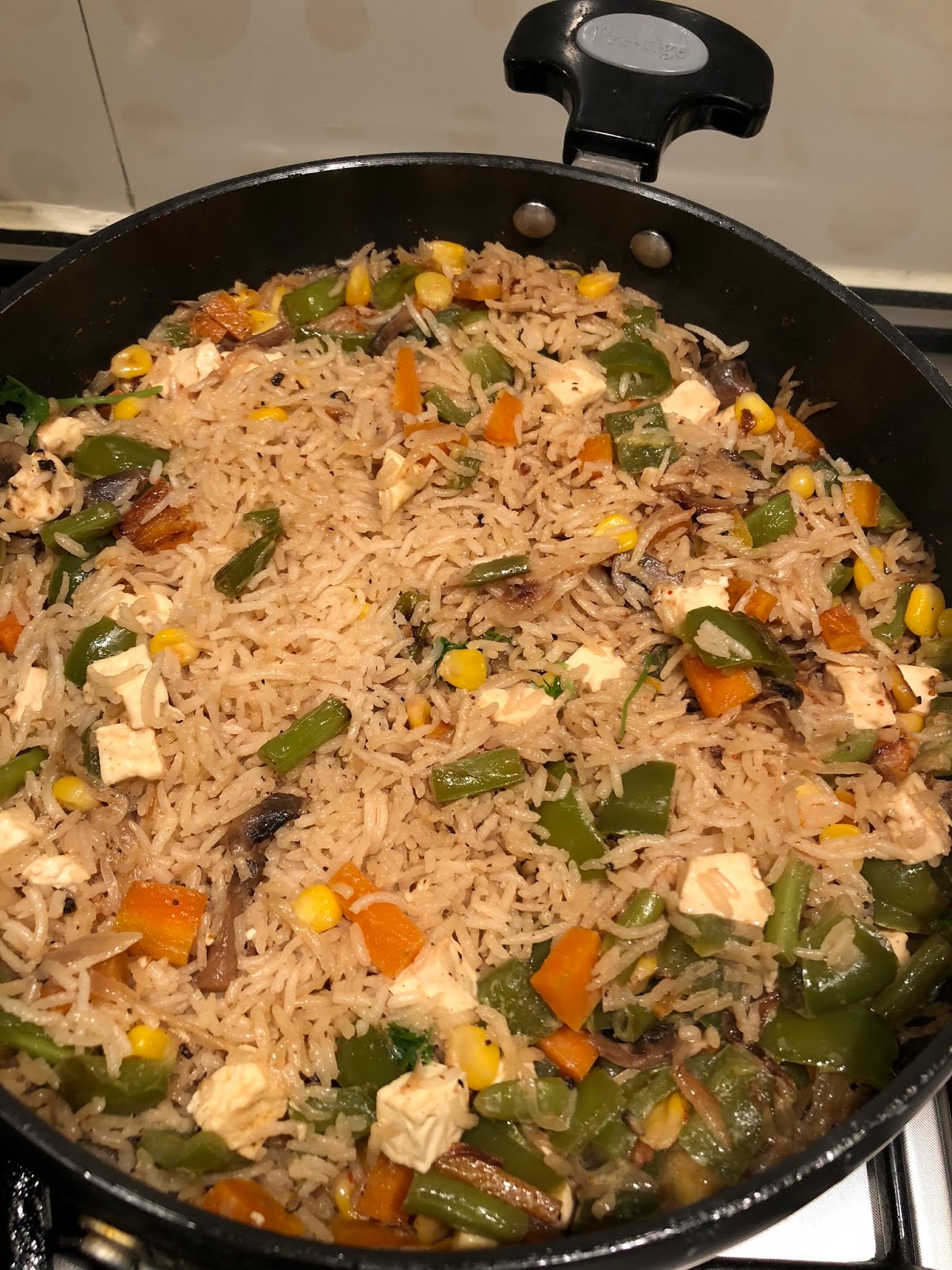
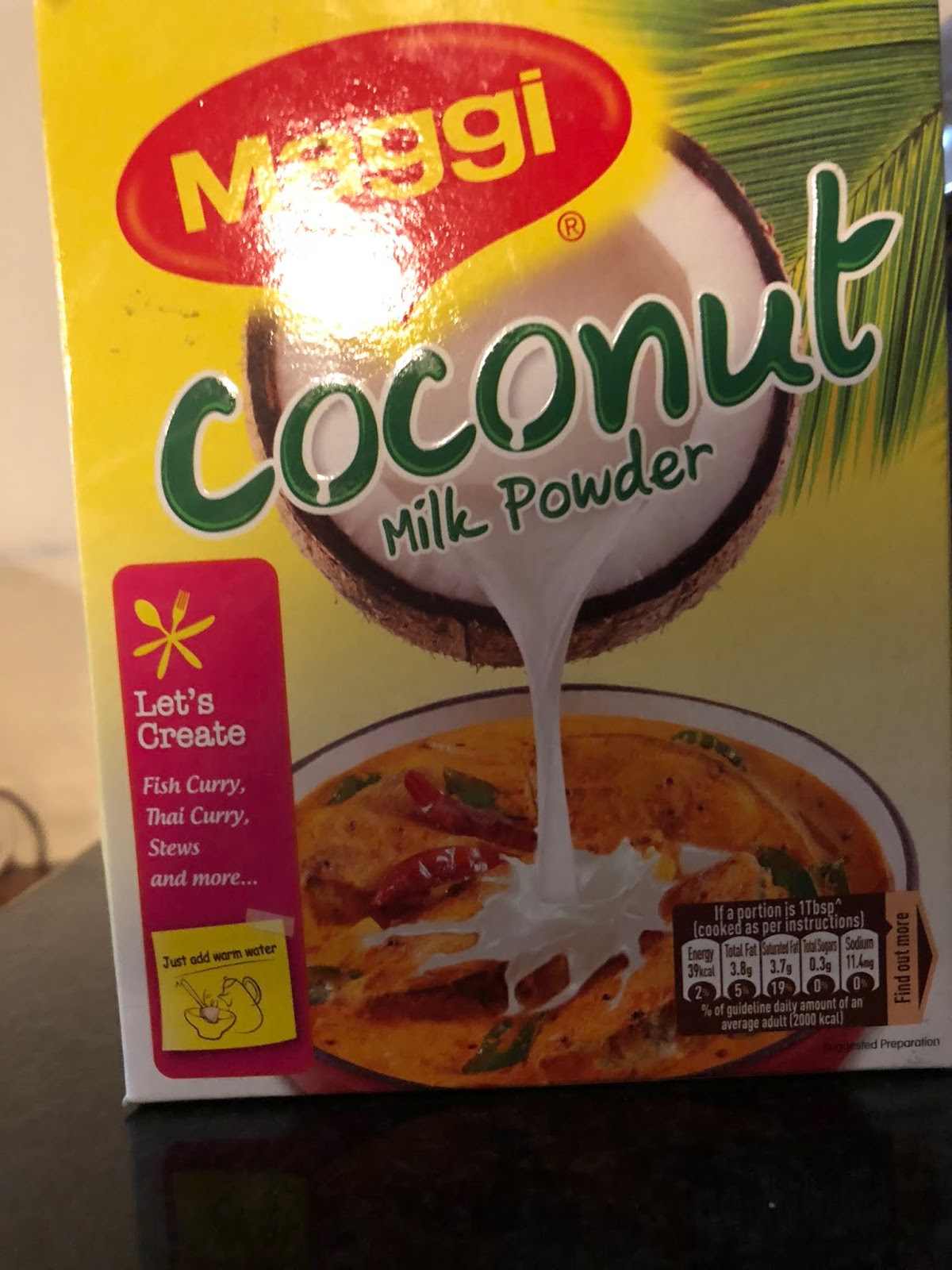
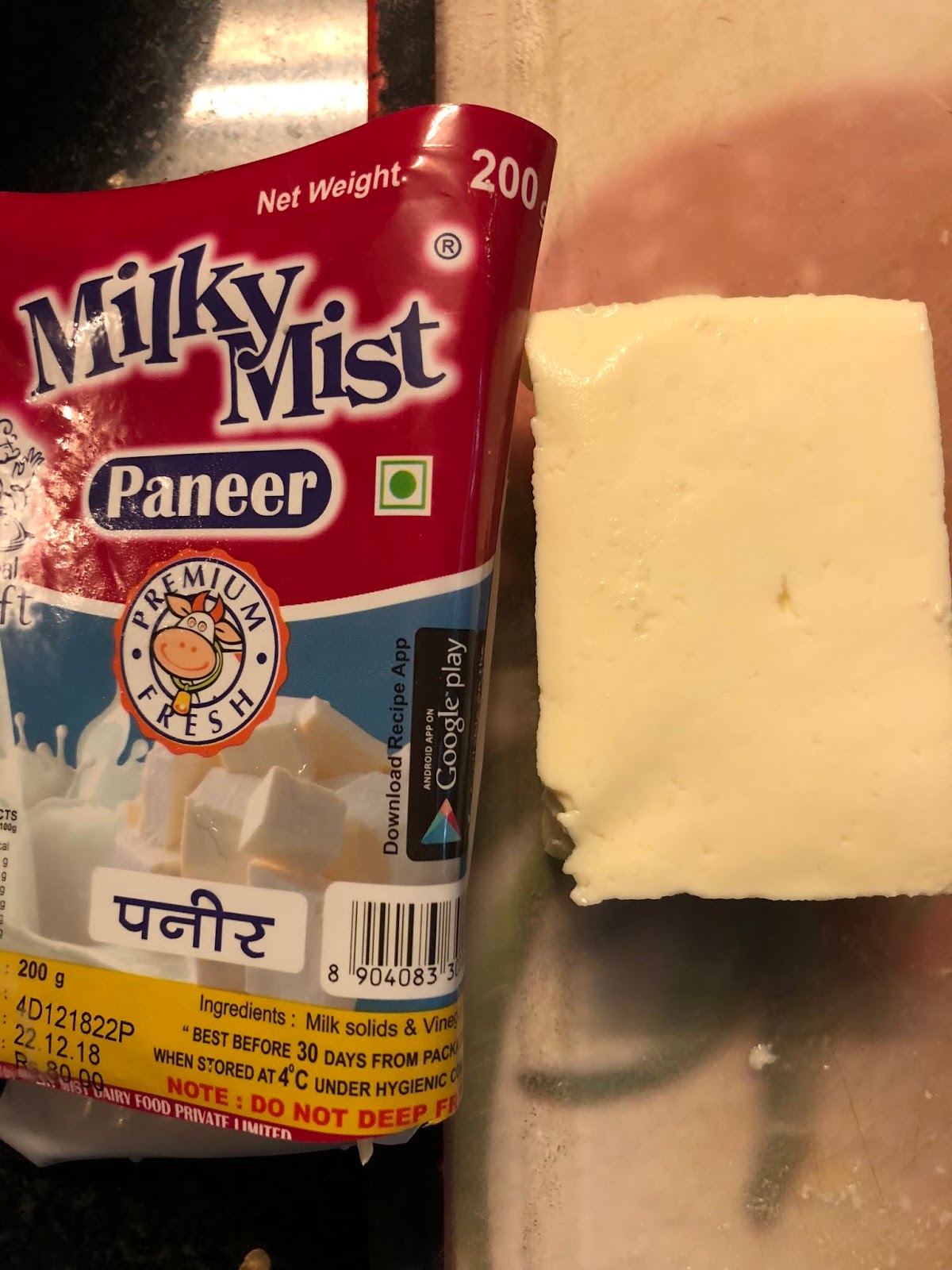
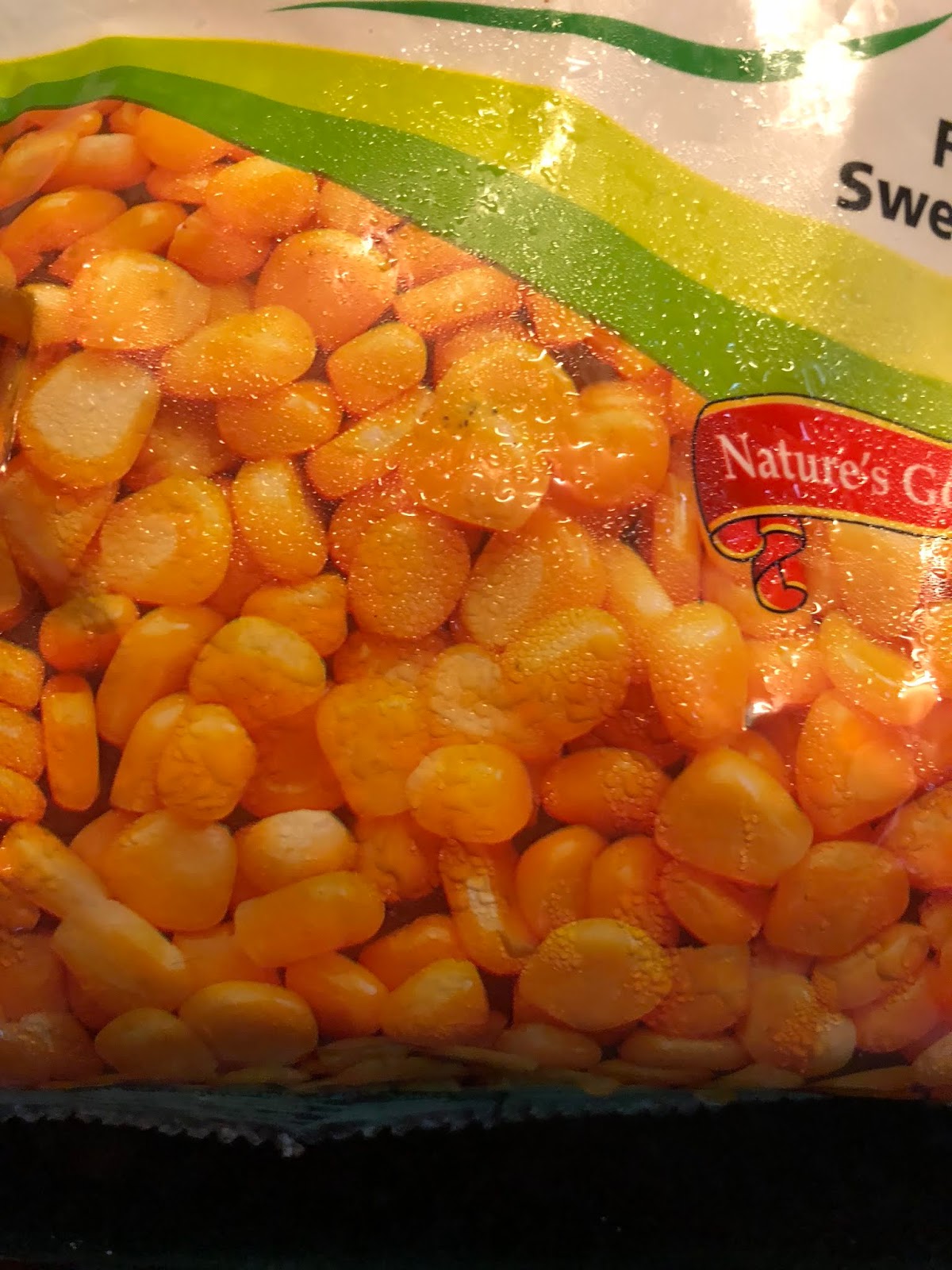
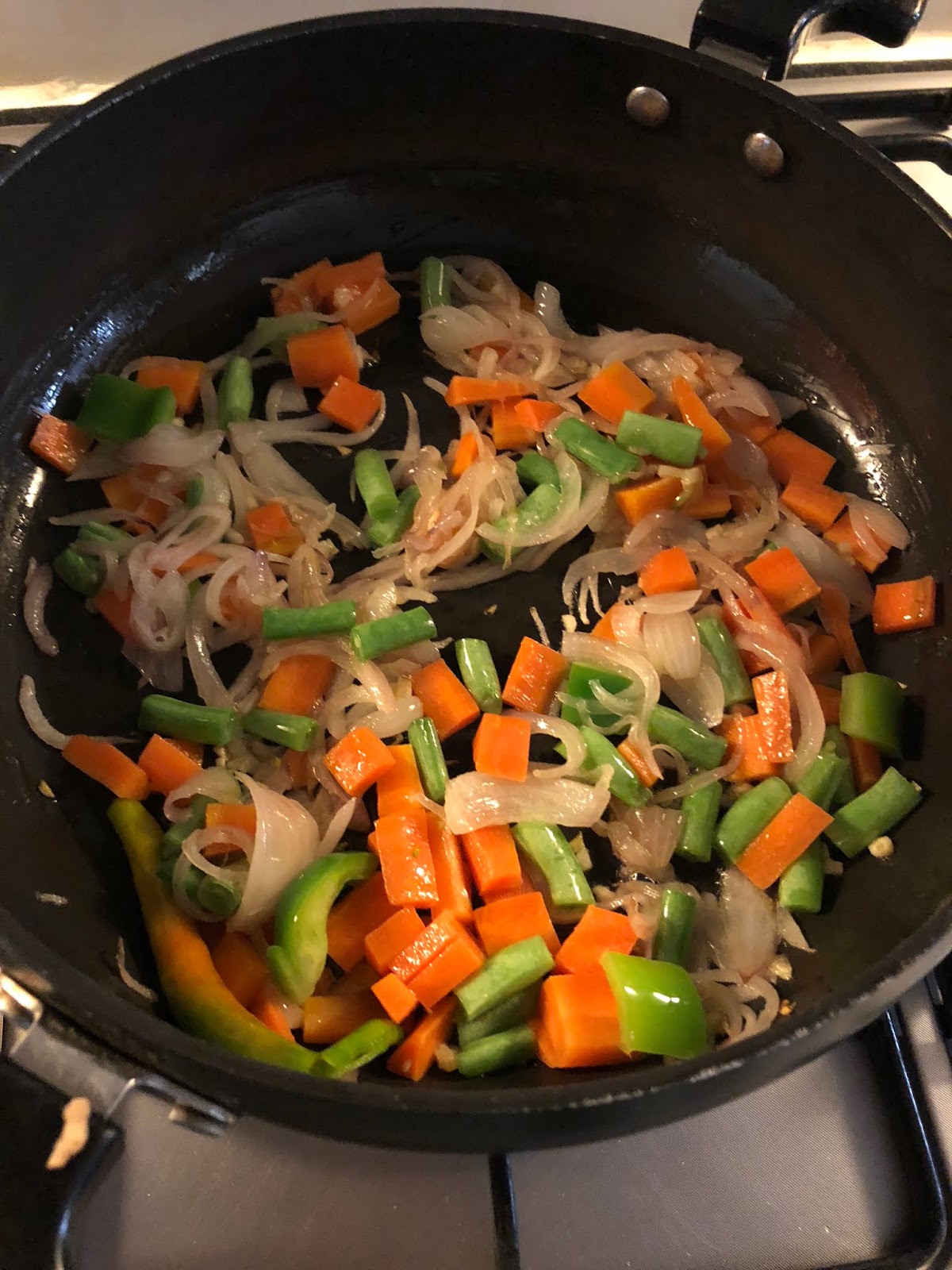
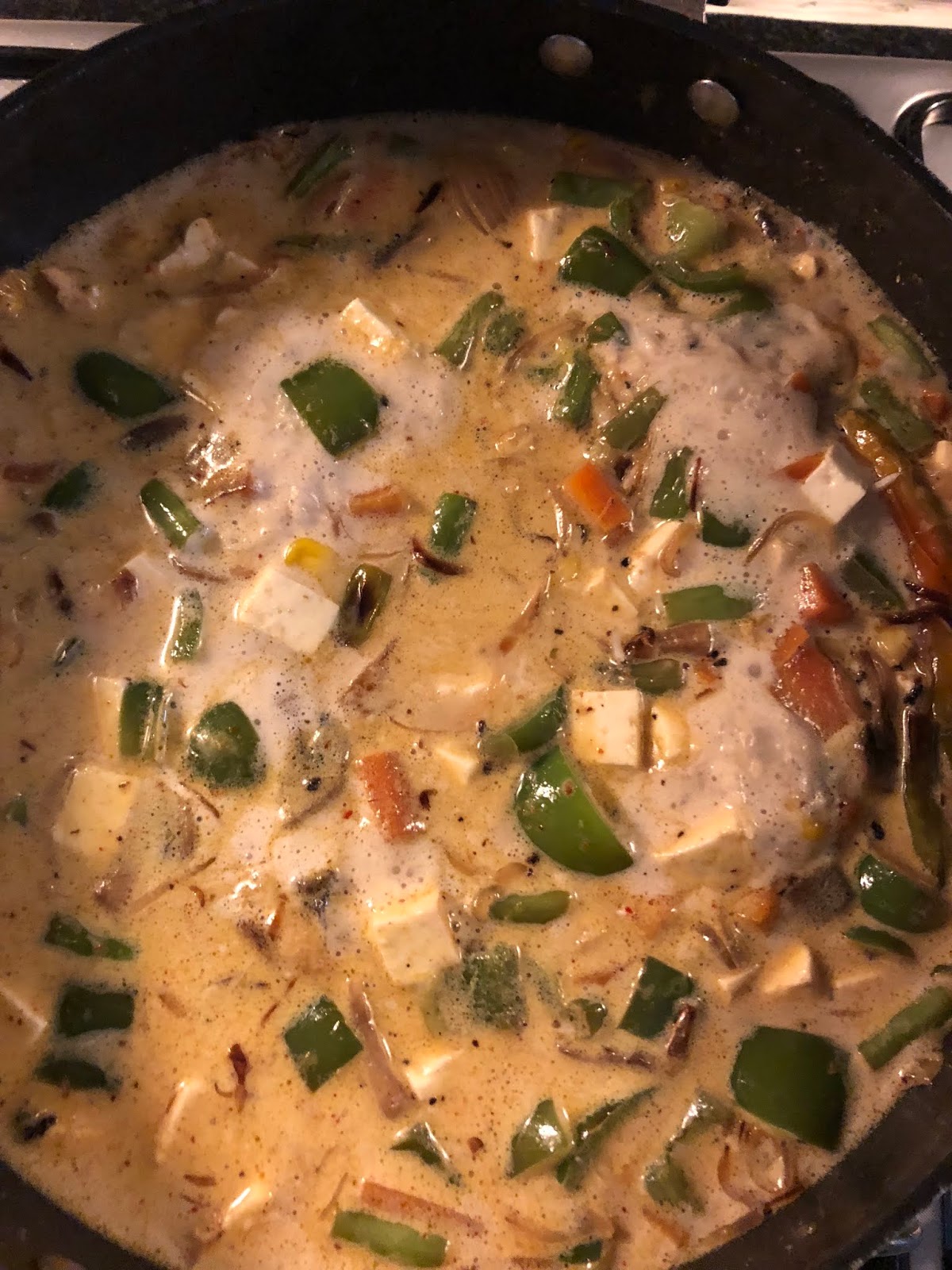
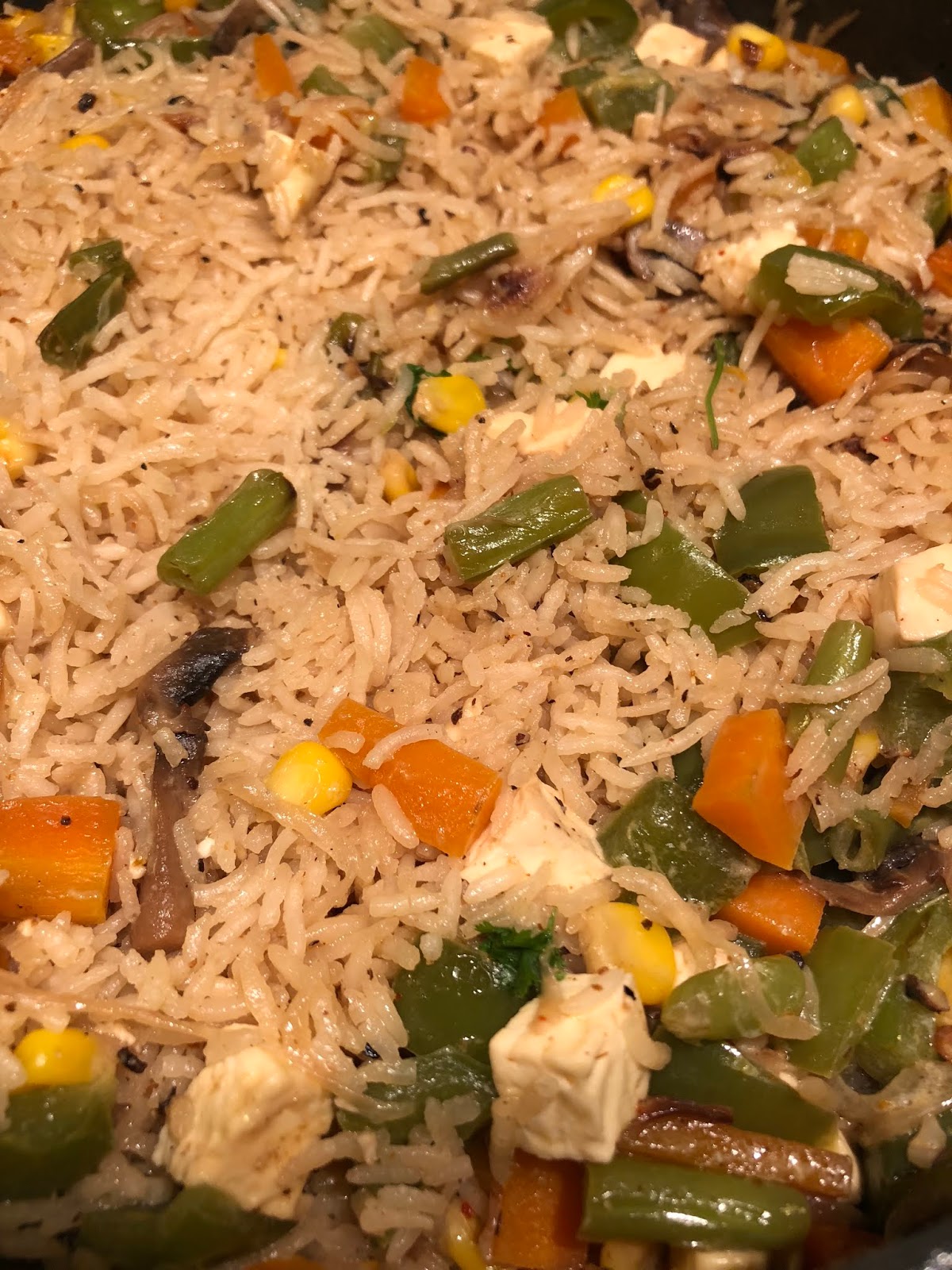
Ingredients : (serves 2-3)
Basmati Rice : 1 cup
Fresh coconut milk (medium to thick consistency) : 2 cups. (or) mix coconut milk powder in 2 cups water forming medium to thick consistency
Carrot : 1
Beans : 5-6
Corn kernels : 1/4th cup
Capsicum : 1 small
Fresh paneer small cubes: 75g
Onion : 1
Garlic : 4-5
Green Chilly : 1
Crushed Black Pepper : 2 tsp
Garam Masala : 0.5 tsp
Dhaniya powder : 0.5 tsp
Fresh Ghee : 1-2 tsp
Oil : 3 tbsp
Salt
Method :
1. Soak the Basmati rice in water for 45 min.
2. Heat oil and ghee in a pan, add chopped onions, chopped garlic and slit green chilly.
3. Once onions turn translucent, add chopped carrot, beans, capsicum, corn kernels. Mix well and saute for 5 min.
4. Add dhaniya powder and mix well. Add paneer pieces and give it a stir.
2. Drain the excess water from the soaked rice and add it into the pan.
3. Add the coconut milk. (Adjust water if required according to the type/quality of rice used).
4. Add crushed pepper powder, garam masala, salt and mix well. Cover the pan with lid and let it cook on low to medium flame for 8-10 min or till rice gets cooked.
Jeera Rice
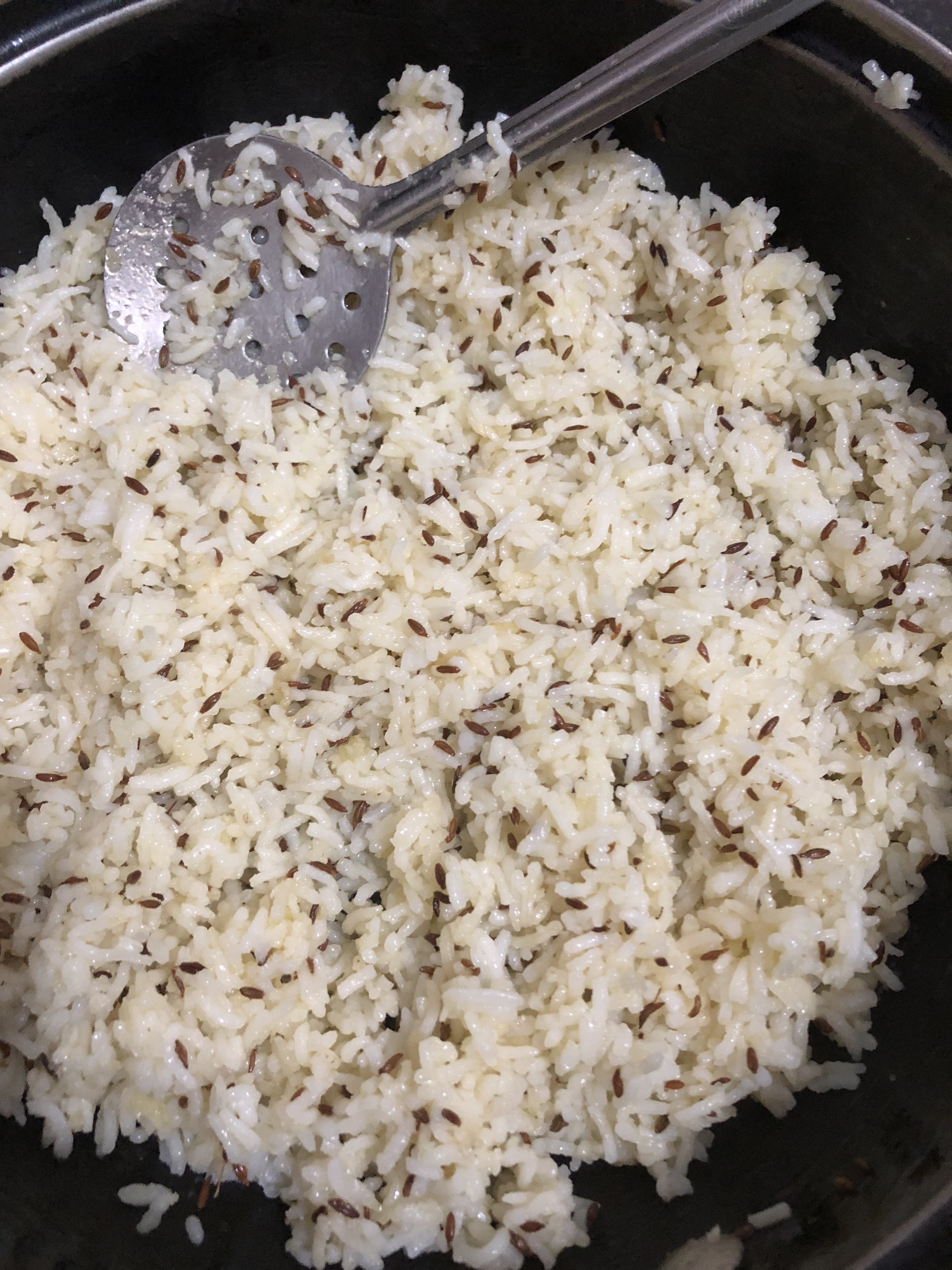
Ingredients:
Cooked rice : 1 cup
Jeera : 1 tsp
Ghee : 2-3 tsp
Asafoetida : 1/4th tsp
salt to taste
Method:
1. Heat ghee in a pan.
2. Add jeera, asafoetida, cooked rice and then salt.
3. Mix well for a minute. Switch off the flame.
Yes its Ready! So Simple & so Tasty! Serve hot with Dal.
Methi Pulao
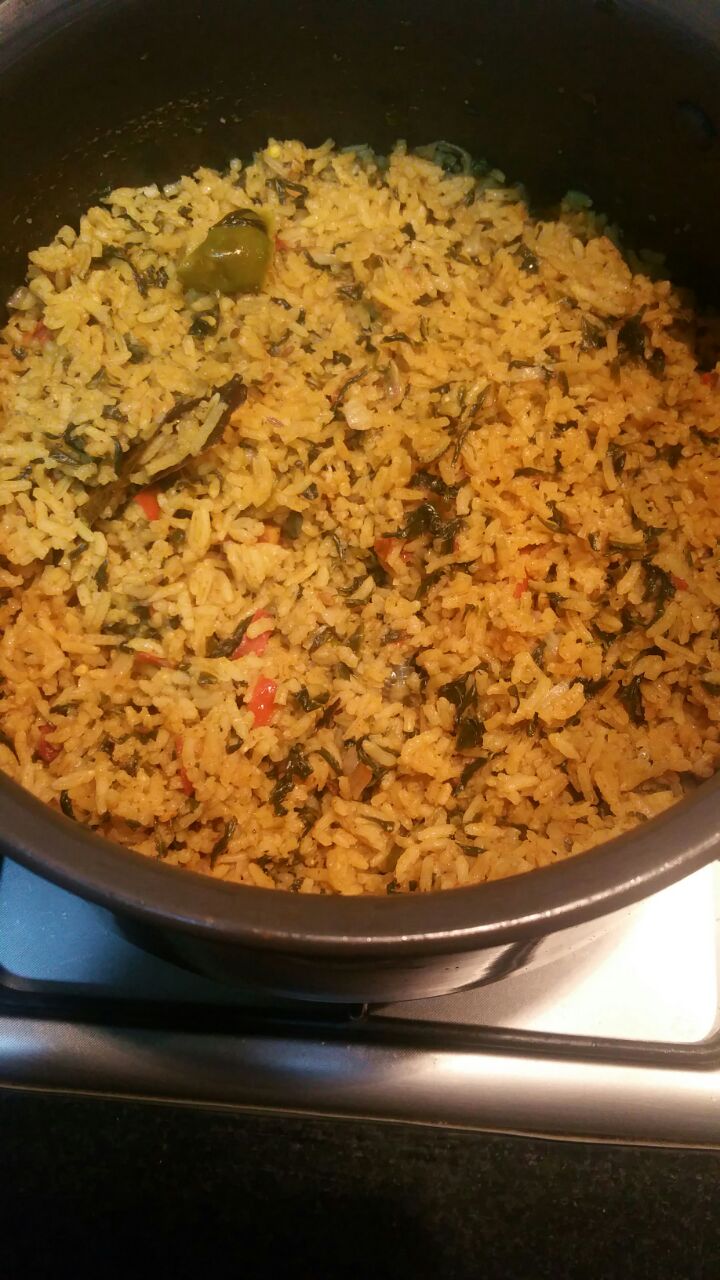
Ingredients:
Cooked rice: 2 to 2.5 cups
Methi : 1 medium bundle
Onion : 2 medium
tomato : 2 medium
Garlic : 3-4 cloves
Green peas : 1/4th cup (optional)
Green chillies : 2 medium hotness (optional)
Jeera : 1/2 tsp
Dhaniya powder : 1 tsp
Gararm masala : 0.5 to 0.75 tsp
Red chilli powder : 0.5 tsp
Turmeric : 1/4th tsp
Sugar : 0.5 to 1 tsp
Salt to taste
Ghee : 2-2.5 tsp
Oil : 1-2 tbsp
Method:
1. Heat 1 to 1.5 tsp ghee in a pan and add finely chopped methi leaves (well cleaned and leaves alone plucked from the bundle). Saute till the leaves leave all water and the water evaporates. Add sugar, mix well, switch off and transfer the leaves in a container and keep it aside.
2. Heat oil in a pan, add Jeera. Add finely chopped onions and saute till they turn translucent. (add slit green chillies before adding onions if you are including them)
3. Now add finely chopped tomatoes, chopped garlic, turmeric powder, dhaniya powder, red chilli powder, garam masala and mix well. Saute for 5 min. Add green peas and mix well, saute till green peas are cooked. (If you are not adding green peas, saute till onion-tomato mixture starts to loose oil)
4. Now add the cooked methi leaves, salt, mix well and saute for 1-2 min.
5. Add cooked rice, mix well. Then add 1 tsp ghee and mix well. Cook with cosed lid for a minute and switch off the flame and let it be closed for 3-4 min.
Snacks & Others:
Pav Bhaji
You get to see many varieties of chat items in India. One among them is the delicious 'Pav Bhaji', just by saying the name mouth starts to water. The main ingredients of Bhaji are onion, tomato, potato and the masalas and the rest is your choice, you can add vegetables of your choice like cauliflower, green peas, carrots, etc. Let's go into the details.
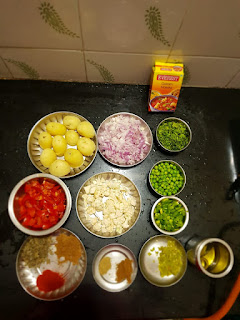
Ingredients: (serves 4-5)
Boiled Potatoes: 5
Tomato: 3
Onion : 3
Cauliflower: 100g
green peas: 1/4 cup
capsicum: half capsicum
Kasuri Methi : 1 tbsp
Dhaniya powder : 2 tsp
Red chilli powder : 1.5 tsp
Saunf powder : 0.5 tsp
Jeera powder : 0.5 to 0.75 tsp
Green chilli : 3
ginger : 1 inch
garlic : 7-8
Garam masala : 1.5 tsp
Cooking butter : 50g
Groundnut Oil: 4-5 tbsp (you can add less or more)
Sugar : 1 tsp
Turmeric : rich
Fresh coriander
Salt to taste
Method for Bhaji:
1. Heat butter in a pan or kadhai, add the chopped onions and saute for a minute or two.
2. Grind the green chillies, ginger and garlic into a paste and add it into the pan.
3. When onion starts to brown, add little chopped coriander, saute for few seconds and add chopped tomatoes.
3. Add sugar, little salt and turmeric, mix well and close the pan with a lid.Let it cook till tomatoes become soft and mushy. Add some oil as required.
4. Add chopped cauliflower and green peas. Mix well and add some water and let it cook with closed lid till vegetables are cooked.(check and stir in between to avoid burning)
5. Add half the 0.5 tbsp kasuri methi, red chilli powder, coriander powder, Jeera powder and saunf powder. Mix very well and again close with lid for a minute.
6. Add capsicum mix well and close with lid for 1-2 minutes.
7. Add garam masala and mix well. Add boiled potatoes, mix and then mash the gravy well with a masher.
8. Add remaining kasuri methi, salt and fresh coriander. Mix well and close it with lid for a minute. Switch off the flame.
Note: Add oil as required in the above steps.
For the Pav (buns):
9. Cut the buns (Pav) into halves and saute the buns with butter on a pan/tawa. Flip them and remove them from pan as they turn golden brown.
Garnish the bhaji with some finely chopped onions, sev, little chopped fresh coriander, little butter, squeeze few drops of lemon into it and enjoy the delicious Pav bhaji.
Macroni
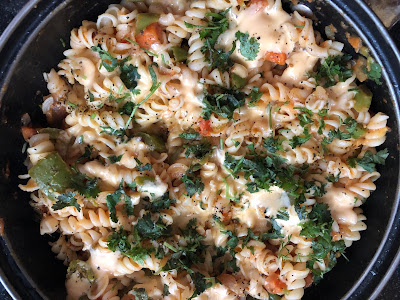
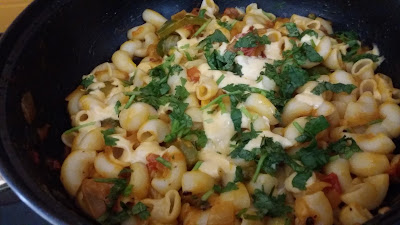 If your kid doesnt eat radish, add it to the macroni. The kid will just gulp it.
You can also add vegetables of your choice like broccoli, spinach, mushroom , corn kernels, etc.
Ingredients:
Macroni : 1.5 cup
Capsicum : 1 small
Chopped vegetables : 1/2 cup
Ghee : 2-3 tsp
Garlic : 4-5
Tomato : 1
Onion : 1
Tomato ketchup : 2 tbsp
Maida (refined flour) : 2-3 tsp
Milk : 3-4 tsp
Cheese slise or grated cheese: as you like it.
Green chillies : 2-3
Crushed black pepper : 1 to 1.5 tsp
Turmeric : 1/8 tsp
Salt
Fresh coriander leaves
Method:
Add little salt and oil to water and bring it to boil. Add macroni to boiling water and cook till macroni become large in size and well cooked. (Pls follow instruction on the macroni packet)
1. Heat ghee in pan.
2. Add chopped garlic, green chillies. Saute for a min, add chopped onions. Saute till they become translucent.
3. Add chopped radish, capsicum. Add salt, crushed pepper, turmeric. Mix well and cook for 2 min.
4. Add chopped tomoto and cook with closed lid for 5 min (or) till capsicum and tomato turn soft.
5. Add tomato ketchup. Mix well. Take maida(refined flour) and mix with 3-4 tsp of cold milk. Add it to the pan and mix well.
6. Add boiled/cooked macroni. Mix well. Add cheese on top and cook for 1-2 min with closed lid.
7. switch off flame. Garnish with coriander leaves.
Vegetable Noodles
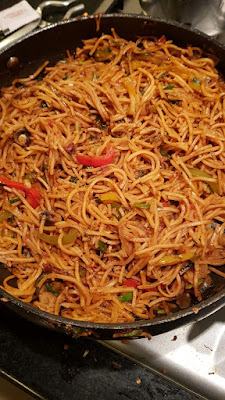
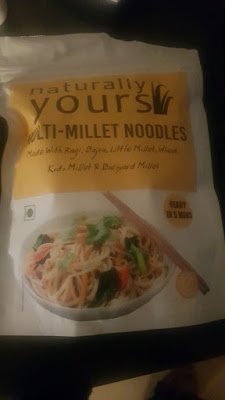
Ingredients :
Noodles (your choice-hakka/multi-millet/etc..) : 1 pack (150g)
Ajinomoto: 1 tsp (better avoid Ajinomoto)
Lemon syrup (squeezed out of 1 big lemon)
Soya sauce : 1 tbsp
Tomato ketchup : 1 tbsp
Sugar : 1 tsp
Salt : 1 tsp (or) as per taste
capsicum : 1
carrot : 2
beans : 8-10
Oil : 3-4 tbsp
Ginger : 1 inch
garlic : 5-6
Green chilli: 2-3
Onion : 2 small
(note: chop the vegetables and onions, thin and longitudinally, i.e. lengthwise)
Method :
Take enough water in a vessel and bring it to boil. Soak the noodles in it, wait for 2 min. Turn off the flame, drain the water and keep the noodles under cold running water. Again drain the water and keep the noodles aside. (Follow the instructions given in the noodles packet)
Heat oil in a pan ( on medium to high flame). Add chopped ginger, garlic, green chillies, onions and fry well.
Add chopped beans, 1/2 tsp ajinomoto and mix well. Cover the pan with its lid for a min.
Next add the carrots, sugar and remaining ajinomoto. Mix well. Cover the pan with lid for a minute again.
Now add salt, tomato ketchup, cover the lid with lid for 10-15 sec.
Then add soya sauce and lemon juice. Add capsicum and mix well. Saute till the vegetables are half cooked.
Add the noodles, mix well and saute for a minute. Serve hot.
Corn Spinach Sanwich
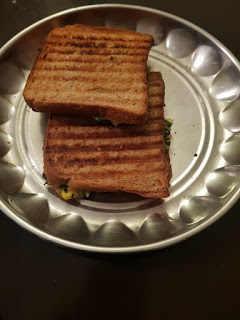
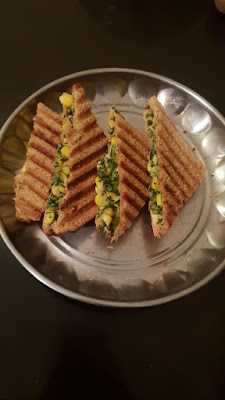
Method:
In a pan, add 1 tbsp butter, half cup boiled corn kernels, 1 cup chopped spinach leaves. Cook for few minutes.
Add 1 tbsp maida to half cup cold milk. Mix properly to avoid lumps. Add this into the pan.
Stir well till the conosistency become slittle thick.
Add salt, 3/4 tsp crushed pepper and 1/2 tsp red chilli flakes.
Sandwich this mixture between the bread slices and grill it.
Desi Maggi
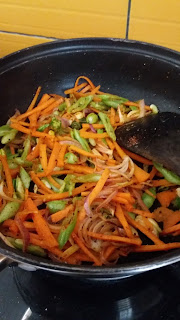
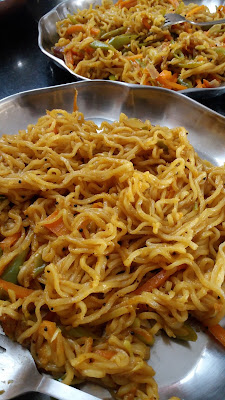
Ingredients: (serves 2)
Carrot : 1 medium
Beans : 3-4
Onion : half of 1 small
Capsicum : half of 1 small
Green chillies : 1
Mustard : 1/4 tsp
Turmeric : pinch
Dhaniya powder : 1/4 tsp
Salt : 1/8 to 1/4 tsp
Oil : 1 tsp
Maggi : 2 cakes + 2 sache masala powder
Method :
Chop the vegetables lengthwise (longitudinally, as shown in the pic).
Heat oil in a pan, add mustard and let it crackle. Add chopped green chilly, onions, then chopped vegetables. Add turmeric, dhaniya powder and salt. Saute on medium to high flame for 1-2 min.
Add 1.5 tumbler water and close the pan with a lid. Reduce the flame to low-medium. Allow the water to boil.
Open lid, add one sache of maggi masala, mix well, add the cakes. Close the lid. Let it cook for 1 min.
Open lid, flip the cakes, close the lid and let it cook for about 20 sec.
Open lid, add the remaining one sache of maggi masala , increase the flame to medium-high. Mix well till there is no extra water. Close the lid. Wait for 10 sec and switch off the flame.
Remove the lid after 1-2 min. Mix well and serve hot.
Tomato Pachadi (Raita)
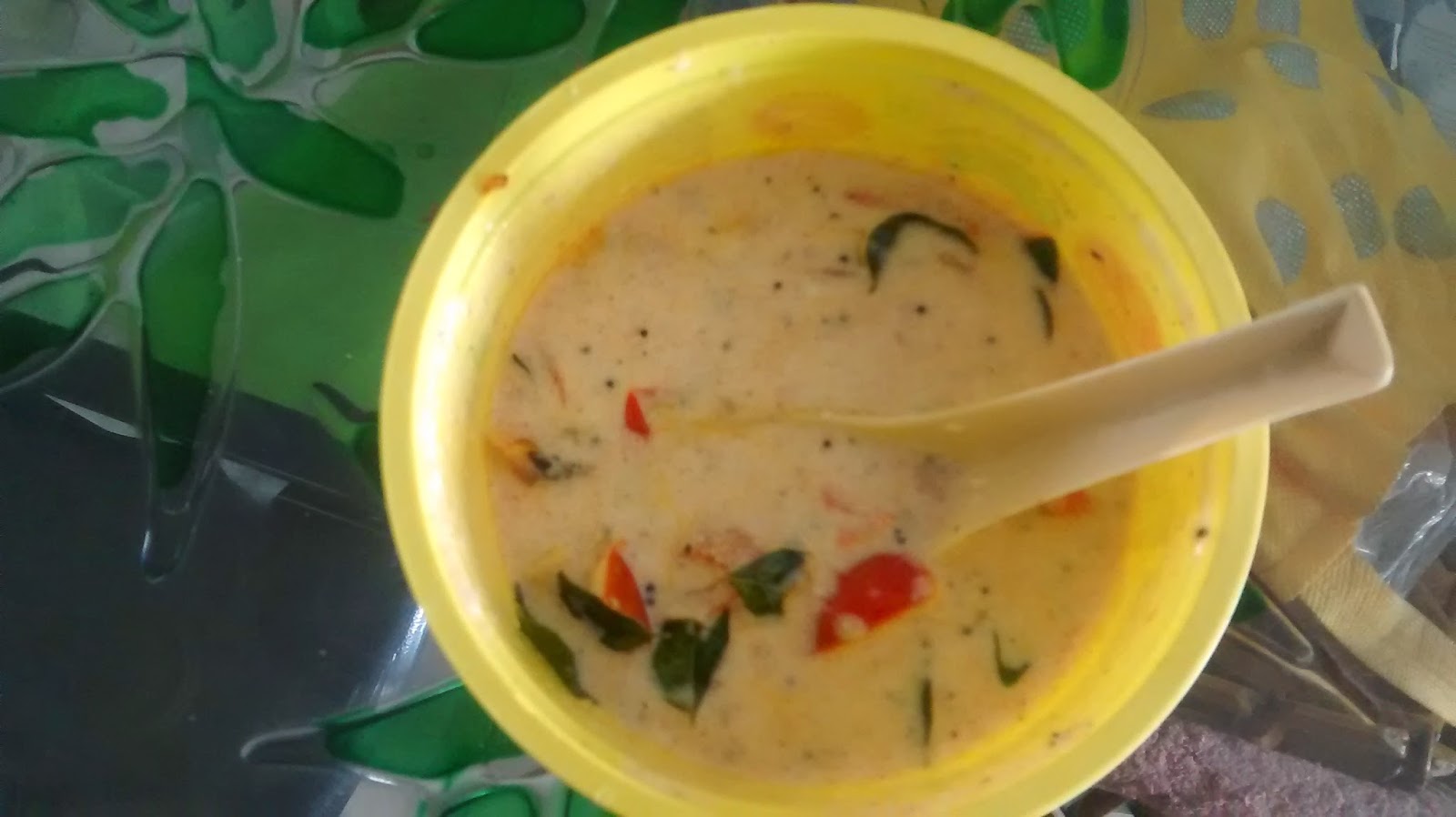
Ingredients :
Oil : 2 tsp
Rai/mustard - 1/4th tsp
Urad dal - 3/4th to 1 tsp
Green chilli - 2 small
Tomato - 2 small
Salt
Curry leaves
Method :
1. Take oil in a pan.
2. Add mustard and let it crackle. Add urad dal, green chilli, curry leaves and fry well.
3. Add chopped tomatoes.
4. Sprinkle salt and mix well for 2-3 min on medium flame.
5. Switch off flame and allow it to cool.
6. Then add this mixture to 2 cups fresh curd.
7. Sprinkle asafoetida and mix well.
Cucumber pachadi (Raita)
Ingredients :
Oil : 2 tsp
Rai/mustard - 1/4th tsp
Urad dal - 3/4th to 1 tsp
Green chilli - 2 small
Cucumber - 1 medium
Salt
Curry leaves
Method :
1. Take oil in a pan.
2. Add mustard and let it crackle. Add urad dal, green chilli, curry leaves and fry well.
3. Add chopped cucumber.
4. Sprinkle salt and mix well for 2-3 min on medium flame.
5. Switch off flame and allow it to cool.
6. Then add this mixture to 2 cups fresh curd.
7. Sprinkle asafoetida and mix well.
Maanga pachadi (Raw Mango)
In south India raw mango is used in cooking, like mango sambhar (yes, it will be delicious!), mango rice, mango pachadi (or maanga pachadi). Mango Pachadi is the khatta meetha (sweet & sour) pulpy gravy which goes very well with thogayal (brinjal thogayal, chow-chow thogayal, coconut thogayal. Thogayal is a kind of thick chutney/spicy paste. You can find its recipe in 'Curry&Spice' page). 'Manga Pachadi' is generally a part of south indian feasts and when served on the banana leaves, you can dip your fingers into it and lick it amidst whatever you eat...mmmm...yummy it will be! 'Totapuri' mango variety ('kili mooku 'in Tamil) is preferred for this, and when it is neither raw or ripe, it would be the best for this 'pachadi'.
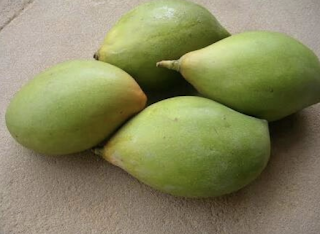
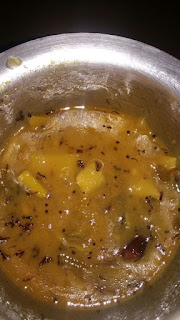
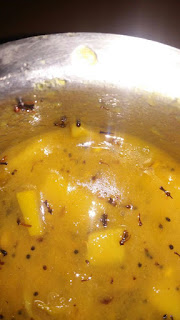
Ingredients:
Raw Mango : 3/4th to 1 cup chopped into medium to big pieces (the 'kili mooku' or Totapuri variety is preferred)
Tamarind juice : 2 tumbler (less concentrated) [1 tumbler =~ 200ml] (or) tamarind paste : 2 tsp
Ginger : 1/4th tsp finely chopped
Green chillies : 4-5 (medium hot)
Red chillies : 2
Jaggery :small amla size (small indian gooseberry size)
Mustard seeds : 0.5 tsp
Fenugreek seeds : 1/4 tsp
Asafoetida : 1/8th tsp
Turmeric : 1/8th tsp
Rice flour : 1 tsp
Oil : 2-3 tsp
Salt to taste
Curry leaves : 5-6 leaves
Neem flowers : 0.5 tbsp (optional)
Method:
1. Roughly chop the mango. Do not chop them into small pieces, let it be medium to big sized. (Refer the pic)
2. Heat oil in a pan, add mustard seeds. After mustard crackles, add broken red chillies, fenugreek seeds, chopped ginger and green chillies, curry leaves and saute for few seconds.
3. Add the chopped mango pieces and saute for 3-4 min.
4. Then add the tamarind juice (less concentrated), asafoetida, turmeric, salt. Mix well and let it boil for 7-8 minutes.
Note: Instead of tamarind juice, you can add 2 tumblers of water and add 2 tsp tamarind paste
5. Add 1 tsp rice flour mixed in cold water to bring it to the right consistency. Mix well, let it boil for two minute.
6. Add powdered jaggery and let it boil for a minute
7. If you have neem flowers, heat 1 tsp oil and saute the flowers in it for a minute. And add it to the pachadi, it is very good for health and also enhances the taste.
Neem flower pachadi
Fry 2-3 tsp neem flowers in 1 tsp ghee for 1 to 2min and keep it aside.
Heat 2-3 tsp oil in a pan, add 1/2 tsp mustrad seeds,2 red chillies, ginger(very little - 1/4tsp) , then add 2 tumbler tamarind juice (less concentrated).
Add 1/8 tsp asafoetida, 1/8tsp turmeric, salt and let it boil for 5-7 minutes.
Add little jaggery. Then add 1 tsp rice flour mixed in cold water to bring it to the right consistency. Crush the roasted neem flower in your palms and add it. Switch off the flame.
Pav Bhaji
You get to see many varieties of chat items in India. One among them is the delicious 'Pav Bhaji', just by saying the name mouth starts to water. The main ingredients of Bhaji are onion, tomato, potato and the masalas and the rest is your choice, you can add vegetables of your choice like cauliflower, green peas, carrots, etc. Let's go into the details.
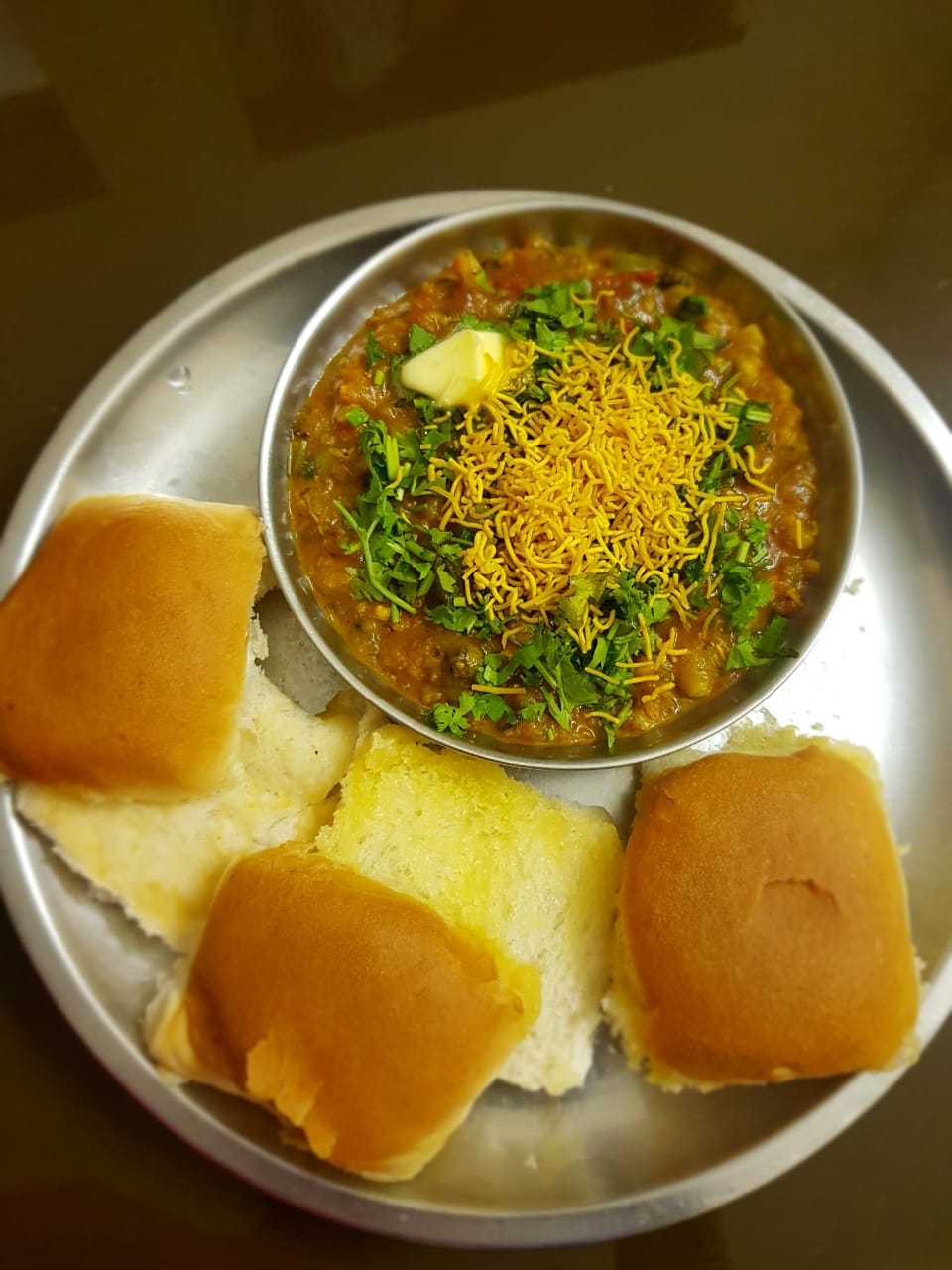
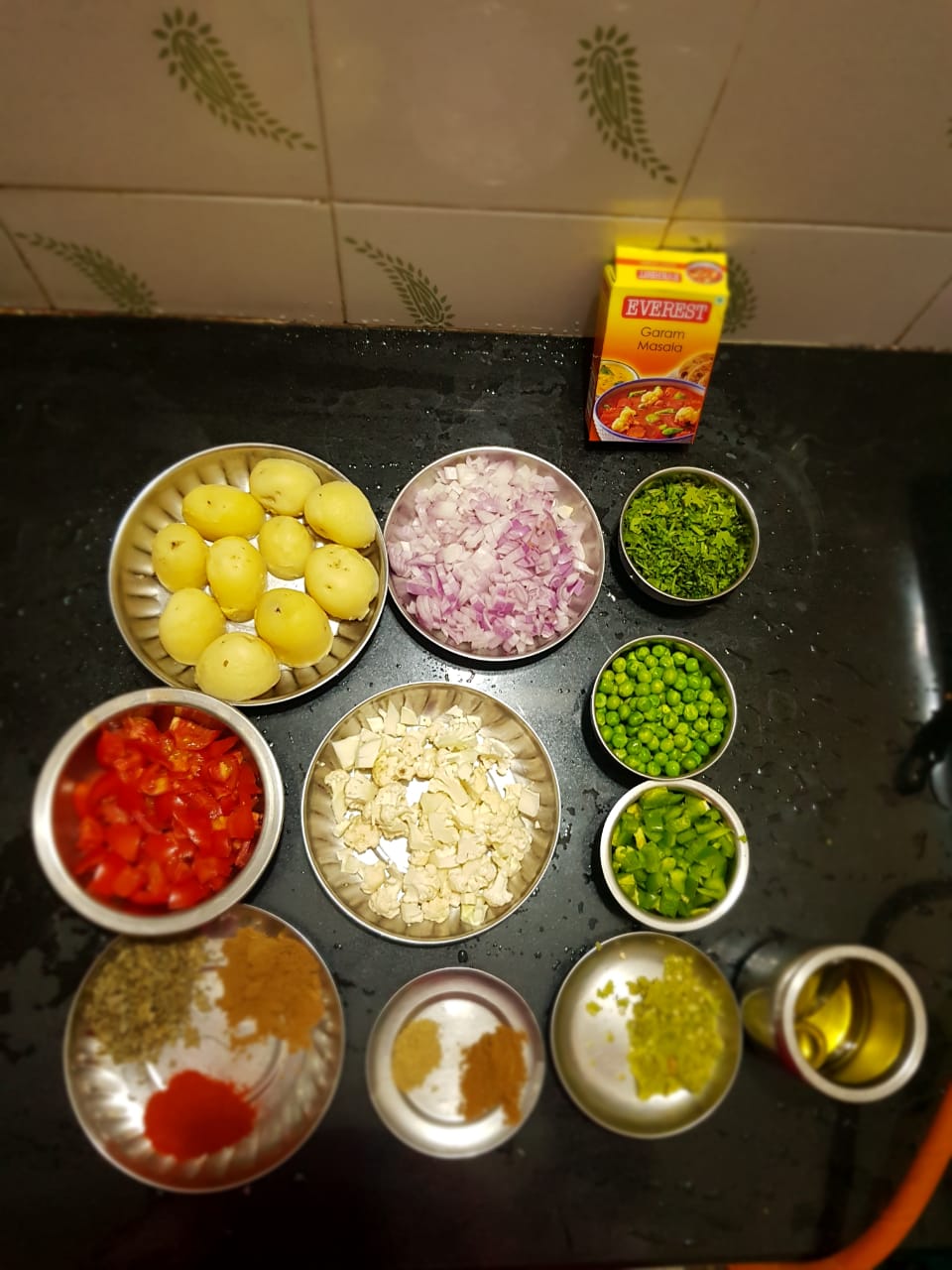
Ingredients: (serves 4-5)
Boiled Potatoes: 5
Tomato: 3
Onion : 3
Cauliflower: 100g
green peas: 1/4 cup
capsicum: half capsicum
Kasuri Methi : 1 tbsp
Dhaniya powder : 2 tsp
Red chilli powder : 1.5 tsp
Saunf powder : 0.5 tsp
Jeera powder : 0.5 to 0.75 tsp
Green chilli : 3
ginger : 1 inch
garlic : 7-8
Garam masala : 1.5 tsp
Cooking butter : 50g
Groundnut Oil: 4-5 tbsp (you can add less or more)
Sugar : 1 tsp
Turmeric : rich
Fresh coriander
Salt to taste
Method for Bhaji:
1. Heat butter in a pan or kadhai, add the chopped onions and saute for a minute or two.
2. Grind the green chillies, ginger and garlic into a paste and add it into the pan.
3. When onion starts to brown, add little chopped coriander, saute for few seconds and add chopped tomatoes.
3. Add sugar, little salt and turmeric, mix well and close the pan with a lid.Let it cook till tomatoes become soft and mushy. Add some oil as required.
4. Add chopped cauliflower and green peas. Mix well and add some water and let it cook with closed lid till vegetables are cooked.(check and stir in between to avoid burning)
5. Add half the 0.5 tbsp kasuri methi, red chilli powder, coriander powder, Jeera powder and saunf powder. Mix very well and again close with lid for a minute.
6. Add capsicum mix well and close with lid for 1-2 minutes.
7. Add garam masala and mix well. Add boiled potatoes, mix and then mash the gravy well with a masher.
8. Add remaining kasuri methi, salt and fresh coriander. Mix well and close it with lid for a minute. Switch off the flame.
Note: Add oil as required in the above steps.
For the Pav (buns):
9. Cut the buns (Pav) into halves and saute the buns with butter on a pan/tawa. Flip them and remove them from pan as they turn golden brown.
Garnish the bhaji with some finely chopped onions, sev, little chopped fresh coriander, little butter, squeeze few drops of lemon into it and enjoy the delicious Pav bhaji.
Macroni
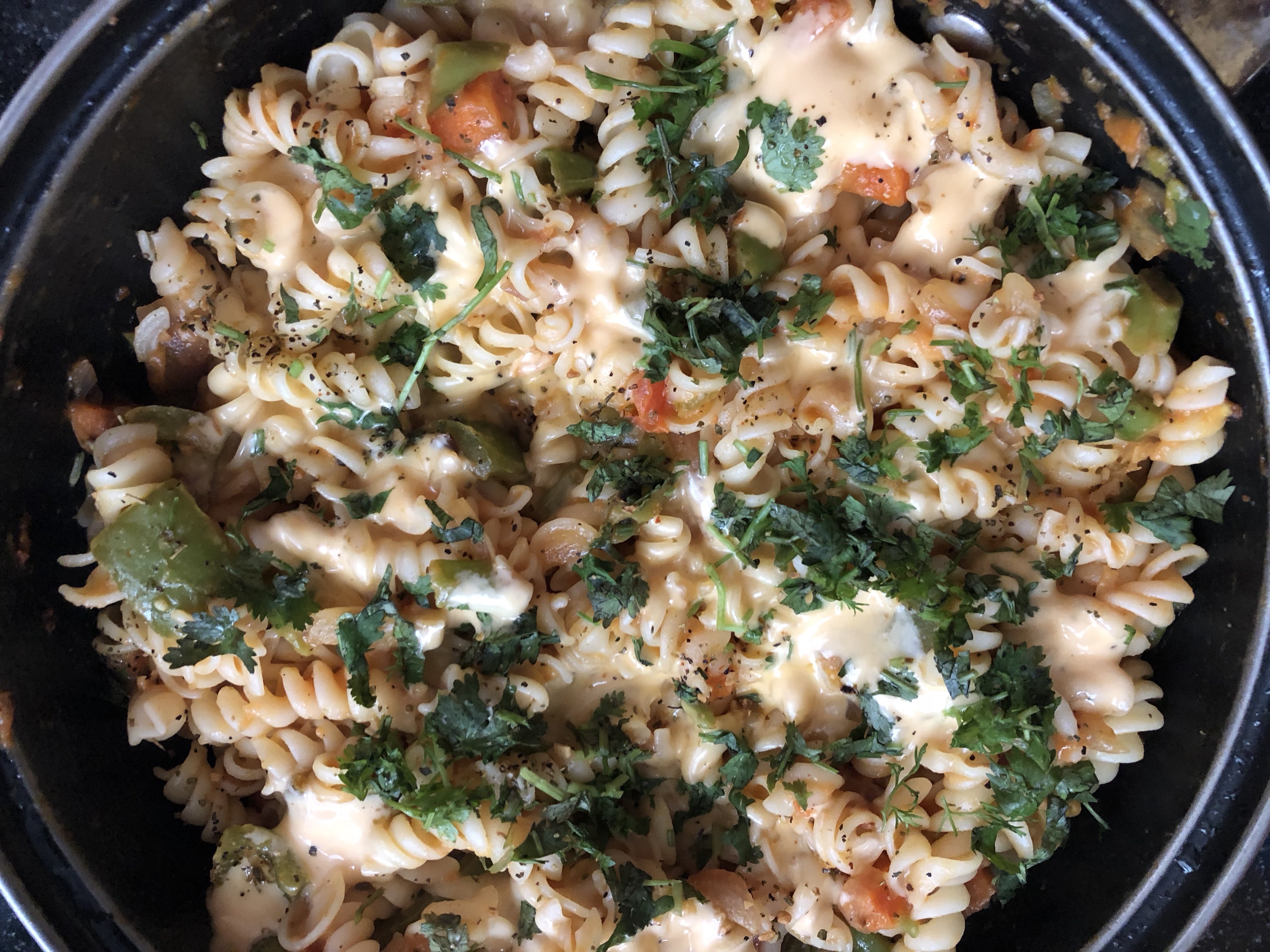
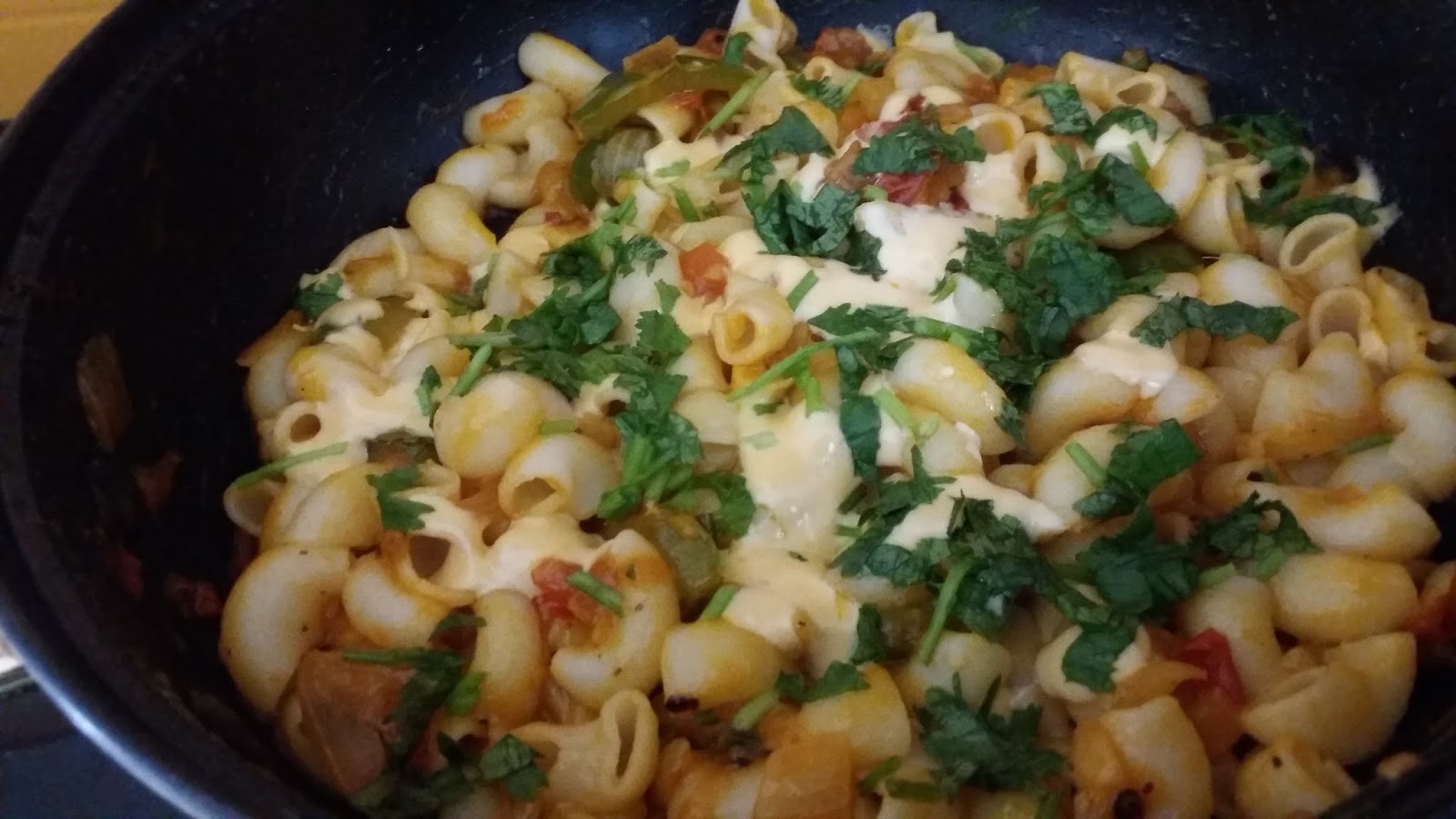
You can also add vegetables of your choice like broccoli, spinach, mushroom , corn kernels, etc.
Ingredients:
Macroni : 1.5 cup
Capsicum : 1 small
Chopped vegetables : 1/2 cup
Ghee : 2-3 tsp
Garlic : 4-5
Tomato : 1
Onion : 1
Tomato ketchup : 2 tbsp
Maida (refined flour) : 2-3 tsp
Milk : 3-4 tsp
Cheese slise or grated cheese: as you like it.
Green chillies : 2-3
Crushed black pepper : 1 to 1.5 tsp
Turmeric : 1/8 tsp
Salt
Fresh coriander leaves
Method:
Add little salt and oil to water and bring it to boil. Add macroni to boiling water and cook till macroni become large in size and well cooked. (Pls follow instruction on the macroni packet)
1. Heat ghee in pan.
2. Add chopped garlic, green chillies. Saute for a min, add chopped onions. Saute till they become translucent.
3. Add chopped radish, capsicum. Add salt, crushed pepper, turmeric. Mix well and cook for 2 min.
4. Add chopped tomoto and cook with closed lid for 5 min (or) till capsicum and tomato turn soft.
5. Add tomato ketchup. Mix well. Take maida(refined flour) and mix with 3-4 tsp of cold milk. Add it to the pan and mix well.
6. Add boiled/cooked macroni. Mix well. Add cheese on top and cook for 1-2 min with closed lid.
7. switch off flame. Garnish with coriander leaves.
Vegetable Noodles
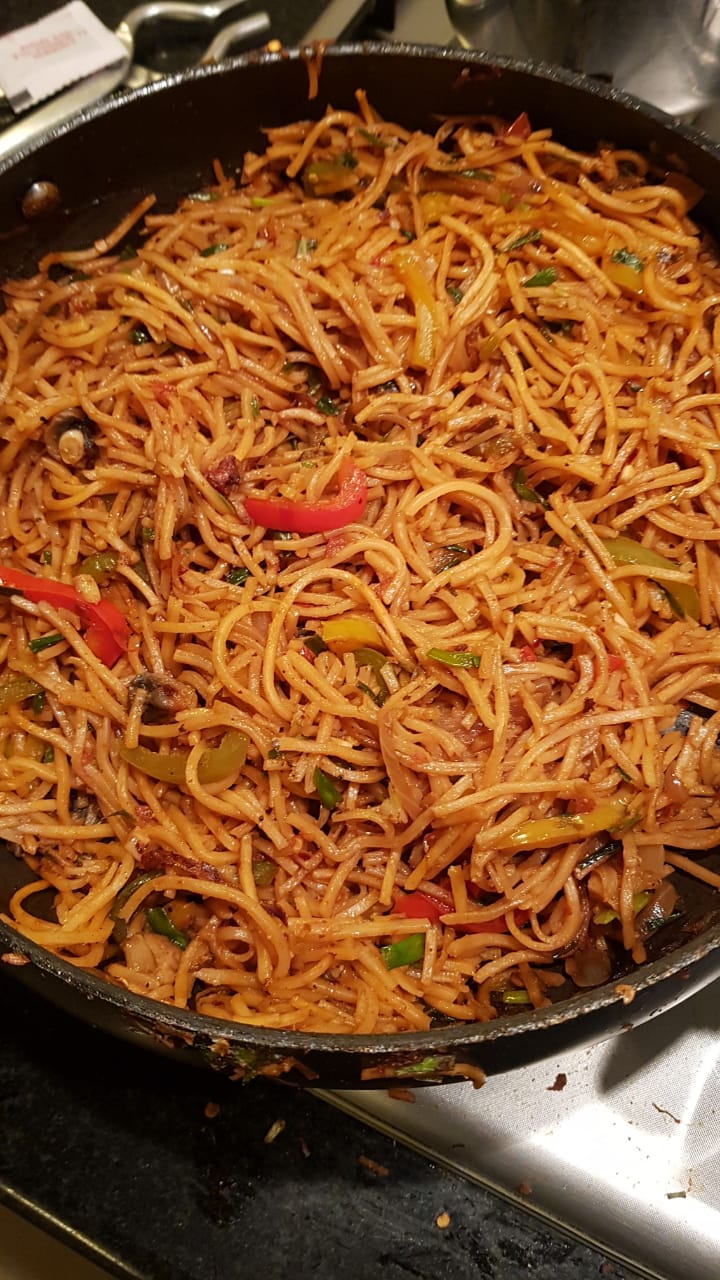

Ingredients :
Noodles (your choice-hakka/multi-millet/etc..) : 1 pack (150g)
Ajinomoto: 1 tsp (better avoid Ajinomoto)
Lemon syrup (squeezed out of 1 big lemon)
Soya sauce : 1 tbsp
Tomato ketchup : 1 tbsp
Sugar : 1 tsp
Salt : 1 tsp (or) as per taste
capsicum : 1
carrot : 2
beans : 8-10
Oil : 3-4 tbsp
Ginger : 1 inch
garlic : 5-6
Green chilli: 2-3
Onion : 2 small
(note: chop the vegetables and onions, thin and longitudinally, i.e. lengthwise)
Method :
Take enough water in a vessel and bring it to boil. Soak the noodles in it, wait for 2 min. Turn off the flame, drain the water and keep the noodles under cold running water. Again drain the water and keep the noodles aside. (Follow the instructions given in the noodles packet)
Heat oil in a pan ( on medium to high flame). Add chopped ginger, garlic, green chillies, onions and fry well.
Add chopped beans, 1/2 tsp ajinomoto and mix well. Cover the pan with its lid for a min.
Next add the carrots, sugar and remaining ajinomoto. Mix well. Cover the pan with lid for a minute again.
Now add salt, tomato ketchup, cover the lid with lid for 10-15 sec.
Then add soya sauce and lemon juice. Add capsicum and mix well. Saute till the vegetables are half cooked.
Add the noodles, mix well and saute for a minute. Serve hot.
Corn Spinach Sanwich
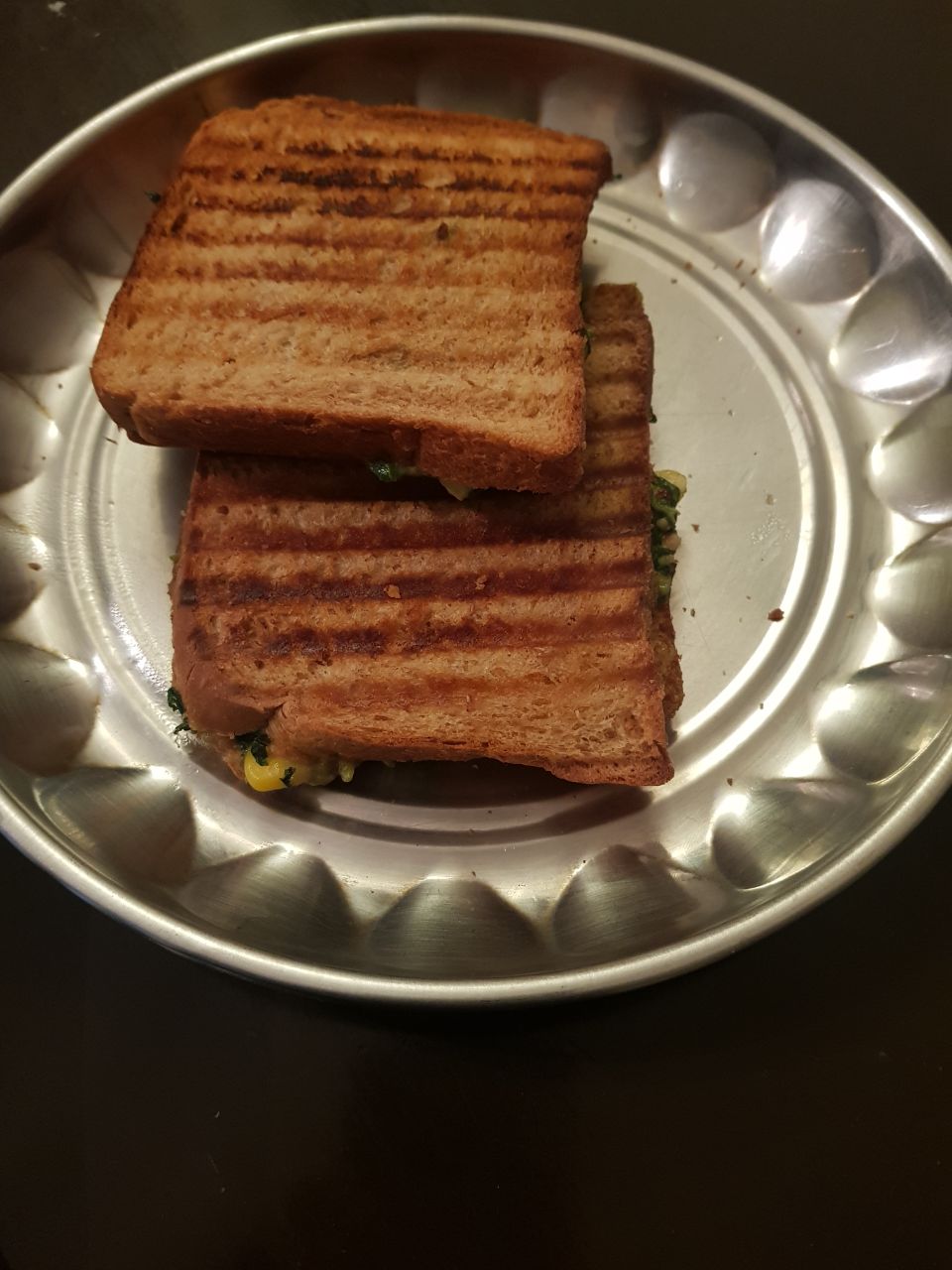
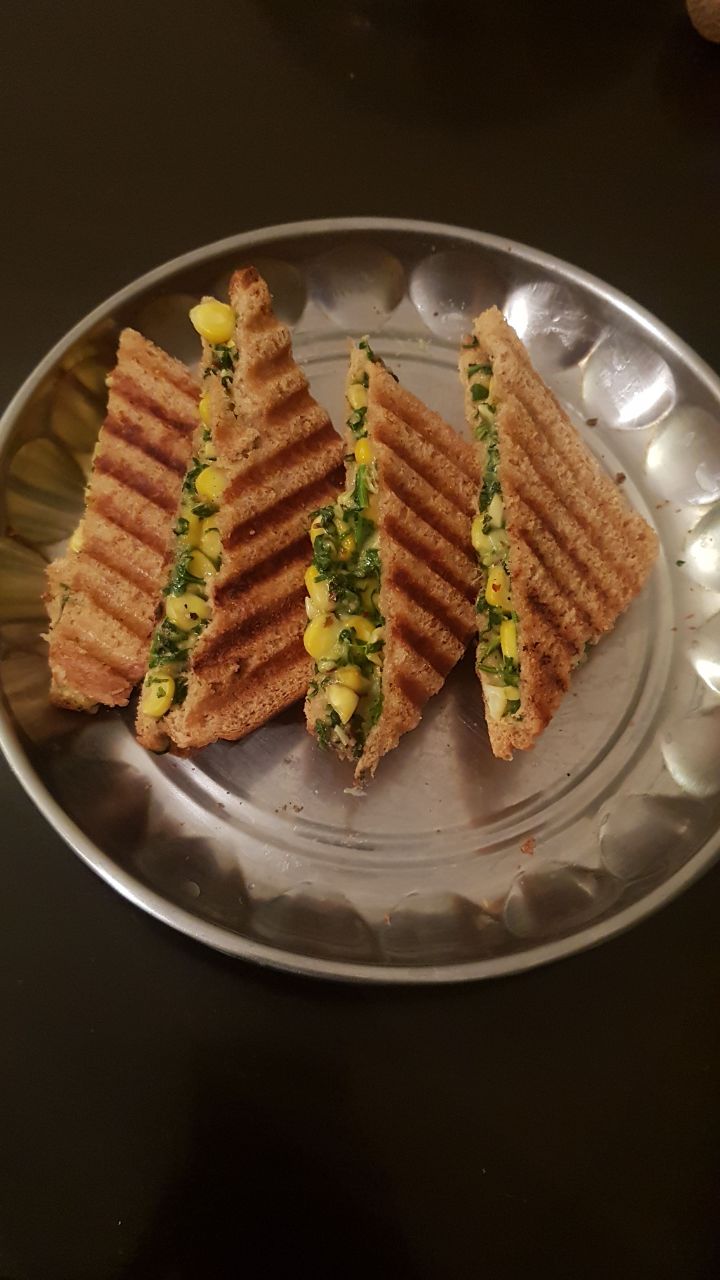
Method:
In a pan, add 1 tbsp butter, half cup boiled corn kernels, 1 cup chopped spinach leaves. Cook for few minutes.
Add 1 tbsp maida to half cup cold milk. Mix properly to avoid lumps. Add this into the pan.
Stir well till the conosistency become slittle thick.
Add salt, 3/4 tsp crushed pepper and 1/2 tsp red chilli flakes.
Sandwich this mixture between the bread slices and grill it.
Desi Maggi
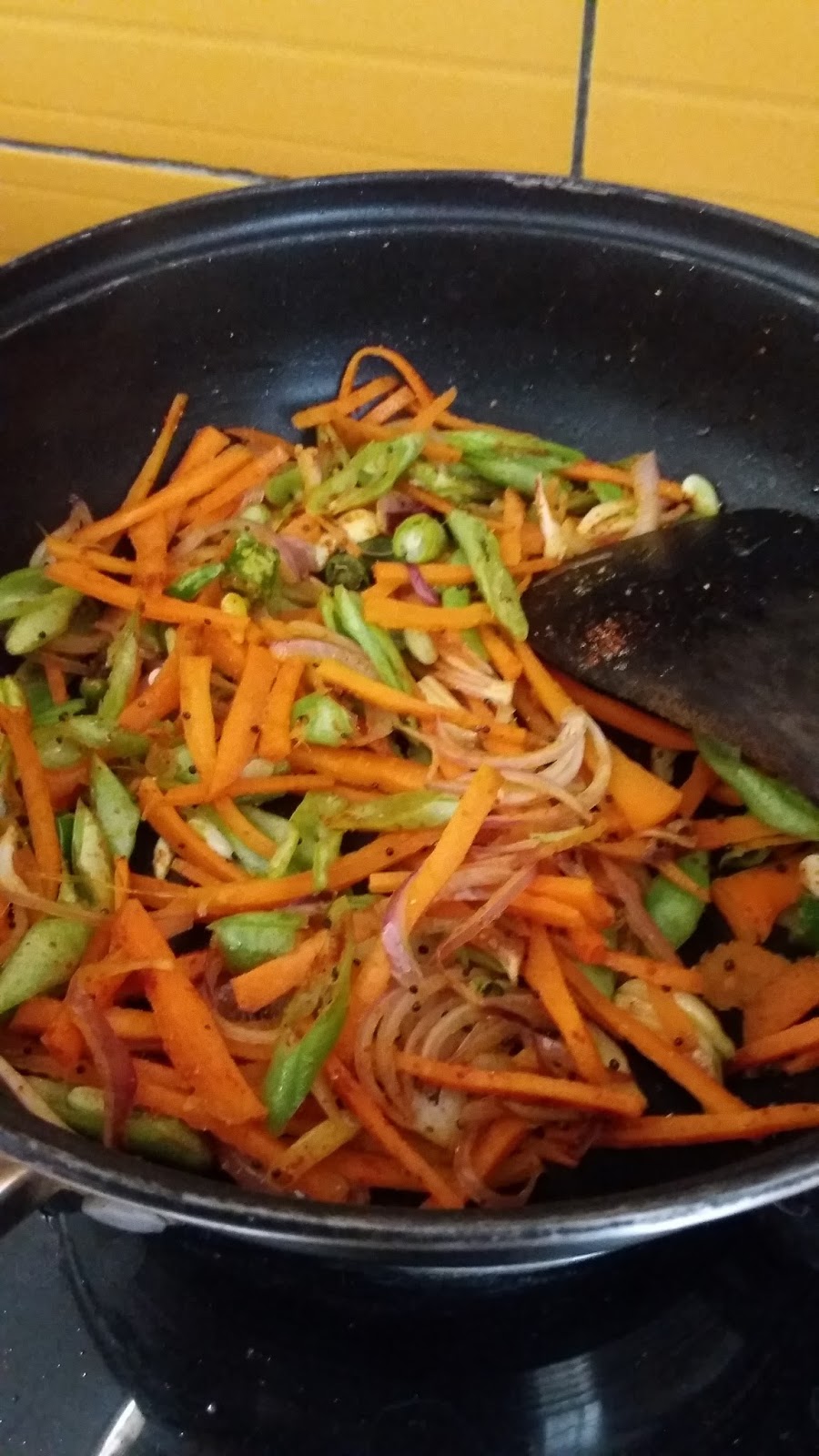
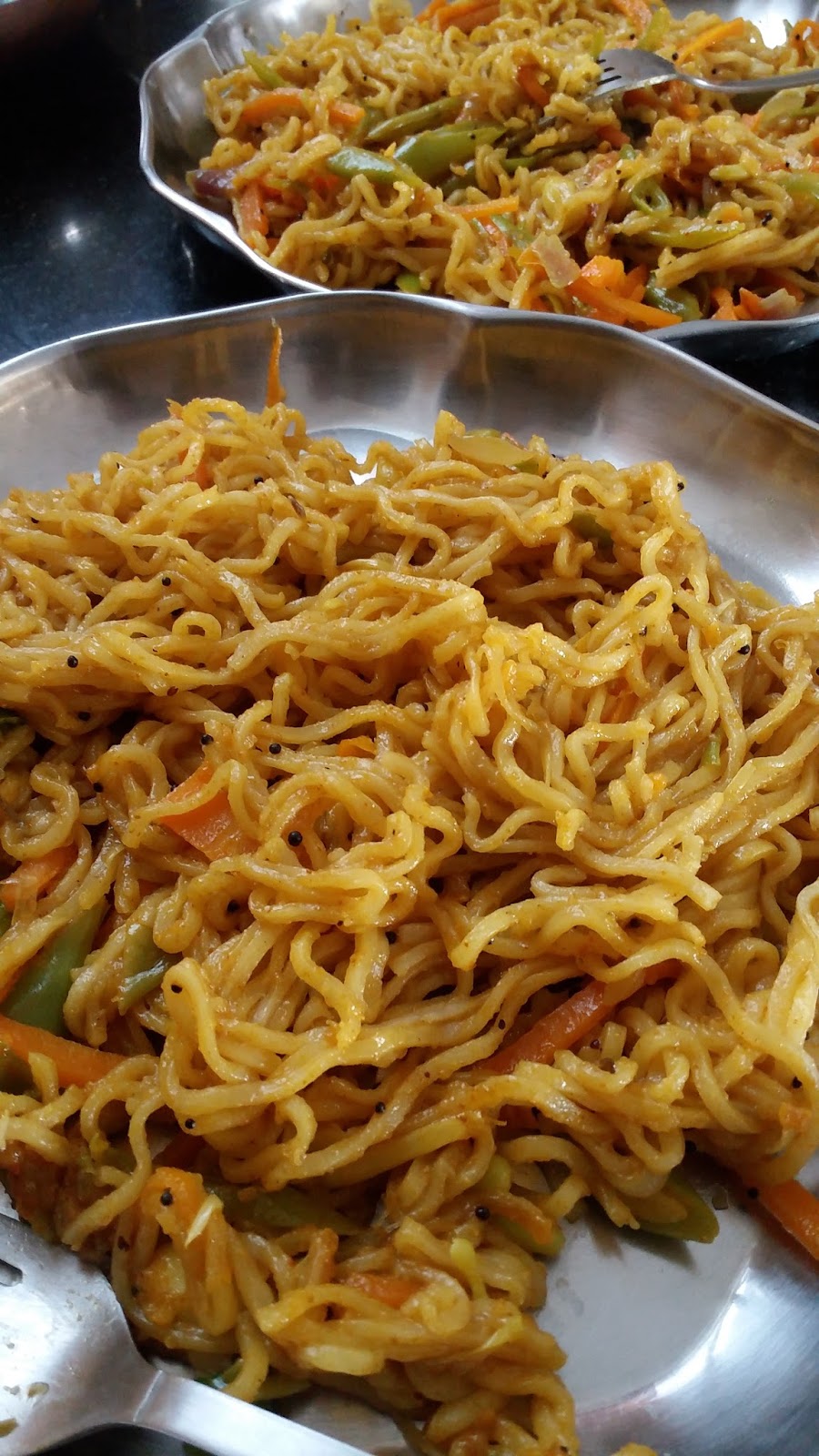
Ingredients: (serves 2)
Carrot : 1 medium
Beans : 3-4
Onion : half of 1 small
Capsicum : half of 1 small
Green chillies : 1
Mustard : 1/4 tsp
Turmeric : pinch
Dhaniya powder : 1/4 tsp
Salt : 1/8 to 1/4 tsp
Oil : 1 tsp
Maggi : 2 cakes + 2 sache masala powder
Method :
Chop the vegetables lengthwise (longitudinally, as shown in the pic).
Heat oil in a pan, add mustard and let it crackle. Add chopped green chilly, onions, then chopped vegetables. Add turmeric, dhaniya powder and salt. Saute on medium to high flame for 1-2 min.
Add 1.5 tumbler water and close the pan with a lid. Reduce the flame to low-medium. Allow the water to boil.
Open lid, add one sache of maggi masala, mix well, add the cakes. Close the lid. Let it cook for 1 min.
Open lid, flip the cakes, close the lid and let it cook for about 20 sec.
Open lid, add the remaining one sache of maggi masala , increase the flame to medium-high. Mix well till there is no extra water. Close the lid. Wait for 10 sec and switch off the flame.
Remove the lid after 1-2 min. Mix well and serve hot.
Tomato Pachadi (Raita)
Ingredients :
Oil : 2 tsp
Rai/mustard - 1/4th tsp
Urad dal - 3/4th to 1 tsp
Green chilli - 2 small
Tomato - 2 small
Salt
Curry leaves
Method :
1. Take oil in a pan.
2. Add mustard and let it crackle. Add urad dal, green chilli, curry leaves and fry well.
3. Add chopped tomatoes.
4. Sprinkle salt and mix well for 2-3 min on medium flame.
5. Switch off flame and allow it to cool.
6. Then add this mixture to 2 cups fresh curd.
7. Sprinkle asafoetida and mix well.
Cucumber pachadi (Raita)
Oil : 2 tsp
Rai/mustard - 1/4th tsp
Urad dal - 3/4th to 1 tsp
Green chilli - 2 small
Cucumber - 1 medium
Salt
Curry leaves
Method :
1. Take oil in a pan.
2. Add mustard and let it crackle. Add urad dal, green chilli, curry leaves and fry well.
3. Add chopped cucumber.
4. Sprinkle salt and mix well for 2-3 min on medium flame.
5. Switch off flame and allow it to cool.
6. Then add this mixture to 2 cups fresh curd.
7. Sprinkle asafoetida and mix well.
Maanga pachadi (Raw Mango)
In south India raw mango is used in cooking, like mango sambhar (yes, it will be delicious!), mango rice, mango pachadi (or maanga pachadi). Mango Pachadi is the khatta meetha (sweet & sour) pulpy gravy which goes very well with thogayal (brinjal thogayal, chow-chow thogayal, coconut thogayal. Thogayal is a kind of thick chutney/spicy paste. You can find its recipe in 'Curry&Spice' page). 'Manga Pachadi' is generally a part of south indian feasts and when served on the banana leaves, you can dip your fingers into it and lick it amidst whatever you eat...mmmm...yummy it will be! 'Totapuri' mango variety ('kili mooku 'in Tamil) is preferred for this, and when it is neither raw or ripe, it would be the best for this 'pachadi'.
(Kili Mooku/Totapuri Variety)
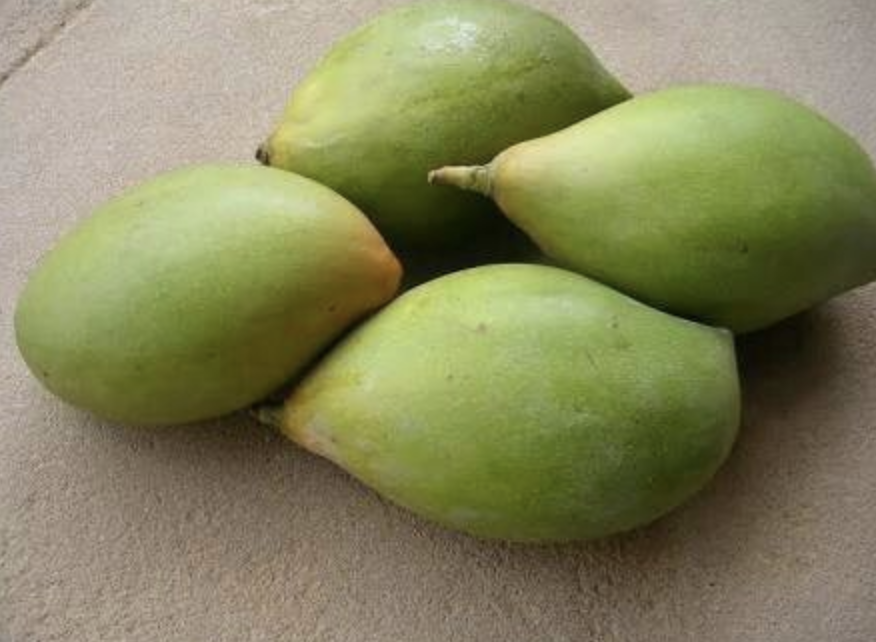
(Maanga pachadi)
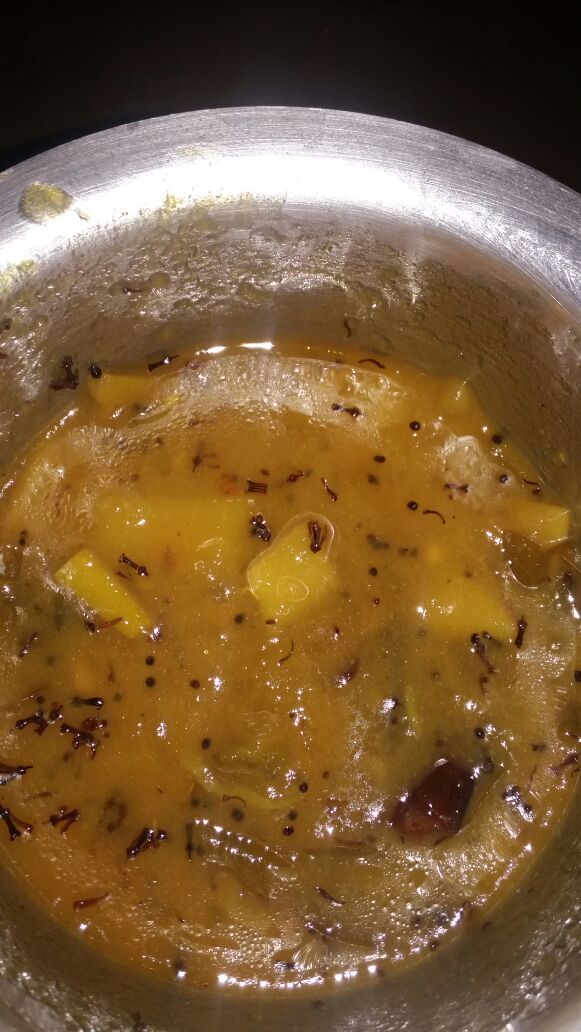
(maanga pachadi - closer view)
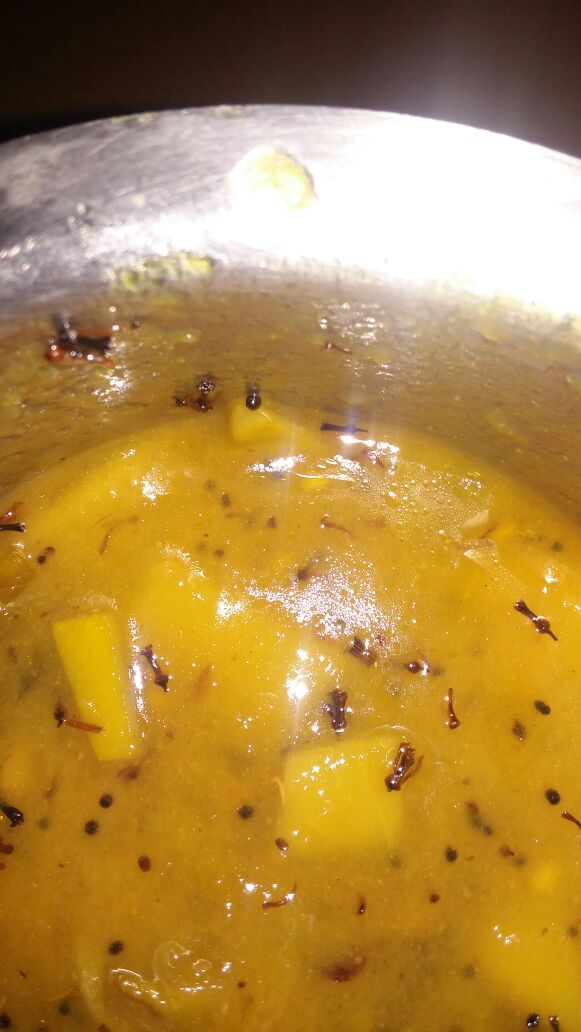
Ingredients:
Raw Mango : 3/4th to 1 cup chopped into medium to big pieces (the 'kili mooku' or Totapuri variety is preferred)
Tamarind juice : 2 tumbler (less concentrated) [1 tumbler =~ 200ml] (or) tamarind paste : 2 tsp
Ginger : 1/4th tsp finely chopped
Green chillies : 4-5 (medium hot)
Red chillies : 2
Jaggery :small amla size (small indian gooseberry size)
Mustard seeds : 0.5 tsp
Fenugreek seeds : 1/4 tsp
Asafoetida : 1/8th tsp
Turmeric : 1/8th tsp
Rice flour : 1 tsp
Oil : 2-3 tsp
Salt to taste
Curry leaves : 5-6 leaves
Neem flowers : 0.5 tbsp (optional)
Method:
1. Roughly chop the mango. Do not chop them into small pieces, let it be medium to big sized. (Refer the pic)
2. Heat oil in a pan, add mustard seeds. After mustard crackles, add broken red chillies, fenugreek seeds, chopped ginger and green chillies, curry leaves and saute for few seconds.
3. Add the chopped mango pieces and saute for 3-4 min.
4. Then add the tamarind juice (less concentrated), asafoetida, turmeric, salt. Mix well and let it boil for 7-8 minutes.
Note: Instead of tamarind juice, you can add 2 tumblers of water and add 2 tsp tamarind paste
5. Add 1 tsp rice flour mixed in cold water to bring it to the right consistency. Mix well, let it boil for two minute.
6. Add powdered jaggery and let it boil for a minute
7. If you have neem flowers, heat 1 tsp oil and saute the flowers in it for a minute. And add it to the pachadi, it is very good for health and also enhances the taste.
Khatta Meetha Maanga Pachadi is ready!
Neem flower pachadi
Fry 2-3 tsp neem flowers in 1 tsp ghee for 1 to 2min and keep it aside.
Heat 2-3 tsp oil in a pan, add 1/2 tsp mustrad seeds,2 red chillies, ginger(very little - 1/4tsp) , then add 2 tumbler tamarind juice (less concentrated).
Add 1/8 tsp asafoetida, 1/8tsp turmeric, salt and let it boil for 5-7 minutes.
Add little jaggery. Then add 1 tsp rice flour mixed in cold water to bring it to the right consistency. Crush the roasted neem flower in your palms and add it. Switch off the flame.
Comments
Post a Comment